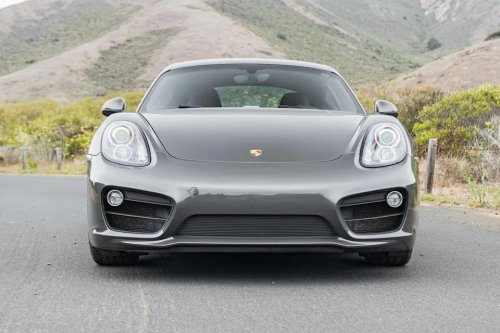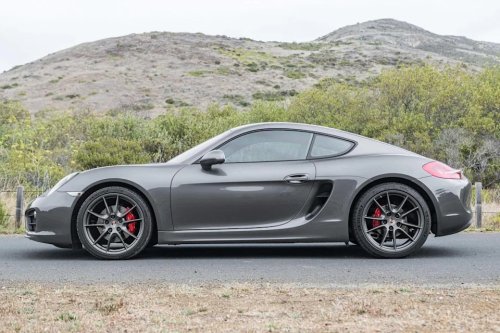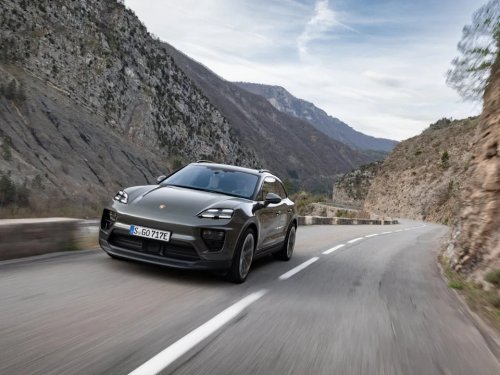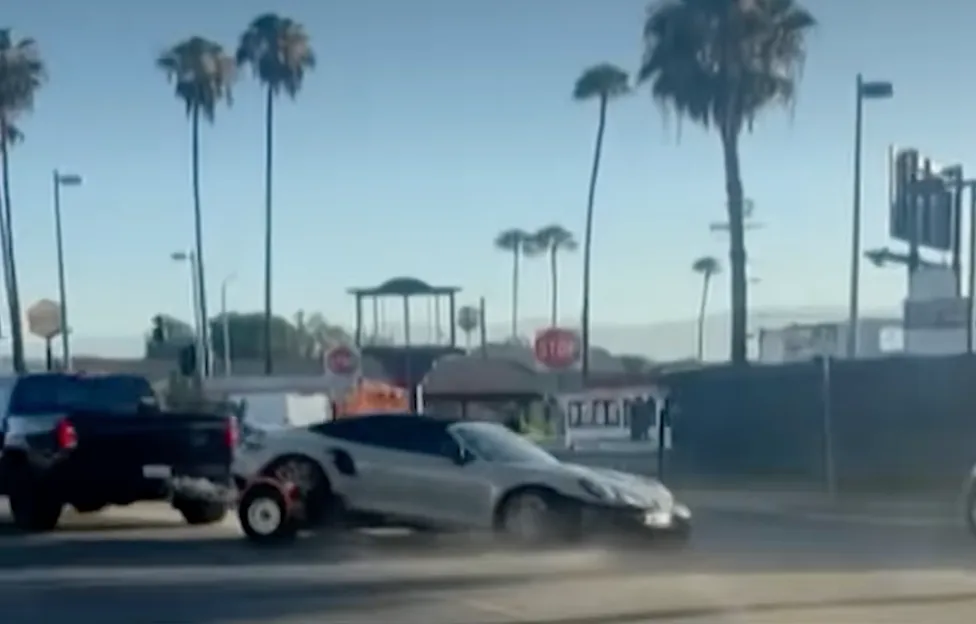



















A Thief Couldn't Start This Stolen Porsche, So He Dragged It Down the Street Like a Shopping CartNobody was driving the Porsche that tore up Tujunga Avenue in North Hollywood last Thursday morning. That's the detail worth sitting with, because it explains everything else in this story.Garage-worthy EDC gear, on sale this week.According to the Los Angeles Police Department, officers responded around 6:27 a.m. after a caller reported a man trying to steal a Porsche. When they arrived, the Porsche wasn't running. It hadn't been hot-wired, and nobody was in the driver's seat. It was strapped to the back of a pickup truck, the way you'd tow a trailer full of firewood. When the driver refused to stop, a pursuit kicked off down Tujunga Avenue, and for the next several blocks a gray, driverless Porsche got dragged along the pavement, its nose scraping the curb, until the tow connection snapped and the car skidded to a stop in front of a car wash. The truck kept going for another ten minutes before officers caught up near Sherman Way and Canal Loop. The driver was booked on felony evading.AdvertisementAdvertisementTreat that as a strange, five-paragraph crime blotter item and you'll miss the actual story. The interesting part was never the chase. It's the method. This isn't even the first time a stolen Porsche has ended a pursuit in a pile of scraped sheet metal instead of a clean getaway.For most of automotive history, stealing a car meant driving it away. That stopped being simple around the mid-1990s, when engine immobilizers, pairing the ignition to an encrypted chip inside the key, became standard equipment. Porsche and its German peers were among the most aggressive early adopters. No matching chip, no start, no matter how many wires get crossed. Porsche stacks additional layers on top of that baseline: tilt sensors, interior motion detection, and a factory alarm that treats an unauthorized tow attempt as seriously as a broken window. Hot-wiring, once a genuine skill passed down through generations of car thieves, is close to extinct on anything built in the last twenty-five years.That's why the towing method exists at all. When a thief can't defeat the security system on the street, in the open, in under a minute, the alternative is to physically remove the car to somewhere private and deal with the electronics later. Auto Wire has covered plenty of the sophisticated version of this problem recently, cloned key fobs breaking open a 1.3 million dollar theft ring and a pair of Corvettes that vanished from a dealer lot using an electronic programming device, without so much as a broken window. What happened in North Hollywood was the unsophisticated version. No cloning device, no relay box, no laptop plugged into the OBD port. Just a tow strap and a pickup truck, which tells you the person attempting this theft had neither the tools nor the time to beat Porsche's security the smart way, so he tried to out-muscle it instead.Here's the part owners and shoppers should actually care about: getting a stolen car back doesn't mean getting it back intact, and this is exactly the kind of incident that proves it. The nose of a modern Porsche isn't just sheet metal. It houses the radar module for adaptive cruise, parking sensors, and on most current models, a low-mounted radiator and condenser pack tucked behind an aluminum front structure that's expensive to source and even harder to repair correctly. Porsche's body shells lean heavily on aluminum panels and crash structures to keep weight down, and aluminum repair isn't a hammer-and-dolly job. It requires certified shops, dedicated equipment, and technicians trained specifically for it, because aluminum work-hardens and cracks in ways steel doesn't. Scrape a nose down the length of a city block at speed and there's a real chance the insurance math ends the same way it would have if the car had simply been stripped for parts: a total loss.AdvertisementAdvertisementThere's also a public-safety wrinkle that's easy to skip past. A car with nobody in it and no brakes underfoot isn't a stolen vehicle anymore. It's an unguided object, dragged at whatever speed the truck pulling it chooses, with no ability to steer around a pedestrian, a cyclist, or another car. That the Porsche's tow connection failed in front of a car wash and not through a crowded intersection is closer to luck than to any plan. Cincinnati recently had to settle a lawsuit after a stolen Porsche it later auctioned off turned out to have undisclosed damage of its own, a reminder that the paperwork and payouts around a recovered stolen car can drag on for years after the pavement stops scraping.None of this makes Porsche's security a failure. It's closer to the opposite. Modern anti-theft engineering has been so effective at killing the classic, quiet, keys-in-thirty-seconds theft that it has pushed criminals toward louder, clumsier, more destructive methods, ones police can see coming and bystanders can get hurt by. Departments that maintain pursuit policies weighing crime severity against chase risk exist precisely because of scenes like this one, where the getaway itself causes more damage than the original crime would have.For what it's worth, the growing menu of theft methods, cloned fobs, signal relay boxes, programming devices, and now brute-force towing, is exactly why Auto Wire keeps circling back to basics like Faraday pouches for key fobs and a full rundown of what actually deters modern car thieves. None of it stops a determined thief with a tow strap. It just narrows his options down to the clumsiest one available.For owners, the lesson isn't that a good immobilizer makes a car theft-proof. It's that the fight over your car increasingly happens after somebody has already decided to take it. Porsche's security didn't stop this theft. It just downgraded it from grand theft auto into a very expensive towing job.Join our Newsletter, follow our Instagram page, and connect with us on Facebook.