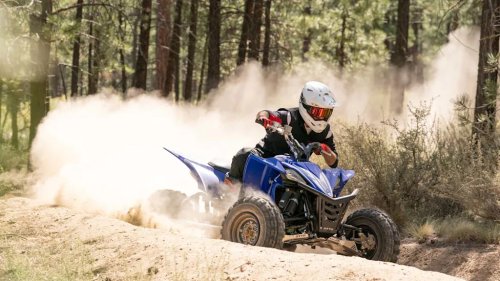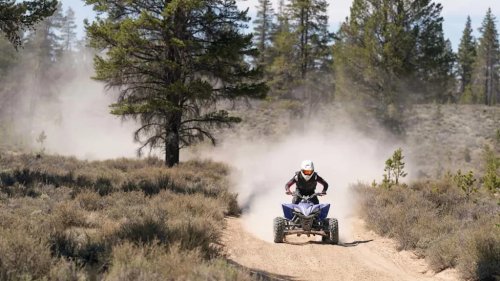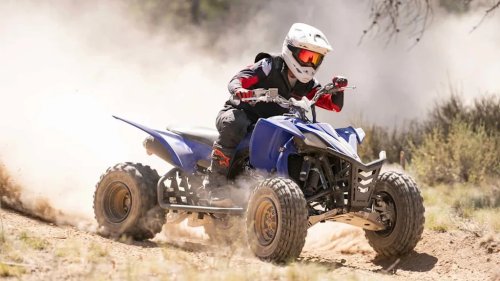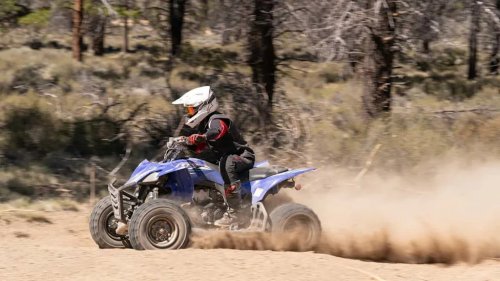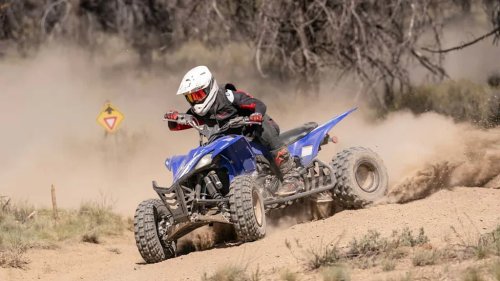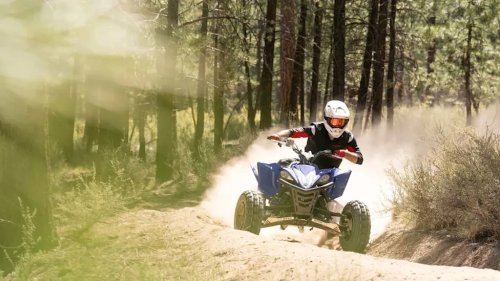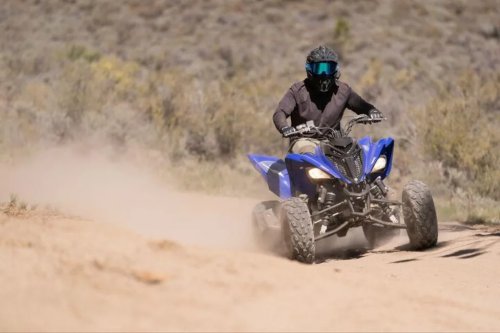
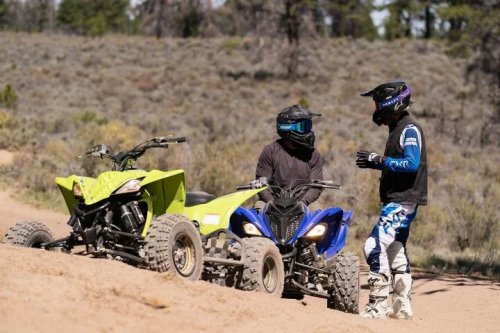
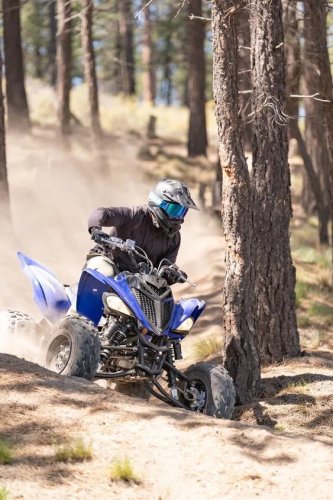
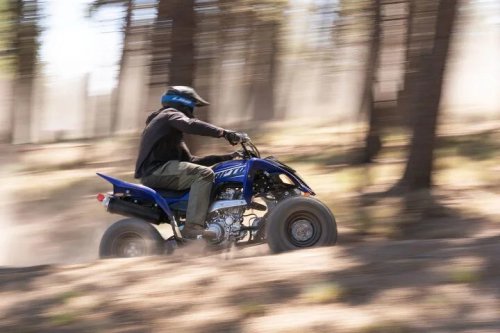
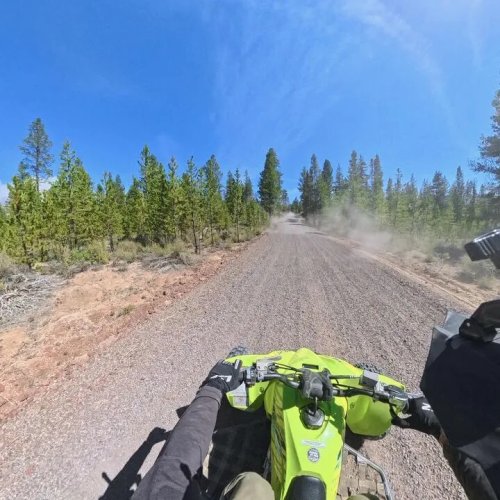
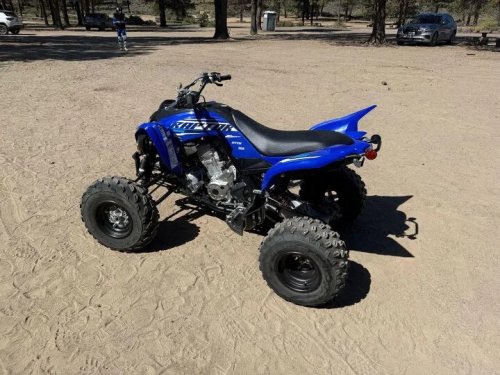
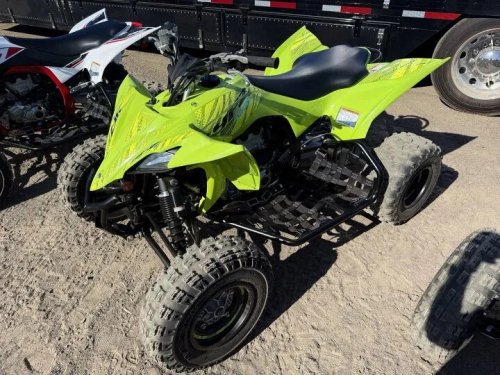
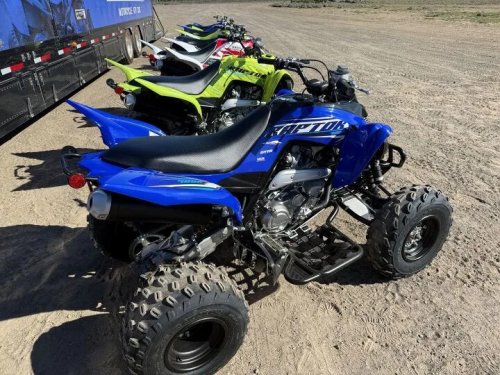
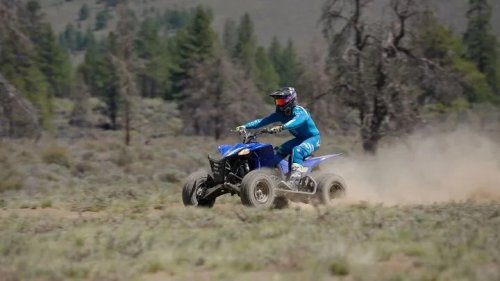
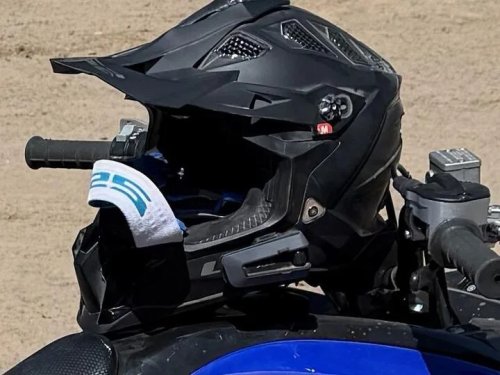
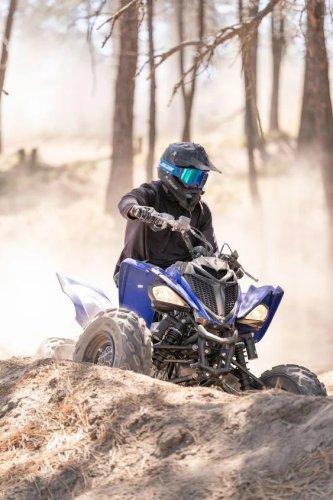















a new rider s take on yamaha s 70th anniversary raptor 700r yfz450rShowing Up to a Sport ATV Event Having Never Ridden OneI got the invite to the 2026 Yamaha Sport ATV Media Ride near Bend, Oregon, and my first honest reaction was a mix of excitement and a low-grade worry that I was about to embarrass myself in front of people who ride for a living. The event was built around the 70th anniversary release of two machines that many riders treat as sacred ground: the YFZ450R and the Raptor 700R. Seven decades of sport ATV heritage, and here I was, a guy whose entire quad résumé amounted to slow, sensible, utility stuff.Let me be clear about where I was starting from. My previous experience was all in utility vehicles and on a slow beater that my old Sheriff's Department kept around for special events. We ran it during things like the Santuario to Chimayo pilgrimage in New Mexico, where the whole point was to move at a crawl, keep people safe, and never do anything remotely exciting. That machine had all the sporting personality of a lawn tractor. It was reliable, forgiving, and never once asked me to do anything I wasn't ready to do.A sport ATV is a different animal. This was my first time on a clutched quad, my first time on anything that Yamaha's own testers describe as fast, and my first time being surrounded by media folks who could probably ride circles around me blindfolded. So that is the angle I want to give you here. Not a spec-sheet breakdown from someone who has ridden a hundred of these. A genuine first-timer's honest take on what it actually feels like to show up green, get trained, and find out why people fall so hard for this stuff.AdvertisementAdvertisementIf you have ever looked at a Raptor in a dealership and wondered whether you, a normal person with no motocross background, could actually learn to ride one, this piece is for you. I was that normal person a few weeks ago. Here is how it went.No Cool-Guy Gear, Just an LS2 Helmet and Combat BootsThe first thing you notice at an event like this is the gear. The other riders and media rolled in looking like they had stepped out of a Supercross pit. Full kit, matching everything, the works. And then there was me.My loadout was my trusty LS2 Subverter helmet, a pair of goggles, a pair of 5.11 pants, a long-sleeve hoodie, and my Garmont combat boots. That is it. No leg armor, no chest protector, no purpose-built riding boots. I looked less like a professional powersports journalist and more like a guy who wandered off a hiking trail and got handed the keys to a quad.Here is the part that surprised me, though. Not a single person made me feel bad about it. The powersports media crowd was genuinely welcoming, and if anything, they leaned into it. Several of them walked me through their gear, explaining what each piece protected and why they had chosen it. There was no sneering, no "look at this rookie" energy. Just people who love the sport wanting to bring someone new into it.AdvertisementAdvertisementThey also explained the costs, and that is a thread I am going to keep pulling on throughout this piece because it turned into one of the more useful conversations of the whole day. The gear these folks wear is not cheap, and there is a real reason for that. For now, just know that I showed up in what is probably closer to what most of the public will actually wear on a trail, and I never once felt out of place. Comfort was fine. My boots did their job, my pants held up to the dust, and the LS2 lid kept the world quiet enough to think.If you are a new rider reading this and worrying that you need to drop a mortgage payment on gear before you can even try one of these machines, hold that thought. We will come back to it.Pat Biolsi's Morning Crash Course: Respect the Machinea new rider s take on yamaha s 70th anniversary raptor 700r yfz450rBefore I was allowed to touch a trail, Yamaha's testing supervisor, Pat Biolsi, pulled me aside for a one-on-one morning crash course. And I mean crash course in the good sense, the kind designed specifically so I would not end up in one.Pat has clearly done this a lot. He quickly realized that I was a true beginner with this kind of machine, not a guy underselling his experience for the story, and he adjusted accordingly. The whole session was built around one central idea that he kept coming back to (I'm distilling and paraphrasing), and it was the single thing that clicked most and shaped my entire day.AdvertisementAdvertisementRespect the machine and its capabilities. Only go as fast as you can actually handle it.That sounds almost too simple to be profound. It is not. When you are sitting on a quad that has more power than anything you have ever operated, your instinct as a beginner is to either freeze up or overcommit, and both of those get people hurt. What Pat gave me was a decision-making framework. Before every input, the question is not "how fast can this thing go," it is "how fast can I actually keep this under control right now." Those are very different numbers, and the gap between them is where you find the edge of your ability.He walked me through the clutch, the throttle, the brakes, body positioning, how to read what the machine was telling me. But the through-line of all of it was that phrase. Respect it. Ride within yourself. The machine does not care about your ego, and it will happily go faster than you can manage if you let it.I carried that sentence in my head all day. Every time the trail opened up, and I felt the temptation to thumb the throttle harder than my skill justified, Pat's voice was right there. It is the best riding advice I have gotten, and honestly, it is good advice for a lot of things beyond ATVs.From Parking-Lot Figure Eights to a Kids' Training LoopOnce the classroom-in-the-parking-lot portion was done, Pat did not just wave me off toward the real trails and wish me luck. The progression was deliberate, and I appreciated it more the more I thought about it later.AdvertisementAdvertisementFirst came figure eights in the parking lot. This is the boring, unglamorous part that every good instructor makes you do, and for good reason. Figure eights force you to practice throttle control, braking, and turning in both directions in a tight, controlled space where the only thing you can really hurt is your pride. You learn how the machine leans, how it wants to be weighted, how quickly it responds. I ran those loops until Pat was satisfied that I was not going to jam the throttle and launch myself into a fence.Only after I proved I could handle the basics did we step it up. Pat took me over to a kids' training loop. Now, there is a joke in there somewhere about the grown man being sent to the kids' course, and yes, I felt it. But it was exactly the right call. The point was to get me off the flat, featureless parking lot and onto something that actually behaved like a trail, with real turns and real terrain, but at a scale and difficulty that would not overwhelm a first-timer.I ran that loop a few times. It was the bridge between "I can operate this machine" and "I can operate this machine while the ground is doing things." Different surfaces, different sightlines, actual corners to set up for. It was the first time the whole thing started to feel less like a driving test and more like riding.Once I had a few clean loops under my belt, Pat gave the go-ahead for real trail runs and had me play follow-the-leader. That green light meant something, because I knew it had been earned rather than assumed. Nobody at this event was going to let me hurt myself or anyone else just to get a story, and that graduated approach is a big part of why I felt safe enough to actually enjoy it.East Fort Rock: Dust, Pines, and Elevationa new rider s take on yamaha s 70th anniversary raptor 700r yfz450rThe real riding happened at East Fort Rock, Oregon, and the setting deserves a paragraph of its own because it is a big part of why this event worked.AdvertisementAdvertisementIt was hot. It was dirty. It was dusty in the way that gets into your teeth and settles into every crease of your gear, and by the end of the day I had a fine coat of Oregon on everything I owned. The terrain was forested with pine, and the smell of hot pine and churned dirt will be locked into my memory of this trip for a long time. Sunlight came down through the trees in shafts, the trail dust hanging in it whenever someone ahead of you kicked up a cloud.East Fort Rock is not a random spot. It is an ideal venue for something like this because the elevation ranges from roughly 4,000 to 7,000 feet, and that variation offers an enormous range of riding conditions. You get long climbs, descents, tight technical sections, and open runs, and the soil types change as you move through it. That variety is exactly what you want when you are trying to show off two machines with different personalities, because it gives each one a place to shine and a place to struggle.For me as a new rider, it also meant I got exposed to a little bit of everything in one day. Tight, twisty stuff where I had to think about every input. More open stretches where I could feel the machine wanting to run. Loose surface, packed surface, and every gradient in between. If your first real trail day is going to happen anywhere, a place with this much variety is a gift, because you leave with a much broader sense of what these machines can do and what they ask of you.Living on the Raptor 700R: A Torque Machine That Forgivesa new rider s take on yamaha s 70th anniversary raptor 700r yfz450rI spent the bulk of my day on the Raptor 700R, and it was great. If you are a new rider, this is the machine I would point you toward, and the more time I logged, the more obvious that became.AdvertisementAdvertisementThe Raptor is a torque machine. It has real grunt right off idle and pulls strong through the midrange, which means you do not have to wind it up into a screaming rev to make it go. You thumb down on the throttle, and it just goes, in a linear and predictable way that gives a beginner room to think. That 686cc, liquid-cooled, fuel-injected engine delivers its power in a way that feels manageable rather than intimidating, and the dual counterbalancers keep things smooth enough that you are not fighting vibration all day. Electric start meant no drama getting going, which, when you are already nervous, is one less thing to worry about.Physically, the Raptor sits taller and runs a narrower track than the YFZ. On paper, you might think narrower and taller sounds twitchy, but on the trail it translated into nimbleness. In tight gaps between pines and on the more technical sections, the Raptor threads through openings that a wider machine would have to muscle around. It felt agile in the places where agility mattered most for a rider like me who was picking his lines carefully.The other thing I noticed, and I did not fully appreciate it until later in the day, is that the Raptor tires you out less over a long haul. Because you are not constantly chasing high RPMs and because the torque does the work for you, you can settle into a rhythm and ride longer before your arms and your brain start filing complaints. On a full day of riding in the heat and dust, that endurance advantage is real. My last legs on the Raptor were nearly as composed as my first, which I cannot say would have been true on a bike that demanded more from me every second.Forgiving is the right word for it. The Raptor tolerates a beginner's mistakes. It lets you learn without punishing every imperfect input, and that is exactly what you want when you are figuring out what your hands and feet are supposed to be doing.Reverse Saves the Day: Overshooting a Turn on a Tight TrailHere is the moment where a feature I had honestly never thought about became the thing I was most grateful for all day.AdvertisementAdvertisementI was on the Raptor, working through a tight section of trail, and I overshot a turn. Not dramatically; nobody was in danger, but I ended up past where I needed to be and pointed the wrong direction in a spot with no real room to maneuver. On my old utility experience, this would have been a shrug. On a tight, tree-lined trail on a sport quad, it is a genuine problem.So I reached for reverse. The Raptor has reverse gear, and I used it a few times over the course of the day, but this was the one that mattered most. I backed the machine up, repositioned myself, and carried on. Ten seconds, no drama, no dismount.Now picture the alternative. The YFZ450R does not have reverse. If I had overshot that same turn on the YFZ, my options would have been to somehow three-point-turn a 450 in a space that did not have room for it, or to get off the machine and physically push and drag it backward to point it the right way. On loose, dusty ground, on a slope, with a heavy machine, that is a genuine chore and a great way to hurt yourself or lose the machine.I honestly cannot imagine managing one of these on tight trails without reverse now. Before this event, I would have told you reverse on a sport quad sounded like a nice-to-have, the kind of thing that pads a spec sheet. After a single day of real trail riding, I would put it near the top of the list of reasons a new rider should look hard at the Raptor. It quietly saved me from an awkward, sweaty, potentially painful situation, and it did it without breaking my flow.A Few Legs on the YFZ450R: More Power Than I Was Ready Fora new rider s take on yamaha s 70th anniversary raptor 700r yfz450rI did a couple of legs on the YFZ450R, and I am going to be completely honest with you. It had way more power than I was ready to handle.AdvertisementAdvertisementThe YFZ is a different philosophy of machine. Where the Raptor hands you torque down low and lets you roll along, the YFZ wants revs. It wants you to wind it up, run higher in the RPM range, and it rewards a rider who knows how to do that. As a beginner, I could feel the machine wanting to go. That is the phrase that keeps coming back to me. It felt eager in a way that demanded more respect, as if it were straining a little against how conservatively I was riding it.I want to be clear about what that actually looked like, because it would be easy to dramatize this and I am not going to. There was no single terrifying moment where the YFZ got ahead of me. It did not buck me, it did not launch me, nothing scary happened. I felt its extra character mostly on the straightaways, where the temptation and ability to open it up were most obvious, and I made a conscious choice to stay well within my limits.That is the whole point, honestly. Pat's lesson from the morning was in full effect. Only go as fast as you can actually handle. On the YFZ that ceiling was lower for me than on the Raptor, and I respected it. I played within my limits, kept my inputs measured, and, because of that, the YFZ never bit me. But I could always feel that there was a whole other machine available above the point where my skill ran out. A more experienced rider would tap into that. I was not that rider yet, and I knew it.The YFZ was not less fun. It was more machine than I had the skill to handle, and there is something genuinely motivating about that. It gave me a clear picture of what I would be riding toward if I keep at this.Two Bikes, Two Personalities: How They Actually DifferPut them side by side, and the two machines have distinctly different personalities, and after a day of riding both, I can describe the practical differences in a way that actually matters on a trail rather than on a brochure.a new rider s take on yamaha s 70th anniversary raptor 700r yfz450rStart with the powerbands, because that is what matters most. The Raptor is a torque machine off idle and through the midrange. The YFZ wants revs. Everyone at the event framed it the same way, consistently, and my own riding confirmed it. The 700 is the easier bike for most riders, and the 450 is a high-RPM machine that rewards experience. Those are not marketing lines; that is just how they behave under you.a new rider s take on yamaha s 70th anniversary raptor 700r yfz450rThen there is the geometry, and this is where the YFZ earns its keep. The YFZ is roughly three inches wider than the Raptor and corners with a confidence the taller, narrower Raptor simply cannot match. That lower, wider stance plants it. In the twisty stuff, a rider who knows what they are doing on a YFZ is going to carry more speed through corners than I could on the Raptor. The Raptor answers with its narrower track and taller seat, which make it more nimble in tight gaps, better at threading the technical bits, and easier to flick around.AdvertisementAdvertisementSuspension travel between the two is close, so that is not the dividing line. The dividing line is width, seat height, and where the power lives.And then, of course, reverse. The Raptor has it, the YFZ does not, and as I already learned the hard way, that matters more than it sounds when you are on a tight trail and you overshoot your line.Here is the honest one-liner for a new rider trying to decide between them. The Raptor is more forgiving for new riders. Full stop. If you are starting out, the Raptor's torque, its nimbleness, its endurance over a long day, and its reverse gear all stack up in your favor. The YFZ is a fantastic machine, but it is asking for a rider who can meet it where it lives, high in the revs, low and wide through the corners. Grow into that. Do not start there.Both machines have real strong points. But strong points only help you if you can access them, and the Raptor puts far more of its capability within reach of a beginner. The YFZ keeps its best self behind a door that skill opens.The 70th-Anniversary 2026 Models and What's Newa new rider s take on yamaha s 70th anniversary raptor 700r yfz450rThis whole event was hung on the 70th anniversary release of these two machines, and the anniversary hook Yamaha leaned into was the 2026 model changes. I want to handle this part carefully, because I refuse to pretend I can feel something I cannot.Per Yamaha's presentation, the 2026 updates fall into three main areas, depending on the model: suspension, protective gear, and styling. On the Raptor, those details were laid out in the deck, and the emphasis was on refinements rather than a ground-up reinvention. The machine I rode came in the Cyan and Yamaha Black scheme, which is a genuinely sharp-looking combination in the pine-filtered sunlight, dust or no dust.Here is where I have to be straight with you. I had never ridden either of these machines before. Not a 2025, not a 2020, not any of them. So when someone asks me what the year-over-year changes feel like on the trail, my honest answer is that I have no baseline to compare against. A veteran who has put seasons on a previous Raptor could tell you whether the suspension update transforms the ride. I cannot, because I do not have that reference point in my body, and I would be inventing feedback if I claimed otherwise.What I can tell you is that the machines I rode felt composed, capable, and appropriate to their billing, and that the styling on the anniversary bikes is legitimately good. If you are already a Raptor or YFZ owner trying to decide whether the 2026 changes justify an upgrade, you are going to want feedback from someone with hundreds of hours on the older versions, not from a guy on his first day. I would rather give you an honest "I don't know" on that specific question than pretend to precision I did not earn.The Gear Conversation: What It Costs and the Media-Kit Pro Tipa new rider s take on yamaha s 70th anniversary raptor 700r yfz450rNow back to that gear thread I promised to pull on, because it turned into one of the most genuinely useful conversations of the whole trip.The media riders showed off their kit, and they were happy to explain why they wear what they wear. The short version is that professional rider gear is expensive. Not a little expensive. But there is a real, honest reason for that price, and it is not vanity. The gear provides a lot of protection. Leg armor, chest armor, purpose-built riding boots, and helmets designed for exactly this kind of riding are engineered to keep the parts of you that matter intact when things go wrong. You are paying for that engineering, and when you look at it that way, the cost makes sense.Here is the pro tip one of the other media folks handed me, and it is the kind of insider detail I would not have known on my own. When a powersports company hosts an event, they will generally include a clue in the media kit as to what gear you should wear, based on what the riders pictured in that kit are wearing. Read the photos. If the riders in the kit are wearing full protective gear, the company is quietly telling you the riding will be aggressive enough that you should show up dressed for it.For this Bend event specifically, the riders in Yamaha's kit were clearly wearing full motocross gear. Riding boots, leg armor, chest armor, the complete setup. So in hindsight, the signal was right there. I showed up in my LS2 Subverter helmet, goggles, 5.11 pants, a hoodie, and Garmont combat boots, which is a fair distance from full motocross kit.Did that bite me? No. I was fine with what I had on, largely because I rode within my limits all day and never put myself in a situation where I needed the extra armor. And here is the thing I keep coming back to: my setup is probably a lot closer to what most of the general public will actually wear on a trail than the pro kit is. Not everyone is going to buy full motocross armor before their first ride, and pretending otherwise would be dishonest.So think about it this way. The pros wear expensive gear because they ride hard and the protection is worth every dollar. If you are going to ride at that level, budget for it and do not cut corners on the stuff that keeps you alive. If you are a casual trail rider staying inside your limits, a good helmet, sturdy pants, and solid boots will get you a long way. Just be honest with yourself about which rider you are, and let that decide how much you spend.One More Thing: Getting a Voice in Your Helmeta new rider s take on yamaha s 70th anniversary raptor 700r yfz450rOutside the Yamaha ride itself, I got to briefly mess with a Cardo Packtalk Edge. This was not a formal part of the event, and I want to be upfront that I did not get the full picture. I was not out on the main media ride, so I never ran it at speed on the trail. I ran it around the staging area (after using the helmet install kit in my LS2), which is enough to tell you it works and not much more.Even that little bit changed the experience. Here is the thing about sport ATVs: you are solo, in your own world, and that is a big part of the appeal. But it is also the downside, especially on a group ride. Being able to coordinate, or get a heads-up about something on the trail ahead, without stopping and dismounting for a quick discussion? That is genuinely useful.You do not want someone babbling in your ear the whole time. Nobody signed up for a conference call. But a quick "loose sand around this next bend" beats finding out yourself. I did not get enough seat time to give you a real verdict, so I will not fake one. I am looking forward to playing with this technology more at future events.You Can Buy One Off the Floor. Get Trained First.a new rider s take on yamaha s 70th anniversary raptor 700r yfz450rHere is the thing that stuck with me the most: the point that sums up everything I have told you about being a nervous first-timer who got walked through this carefully.You can walk into a store, buy one of these machines, and start running trails the same day. No test, no license for it, no mandatory training. That is awesome. It is also dangerous.These are powerful machines. I spent the entire day with a professional testing supervisor beside me, a graduated progression from the parking lot to the kids' loop to the real trail, and one simple rule drilled into my head: respect the machine and ride within myself. And even with all of that, I still felt the YFZ straining to go faster than I could handle. Now imagine skipping every bit of that. Imagine buying a Raptor or a YFZ on a Saturday morning and pointing it down a trail that afternoon with nobody to tell you what "too fast" looks like until you find out the hard way.So the take is simple, and I will not dress it up. Get trained before you ride. There are safety classes out there designed exactly for this, and they are worth your time and money before you ever jam the throttle yourself. The machine will still be there after you have learned to respect it. You want to be around to enjoy it.My experience was both exhilarating and humbling. Humbling because I found the edge of my ability fast and had to ride honestly inside it all day. Exhilarating because within those limits, this was some of the most fun I have had in a long time. The dust, the pines, the torque of the Raptor pulling me up a climb, the eager pull of the YFZ on a straightaway, the small triumph of clicking into reverse and saving myself from an embarrassing turnaround. All of it added up to something I did not expect walking in.I am hooked. I get it now, why people fall so hard for sport ATVs and why they say it is addictive. I showed up as a guy who had only ever crawled along on a department beater, and I left already planning how I get more seat time. Just do it the way I did. Respect the machine, get some training, ride within yourself, and let the addiction grow on the right side of the line between exciting and dangerous.