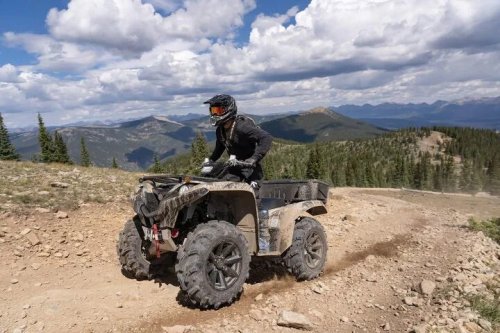
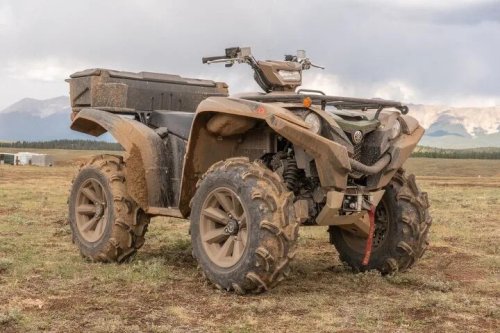
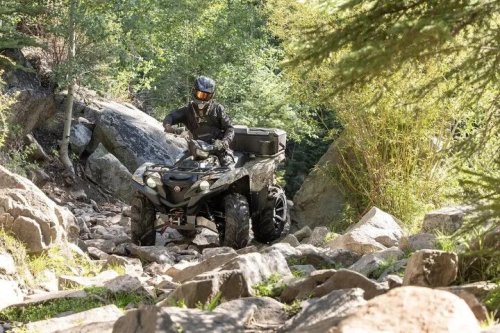
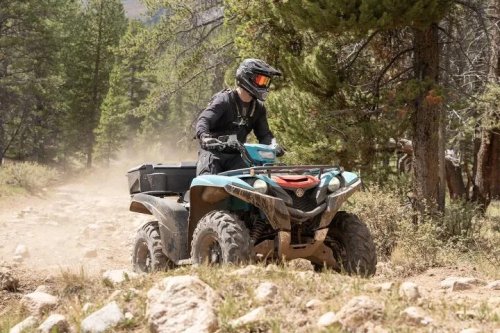
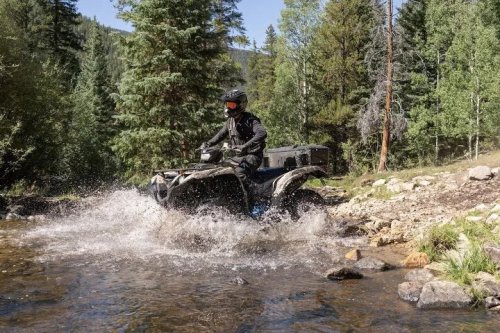
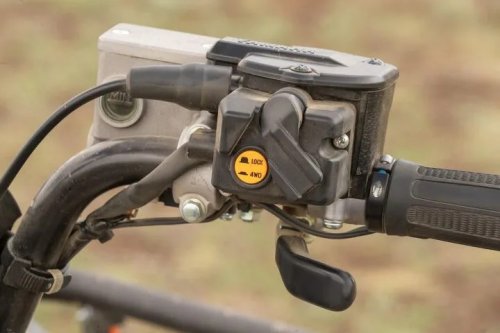
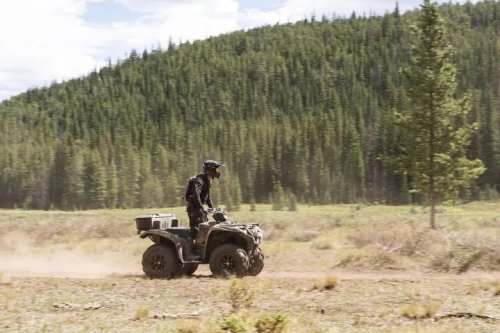
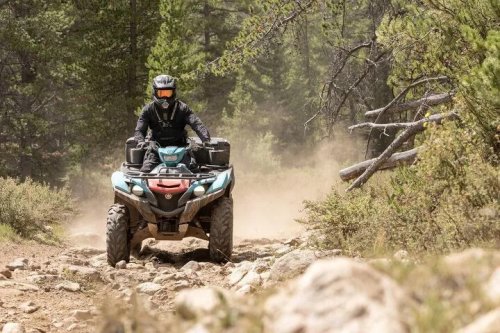
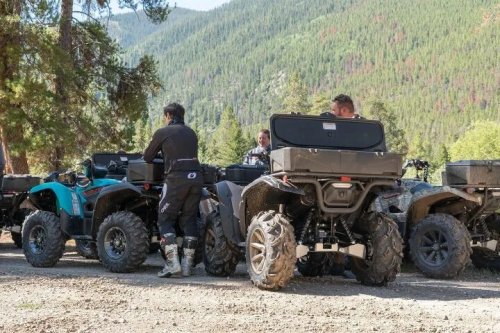
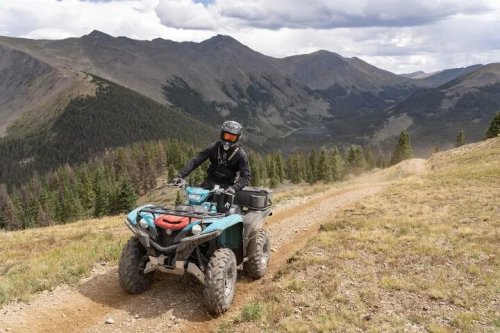
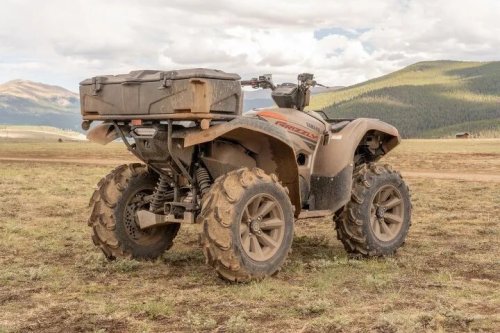


















Wherever it is you want to go, the Grizzly will get you out there. Credit: YamahaWherever it is you want to go, the Grizzly will get you out there. Credit: YamahaIt's not every day you get handed a perfectly polished review of a machine before you even throw a leg over it. Unfortunately, after hearing one of Yamaha's product managers summarize the 2027 Grizzly lineup as "high on capability, low on surprises," I knew my job was finished, because I couldn't have said it better.I'd been bested with six simple words, and in that moment it was clear to me that a more in-depth review would only complicate things for our readers. Everyone knows the Grizzly hasn't really changed in years, which means everyone already knows what to expect from Yamaha's flagship utility machine.In its XT-R trim, the Grizzly gets upgraded wheels and tires, a Warn winch, and there's even a nice two-tone factory paintjob under all that mud. Credit: Kurt SpurlockIn its XT-R trim, the Grizzly gets upgraded wheels and tires, a Warn winch, and there's even a nice two-tone factory paintjob under all that mud. Credit: Kurt SpurlockDefeated, I went back to my hotel, packed my bag, and sulked out into the night to try and thumb a ride back to the airport. As I sat there in the dark, however, I had an epiphany: if you haven't actually ridden a Grizzly before, you might think that a lack of new and/or exciting features would render the ol' 'Grizz obsolete.As anyone who's spent time with the Grizzly will readily tell you, that couldn't be further from the truth. And so, for those of you who need a reminder as to why the Grizzly still belongs at the top of your list, here's what Yamaha's big-bore ATV brings to the table for yet another year.Don't Call It A Utility RigYamaha still classifies the Grizzly as a utility rig, but most owners recognize it as a fantastic trail machine that's outstanding in the rocks. Credit: YamahaYamaha still classifies the Grizzly as a utility rig, but most owners recognize it as a fantastic trail machine that's outstanding in the rocks. Credit: YamahaYamaha may categorize their liquid-cooled 686cc Grizzly as a utility machine, but I'm here to tell you that's as gross an understatement as I've heard in years. Don't be taken in by all these images of Grizzlys hauling trophy bucks out of the woods or pulling utility trailers around the farm: this is as capable a trail rig as a fella could ask for.Will it haul 300 pounds on its cargo racks or tow a healthy 1,300 pounds at the 2-inch receiver? Yeah, sure, but it also crawls over rocks like a mountain goat, fords streams with ease, blasts loose uphills without breaking a sweat, and stays confident and composed on steep, technical descents. Hell, Yamaha's even been racing them recently.The base model may lack a few bells and whistles, but it's staggered wheel and tire setup makes for a lighter and livelier feeling rig. Credit: YamahaThe base model may lack a few bells and whistles, but it's staggered wheel and tire setup makes for a lighter and livelier feeling rig. Credit: YamahaOur test route for the 2027 Yamaha Grizzly was a roughly 60-mile loop through the off-road mecca that is Gunnison National Forest. Trails included wide-open two-lane gravel roads, boulder-strewn creek beds, and steep and narrow 50-inch goat tracks. Throw in a few water crossings and a dash of mud, and you'll start to get the picture.The Grizzly is willing and able to tackle any trail you come across, and when that happens to be a fast and flowy bit of backcountry doubletrack, you'll find yourself surprisingly comfortable throwing the big 'Grizz around like a sport rig. It's particularly impressive as a rock crawler, going up and over everything without a fuss, much less any need to actually lock the front differential.Point and Shoot SimplicityThe Grizzly goes where it pleases thanks to a torquey motor, a flawless CVT, and a well sorted on-command 4WD system. Credit: YamahaThe Grizzly goes where it pleases thanks to a torquey motor, a flawless CVT, and a well sorted on-command 4WD system. Credit: YamahaThe Grizzly may lack some of the flashy tech of its more modern competitors, but its tried-and-true approach to traction and control is as effective and reliable as ever. There are two main reasons for this.The first is the pairing of Yamaha's 686cc single-cylinder engine and the utterly proven Ultramatic CVT transmission. The design traces its roots back to 2007, but the big single's ever-present torque, combined with the CVT's smooth operation and fantastic clutching, means there's always controllable power on demand with enough punch left over for a good time.When you're in 4WD, you're getting four-wheel engine braking, making the Grizzly easy to control on descents. Credit: Kurt SpurlockWhen you're in 4WD, you're getting four-wheel engine braking, making the Grizzly easy to control on descents. Credit: Kurt SpurlockThe second major feature the Grizzly continues to bring to the table is its outstanding engine braking, made possible by the transmission's one-way sprag clutch. Where other quads offer engine braking and "downhill assist" systems as add-ons, four-wheel engine braking is a standard mechanical feature of the Grizzly, making it effortless to ride in otherwise sketchy downhill situations.I'll also note that Yamaha's choice to leave the rider in full control of the Grizzly's "On-Command" 4WD system makes a lot of sense to me. There's no ECU or slip-control system doling out traction to all four wheels on your behalf. The Grizzly simply stays in whatever setting you leave it in, whether that's 2WD, 4WD, or 4WD fully locked, and you get what you ask for, no surprises necessary.It's A Cadillac You Can Take Off JumpsRide quality is outstanding whether you're getting after it or just cruising around taking in the scenery. Credit: YamahaRide quality is outstanding whether you're getting after it or just cruising around taking in the scenery. Credit: YamahaThe Grizzly has earned itself a reputation for a plush ride over the years, and nothing's changed in that regard. Once again, "low on surprises" is a good thing when you've got your act together. Whether you're zipping down a gravel road at speed or picking your way through a rocky riverbed, the Grizzly's ride quality punches well above what you'd expect from a simple steel-tube shock setup that's only adjustable for preload.That being said, for as plush a rig as the Grizzly is, the suspension remains surprisingly capable when you pick up the pace. The trails of Gunnison National Forest are regularly broken up by steep water bars, and the Yamaha was happy to get all four wheels off the ground on every one. For a rig this size that's pitched as a utility machine, the Grizzly jumps and lands awfully well, and it takes a pretty ridiculous send to actually bottom out the shocks.The Power Steering is PhenomenalYamaha's EPS was updated in 2025, and it's an absolute godsend when you're flying over rocky ground. Credit: YamahaYamaha's EPS was updated in 2025, and it's an absolute godsend when you're flying over rocky ground. Credit: YamahaThe folks at Yamaha pride themselves on the Grizzly's power steering, and they absolutely should. The current system was introduced in 2025, making it the most meaningful update the Grizzly has seen in the last 10 years. Luckily for us, it was a good one.What's particularly special about Yamaha's EPS is that it works on both positive and negative feedback. In other words, not only does it dramatically reduce the effort required at the bars, but it also kicks back negative chatter from the trail, effectively functioning as a steering damper.The steering damper effect pays real dividends: You're nowhere near as tired or sore as you should be when you climb off at the end of the day. Credit: Kurt SpurlockThe steering damper effect pays real dividends: You're nowhere near as tired or sore as you should be when you climb off at the end of the day. Credit: Kurt SpurlockThe result is a machine that you can bounce around the rocks all day without beating up your wrists, arms, and shoulders. Ten hours on the trail will leave anyone a little sore, but I was in awe of how little soreness I felt in my upper body when I finally climbed off the Grizzly.ComplaintsYamaha's been building the Grizzly since 1998, and they've pretty much perfected the formula over the last three decades. Aside from a star-crossed rendezvous with the folks at Subaru back in 2016, the current generation of Grizzly has gone without significant updates for 10 years, and that's because it just plain works.The aggressive tread on the XT-R and Camo version's square setup is actually my single biggest complaint. Credit: Kurt SpurlockThe aggressive tread on the XT-R and Camo version's square setup is actually my single biggest complaint. Credit: Kurt SpurlockThat being said, this is Yamaha's flagship product, and there are an awful lot of us that would like to see what a twin-cylinder Grizzly could offer. It's tough to fault the dead-reliable, torque-laden 686cc single that's brought this machine so much fanfare, but the possibility of a more powerful platform with two-up touring potential and serious top-end punch certainly sounds nice.My only real issue with the current model would be the tires, specifically those found on the XT-R and Camo versions. The Maxxis 'Zillas may be great in mud or loose soil, but elsewhere they rob a bit of the Grizzly's playful handling and recreational fun. I'm a fan of a square setup, and a 27-inch tire from the factory adds serious value, but something more all-terrain focused would be preferable.Final Thoughts: The Grizzly Still DeliversThe base model delivers on all the Grizzly's core competencies, but the XT-R seems like the real value. Credit: Kurt SpurlockThe base model delivers on all the Grizzly's core competencies, but the XT-R seems like the real value. Credit: Kurt SpurlockThere's no denying the Grizzly is a bit long in the tooth. Its old-school 686cc single is down on power compared to other manufacturers' twin-cylinder flagship quads, there's no new technology to speak of, and Yamaha doesn't offer special editions with upgraded suspension or mud-specific builds.That being said, at $11,399, it's hard to see the Grizzly XT-R as anything other than a great value. Polaris and Can-Am both have comparable rigs in their lineup for less, but between the alloy wheels, 27-inch tires, factory Warn winch, and hard-earned reputation for industry-leading reliability (that 10-year belt warranty certainly doesn't hurt), the Grizzly remains a contender, especially for folks who aren't willing to roll the dice on durability in exchange for extra bells and whistles.At the end of the day, I remain convinced there's nothing you can do on a $20,000 quad that you can't do on a Grizzly. It may not do it quite as quickly or with the same panache, but the Grizzly delivers tons of fun, real working capability, and the confidence to get out and explore like nothing else in the industry, and does it with no surprises.2027 yamaha grizzly review low on surprises2027 Yamaha Grizzly XT-R Specs:Engine Type: 686cc liquid-cooled SOHC 4-strokeBore x Stroke: 102.0mm x 84.0mmCompression Ratio: 10.0:1Fuel Delivery: Yamaha Fuel Injection (YFI), 44mmTransmission: Ultramatic V-belt with all-wheel engine braking; H, L, N, R, PFinal Drive: On-Command 3-way locking differential; 2WD, 4WD, locked 4WD; shaftFuel Capacity: 4.8 galSuspension/Front: Independent double wishbone; 5-way preload adjustment, 7.6-in travelSuspension/Rear: Independent double wishbone with anti-sway bar; 5-way preload adjustment, 9.1-in travelBrakes/Front: Dual hydraulic discBrakes/Rear: Dual hydraulic discTires/Front: AT27 x 10-14 Maxxis® 'Zilla MU01Tires/Rear: AT27 x 10-14 Maxxis® 'Zilla MU01Dimensions (LxWxH): 81.5 in x 49.2 in x 50.0 inSeat Height: 36.6 inWheelbase: 49.2 inMax. Ground Clearance: 11.8 inFuel Capacity: 4.8 galWet Weight: 783 lbWarranty: 6-months