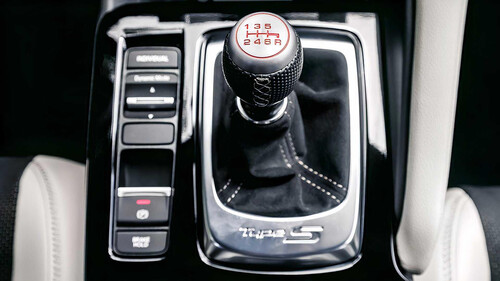
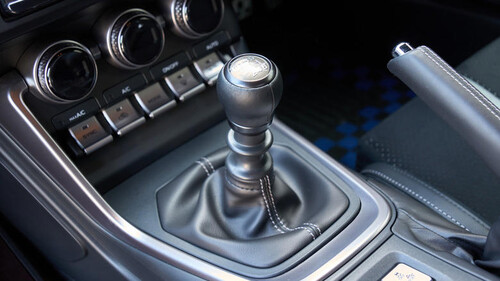
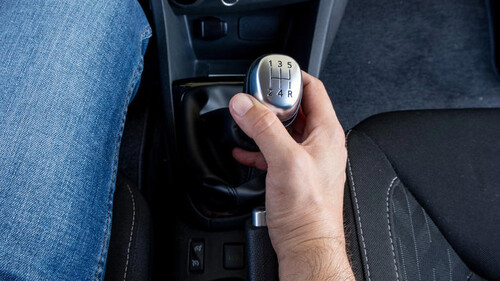
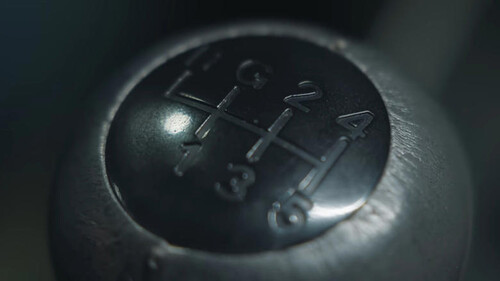
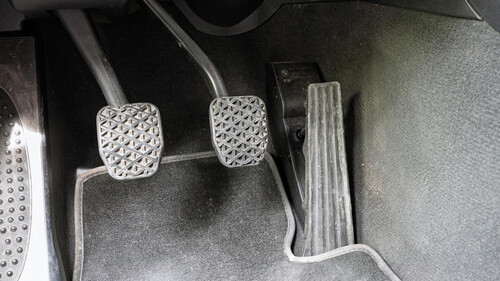
Find a large empty space to practiceThe first thing you'll need to do after purchasing your manual-transmission vehicle is find a place to practice, and ideally, an experienced and patient stick shift driver to serve as an instructor. If you live in a rural area and there is a large empty field you can use without endangering children, livestock, or property, that is the best place to start. For suburban and urban dwellers, find an obstacle-free parking lot you can use when it is empty.Schools, shopping centers, and athletic field complexes often have parking lots that are reasonably free of cars for hours at a time, offering you a chance to practice without interference. Find a large, empty, flat space and have your experienced friend drive you and the car safely to that spot until you are comfortable driving in traffic. It can also be helpful (if at times mildly embarrassing) to buy a "student driver" sticker or placard and display it on your car during the learning phase; this should encourage patience in other drivers.Learn your vehicle's shift pattern while stoppedBefore you even worry about coordinating clutch and gas pedal operation, you need to learn how to move your transmission from gear to gear. With the car parked, the engine off, and the emergency brake on, grab the shift lever firmly and move it between the various positions to get a feel for the proper motion and amount of force needed. You don't want to slam the lever into place; rather you should guide it gently and smoothly from position to position. The transition from second to third gear is tricky for many new drivers. This requires a mainly forward motion with a slight divergence to the right. On many cars, shifting from fourth to fifth gears requires a more exaggerated movement to the right, but you'll get a feel for just how your car shifts after a little practice while stopped. Once you're comfortable shifting through all the gears in both directions, it's time to learn to manage the clutch pedal.Find your clutch engagement pointWhile the engine is off, you can shift freely among gears, but when it's running, you need to use the clutch pedal to disengage the engine from the transmission. When fully depressed, the clutch separates these two components, essentially putting your car in neutral. You need to find the point at which your engine starts to move your car as you release the clutch; this is called the engagement point. Push the clutch to the floor, start your car, and put the lever into first gear. Release the clutch very slowly until you feel tension beneath your left foot — at this point, the car should begin to crawl ever so slowly forward. Later on, you'll learn how to apply the proper amount of gas for various driving conditions, but at the beginning, you can just practice moving slowly from a stop in first gear without using the accelerator. As the clutch begins to engage and you creep forward, you'll be tempted to release the clutch pedal abruptly, but this will cause the car to buck and perhaps stall out. Eventually, you will get a feel for how to smoothly engage the clutch without giving you and your driving instructor unexpected spinal adjustments. When you have learned to get the car moving in first gear, try the same in reverse. Learn your car's shift pointsWhen you are comfortable getting your car going from a stop in first gear, you should try accelerating and driving in second and third gear in your safe, open practice space. An automatic transmission shifts gears automatically as engine revolutions increase. With a stick shift, that's your job. The tachometer will have the engine's maximum revolutions clearly marked (the "redline") but you should upshift before you rev the engine this high. As you gain experience, you'll learn to shift based on engine noise and vibration and won't have to look at the dashboard. You should have a good feel for your car's engagement point by now. Start in first gear, and when the clutch is fully engaged, practice gently applying gas to accelerate. At first, upshift at 2,500 to 3,000 rpm, which should prevent stalling while leaving plenty of room below the redline.When you reach this point, press the clutch down fully and shift into second gear. You don't have to be quite as gentle in releasing the clutch as you do when moving from a stop, but the smoother the better. It's also important not to "ride" the clutch by applying too much pressure for too long, as that will wear down the clutch disc and eventually cause the clutch to slip. Once you're comfortable shifting into second, try accelerating enough to shift into third gear. On most vehicles, this will be at neighborhood cruising speed.