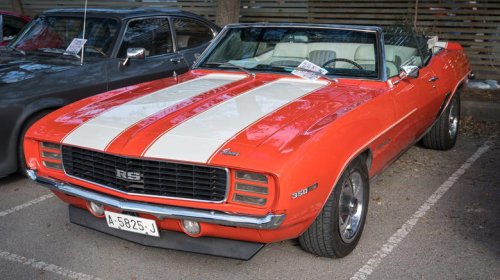
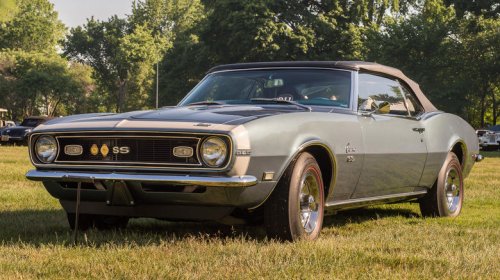
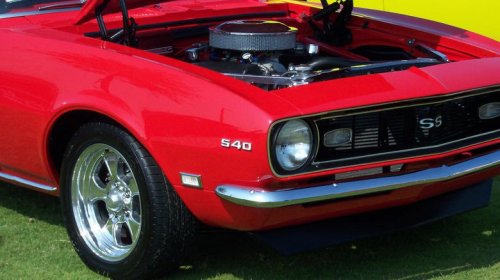
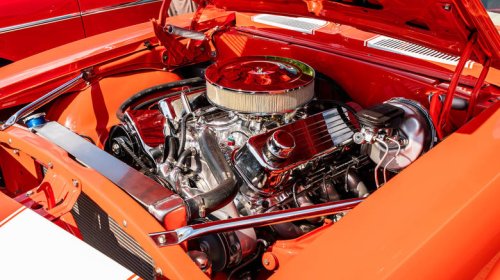
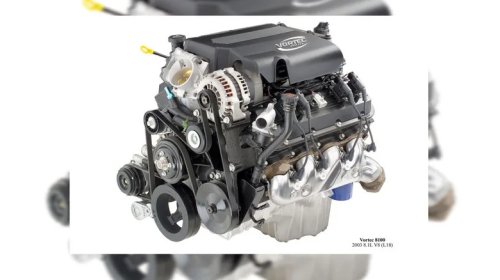
Pick your styleThe first Camaro in 1967 was Chevrolet's answer to the Ford Mustang. As such, it had clean lines and plenty to offer under the hood. But it also had plenty you could change about the exterior and interior of the car. You had options for extra chrome on the outside, or you could opt for wooden panels in the interior. You could get the Super Sport (SS) version with the big-block engine or the Z28 performance version designed originally for racing. Make sure to research what was available at the time to find the right Camaro for you.In '68, the Camaro had a newly redesigned interior with a center console, better armrests, different console gauge configurations, and more chrome accents. There were also a lot of cosmetic changes to the way your rear lights looked, the angle of the grill, and other design tweaks.The '69 Camaro had some tweaks to the body design with differently styled doors, fenders, and quarter panels that gave the car a different feel than earlier models. It also came with power steering and disc brakes, which might be worth seeking out those models if you like those options. Whichever flavor of Camaro is your favorite, it's good to know what each offers before you start seriously considering buying one of these classic cars.Kick the tiresIt's a saying as old as time: "Kick the tires." But we don't really mean to just kick the tires (we're not stopping you, though!); instead, you need to do a once-over of the entire car before you make any firm decisions. One major thing to look out for is rust. It's been a long time since this classic Camaro was originally built, and you can't fully know where it's been between then and now.As you probably already know, the elements have a way of finding their way into the dark places inside your car. Classic Camaros were built on a semi-unibody platform, so that means checking specifically where the subframe mounts to the unibody. If there's rust there, it could mean a lot of work but don't worry too much about materials. Plenty of companies still build sheet metal parts for these old cars because they are popular classics, and plenty of them are out there.Check for (too many) modificationsOn a popular classic car like the Camaro, some owners tend to go a little crazy with the modifications. One thing you'll want to check is to see if the firewall has been cut and/or modified to fit a bigger engine. Camaros were used a lot as drag racers, and if a previous owner modified the firewall to house a larger engine, it means the body probably doesn't have the proper modifications to support all that extra weight, which could possibly damage the frame of the car.In other words, if the car has a boatload of modifications, you'll probably want to turn away. As we mentioned, rust is always a problem, but you'll also want to search for fiberglass "spot fixes" or too many tangles of wires for mods. The more it's been "decked out" by previous owners, the more that things can go wrong. It might be fun for a while, but working on the car (for you or a mechanic) will become a much more complex headache than it's worth.What's it packing?The different models of Classic Camaros from the late '60s era of cars come with slightly different body types and extras, but it's important to note what kind of engine is in your prospective Camaro now. The classics had options for inline six-cylinder engines, 327-cubic-inch small-block V8s, a 302 small-block (made for the Camaro Z28), and even a 396 big-block V8. You also had the option for a manual or automatic transmission.It's important to make sure you know what you have under the hood because it could mean the difference between a good-looking commuter car and a gas-guzzling powerhouse. There are good reasons for both, and nobody is judging you, but if you were hoping to show off with a burnout and really feel the power of the bigger engines, you're going to want to lean in that direction. If it doesn't matter, Chevy's inline six-cylinder engines were tried and true, so they shouldn't give you too much trouble as long as they were maintained correctly and you continue to maintain them.