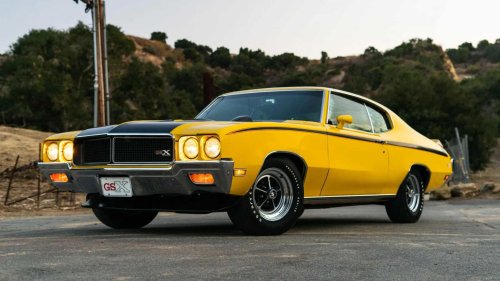
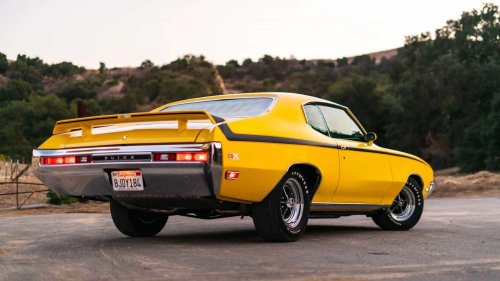
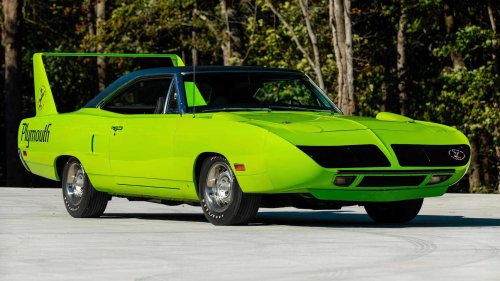
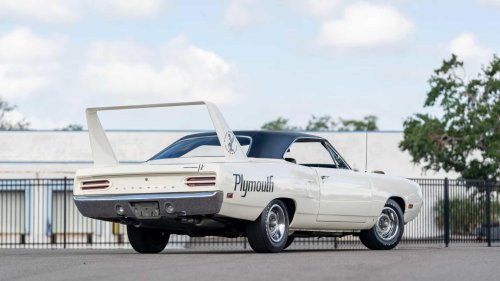
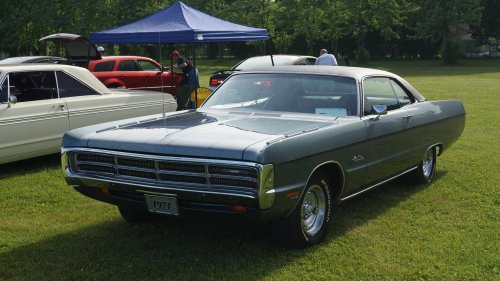
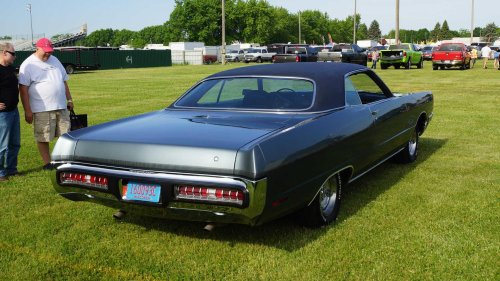
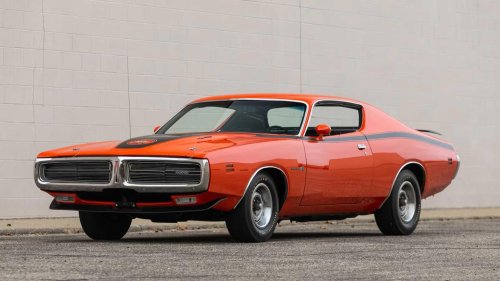
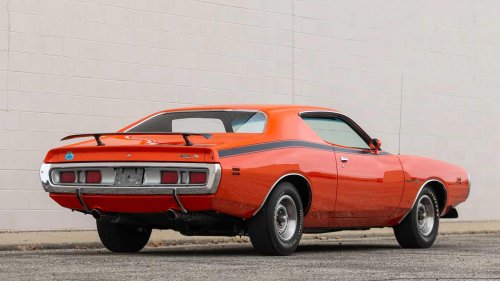
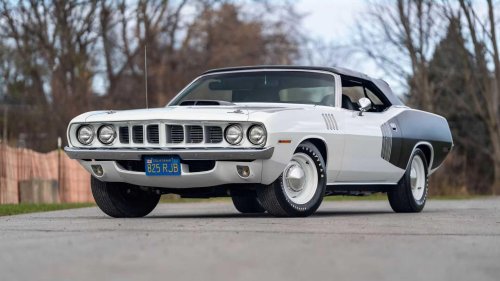
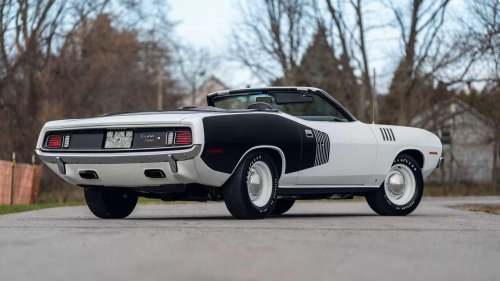
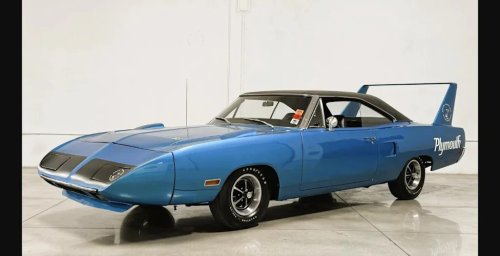
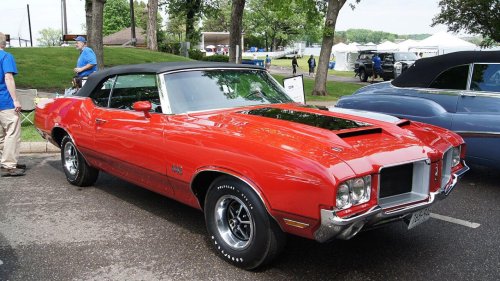
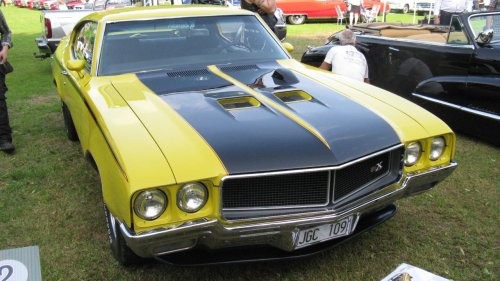
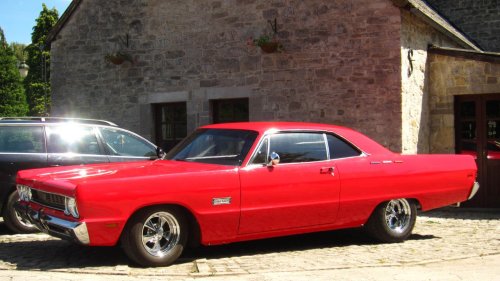
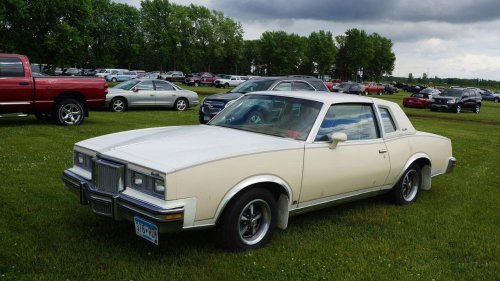
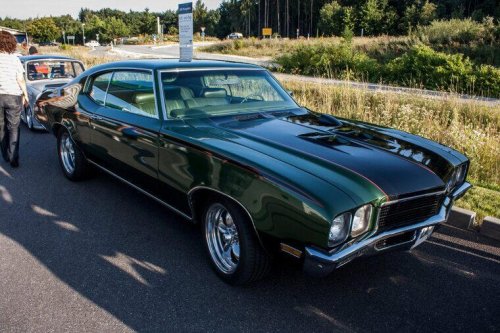
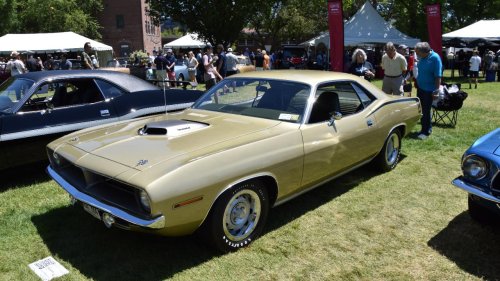
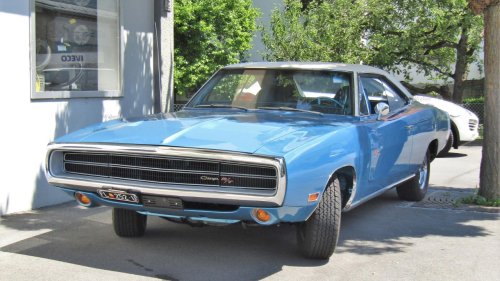
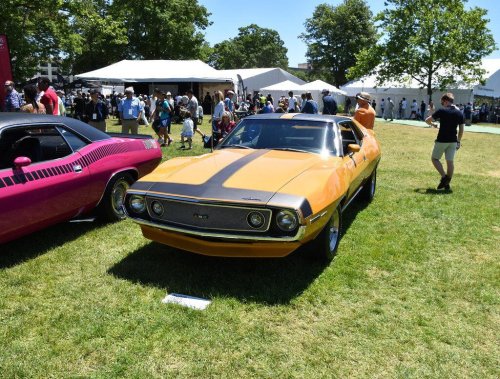
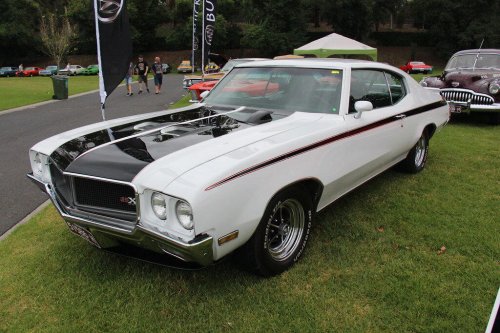
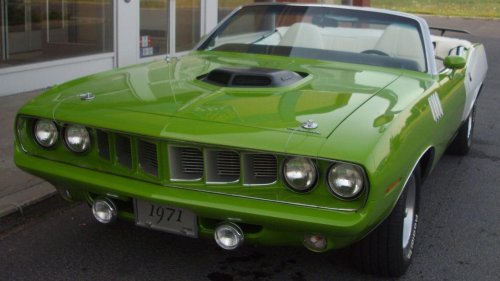
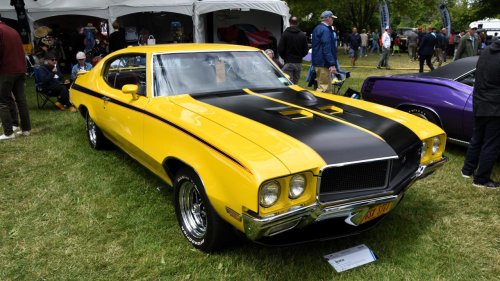
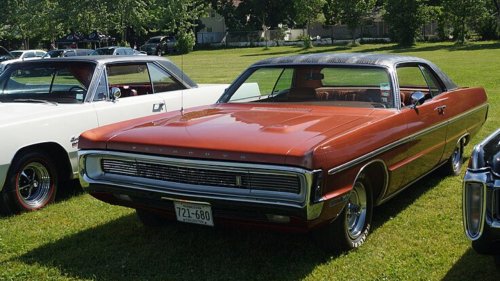
Everyone knows that the great muscle car era ended in the '70s after government regulations, high insurance premiums, and a looming fuel crisis put a stop to them. The American automotive scene went from big engines and big cars to smaller engines and smaller cars as the years went by. But before the big companies finally gave in to these external issues, they all decided to bow out with some of the most powerful and special cars the engineers could create with high-performance parts already available in their arsenal.Many of these muscle cars were made for a single model year in limited numbers. Each car on this list was way too fast, too loud, and in many cases, very expensive to buy. Today, these cars are now being appreciated for their engineering excellence and have become "holy grails" in the collector world. Finding one of these original cars is a huge task, and even if you do, the current owner may not be willing to sell.The models on this list have been extensively researched with all information verified to the best of our ability. Models are ranked from the least rare to the rarest car. 1970 Buick GSX Stage 1 Record Sale: $236,500 (400 Cars Made) Bring a TrailerJust like every manufacturer trying to build the very best muscle car they could at the time, Buick wanted to take part, and the platform was already available with the Buick Gran Sport (GS). The GSX was the high-performance version of the Gran Sport 455 that had just been released for that year. It was only available in two colors, which were Saturn Yellow or Apollo White, with bold stripes. This car came standard with the 455 cubic-inch (7.5-liter) engine, making 350 horsepower and 510 pound-feet of torque, but the stage 1 package is what most collectors want.Bring a TrailerThe GSX stage 1 used the massive 455-cubic-inch V8 but had 10 more horsepower at 360 horsepower, while maintaining that massive 510 pound-feet of torque. The torque figure is very important because this car had the highest of any American car until 2003, when the Dodge Viper made more at 525 pound-feet. The Buick GSX Stage 1 was also very fast, hitting 60 mph in 5.5 seconds and running the quarter mile at 13.4 seconds. This was Buick's answer to the Pontiac GTO Judge, Oldsmobile's 4-4-2, and Chevelle SS. Now, Buick didn't have big racing programs like some manufacturers, but they performed exceptionally well on the streets.Buick made a total of 678 GSX cars, with around 400 customers opting for the stage 1 pack and about 120 cars having the 4-speed manual transmission. Despite having more stage 1s than the regular GSX, collectors want the most powerful car, and a genuine car is now worth six figures. Clean and original cars now sell between $130,000 and $200,000, with a record sale of $236,500 in January 2025 at Barrett-Jackson. 1970 Plymouth Hemi Superbird Record Sale: $1,650,000 (135 Cars Made) MecumWhen we talk about big wing cars, the Plymouth Superbird is one of the most recognizable cars in history, but the wing wasn't just for show. Plymouth built the Superbird for one purpose: to lure Richard Petty back from Ford and win NASCAR races. The Superbird is essentially a highly modified racecar version of the Plymouth Road Runner. But to satisfy NASCAR’s homologation rules, a road version of this car had to be built, which was around 2,000 cars. Since demand was high, Plymouth was able to meet the requirement, with some sources claiming they produced 1,935 cars and others stating there were over 2,700. But only 135 of those were equipped with the most powerful Hemi V8.Mecum NASCAR is a race of top speed, so having a big engine alone didn't matter; aerodynamics was also important. So the Hemi Superbird was an aerodynamic masterpiece (for 1970), featuring a protruding nose cone and a huge rear wing. The cone was meant to cut through the air quickly, and the wing was meant for high-speed down force and stability. Pair that with the 426 (7.0-liter) Hemi V8 producing 425 horsepower and 490 pound-feet of torque, the Superbird was a force on the track.Richard Petty had originally left for Ford because Plymouth had no car that could compete, but he came back and won numerous races with the Superbird before the aero cars were banned in 1971 and the restrictions on engine displacement in 1971. Regular buyers wanted a taste of what the Hemi had to offer, but only 135 were lucky enough to buy one, which makes them really rare and expensive. In today's market, any Superbird is worth a lot of money. Recent sales have shown the 440-equipped cars selling for as high as $300,000-$500,000 at auctions. The Hemi Superbird starts at $400,000, and one hit a record sale of $1.65 millionin July 2022, but good luck finding one for sale. This car is an important piece of American racing history, and values will hold steady for a very long time. 1971 Plymouth Fury GT (440 Six-Barrel) Record Sale: N/A (66 Cars) Wikimedia Commons / Greg Gjerdingen The Plymouth Fury was one of those cars that was never intended for performance. It was a mass-produced car that catered to everyone and was available in various forms as a four-door sedan, two-door coupe/convertible, and station wagon. But in 1970, Plymouth decided to add a GT package to the Fury lineup. The 1971 version with the 440 Six-Barrel engine is a true ghost and almost impossible to find.Wikimedia Commons / Greg GjerdingenThe "Six-Barrel" (or Six-Pack in Dodge lingo) used three two-barrel Holley carburetors to feed a 440 cubic-inch (7.2-liter)V8, producing 390 horsepower and 490 pound-feet of torque. This was a massive car, but with that much torque, it was a great highway cruiser. But the Fury GT was never meant to be a fast muscle car, so it was heavy, and the huge engine made it more expensive to insure, leading to bad sales. By the end of 1971, the GT package was scrapped entirely, with only 66 cars sold.The Plymouth Fury GT didn't have any racing wins to make people want it, but its rarity is playing a big part in its collectibility. Because these cars are so rare, they don't come up for auction, and when they do, collectors are willing to pay a premium. Regular cars sell between $20,000-$30,000, so the Fury GTs could easily double that figure and fetch between $60,000-$100,000, but that is if you can even find one at all. Probably the hardest car to find despite being the most affordable. 1971 Dodge Charger Hemi Super Bee Record Sale: $245,000 (22 Cars) MecumAnother Hemi-powered Mopar makes the list with the Dodge Super Bee. The original Super Bee was based on the Dodge Coronet. But for the 1971 model, which was the final year of the Original Super Bee, it was moved to the Charger platform. One of the reasons for this was the design, as Dodge was adopting the "Coke bottle" styling, which was taking over at the time. You could get a few engines, but the one everyone wanted was the 426 Hemi, However it was quite expensive.Mecum Adding the Hemi alone was an almost $900 option, which was huge money if you considered the car cost $3,200, and almost no one could justify paying that premium. Only 22 Hemi Super Bees were produced in 1971, making it one of the rarest Mopars in existence. But for those who could buy one, they had a rare car that had a big V8 with 425 horsepower and 490 pound-feet of torque. These numbers were good for 0-60 in 5.7 seconds and the quarter mile in 13.7 seconds at 104 mph. This was crazy for a streetcar of that size with the technology available. It didn't disappoint on the street or at the drag strip.With many Mopars reaching collector status, this is definitely one of those cars collectors are searching for, and almost impossible to find. Most of them are currently locked away in Private Collections for life. If any Hemi Super Bee happens to come up for auction, expect to pay over $200,000. The highest recorded sale for one is $245,000, but the demand keeps going up, which could affect future prices. 1971 Plymouth Hemi ’Cuda Convertible Record Sale: $3,500,000 (11 Cars) Mecum If there is a "Mona Lisa" equivalent of the muscle car world, this is it. The third-gen Plymouth Barracuda began in 1970 but received a facelift in 1971 with its iconic four-headlights, cheese grater grille, and fender gills. This was the only year the Cuda would get this headlight configuration, but its Dodge Challenger counterpart had them for its five-year run. This was also the final year of the beloved Hemi. Now, when you make a convertible version of your most powerful car, you get one of the rarest automobiles in the world.Via Mecum AuctionsHigh-performance convertible muscle cars weren't the norm, so about 374 Cuda convertibles were built, but only 11 had the more expensive 426 Hemi engine. This was considered the ultimate expression of Mopars. Even with the best technology we have today, you hardly see high-performance muscle cars as convertibles.The 1971 Hemi Cuda was a 13-second car that you could drive with the roof down and beat others in a street race. But the safety and rarity of these cars meant they were never used on the track, instead the hardtop versions proved their worth, especially at Trans-Am races. Cars like these are the pioneers of the multi-million dollar muscle car market. These cars easily sell for $2 million and in January 2026, a 1971 Hemi 'Cuda Convertible sold for $3.3 million, although a blue 4-speed version famously sold for $3.5 million at Mecum in 2014. You may have the cash to buy each car on this list, but finding one is a different ball game.Sources: Mopar, Dodge, Buick, Hagerty, Classic.com.