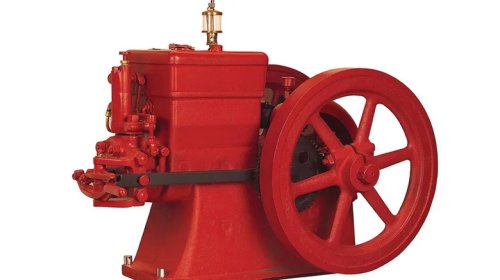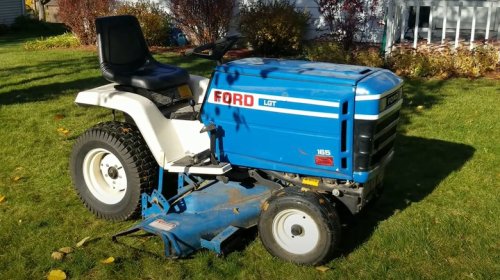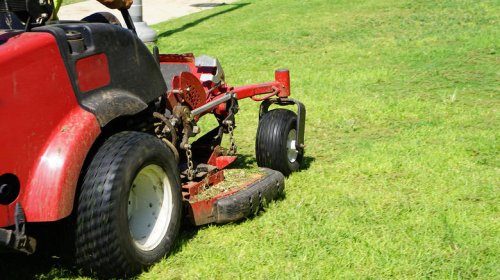
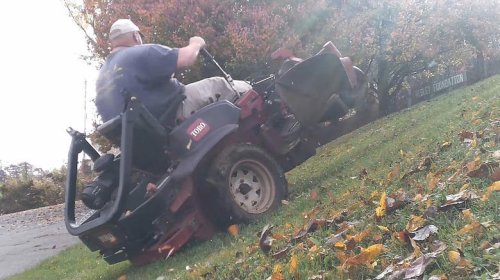
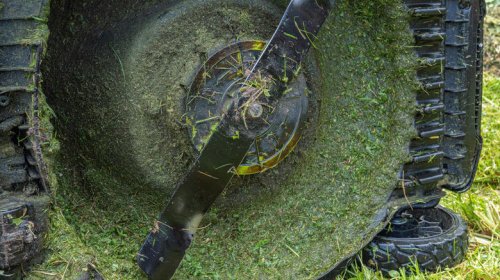
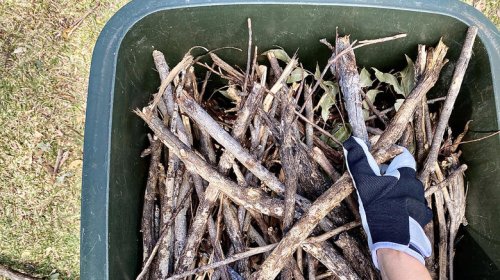
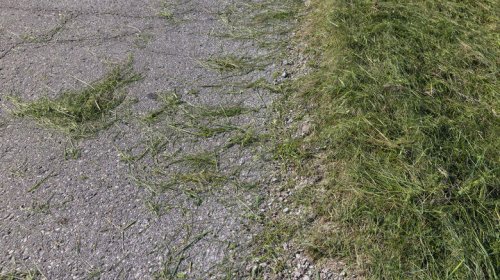






















A person using a zero-turn mower to cut grassNearly two centuries have passed since a mechanical grass cutting device was first patented, and here's what the first lawn mower looked like. The lawn care market in the U.S. hit 57.77 billion in 2024 with estimates showing a sizable increase into the next decade. Meaning, the familiar hum of small engines across American suburbs every weekend will continue to rise.Some hazards include using the wrong type of mower for your property, being careless around the spinning blades, failing to collect loose items from your lawn prior to mowing, and blowing clippings onto the road. While some of these blunders seem obvious, there may be some you haven't considered. It's important to get the correct mower for your property's terrainA zero-turn mowers front wheels lifting up while navigating a slopeIf you're not familiar with landscaping equipment such as the difference between a zero turn vs. riding mower, you might conclude one option is just as good as the next. Unfortunately, the wrong type of machine could put you in danger, depending on the topography of your yard.For instance, a zero-turn mower doesn't perform as well on slopes. The maximum uphill angle you should navigate on a zero turn is 10 - 15 degrees. Anything greater and the front wheels can pop up, you can begin losing traction and sliding, or even tip over. Residential zero-turns can easily weigh well over 600 pounds, making a rollover accident potentially deadly.If your lawn is hilly, you'd be much better off opting for a lawn tractor. These units can be more stable on inclines as the engine sits directly over the front wheels and the deck is mounted in the middle under the seat. A lawn tractor can typically handle slopes up to 20 degrees, making it a much safer choice for some. Although, you should always maintain a mowing path that takes you straight up and down a slope. Both zero-turns and lawn tractors alike can tip if navigating a hill at an angle. Lawn mower blades spin at high RPM and can cause devastating injuriesThe underside of a lawn mower showing the bladeBlades are the most obvious hazard posed by a lawn mower. These hunks of metal rotate up to 3,600 RPM underneath the deck and can certainly lead to serious injury if an operator or bystander get too close. Putting things into perspective, according to the American Academy of Orthopaedic Surgeons, the force imparted from a spinning mower blade can be compared to a .357 Magnum pistol firing a round into your hand, to say nothing about its ability to sever fingers or toes.Often this happens due to careless actions. There are modern safety features which automatically turn off the machine when lifting off the operator seat of a zero-turn mower or lawn tractor. Push-behind mowers usually have a similar kill switch when you let go of the handle. That's being said, these kill switches aren't foolproof. It's vital to always turn off the blades before getting anywhere near the ground around the cutting deck of your mower. Walk through your yard looking for obstacles prior to mowingA container of yard debris in the form of fallen branches and sticksOne of the ways to mitigate risk while mowing, is to briefly walk around your property looking for anything that might interfere with the mower's job. This can include toys, fallen branches, rocks or any other debris that might get in the way. This serves multiple safety-related purposes.First, things like rocks can damage your mower blades, creating chips, bends and curls. While a dull blade isn't good for your grass, the consequences go deeper. Following contact, a blade can become weaker structurally, leading to parts of it potentially flying off at the time of impact or after. Metal shards becoming projectiles are clearly a hazard to both the operator and those in the immediate area. Even if a piece lands harmlessly on the ground, you're still dealing with metal pieces strewn about your yard. Also, a bent or broken blade can easily be off balance which increases stress throughout the machine. Be careful not to discharge grass clippings onto your streetGrass clippings left in the roadIt might seem harmless, but if you're not bagging your grass, you should never coat your neighborhood road in clippings. Loose pieces of grass create a traction nightmare for two-wheeled vehicles like motorcycles or bicycles, especially on a corner. It's even more dire if the clipping's become wet, as it can be equivalent to an ice patch. It's not only a perilous situation for motor bikes, but it's also illegal in some areas of the country. For example, in the state of Virginia it's considered a Class 1 misdemeanor.Fortunately, there are some easy solutions to this issue, even if your lawn grows directly adjacent to the road. You can equip your mower with a bag to collect the clippings or install a mulch kit. Often, a mulch setup blocks the side chute, keeping the clippings under the deck to be cut multiple times and reduced in size. Regular deck cleaning is essential, otherwise wet build-up can cause a frustrating situation for your lawn mower.Even without a bag or mulch kit, you can mow in a pattern that points the chute away from the road. This distributes the clippings back onto your lawn instead, making it safer for everyone. Want the latest in tech and auto trends? Subscribe to our free newsletter for the latest headlines, expert guides, and how-to tips, one email at a time. You can also add us as a preferred search source on Google.