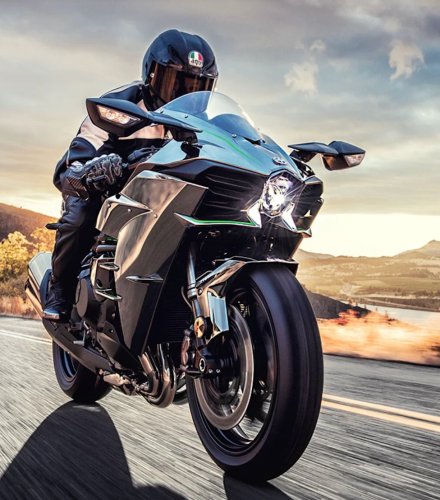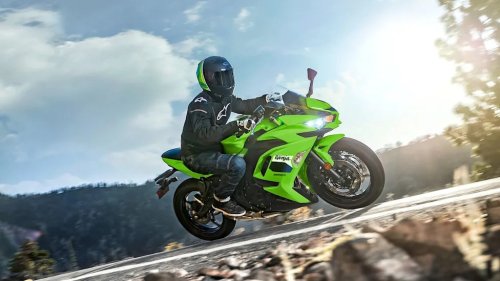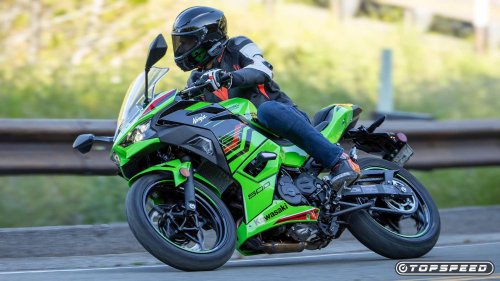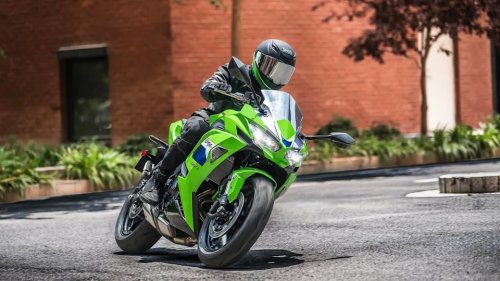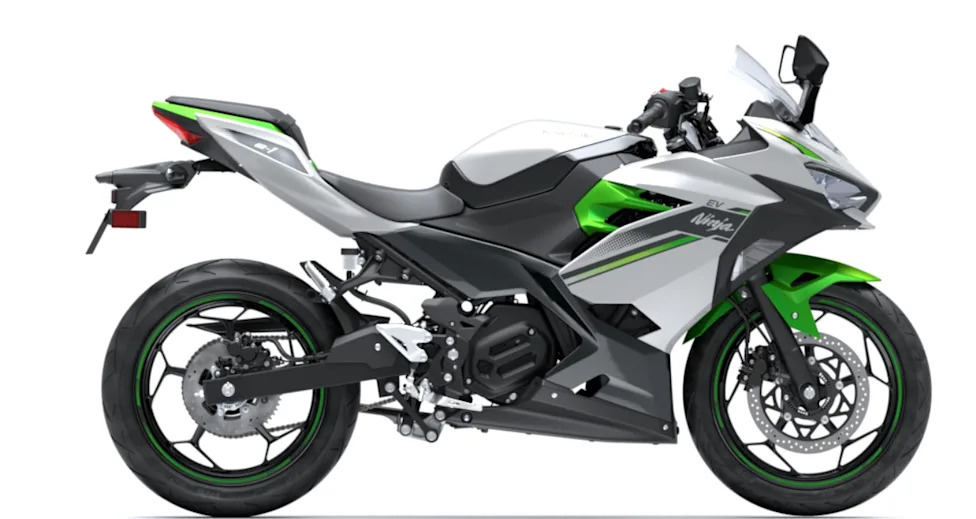



















2027 Kawasaki Ninja e-1 ABS: Price, Real Specs and True Ownership CostsKawasaki has put its electric Ninja back on the order sheet for 2027, and if you want one, the clock is already running. The company's announcement out of Foothill Ranch lists the Ninja e-1 ABS at $7,599 in Metallic Bright Silver/Metallic Matte Lime Green, with dealers taking reservations through October 23. That's not a typo or a soft launch — it's the same build-to-order approach Kawasaki used the first time around, which tells you plenty about how many of these Team Green expects to move.The price is worth pausing on. Kawasaki's own consumer page for the outgoing bike still shows $7,899. The 2027 comes in $300 under that. In a model year where nearly every Ninja has crept upward, a price cut on the slowest one in the family is a curious signal.Why it's only as fast as it isHere's the part that gets skipped in most coverage: the e-1 isn't slow because Kawasaki ran out of engineering. It's slow because of a European licensing rule. Kawasaki's launch documentation states the bike was built to comply with the A1 license class, which caps output at 11 kW and covers machines equivalent to 125cc. The motor is rated at 5.0 kW continuous and peaks at 9.0 kW, comfortably under that ceiling. Every performance number on the spec sheet flows downstream from that decision.Related ArticlesAn Ohio Seller Wants $5,000 for 14 Geo Metros, Rust and Rare Convertibles IncludedMan Charged in Greg Biffle Burglary Allegedly Picked Targets by Reading the NewsAdvertisementAdvertisementThe U.S. release quotes 52 mph in ROAD mode and 37 mph in ECO, with the e-boost button adding a 15-second window that lifts those to roughly 65 and 45. Kawasaki's global release lists 88 km/h — about 55 mph — for Road mode, so there's a small regional spread depending on how you measure it. Either way, this is a machine engineered around a regulatory box that doesn't exist in the United States. American buyers get the restriction without the license benefit that justifies it, because here the e-1 is simply a motorcycle: full endorsement, full registration, full insurance.The battery math nobody runsTwo removable lithium-ion packs, 50.4 volts nominal and 30 amp-hours each per Kawasaki's published specifications. Multiply it out and each pack holds about 1.5 kWh, for roughly 3.0 kWh total. That's less energy than a decent e-bike battery times four, and it explains the claimed 72 km (about 45 miles) on the WMTC Class 1 cycle.Now the charging. A full pack takes 3.7 hours, meaning the onboard charger is pulling roughly 400 watts. That's not a limitation Kawasaki failed to overcome — it's deliberate. At that draw, the charger lives happily on any 120V household circuit alongside a lamp and a laptop, which is the entire point for an apartment dweller carrying packs inside. A partial 20-to-80 percent top-up runs about 1.6 hours per pack. Do both sequentially and you're at 7.4 hours for a full refill, so plan on overnight.Working backward, roughly 3 kWh for a claimed 41 miles works out to about 74 watt-hours per mile. Assume 15 cents per kilowatt-hour and a full charge costs about 45 cents. That's the strongest number on the bike.AdvertisementAdvertisementThe parallel wiring deserves a nod too. Most dual-pack designs wire in series to raise voltage. Kawasaki went parallel, which keeps system voltage at 50.4V and lets the bike keep running on one pack — defaulted to ECO mode — if the other is pulled, isolated, or drains first. It's a redundancy feature dressed up as a packaging choice.What ownership actually looks likeMechanically, there's less to neglect. No oil, no filters, no valve clearances, no coolant. What remains is the stuff riders forget on gas bikes anyway: chain tension and lube, brake fluid, tire pressure, and pads. The 290mm front disc with a dual-piston caliper and 220mm rear are conventional hardware, and the Nissin ABS unit is a known quantity.Related ArticlesUber's $10 Billion Self-Driving Gamble Hits a Wall: Europe's 250-Car-Per-Country LimitThe Camaro Restoration Disaster That Proves an Empty Gas Tank Is More Dangerous Than a Full OneThe number that should shape your buying decision is the replacement pack. Kawasaki part 26105-0009 is currently listed by a dealer at $3,023.38 — for one of the two. Replace both out of warranty and you've spent about 80 percent of a new bike. On a machine with a 3 kWh pack and heavy cycling from short commutes, that's not a hypothetical down the road; it's the resale-value question sitting under every used e-1 listing five years from now. Buy accordingly, and buy new if you can.AdvertisementAdvertisementOne more wrinkle: the federal incentive that would have softened this is gone. The IRS credit for two-wheeled plug-ins was 10 percent of cost up to $2,500, and it expired for vehicles acquired after December 31, 2021. Galling detail: the e-1 would have qualified. The rules required a battery of at least 2.5 kWh and a top speed of at least 45 mph. At roughly 3.0 kWh and 65 mph on boost, it clears both bars. Had the credit survived, this bike would carry about $760 off the sticker.Where this fitsKawasaki's stated plan was more than ten electrified motorcycles by 2025. The e-1 was the opening act, and three years on it's returning essentially unchanged — same 140 kg curb weight, same 785mm seat, same 1,370mm wheelbase, same high-tensile trellis frame borrowed from the 400cc-class chassis with the motor slung low. The chassis is honest sportbike hardware: 41mm fork, Bottom-Link Uni-Trak shock with adjustable preload, full-size 17-inch wheels on 100/80 and 130/70 rubber. That's the good news. A carryover model year is also what a manufacturer does when volume doesn't justify a redesign.If you commute under 20 miles round-trip, can charge at both ends, and want something that behaves like a real motorcycle instead of a scooter, the e-1 does a specific job well — and the 4.3-inch TFT, WALK mode with reverse, and a 5-liter locking storage box in place of the fuel tank are genuinely useful on that job. If your ride involves any highway, this is the wrong bike, and no amount of e-boost fixes that. Just know what you're signing up for before October 23, because after that, you're waiting on 2028.Images Via: Kawasaki