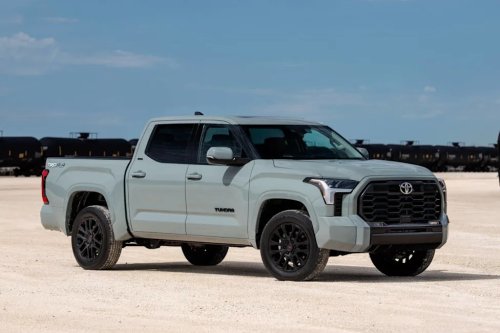
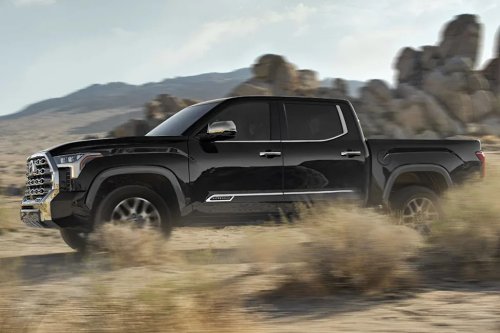
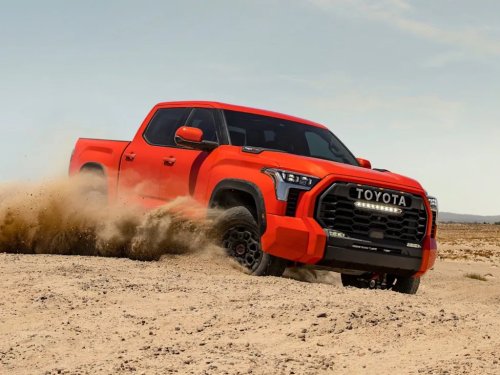
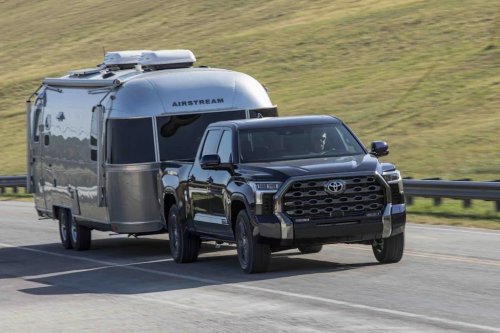
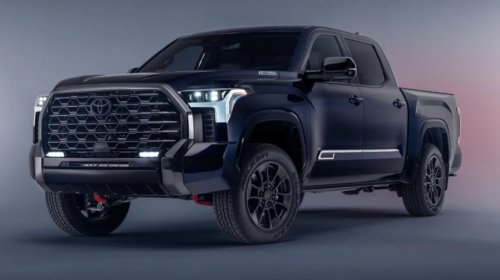
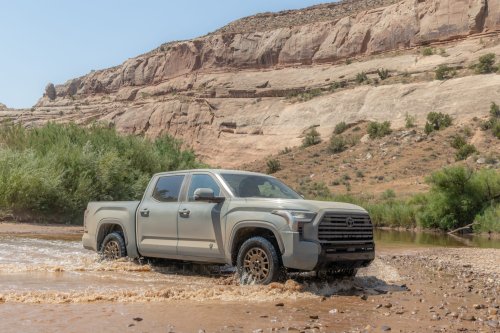
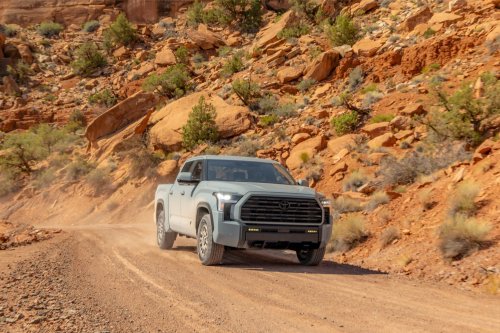
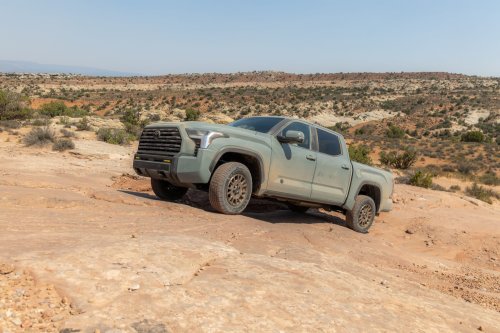
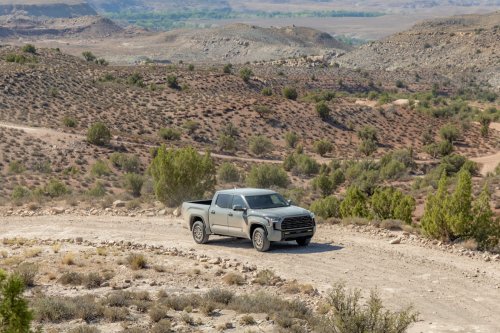
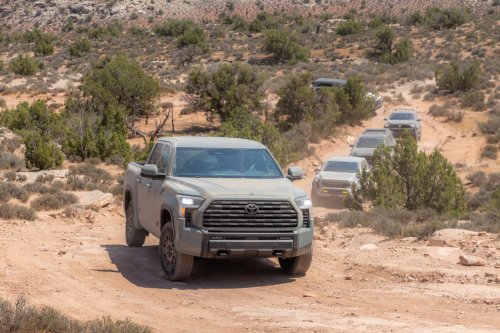
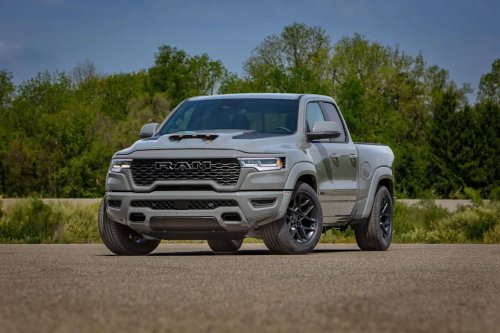
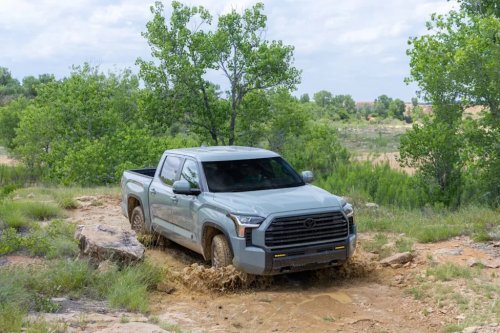
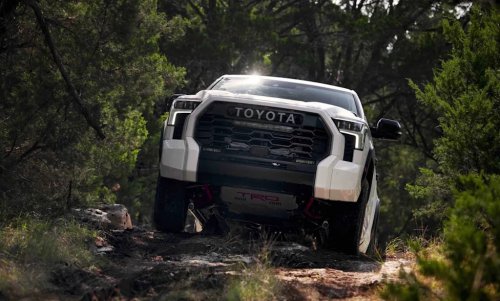
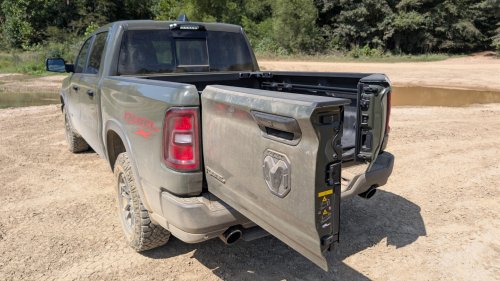
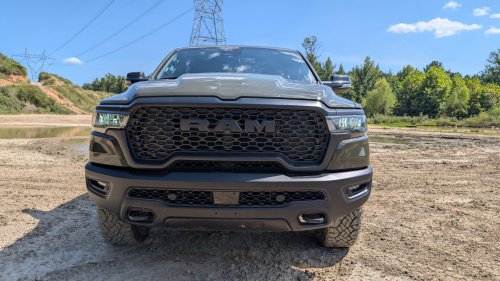
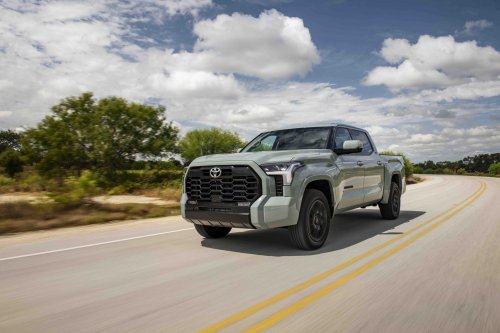
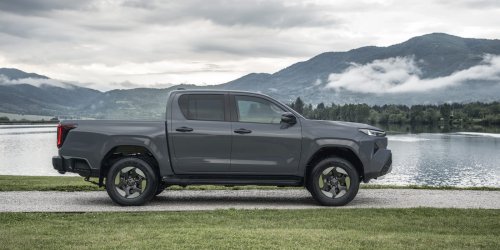
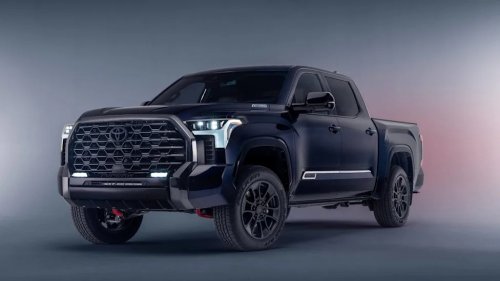
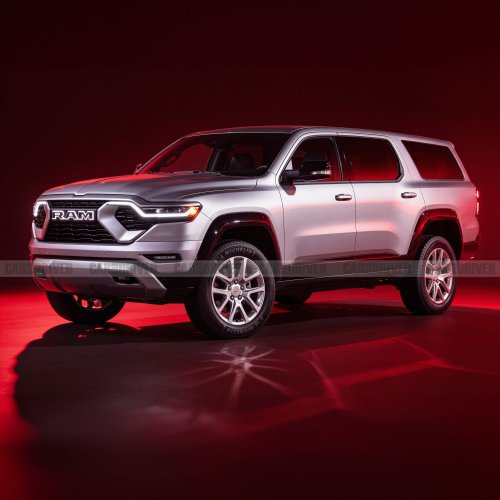
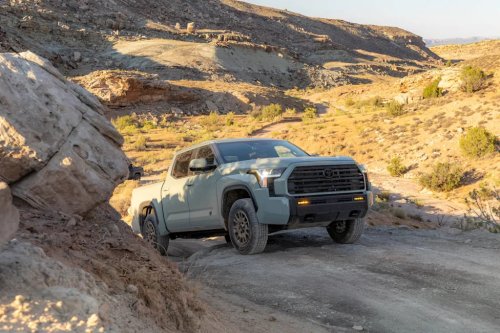
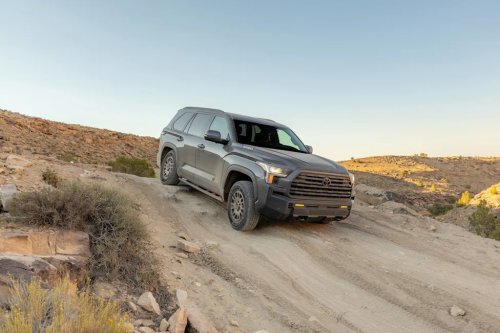
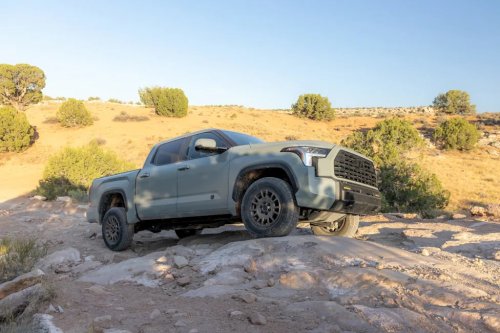
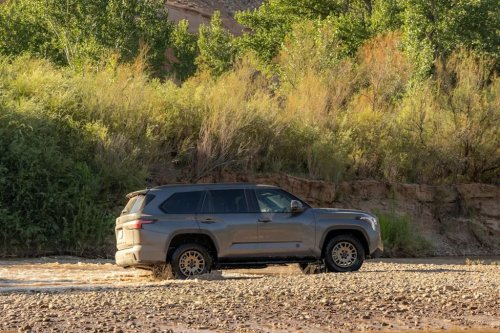
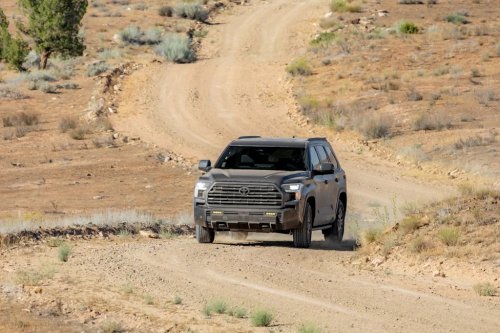
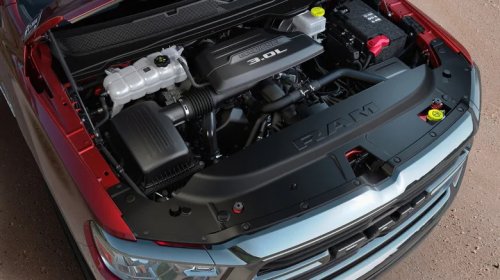
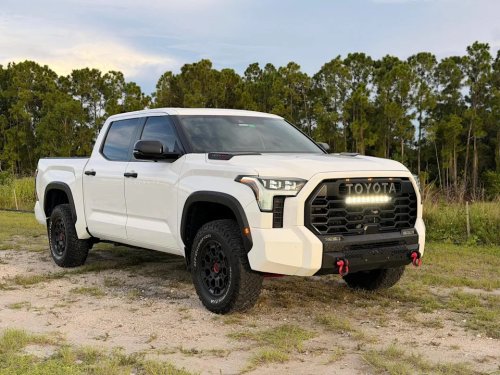
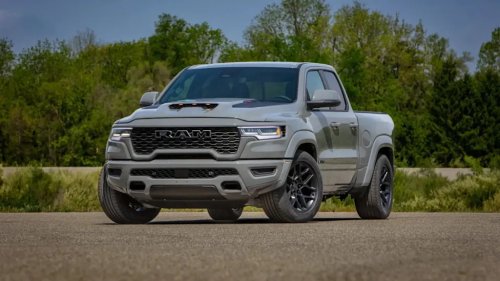
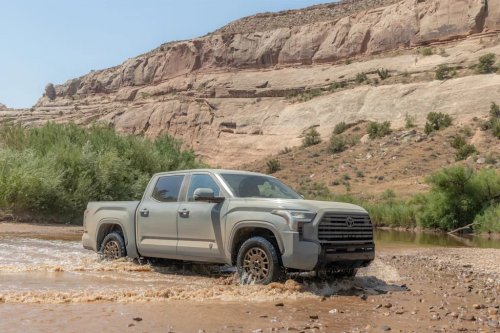
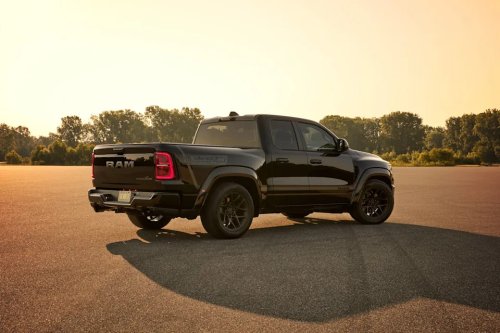
Autoblog and Yahoo may earn commission from links in this article.Comparison: 2026 Ram 1500 vs Toyota TundraFor those who'd like a full-size pickup but want to forgo the Ford F-150 and Chevrolet Silverado, there are two other choices. Those models would be the Ram 1500 and the Toyota Tundra. While neither sells in the same volume as the other two (especially the Toyota), both are hugely capable haulers that can put in the work.Not going for the two top sellers doesn't mean you're getting compromised choices, either, as the Tundra and Ram have specs that impress. The question now is, which one has the better stats?ToyotaView the 2 images of this gallery on the original articleTowing and Payload: Give and Take Between the TwoWe'll say straight up that it's practically a draw between the two. It's not because the two have identical figures; rather, one has a towing advantage, while the other has a payload advantage. For towing, the nod goes to the Tundra as it maxes out at 12,000 lbs, whereas the Ram calls it a day at 11,610 lbs. It's a relatively marginal difference, but it could also make all the difference.AdvertisementAdvertisementAs for payload capacity, it's the Ram that takes the win with 2,360 lbs versus the Toyota's 1,940 lbs. It's interesting to note that both have about a 400-lb difference in towing and payload, so the choice here depends on one's priorities.View the 2 images of this gallery on the original articleBed Size: Length isn't EverythingOn paper, the Tundra should easily take the win over the 1500 thanks to longer bed options. While the Ram has a longer bed than the Tundra (5'7" vs 5'6"), the Toyota counters with an available 6'6" or whopping 8'1" bed. The longest bed available in the 1500 is a 6'4" box.But the story doesn't end there, as width is just as important. That's where the Ram claws back points by being wider from wall to wall and between the wheel wells. It's 66.4 inches and 58.7 inches in favor of the Ram, and between the wheel wells, it's 55.0 inches and 48.7 inches, again giving the 1500 the advantage. The Ram's bed is also ever so slightly taller at 21.4 inches versus 20.9 inches in the Toyota.AdvertisementAdvertisementObviously, the Ram has nothing on the Tundra's optional eight-footer, but loading and sliding in wider items will be easier in the American pickup. For that, the 1500 takes it.ToyotaView the 2 images of this gallery on the original articlePulling Power: One Clear WinnerNot counting the base V6, the Ram is the easy winner here. The Hemi V8 already produces more power than the twin-turbo V6 in the Toyota, at 395 hp versus 389 hp. That said, the Tundra Hybrid counters that by producing 437 hp and 583 lb-ft of torque, surpassing the standard-output Hurricane straight six with its 420 hp and 469 lb-ft.But if you're willing to stretch the budget and go for a model with the high-output Hurricane, it leaves the i-Force Max hybrid far behind. We're talking 540 hp and 521 lb-ft, and while it's still less torque than the electrified Toyota, sub-five-second 0-60 mph runs are possible.View the 2 images of this gallery on the original articleReliability: Neither are Champs, but One Fares Far WorseIn the Ram vs Tundra reliability stakes, one would think it would be a walkover for the latter, given that it wears a Toyota badge. However, in Consumer Reports' most recent roundup of reliability results, it's not the case at all. If anything, the Tundra has been undoing Toyota's stellar reputation for dependability with a score of 41/100. That's no thanks to persistent problems with the 3.4-liter twin-turbo V6 caused by manufacturing debris entering the engine. That said, the hybrids appear to be less affected by the issue, but that doesn't guarantee they're immune to it.AdvertisementAdvertisementBut if the Tundra's engine failures are down to the luck (or bad luck) of the draw, Consumer Reports' score for the Ram 1500 makes it look like Russian roulette with five in the cylinder. And speaking of five, that's exactly the score the organization gave the pickup out of 100. Parasitic battery drains, electrical glitches, issues in both inline-six and V8 engines, and a litany of recalls resulted in that shocking score.In this case, the Tundra wins by a huge margin, but only because the Ram scored so poorly.ToyotaView the 2 images of this gallery on the original articlePrice, Trims, and Configurations: Toyota Wins on ValueThe Ram 1500 is available in 10 trims, four engine choices, two body styles, and two bed lengths, while the Toyota has 10 trims, three engine choices, two body styles, and three bed options. For the Tundra, the range consists of SR, SR5, Limited, Platinum, 1794 Edition, Limited i-Force Max, Platinum i-Force Max, 1794 Edition i-Force Max, TRD Pro, and Capstone. Moving to the 1500, it's Tradesman, Express, Warlock, Big Horn, Laramie, Rebel, RHO, Limited, Longhorn, and the Tungsten.AdvertisementAdvertisementIn terms of price, the 1500 starts at $42,025 and goes up to $89,095, while Tundra base prices range from $41,260 to $80,800. It's worth pointing out that the Tundra has more standard kit from the start than the Ram, further enhancing its value proposition. Factor in Toyota's rock-solid residuals, and the Tundra comes out cheaper to run from start to end of ownership. Having a hybrid option is a plus for those looking to cut fuel bills but still want a full-size pickup.ToyotaView the 2 images of this gallery on the original articleFinal ThoughtsBoth are neck and neck when it comes to pickup tasks such as towing, hauling, and loading. The Ram takes a couple of decisive wins, but so does the Toyota. That said, neither has stellar reliability records, which is a shock for a Toyota, but the Ram's dismal score will surely scare some potential buyers away.With that, we recommend considering the Tundra over the Ram, but just to be on the safer side, go for the hybrid as it has fewer reported issues. Do note that it tows and hauls less than the gas-only model, but it can still do a fair bit of work.This story was originally published by Autoblog on Jul 12, 2026, where it first appeared in the Features section. Add Autoblog as a Preferred Source by clicking here.