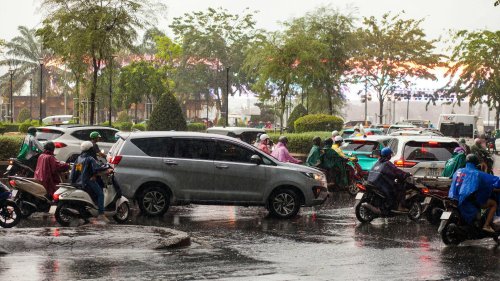
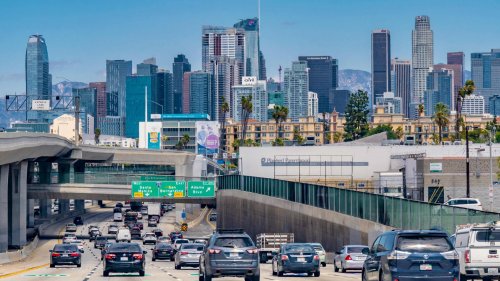
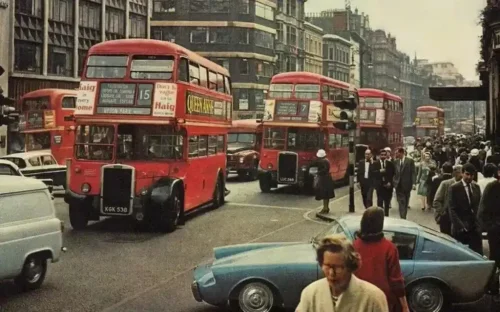
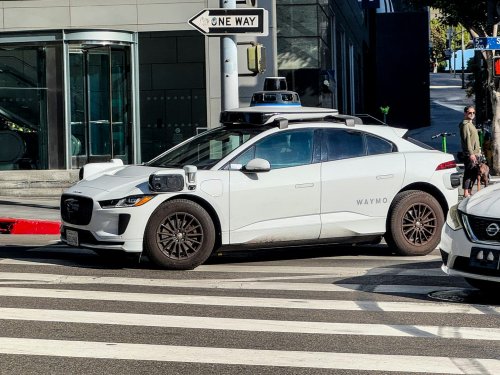
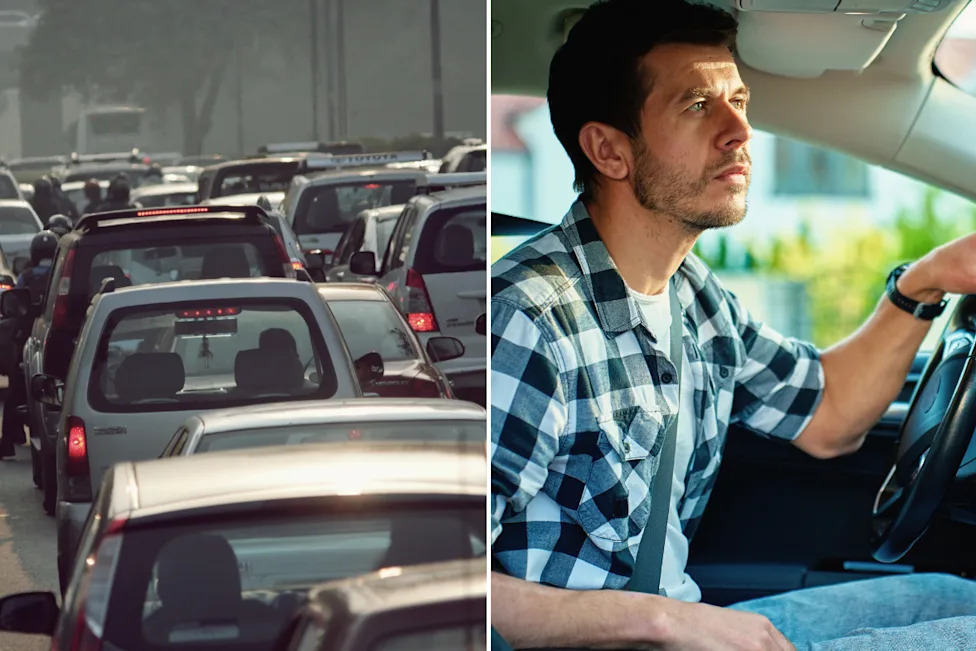
Traffic congestion, left, and a man behind the wheel.There's perhaps no more frustrating human experience than sitting in traffic on a busy road. It's one thing when there's been an accident or construction has diverted the flow of vehicles. But sometimes, for no perceptible reason, we're all just…sitting there.When traffic backups occur without any obvious cause, they're sometimes called "phantom" traffic jams. Believe it or not, scientists and engineers have been studying the phenomenon for years in an effort to design better infrastructure.A 2008 study finally revealed the cause of phantom traffic jamsYuki Sugiyama, a physicist at Nagoya University, and his colleagues wanted to understand why traffic slows or comes to a stop even when there's no bottleneck.AdvertisementAdvertisementSo they decided to create the perfect driving conditions—ones in which a traffic jam couldn't possibly form. They had 22 cars drive in a loop on a closed track. The participants were instructed to maintain a constant speed of 30 km/h, and the track provided plenty of room for each driver to keep a safe following distance from the car ahead.There were no lanes to change, no signage, no construction, no obstacles, and no reason for anyone to slow below the "speed limit."Within about a minute, there was a traffic jam.The cause of phantom traffic jams revealedThe research team found that it only takes one: one driver who's going just a little too slow, or who gets nervous about their following distance and gives the brakes the tiniest tap.AdvertisementAdvertisementWhat happened in the experiment when one driver did this? It sent a literal "shockwave" through the ring of cars. The car immediately behind the slower driver was forced to slow down even more. The car behind it braked even harder. And so on down the line until the cars at the very back either came to a complete stop or nearly did."Even a tiny fluctuation grows larger and then the homogeneousmovement cannot be maintained. Finally, a jam cluster appears and propagates backward like a solitary wave with the same speed as that of a jam cluster on a highway," the researchers wrote.The findings were published in the paper "Traffic jams without bottlenecks—experimental evidence for the physical mechanism of the formation of a jam."They were also explained beautifully by Tom Cruise's character, Ethan Hunt, in Mission: Impossible III.Human nature is the traffic jamIf we're the problem—not road design, construction, or the way cars are built—then what's the solution?AdvertisementAdvertisementTraffic is a major contributor to people's unhappiness. People with regular commutes—especially long ones—who sit in traffic day after day can experience frustration, anger, and mental health challenges that linger long after they've gotten out of the car.One promising solution to phantom traffic jams comes from the world of AI. A traffic experiment similar to the 2008 study took place in Arizona. Researchers had about 20 cars drive in a circle, much like in the original experiment. Once again, human-caused traffic shockwaves rippled through the line of cars after even the slightest fluctuations in speed.However, in the 2016 Arizona study, the researchers added a novel twist: they introduced a single smart, self-driving car into the mix. Immune to human error, the automated car helped smooth out the traffic shockwaves for the other 19 drivers.The findings suggest that introducing more self-driving cars onto our roads could smooth traffic for everyone—and save fuel to boot. Just one out of 20 could make a huge difference.AdvertisementAdvertisementIn the meantime, there's one more solution: we can give each other a break out there. The people stopping and starting around us on jammed highways aren't being intentionally difficult. They're just being human.If carefully selected drivers on a perfect, closed track can't defeat traffic jams, what hope do the rest of us have? Traffic will always be frustrating and inconvenient, but by better understanding the human behavior behind it, maybe we'll find a little more patience out there on the roads.The post 18 years ago, scientists solved the mystery of 'phantom' traffic jams with an odd experiment appeared first on Upworthy.



















 +38 others