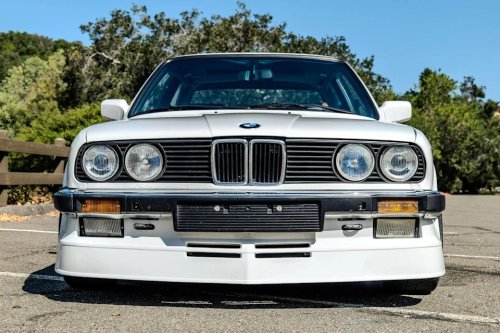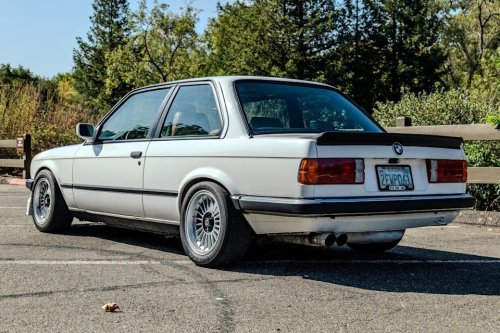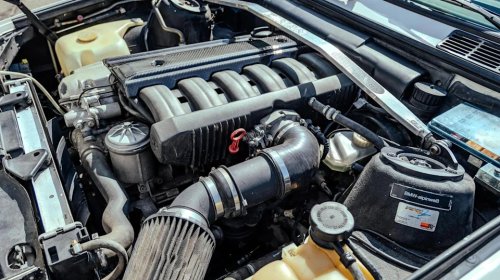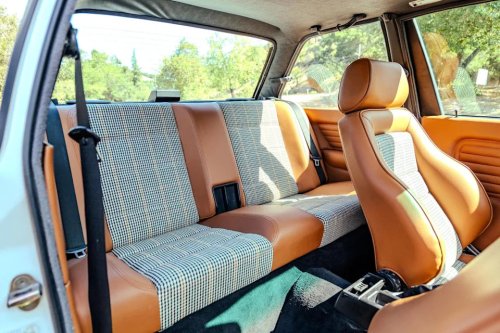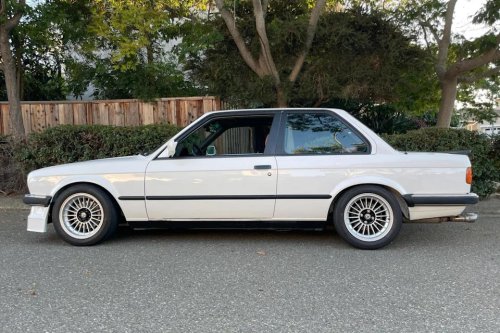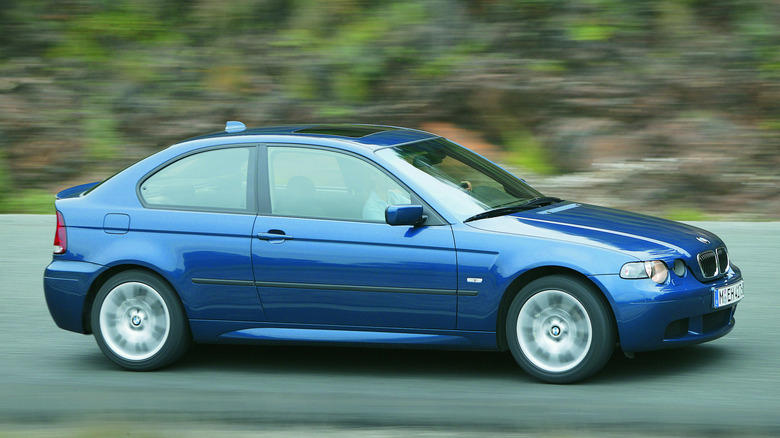
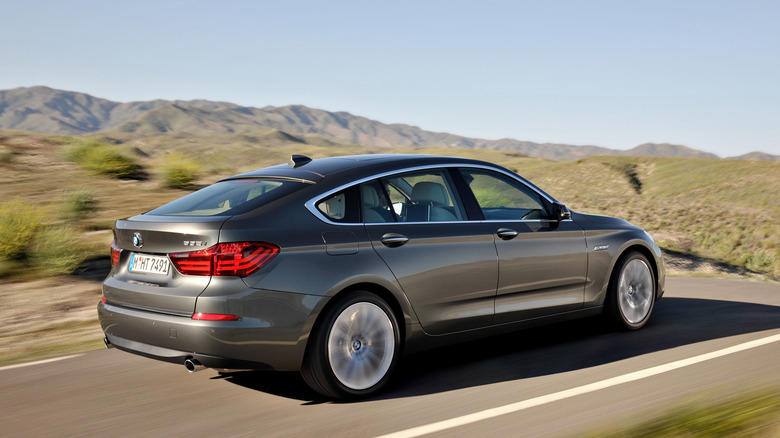



















BMW 3 Series Compact (1994 to 2005)Entering the 1990s, BMW had a well-established portfolio of luxury sedans and a halo car in the form of the 8 Series. However, the Bavarian automaker lacked a competitor in the increasingly popular compact segment in Europe. A smaller Golf competitor that would lure younger buyers into its showrooms. BMW launched the 3 Series Compact in 1994. Unlike its competitors in the segment, though, BMW wasn't going to develop an all-new front-wheel-drive platform. Instead, the company shrank the E36 3 Series platform to create a smaller rear-wheel-drive coupe. It also equipped the base versions with four-cylinder engines and even turbodiesels.However, the 3 Series Compact could also be equipped with the brand's new M52 2.5-liter inline-six engine, which made 168 horsepower. Paired with a five-speed manual, it propelled the small BMW to 62 mph in 7.8 seconds, an excellent figure for the era. The second-gen model saw a power bump to 189 horsepower, cutting the acceleration figure to 7.1 seconds.Looking at these figures, you'd probably wonder how the 3 Series Compact ended up being a flop. Heck, young enthusiasts today would kill for a RWD sports coupe with an inline-six engine. BMW's smallest model at the time didn't sell all that bad but simply couldn't compete with the Audi A3 and VW Golf. While its competitors were five-door hatchbacks, the 3 Series Compact was a more compromised two-door coupe. For the next generation small vehicle, BMW also went the hatchback route with the brand-new 1 Series.BMW 5 Series Gran Turismo (2009 to 2017)The 5 Series GT was a car that tried to be the jack of all trades but ended up being the master of none. Just look at it; It had ungainly proportions with a weird bubble-like roof that makes it look almost cartoonish. I has the oh-so-popular coupe-like rear end, but it simply doesn't connect well to the rest of the vehicle. BMW imagined it as a high-roof grand tourer, but those two obviously don't mash together.The idea was, of course, to offer a combination of style and practicality. Based on the regular 5 Series, the Gran Turismo had some nifty features, like a sliding rear bench with more legroom than the sedan. Still, due to the sloping roof, it also had limited headroom. Also, the trunk aperture was bigger than on the sedan, but the space wasn't as practical as a wagon would've been. And make no mistake, a 5 Series Touring wagon existed at the time, though not in the U.S. Lastly, the 5 Series GT was a huge car at 16.4-feet long. As such, it never felt sporty.What killed this car is the fact that it lacked higher ground clearance. Although polarizing, the first-gen E71 X6 crossover-coupe was already a hit for BMW, leaving no space for the 5 Series Gran Turismo in the lineup.