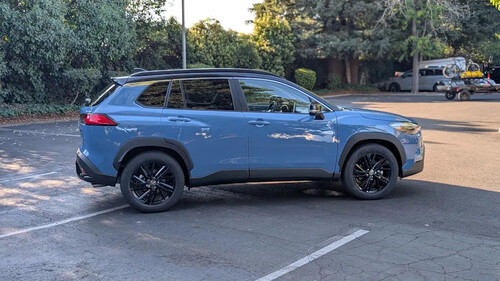
Image Credit: FOX Carolina News / YouTube.A South Carolina driver thought she was doing everything right when she bought a new Subaru Forester Hybrid. A stop at a truck stop on the way home changed all of that.There is a particular kind of frustration that comes from doing everything by the book and still getting burned. You buy a new car to avoid repair headaches. You stop for gas at what looks like a perfectly normal station. You drive away and, within hours, you are stranded on the side of an interstate in the middle of the night, staring at a $1,273 repair bill for a car you barely even finished signing the paperwork on. That is exactly what happened to a Conway, South Carolina driver who recently came forward to FOX Carolina Investigates with a story that should make any motorist pay closer attention at the pump.The driver, who asked that her face not be shown on camera, says she fueled up at the T-A truck stop in Conway, South Carolina. Not long after pulling back onto the road, her brand-new Subaru Forester Hybrid shut itself down. She was stranded for roughly six hours before a tow truck arrived and hauled the vehicle to a dealership, where mechanics found the cause: the fuel she had pumped was more water than gas. The dealership had to flush the fuel lines and purge the system at a cost exceeding $1,200.AdvertisementAdvertisementThe South Carolina Department of Agriculture, which oversees fuel quality inspections in the state, confirmed that a gas sample pulled from the T-A station in Conway failed inspection. The station was placed under a stop-sell order, meaning it could not sell fuel again until the problem was corrected and retested. State records obtained by FOX Carolina show 132 cases of water or sediment contamination found at gas stations across South Carolina since January of the previous year, out of 3,537 tests conducted.The driver was ultimately reimbursed for the damage to her vehicle, and the station has since been cleared to sell fuel again.Why Water in the Fuel Tank Is Such a Serious ProblemGasoline and water do not mix, at least not in any way your engine can tolerate. Water is denser than fuel, so it settles at the bottom of the tank, which is also where the fuel pump draws from. That means the pump is one of the first components to take a hit.Fuel pumps rely on gasoline for both cooling and lubrication. When water enters the mix, that protective layer disappears, friction increases, and the pump can fail from overheating alone. From there, water can reach the fuel injectors and combustion chamber, where it disrupts ignition, causes misfires, and in serious cases, shuts the engine down entirely.Hybrids May Actually Have an Advantage HereThe driver in this case noted that she considers herself fortunate to have been in a hybrid. Her Subaru's hybrid system detected the problem and shut the car down before more extensive damage could occur. She pointed out that older or fully combustion-powered vehicles may not have that failsafe, meaning they could keep running on contaminated fuel long enough to do significantly more damage to injectors, fuel lines, and other components before the driver realizes anything is wrong.AdvertisementAdvertisementModern engine management systems on many newer vehicles will trigger a check engine light or cut power when something is clearly off, but older platforms may just sputter along until things get considerably worse.What State Inspectors Are Actually Doing About ItSouth Carolina's Department of Agriculture conducts random weekly inspections of fuel pumps statewide and also responds to customer complaints. Communications Director Eva Moore told FOX Carolina that any contamination finding triggers an immediate stop-sell order, and the station cannot resume fuel sales until inspectors return, resample, and clear the pump.That process has real teeth, at least in theory.The 132 contamination findings over roughly a year and a half do not necessarily mean 132 drivers ended up with bad fuel, since many cases are caught during routine testing before customers are affected, but the scale of the problem underscores why the program exists.How to Protect Yourself at the PumpThe best practical defense is choosing high-traffic stations with strong reputations for maintenance, since busier locations tend to cycle fuel faster and keep underground storage tanks in better condition. If your car begins hesitating, misfiring, or stumbling shortly after a fill-up, that is worth taking seriously rather than writing off as a minor issue.AdvertisementAdvertisementDrivers who suspect contaminated fuel should avoid continuing to run the vehicle, as the pump and injectors are at greatest risk the longer the engine runs on a bad batch. Anyone who believes they received contaminated fuel in South Carolina can file a complaint directly with the Department of Agriculture, which will dispatch an inspector for testing.The driver in this story came forward specifically to warn other motorists, and given that she paid over $1,200 to fix a car she had barely driven off the lot, it is hard to argue she did not earn the right to say something about it.If you want more stories like this, follow Guessing Headlights on Yahoo so you don't miss what's coming next.