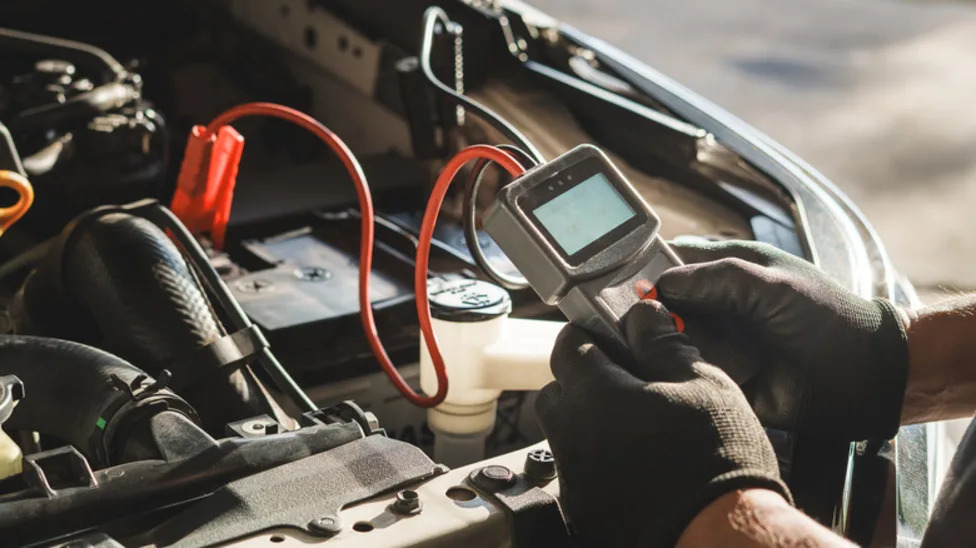
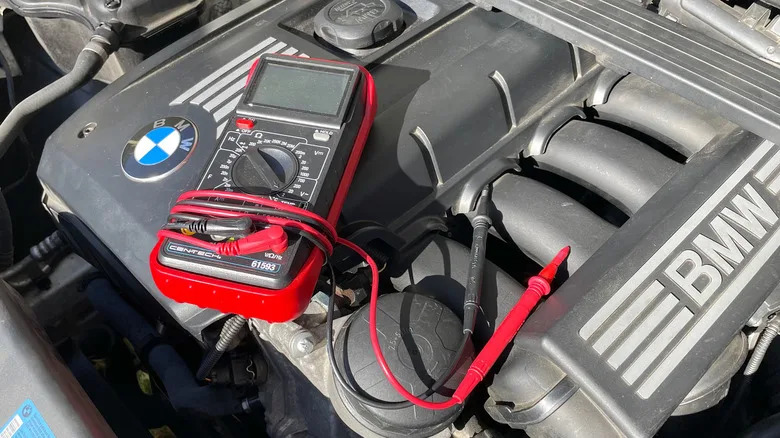



















An automotive technician tests a car's battery for its health - Sirapob/Getty ImagesElectricity is a crucial part of how a car functions, whether it runs on internal combustion or, simply, electricity itself. When it's the former, electricity is what ignites the air/fuel mixture inside the engine's combustion chamber, and has a hand in basically every other system.Because of electricity's wily ways, it must be routed properly, otherwise automotive systems won't function properly. If a wire is frayed, it could mean that a sensor isn't relaying crucial information to the engine control unit (ECU). Or it could mean fuel isn't being pumped, a spark plug isn't firing, lights aren't turning on — the list is endless.Then, if the car isn't properly grounded, it could adversely affect so much under the hood. One of the main ways this is done is with a dedicated ground strap (or, straps, depending on its design) of a thick gauge — common, thinner wiring isn't enough. Let's discuss why your engine has a ground strap and why it's important.AdvertisementAdvertisementRead more: Never Jump Start A Modern Car Without Checking For These Things FirstStrap inA multimeter sitting on top of a BMW engine, ready to diagnose an electrical issue. - Peter Nelson/JalopnikElectricity will always take the path of least resistance, so it must reliably return to the battery's negative terminal via the chassis. Simply put: the ground strap acts as a way to ground electricity from the engine back to the negative battery terminal. But if there's a problem with the grounding, it could cause all kinds of issues.Giving electricity a clear, direct path ensures good vehicle health. It stabilizes voltage, prevents electrical interference — which is often heard through the car's stereo system when there's weak grounding — and ensures peak efficiency. Poor grounding could also cause the headlights to flicker, make sensors report inaccurate readings, kill your battery's lifespan, and more. And, of course, it could shock you if you touch the engine while it's running. Components that are often grounded — and can therefore be killed off if they aren't grounded properly — include the radiator fan, AC compressor, stereo, alternator, ignition system, and a myriad of sensors.When firing up the engine, grounding is crucial to the whole process. Poor grounding is hard on the starter motor, and, if there's no grounding, it'll cause a no-start situation. Some people may misdiagnose a rough or no-start as a dying starter or dead battery, but checking voltage at the battery can quickly narrow this down. After that, determining where the ground strap is and ensuring it's connected properly (and not worn out) is a good next course of action.AdvertisementAdvertisementIn this author's experience, replacing the old, worn-out ground straps on a trusty BMW 128i brought back fast start-ups as well as noticeably improved engine performance and fuel economy. In fact, that's the key to it all: Healthy grounding means healthy and efficient vehicle operation.Want more like this? Join the Jalopnik newsletter to get the latest auto news sent straight to your inbox, and add us as a preferred search source on Google.Read the original article on Jalopnik.