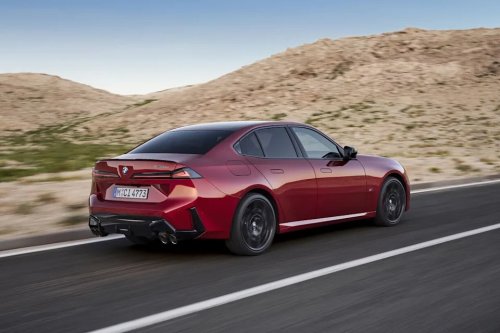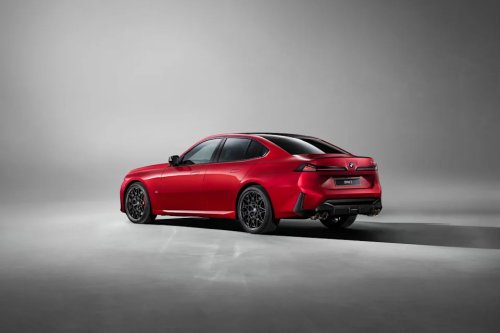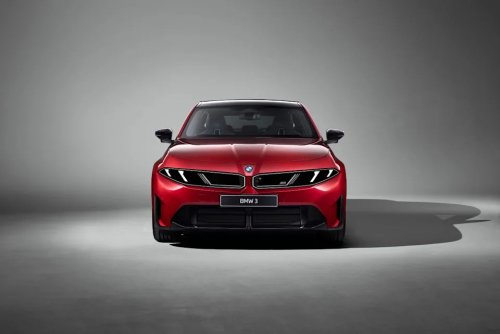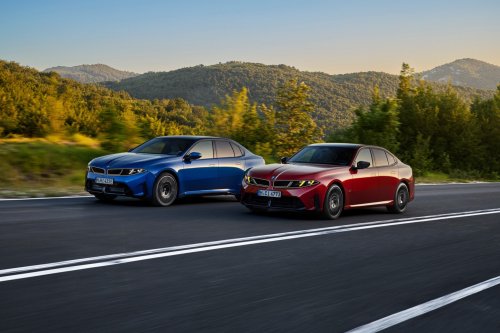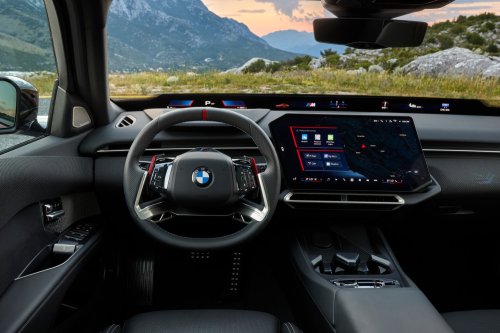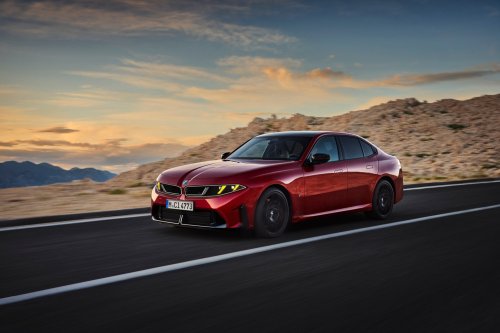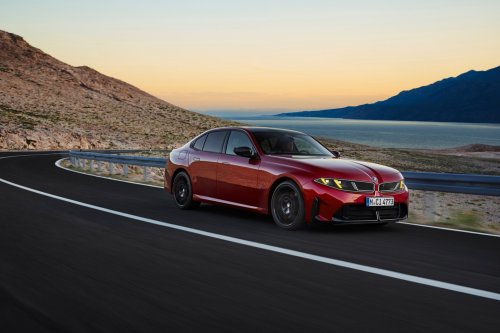


















BMW's Brake Defect Has Survived Three Recalls in a Row. Yes, That Includes a Rolls-Royce.Three times since February 2024, BMW has told a group of owners the same thing: a brake recall exists, dealers will fix it, and the danger is over. Three times, the company has had to come back and admit the fix didn't hold. The newest chapter, filed with federal regulators this month, covers only 428 vehicles, a rounding error next to the roughly 1.5 million BMWs, Minis, and Rolls-Royces caught up in the original defect worldwide. The tiny number is the actual story. It means that two and a half years, one major supplier, and untold hours of dealer labor later, BMW still cannot reliably close out a problem in the module that decides whether its cars stop.The new campaign, NHTSA number 26V422, covers a scattered list of 2023-2025 model year vehicles: BMW's 5 Series, 7 Series, X1, X5, X6, X7, XM and their electric i5 and i7 siblings, plus the Mini Cooper S, the Mini Countryman S All4, the BMW X2, and, improbably, the Rolls-Royce Spectre, the brand's roughly $420,000 flagship electric coupe. The part at issue is the Integrated Brake system, a single electronic module that replaces the old vacuum booster and folds power-assisted braking, anti-lock control, and stability control into one computer-controlled unit. Per the recall filing, that module can fail two ways: it can quietly stop providing power assist, which stretches out stopping distance, or it can knock out the Antilock Brake and Dynamic Stability Control systems entirely, the kind of failure that turns a wet on-ramp into a spin. BMW's remedy is to inspect the module and replace it, free of charge, with owner letters expected around August 21.That's the press-release version. The sentence worth rereading is buried in NHTSA's own paperwork: vehicles previously repaired under recall 24V-739 or 24V-104 will need the new remedy completed. In other words, none of these 428 vehicles are newly discovered cases. Every one of them already visited a dealer for this exact defect, for some it was a second visit, and all of them are now being called back for a third.AdvertisementAdvertisementRewind to February 2024, when BMW opened campaign 24V-104. The original scope was almost comically small: NHTSA's filing described roughly 90-some U.S. vehicles built with a defective integrated brake unit, the kind of number that points to a bad batch off one supplier line, not an industry crisis. It did not stay small. By September 2024, BMW told regulators the same defect touched about 267,000 vehicles in the United States and, per the company's own count reported that month, roughly 1.53 million vehicles worldwide across five countries. The expansion was large enough that BMW trimmed its own 2024 delivery guidance, citing hold-ups tied to the Continental-built brake system, a rare instance of a components problem showing up in a public automaker's sales outlook instead of only its warranty ledger.Then, in November 2024, BMW opened a second campaign, 24V-739, covering roughly 11,600 more U.S. vehicles. Its own text said plainly that these vehicles had previously been repaired under 24V-104 and needed the new remedy completed anyway. That was recall number two for the same fault, on cars that had already been through recall number one. This month's 428 vehicles make three.There's a second detail worth sitting with, because it explains how a Rolls-Royce and a Mini ended up in the same recall notice. BMW Group builds the Spectre, the 5 Series, and the Cooper S on different platforms at wildly different price points, but they draw from the same integrated brake module architecture and the same outside supplier. That's ordinary automotive economics. Sharing electronic control units across a corporate family is how a low-volume ultra-luxury model like the Spectre gets modern, tightly integrated safety systems without its own dedicated engineering budget. It is also how a defect discovered on a mainstream 5 Series ends up grounding a car that costs roughly eight times as much.The bigger lesson here isn't really about BMW's build quality. It's about what a modern brake system has become. A vacuum booster is dumb machinery, a rubber diaphragm and a check valve, with nothing to reprogram and very little that can quietly misfire. Automakers have been moving away from it for a decade because an electric integrated brake module can do more: blend regenerative braking on hybrids and EVs, respond to stability-control inputs in milliseconds, and shed weight and packaging space along the way. The tradeoff is that a single control-module failure can now take out three separate safety systems at once, and a repair to that module is a software-and-hardware job that's far harder to verify from behind a service counter than tightening a hose clamp ever was.AdvertisementAdvertisementThat's also why a completed recall is a shakier promise than it sounds, and why this pattern keeps showing up across the industry right now. This same month, Kia told owners of nearly half a million Tellurides that a 2024 seat-fire fix hadn't held, and Honda dealt with a rearview-camera recall that failed the same way it started. BMW's brake saga is that pattern playing out with higher stakes, since the part in question is the one that stops the car, not the one that shows what's behind it. If you own one of the affected BMW, Mini, or Rolls-Royce models, a recall marked closed on a 2024 service record tells you what a dealer intended to do, not necessarily what actually got fixed. It's worth running your VIN again this fall, even if you already did it once.It's part of a broader stretch of recall activity this summer, one busy enough that NHTSA has flagged everything from rollaway pickups to fire-risk Jeeps in the same few weeks. Anyone trying to keep track of what's currently open across the industry can see the scope of it in our running list of major active campaigns.BMW will call this a completed recall again once the August notices go out. Judging by the last two rounds, "completed" and "fixed" have not been the same word.Join our Newsletter, follow our Instagram page, and connect with us on Facebook.