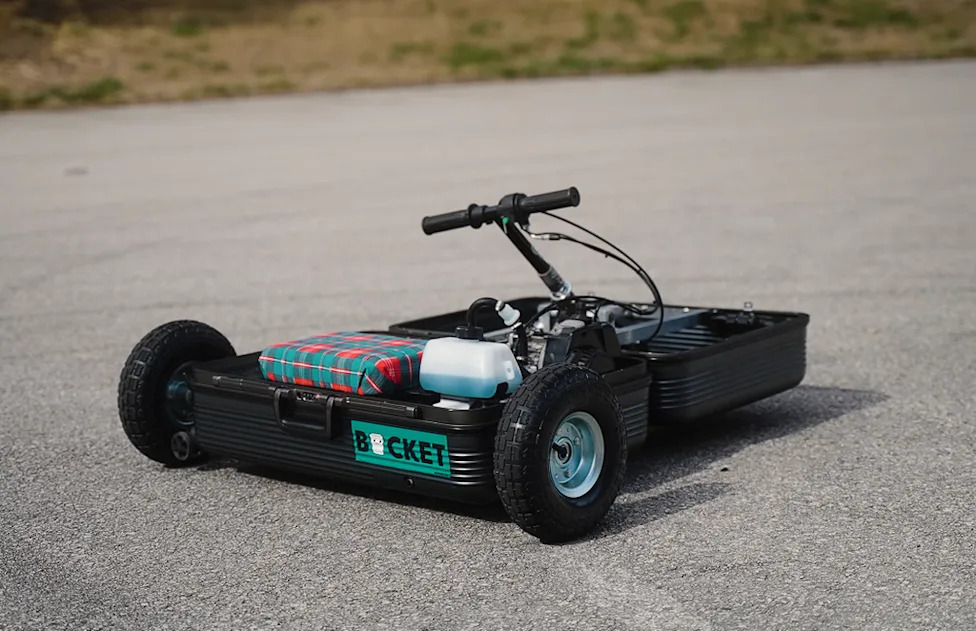
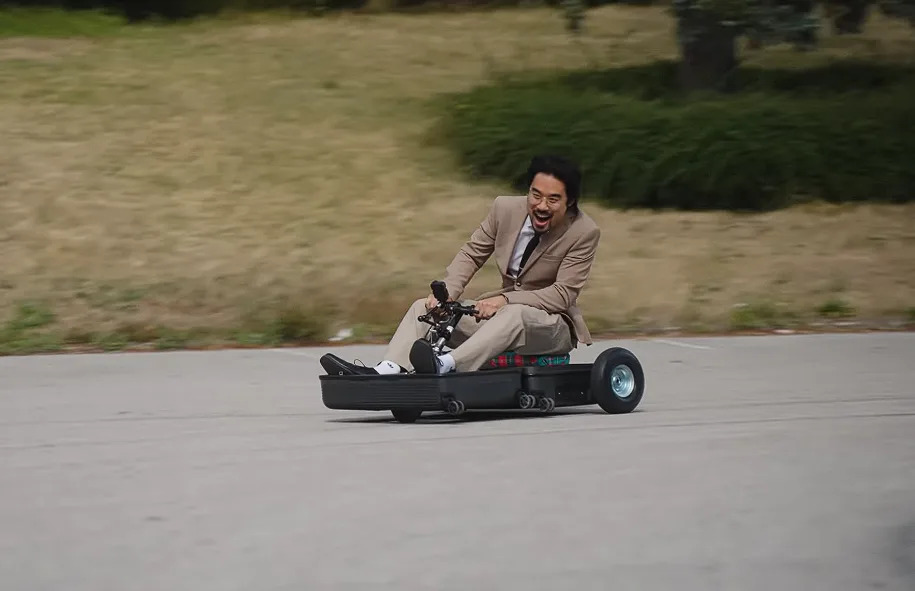
In 1991, Mazda was on an absolute hot streak. The company had just won the 24 Hours of Le Mans with the legendary 787B, and the MX-5 Miata was selling faster than dealerships could stock them. Riding this wave of absolute creative freedom, the automaker hosted an internal mobility design competition called "Fantasyard," leading a group of transmission engineers to create one of the most bizarre and brilliant concepts in automotive history: a fully functional gasoline go-kart folded neatly inside a hard-shell Samsonite suitcase.According to a retrospective by Mazda UK, only three promotional models of the original 33cc, two-stroke Suitcase Car were ever constructed. With the European and Japanese models destroyed and the final U.S. model locked away in a private collection, automotive YouTuber "Bucket" decided to take matters into his own hands and build an exact replica from scratch.Rather than scouring eBay for a vintage 1990s luggage shell, the creator managed to secure an official upgrade. "I've changed the suitcase we're using for the project," Bucket revealed. Pointing out his shiny new hardware, he added, "This is the Samsonite Rexton, and this was sent to us by the Samsonite rep of North America".Because the original vehicle's blueprints were lost to time, Bucket directly contacted the caretaker of the world's only surviving Mazda Suitcase Car to understand the sliding rail mechanics that lock the chassis into a rigid frame. Using a TIG welder, he began fabricating a custom aluminum skeleton to house a salvaged pocket bike engine.AdvertisementAdvertisementOf course, the DIY engineering process wasn't entirely smooth. After permanently botching his engine mount drill holes, the builder humorously admitted, "measure twice, cut once words I don't live by".The One-Wheel Drive SolutionThe biggest hurdle wasn't making the suitcase go—it was making it turn. A solid rear axle meant the tiny go-kart simply plowed forward instead of steering. To fix this without packaging a heavy, complex differential inside a luggage case, Bucket engineered a crude but effective slip system using chopped pillow block bearings, effectively turning the vehicle into a one-wheel-drive machine.For the front steering column, he chopped the fork and wheel off a dirt-cheap Razor E100 electric scooter and engineered a quick-release latch system. This allows the handlebars to effortlessly detach and stow flat next to a custom seat upholstered with a vintage rice bag.The final result is actually a massive engineering improvement over Mazda's original 1991 prototype. As highlighted in a recent breakdown by The Autopian, Bucket's modern replica hits the scales at just 56.8 pounds—significantly lighter than the original 71-pound concept, making it much easier to actually lift into the trunk of a car.AdvertisementAdvertisementDuring its maiden top-speed run, the roaring two-stroke luggage hit a terrifying 33 km/h (20 mph) before the builder backed off the throttle. Despite the undeniable cool factor and viral success of the build, the creator remained remarkably grounded about the vehicle's actual utility."This was a flawed idea from the start, and there's really no practical use case for it other than looking cool," Bucket confessed.