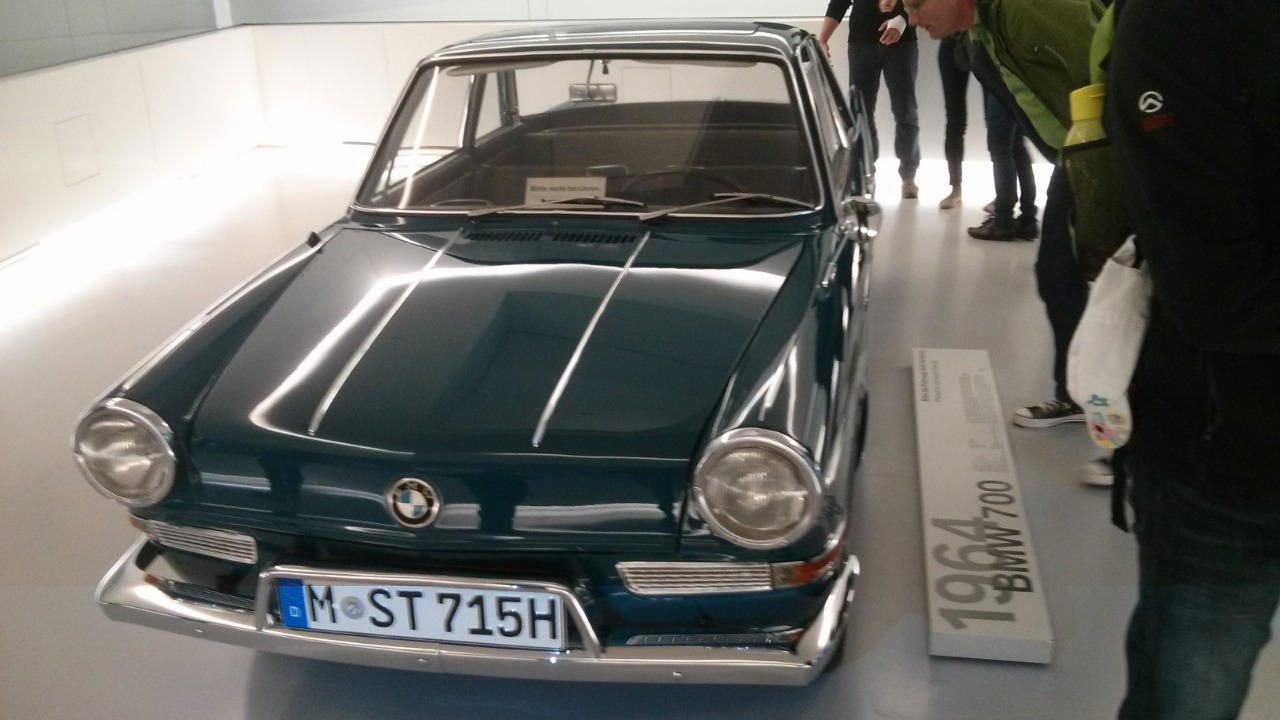




















The 1959 BMW 700 arrived at a moment when its maker was running out of road, and it did something no boardroom rescue plan could manage: it put survival on four small wheels. By blending clever engineering, sharp design and just enough performance, it turned a struggling luxury brand into a volume player again and reset the company’s future. I see it as the pivot point where a niche Bavarian manufacturer learned how to build the kind of compact, spirited cars that still define its identity. The crisis that set the stage When the BMW 700 appeared, the company was caught between worlds, with big, expensive sedans on one side and tiny bubble cars on the other, and neither bringing in enough cash. The firm had been leaning on minimalist transport like the Isetta, but that strategy was running out of steam as buyers demanded more space, comfort and credibility on the open road. In that context, a small, modern-looking saloon with real car proportions was not just another model, it was a last throw of the dice to keep BMW independent and rooted in Bavaria. Accounts of the period describe how the company needed a car that could be built cheaply yet feel like a step up from microcars, which is exactly the gap the 700 was meant to fill. One detailed history notes that in 1959 BMW introduced the 700 as a small, rear engined economy car created to boost sales at a critical moment, and that it played a crucial role in the company’s survival. Another retrospective on the “tiny fighter that saved” the firm describes how a flat twin engine and a dream were pressed into service to rescue the brand in Sep, capturing just how precarious things looked before this compact newcomer arrived in Bavaria, and how much weight was placed on the shoulders of a car that was barely larger than a city runabout, as seen in that video history. A radical rethink in a small package Image Credit: Tamás András Kálmán – CC BY 2.0/Wiki Commons What made the BMW 700 more than a stopgap was the way it rethought the company’s entry-level car from the ground up. Instead of stretching an old microcar, BMW chose to reconfigure the entire design and structure of the body so the car could be light, affordable and still feel like a proper automobile. That decision gave the 700 a modern stance, with a low silhouette and usable cabin, and it signaled that BMW was ready to move beyond the compromise of bubble cars into something that could grow with its customers. Internal accounts explain that earlier concepts were rejected because they did not offer enough potential, so instead BMW decided to find a more promising solution by re configuring the body and layout. A later corporate history echoes that point, noting that BMW chose to re configure the entire design and structure of the 700 to achieve the right balance of dimensions, weight and performance, which in turn delivered strong acceleration and hill climbing ability for such a small car. By putting engineering effort into a budget model, the company quietly redefined what its base cars could be, and that mindset would echo through later compact sedans and coupes. Design that made economy feel aspirational For the 700 to change BMW’s fortunes, it had to appeal to buyers who were ready to move up from bare bones transport but could not yet afford a big six cylinder saloon. That is where design came in. The company turned to Giovanni Michelotti, a stylist already known for crisp, modern lines, and the result was a car that looked light on its feet, with a distinctive notchback profile in saloon form and a clean, almost Italianate coupe roofline. In my view, that decision to invest in aesthetics for an economy model helped make small BMWs feel aspirational rather than apologetic. Contemporary descriptions of the car for collectors underline that point, noting that The BMW 700, designed in part by Giovanni Michelotti, marks a significant turning point and is now seen as a key model in the brand’s economic recovery. Another detailed narrative explains that the car was offered as a two door saloon and a more stylish coupe, and that While the 700 was a smash hit for BMW, very few were sold in the UK even though it was available with right hand drive, which only adds to its rarity there today. The fact that a modestly powered, rear engined compact could be described in such terms decades later shows how successfully its design lifted it above the utilitarian norm of its era. Engineering and motorsport: the Boxer with a point to prove Under the skin, the BMW 700 was not just about saving money, it was also about proving that the company’s engineering DNA could survive in a smaller format. The car used a rear mounted, air cooled flat twin derived from the firm’s motorcycles, a layout that kept weight low and packaging efficient. In coupe and sport versions, that engine turned the 700 into a surprisingly lively machine, and it gave BMW a platform to go racing again at a time when big budget motorsport programs were out of reach. Official model notes record that Production of the BMW 700 Coup started in 1959 and that it was fitted as standard with the two cylinder Boxer engine, with later, more powerful versions carrying the designation BMW 700 CS. That mechanical package proved its worth in competition, where the light weight and rev happy twin made the car a natural for hillclimbs and tight circuits. A retrospective on the brand’s minimalist racers notes that At the forefront of this racing success was Hans Stuck, the King of the Mountains, who won the German Hillclimb title a final time in a small BMW, a reminder that even in its leanest years the company used competition to showcase its engineering. For me, that blend of thrift and performance is exactly what made the 700 such a meaningful bridge between the motorcycle powered microcars and the later sports sedans. From stopgap to foundation stone Looking back now, it is tempting to see the BMW 700 as a quirky side note, but the evidence points in the opposite direction. The car did not just plug a gap in the lineup, it taught BMW how to build compact, profitable vehicles that still felt like part of a premium family. That lesson would underpin the later Neue Klasse sedans and, by extension, the modern 3 Series and its siblings, which all trace a line back to the idea that a small car can carry big brand values if it is engineered and styled with care. Detailed timelines of the model’s life highlight that between 1959 and 1965 BMW used the 700 to play a crucial role in its economic recovery and to reconnect with drivers who valued the sheer joy of driving even in an economy car. Corporate histories describe how, boasting compact dimensions and strong acceleration and hill climbing performance, the BMW 700 became known as the car that saved the company, a phrase that captures both its financial impact and its symbolic role in reshaping the brand. When I look at today’s compact BMWs, from city friendly hatchbacks to agile coupes, I see the same basic promise that first came good in that modest rear engined saloon: a small footprint, a willing engine and a sense that even the entry level car matters deeply to the people who build it. More from Fast Lane Only: 10 underrated V8s still worth hunting down Police notice this before you even roll window down