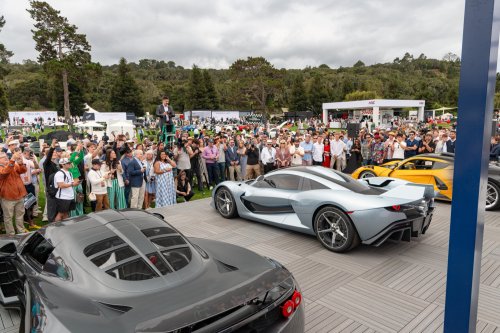
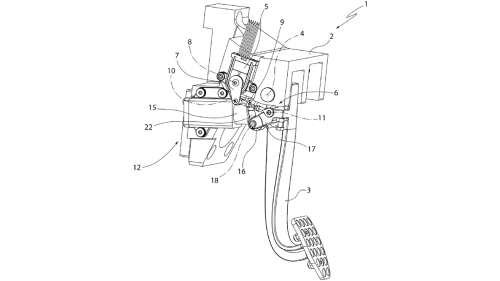
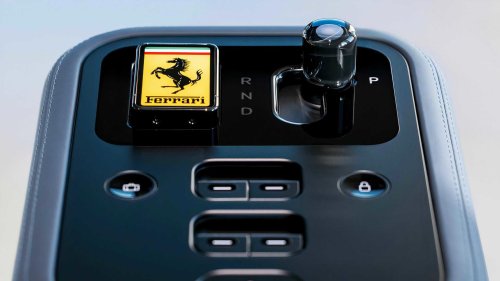
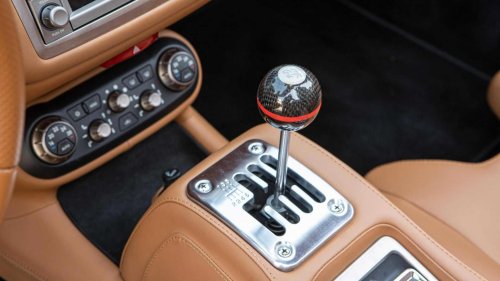
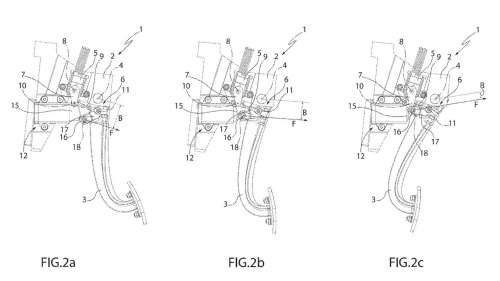
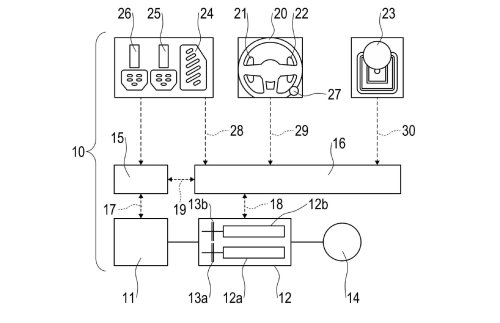
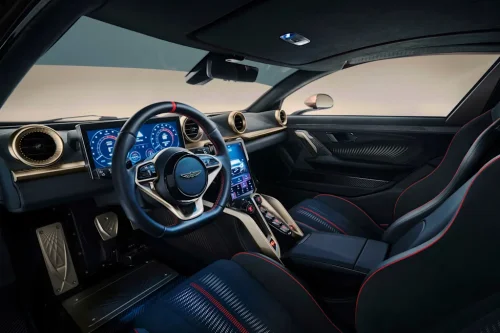
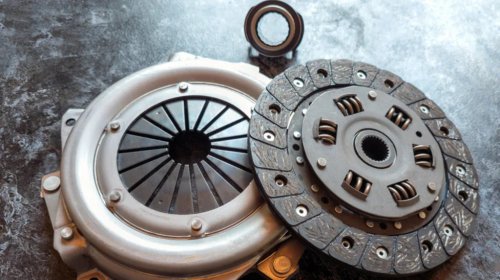
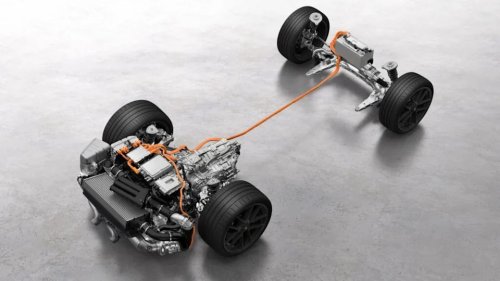
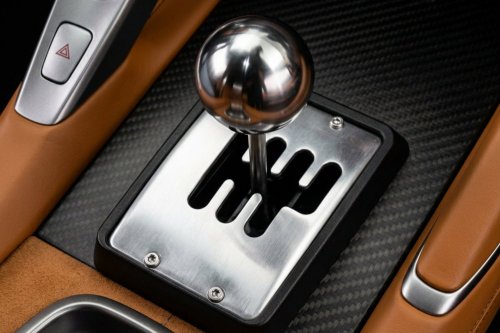
Why a Clutch Pedal Is Now an Engineering Nightmare for Low-Volume Sports CarsAsk most enthusiasts why manual gearboxes are dying and you'll get some variation of "nobody buys them." That's the easy answer, and for a company like Aston Martin it isn't even the main one. Speaking publicly during Monterey Car Week, Aston CEO Adrian Hallmark made the point that finding a manual gearbox is the trivial part of the problem. Making the rest of the car agree to work with one is the expensive part.He's right, and the reason is more interesting than "electronics are complicated." It comes down to a single question that modern cars have quietly answered in favor of the computer: who is allowed to open the clutch?The clutch is now a safety componentIn a car with a torque converter or a dual-clutch, the vehicle can decouple the engine from the wheels at any moment, without asking. That capability is load-bearing for two systems regulators now demand.AdvertisementAdvertisementAutonomous emergency braking is the obvious one. When AEB fires and drags the car to a full stop from speed, something has to disconnect the driveline or the engine stalls. An automatic handles this in milliseconds. A three-pedal car cannot — there is no actuator on the clutch, only a human foot that is currently busy being surprised. A stall mid-intervention is not just embarrassing; it's a dead engine in a live traffic lane, with the assist characteristics of the steering and brakes changing underneath a driver who has just been through a panic stop.Related ArticlesWhy Tennessee's Drag Racing Law Charges the Blocker Cars Too2027 Kawasaki Ninja e-1 ABS: Price, Real Specs and True Ownership CostsAdaptive cruise control is the second. ACC assumes it can manage road speed indefinitely. On a manual, it can't. If traffic slows below what fourth gear will pull, the system has to detect the impending lug, warn the driver and hand back control gracefully — a whole additional state machine, with its own human-machine interface, its own failure modes and its own validation. Manufacturers who do offer ACC on manuals have written that logic. It isn't free, and it isn't reusable from an automatic-only program.Stack on hill-hold, stop-start, creep management and torque-request arbitration, all of which were architected around a gearbox that obeys instructions, and you can see why a clutch pedal is a systems-engineering project rather than a parts-bin exercise.The regulatory clock nobody is talking aboutHere's the part that explains the timing, and it's a matter of published law rather than executive opinion.AdvertisementAdvertisementThe EU's second-generation General Safety Regulation, Regulation 2019/2144, made advanced emergency braking, intelligent speed assistance, emergency lane keeping, drowsiness detection and event data recorders mandatory — for new vehicle types from 6 July 2022, and for all new vehicles from 7 July 2024.Low-volume specials got a reprieve. Under Delegated Regulation 2022/2236, small-series vehicles couldn't receive new EU whole-vehicle type approval without complying from 7 July 2024 — and from 7 July 2026, certificates of conformity for non-compliant new small-series cars stop being valid and registration is prohibited outright.Read that date again. The window that let a manufacturer homologate a handful of manual-transmission specials under relaxed requirements shut roughly six weeks before Hallmark was standing in Monterey being asked about manuals. That is not a coincidence, and it's the concrete substance behind the vague industry line about "older architecture."Which is precisely how Aston built the last ones. The Valiant press release from June 2024 describes a 745PS twin-turbo V12 with a six-speed manual, production capped at 38 cars, all allocated. Thirty-eight units sits comfortably inside EU small-series allowances. A regular-production Vantage does not.AdvertisementAdvertisementThe US timeline is looser but pointing the same direction. NHTSA's FMVSS No. 127 requires AEB, pedestrian AEB and forward collision warning on all light vehicles by September 2029, with small-volume manufacturers granted an extra year. The rule has been through petitions and an effective-date delay, so treat the specifics as live. The direction of travel isn't in doubt.Why Ferrari's answer is smarter than it looksThe reflexive enthusiast reaction to the 12Cilindri Manuale was that it's a fake. Mechanically, sure. Strategically, it's the only version of this that survives a homologation review.Ferrari's own description of Manuale By-Wire is specific: the gear lever and clutch-by-wire pedal send signals to the gearbox control unit, which handles the manual inputs while leaving the DCT's basic operating logic unchanged. Driver input is read by two Hall-effect angle sensors, one per axis, with a push-pull solenoid providing physical feedback as a locking device. Production is capped at 1,499.That one clause — the DCT's operating logic unchanged — is the whole trick. The car never loses the ability to open its own clutches. AEB works. ACC works. Every certification file the base car already passed remains valid, because underneath the theater nothing about the powertrain's authority has changed. You get the ritual without re-litigating the safety case.AdvertisementAdvertisementYou also get a gearbox that is, functionally, a software feature. That has implications enthusiasts should think about seriously: a by-wire manual's character can be revised by an update, its feel depends on calibration files being supported a decade out, and its long-term serviceability is tied to electronics rather than gears and synchros. A real H-pattern is a mechanical asset. A simulated one is a licence.The math Aston is actually doingAston's FY2025 results put wholesale volumes at 5,448 units, revenue at £1.258 billion and an adjusted EBIT loss of £189 million. That is the entire company, across every model line.Now amortize a bespoke manual transaxle, a parallel ADAS calibration program, a separate homologation campaign in every market, and ongoing software support — across what would realistically be a few hundred cars. There is no version of that spreadsheet that ends in black ink unless the price is genuinely absurd, and absurd prices are exactly what the 38-car Valiant model exists to capture.Related ArticlesThe SEC Says Tricolor Pledged the Same Car Loans Twice — and $800 Million of Collateral Never ExistedMonterey's Record $755.6 Million Was Built by 10 Cars. The Other 843 Got a Reality CheckAdvertisementAdvertisementMeanwhile the current halo, the Valen, arrived at Monterey with 850PS and an eight-speed ZF running race-derived shift strategies from the Vantage GT4 programme. That's the honest signal about where the engineering budget went.What this means if you're buyingIf you want a genuine three-pedal Aston, the used market for cars homologated before July 2026 is the market, and it is not going to get bigger. Those cars are now a closed set defined by regulation rather than taste — historically the single most reliable predictor of a values floor.If a by-wire manual eventually appears at Gaydon, evaluate it as what it is: an interface, not a transmission. Ask what happens to shift calibration after the warranty ends, whether the clutch pedal's feedback hardware is a serviceable part, and how the car behaves in automatic mode, since that's what it will spend most of its life doing.And if you're hoping the industry rediscovers the clutch pedal on principle — the principle already lost. It lost to a regulation that requires the car to be able to stop itself, which requires the car to be able to disconnect itself, which requires the car to own the clutch. Everything after that is negotiation.



















 +70 others