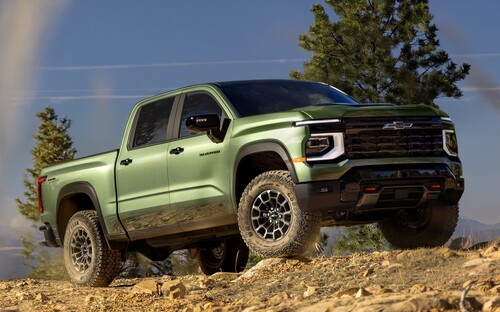
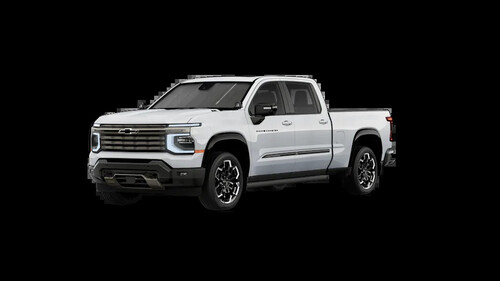
Brembo Boldika Brakes: Iron and Aluminum Team UpBremboIt's no secret that electric vehicles can be brutally heavy. Some production EVs on sale today weigh over 9000 pounds, thanks in no small part to enormous batteries; full-size trucks like the Chevrolet Silverado EV and off-road behemoths like the GMC Hummer EV are up there in that range, and they have power outputs north of 700 horsepower to match. This presents fresh problems to solve all over the vehicle, but one rather important one concerns the brakes: with so much power and so much mass, there can be an absurd amount of force needed to stop.Up until now, vehicles like the Silverado EV have used your standard sliding-piston-style brake caliper. Brembo has an innovative new solution, though, called Boldika. Pronounced "bohl-DEE-kah," this caliper is meant to be a powerhouse of both stiffness and weight savings.The secret is a three-piece design that combines two aluminum caliper halves connected via a cast-iron bridge. The aluminum bits are what Brembo is known for when it comes to high-performance sports car brake systems. These lightweight caliper bodies communicate their sporting intentions from the moment you run your eyes over them. Clad in red (they can also be whatever color an OEM decides), they're visually similar to the brakes you might find on a Porsche 911 or Chevy Corvette. But then you get to the fascinating part of this equation: the cast-iron bridge.Brembo"The forces that we would see from this application were exceeding the mechanical properties of aluminum, and in the compressional direction," Cloyd Reed, Brembo engineering supervisor and one of the key engineers behind these brakes, tells me. "The cast iron bridge was a solution to replace the areas where the aluminum was not sufficient."AdvertisementAdvertisementWith great weight comes an even greater need for stiffness. While Brembo's all-aluminum body calipers are superb solutions for lightweight sports cars, the enormously heavy EVs and off-road trucks on sale these days require a different approach."So, the application that we introduced this concept for was quite unique," Reed says, "in the sense that typical aluminum material was essentially limited for what kind of loads it was able to handle compared to what we were having for this application."To throw some numbers at it, the six-piston Boldika caliper is capable of about 6296 pound-feet of braking torque, or double that of the next-best all-aluminum six-piston caliper from the Italian brake manufacturer. Yes, Brembo built its most powerful brake caliper for trucks, not supercars.BremboThe construction of the caliper involves four bolts that tie the cast-iron bridge together with the aluminum halves. Thanks to the iron in the center, this torsional stiffness helps give the brakes a reassuring pedal feel and ensures a far stiffer structure than a typical aluminum caliper can offer.AdvertisementAdvertisement"Comparing stiffness, a fixed caliper like this one is going to have much less compliance than your standard sliding caliper," Reed says. "Sliding calipers have various components that are trying to live against one another, and you have tolerances between those things that generate compliance in the system."Weight is a huge factor in this design. A Boldika six-piston caliper weighs 32 pounds; if it were fully cast-iron, this same caliper would be about 53 pounds, Reed says. That's an enormous weight savings in the most important area on a car, unsprung mass. Of course, the bridge's usage of cast iron adds some weight back in, but Reed says that "even if it were aluminum, the caliper is not that much lighter."BremboAfter learning about the introduction of cast iron to an otherwise aluminum caliper, one of my instant concerns was regarding corrosion over time. While Brembo's pretty, painted aluminum calipers never suffer from rust, anyone who's seen a cast iron caliper after five years of service knows there's going to be some degree of visible evidence of oxidation. The Boldika design hides the cast iron part from view, for the most part, but you can still see the red-painted bridge if you look close enough. Reed promises the fear of having a partially painted, partially rusted caliper isn't warranted, though."Regardless of the caliper materials and coatings that are used, we're always working to the same corrosion-resistant and appearance requirements," he says. "We do select coatings that allow us to mitigate things like galvanic corrosion, because we're working with dissimilar materials. And we also work to develop paint. We do develop the paint to also meet its own performance criteria, whether it's on an aluminum surface or a cast iron surface. And for this one, we might do a slight adjustment to make sure that we're not getting any contact between the dissimilar materials, [and] we might go a step further just to make sure that that doesn't happen."AdvertisementAdvertisementBeyond that, Reed wasn't eager to share any information about Brembo's proprietary coating technologies. (For now, I'll take Brembo's word for it, but I'll certainly be on the lookout for what trucks with these calipers look like down the road.)ChevyOn the topic of design, the Boldika's looks are almost as intriguing as its capabilities. After all, part of the allure of an aluminum-bodied caliper is its ability to look capable when you peer through the wheel spokes. Surely, some of the EVs these brakes are mounted on will hide the caliper on account of aero-focused wheels—but when you can see it, it's obvious that this assembly is one chunky customer."So the design itself is as it would be in nature," Reed says. "The way that we went about the design of the caliper is first based on the performance criteria, and then what components we needed to fit within the caliper packaging, and then working around those things to create the caliper body itself, the design. And the design came out in nature as basically an expression of this mechanical capability. It looks as the name is described... as bold and strong and robust."The four exposed bolts holding the bridge together are the first thing I notice when comparing it to Brembo's other aluminum body calipers. Then there's the squared-off caliper ends and lack of piston silhouettes; Reed says the lack of those visible pistons is simply a result of Brembo going with an all-natural look. In other words, there's no real need to have the silhouetted pistons on Brembo's six-piston sports car brakes—they just look cool. But on the Boldika, it's all about rugged function.AdvertisementAdvertisementServicing Boldika calipers is a little different than both Brembo's full-aluminum and full-cast iron calipers, too. I'm a huge fan of the all-aluminum units that essentially allow you to pad swap by simply tapping out a pin, releasing the pads to easily pull out by hand or via a prying tool. With the Boldika, Brembo prioritized stiffness over everything, which resulted in screwed-in pad pins as opposed to the tap-out type. This process can be completed after you've fully removed the caliper from its mounting points and released the four bolts holding the cast-iron bridge in between the two aluminum halves.BremboAs for the springs, to my delight, Brembo managed to integrate its Enesys spring technology into the Boldika. They can be removed and installed by hand, and their ability to fully retract the pad away from the surface of the rotor when off the brakes means better pad life and greater overall efficiency. This Formula 1-derived spring technology is otherwise typically found in Brembo's full-aluminum calipers, so it's excellent to see it integrated in the hybrid solution, too.The last performance benefit Brembo brags about is a more consistent, more even pad pressure-slash-application on the rotor. This enormous caliper is so stiff from top to bottom that Reed promises you can physically feel the difference through the brake pedal. With more total and even pad pressure comes a better distribution of force/heat, and in turn, your braking system has higher performance and greater ability to withstand thermal loads. The system makes the biggest difference when you're hauling extreme weights along slopes, or subjecting the system to extreme use in high-speed off-road endeavors."And this especially comes into play when you're having a loaded vehicle condition," Reed starts. "It's gonna be much less noticeable, the amount of extra force that the brakes are generating compared to a slider caliper—and ultimately, it's giving the driver confidence. The driver's going to feel it through the pedal directly. It's not gonna be as long of a pedal travel as you would with a system that needs more force and has more compliance."BremboFor now, Brembo says the giant Boldika caliper will fit within 20-inch wheels, which covers a large swath of off-road and high-power electric trucks in the market. The first pickup you'll see Boldika on is the Silverado EV Stars and Steel special edition (pictured above, with said brakes). I suspect there will be plenty more applications in the near future for it on massive EVs and off-road vehicles with hardcore intentions.You Might Also LikeIf You Can Only Own One Car, Make It One of TheseThese Are the Most Popular Cars by State