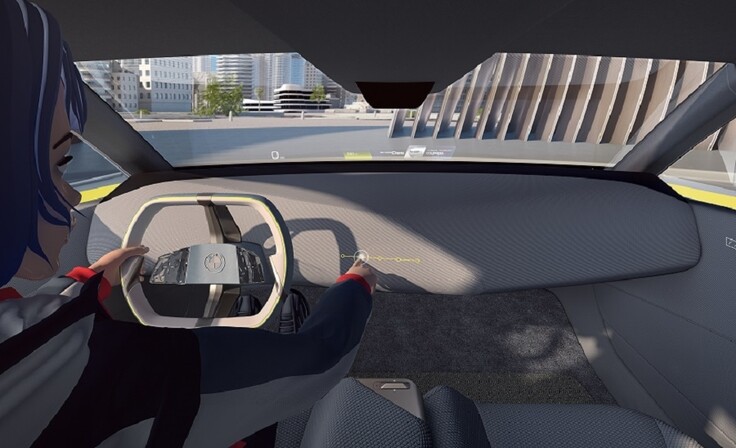
Gasgoo Munich- The autonomous driving landscape is growing increasingly fractured.On one hand, the industry is split between skipping Level 3 to jump straight to Level 4, or taking a more incremental L3-inclusive path. On the other, while the L2 spotlight shines brightest on advanced features, the recurring safety incidents within the L2 tier are overwhelmingly tied to its basic functions.Caught in the middle, autonomous driving safety occupies an awkward spot.Technology is iterating at a breakneck pace, with commercial pressure demanding rapid deployment. Yet the safety of basic L2 features—the tier serving the vast majority of users—lingers in the gap between what drivers believe the system can do and what it actually does. Too often, that gap is only "calibrated" by accidents.As accidents recur and families suffer devastating losses, consumer trust in autonomous safety is steadily eroding. The pressing issue is no longer assigning blame, but compelling the industry to reflect: What is the true purpose of technological iteration? How much weight does safety carry when these systems hit the road? With basic L2 safety still riddled with blind spots, has the industry landscape truly reached its endgame? And what opportunities lie hidden in the ongoing refinement of L2?Where Exactly Are the L2 Safety Hazards?Gasgoo has noted that since the start of the year, multiple automakers and suppliers have repeatedly stated in public that the industry's spec war has reached its limit—there is neither room nor meaning in pushing it further.Whether there's still a need to keep pushing, however, depends entirely on your vantage point.From the consumer's perspective, certain specs and features still desperately need that pressure to evolve.When the industry talks about autonomous safety, does it actually know where the real hazards lie? Are they found in the coefficients, metrics, and test scores repeatedly flashed on giant screens at new car launches?Consider the accidents that have actually occurred.In the early hours of last October, a new-energy vehicle driving with intelligent assistance engaged plowed straight into a semi-trailer parked in the fast lane, killing three people—just 40 seconds after the system was activated.Recently, local authorities released their investigation report, citing the direct cause: while driving on the highway at night using the "intelligent driving assist" system, the vehicle failed to detect the road conditions ahead in time and take effective evasive action. (In the final seconds before impact, the driver made no effective intervention.)The automaker involved later clarified that the vehicle was equipped with the previous-generation IACC (Integrated Adaptive Cruise Control) system and lacked LiDAR.Regarding the system's real-world detection capabilities in complex environments, the automaker's official guidance states that IACC is suited for highways or roads in good condition. In adverse weather or poor visibility—such as rain, fog, dust, or insufficient light—the system may fail to detect obstacles ahead and respond effectively.Public records show IACC is commonly known as an integrated adaptive cruise control system. Its primary function is to automatically adjust speed based on the vehicle ahead after a set speed is chosen. In scenarios like highway driving, it handles following, decelerating, accelerating, and lane centering—reducing the driver's operational burden.Notably, the vehicle in question was not equipped with a high-level ADAS capable of highway NOA (Navigate on Autopilot). Instead, it relied on a basic L2 system centered on adaptive cruise control and lane keeping.Regardless, the human remains the primary operator at this level of assistance, bearing ultimate responsibility for driving safety.On that point, there is no dispute.Viewed from another angle, however, the root cause of such accidents often lies in users placing too much trust in driver assistance.In recent years, the industry has touted increasingly dazzling autonomous features, backed by a dizzying array of parameters. Marketing jargon relentlessly pushes concepts like "autonomous driving," "advanced smart driving," and "full-scenario intelligence." Even within the L2 tier, the industry has quietly splintered the category into L2, L2+, L2++, and L2+++—dividing basic from advanced functions in a way that leaves most ordinary consumers struggling to tell them apart.Simply put, L2 is the baseline—featuring core functions like ACC (Adaptive Cruise Control) and LKA/LCC (Lane Keeping Assist/Centering). L2+ adds automatic lane changes. Building on that, L2++ relies on NOA to grant the vehicle autonomous route planning and decision-making capabilities.Beyond features, hardware stacking has evolved from L2's "good enough" to L2++'s "redundant" configurations.Yet no matter how automakers brand it, as long as it remains classified as L2, the driver behind the wheel is forever the first person responsible for safety.Most critically, the hidden dangers behind these tragic accidents ultimately land on ACC—the most fundamental core function of L2.Such incidents are hardly isolated. In July 2023, a grieving family member described an accident: "A certain NEV was driving normally on the highway at 103 km/h when the ACC system suddenly took over, causing the car to veer right and crash into a 10-cm-diameter tree by the roadside. The tree didn't break, but the car's A-pillar tore, B-pillar snapped, and roof deformed, leaving one dead and three injured."Over the past two years, the autonomous driving industry has charged ahead under an "endgame" narrative. Advanced ADAS has become the absolute star at auto shows, and capital markets have cheered every new version of urban NOA.Yet away from the spotlight, safety issues surrounding basic L2 functions—issues directly tied to consumers' lives—are being severely underestimated amid the noise.Who Really Needs a "Safety Backstop"?Since 2026, even as basic L2 functions remain flawed and high-level ADAS penetration stays limited, a new buzzword has emerged in the industry: the safety backstop.Recently, a leading automaker began promising a "safety backstop," underwriting the safety of its City NOA for one year.Specifically, if a user is involved in an at-fault accident while legally using the City NOA function, the direct economic losses the vehicle should bear—including repair costs, third-party property damage, and personal injury—will be fully compensated by the automaker.Notably, unlike common industry smart driving insurance, this automaker's City NOA backstop is entirely free, has no cap, and won't affect the following year's commercial insurance premiums.It's worth noting, however, that these automaker "safety backstops" mostly cover high-level L2 features like City NOA. Basic, high-penetration functions like ACC are excluded.Company insiders explain that the policy applies only to CNOA (City NOA) within the navigation assist suite. Other driving aids—like ACC, ICC (Intelligent Cruise Control), and HNOA (Highway NOA)—are not covered.Image source: BMWRegarding this backstop measure, some autonomous driving firms have voiced approval. They argue that by promising to "pay if things go wrong," automakers can convince users of their technology's prowess. "Even if regulations aren't fully in place, as long as automakers dare to take responsibility for smart driving accidents, users will dare to use them."Undeniably, as a differentiating selling point, the "smart driving safety backstop" attempts to alleviate users' trust anxiety toward advanced assistance by proving itself through accountability.The question remains: between basic and advanced features within the L2 tier, which one actually needs a backstop the most?Is Advanced ADAS Just a "Game for the Few"?Zhou Xiaoying, CEO of Gasgoo, points out a critical misconception in the industry: an excessive focus on advanced ADAS. Consumers genuinely feel the impact of basic L2 features like ACC, and the proportion of users actually engaging advanced ADAS is far smaller than those using basic functions.The data tells the real story.Gasgoo's database shows that the penetration rate of L2 (factory-standard) hit 39.8% in 2025. Over the same period, City NOA—the hallmark of advanced ADAS—managed a mere 4.6%.More recently, from January to April 2026, L2 penetration reached 43.2%, while City NOA lagged at just 7.3%.These figures reveal a crucial truth: advanced ADAS is indeed growing, but basic driving assistance remains the undisputed protagonist of the market.In other words, even as L2 penetration steadily climbs, the City NOA penetration that the industry obsesses over lingers in the single digits. The vast majority of users still reside in the zone defined by basic L2 functions.And that is precisely the zone where the industry must build its foundation of trust in autonomous safety.Image source: WaymoThis bizarre landscape—where high-end features boil over with hype while basic functions sit in silence—is exactly where industry narratives disconnect from real user needs.At new car launches, automakers often dedicate their most dazzling presentations to the future of advanced ADAS, yet they are no longer willing to spend much ink on the basic L2 configurations.Yet these glossed-over features are exactly what underpin the actual driving experience and safety of ordinary consumers. When a top-spec model's autonomous suite and a base-spec volume seller's capabilities are separated by a generational chasm, which one truly defines the automaker's ADAS reputation?That isn't just a source of consumer confusion; it's a genuine dilemma the industry must confront.Viewed through the lens of the industry's development stage, it becomes clear: as long as basic L2 safety has "vacuum zones," the broader industry landscape remains fluid.As Yu Zhenghua, CEO of Motovis, put it in a conversation with Gasgoo: "It's too early to talk about an endgame for smart driving."Over the past two years, every new car launch had to mention City NOA, and every supply chain summit debated advanced system layouts—as if failing to step onto this rung meant outright elimination.Some even assert that China's passenger vehicle ADAS market will ultimately boil down to just three or four players, using this premise to shut down all further discussion.Yet this "endgame theory" might just be a narrative strategy from the top players. Motovis's Yu Zhenghua argues: "The landscape is far from its endgame, and the industry's pecking order is constantly shifting. There are more companies coming up, technology is still iterating, and the OEM landscape is still consolidating. We are nowhere near the convergence seen in consumer electronics."In truth, this "endgame theory" is a narrative bubble that deserves constant questioning.Technological iteration in the ADAS industry is far from over. The commercialization path for L3 and L4 remains unclear, and independent suppliers outside the top tier are still posting steady growth in niche segments.It might be more accurate to call this the opening stretch of a marathon, rather than a match point where the outcome is already decided.The autonomous driving industry is thriving, and it is both an inevitable trend and a shared aspiration for participants to iterate toward higher levels of intelligence.By writing this article, Gasgoo simply hopes that industry narratives packaged in "endgame" rhetoric won't leave everyone staring upward at the peak, ignoring the "safety hazards" still on the road beneath their feet. And within those very hazards lie even greater industrial opportunities.