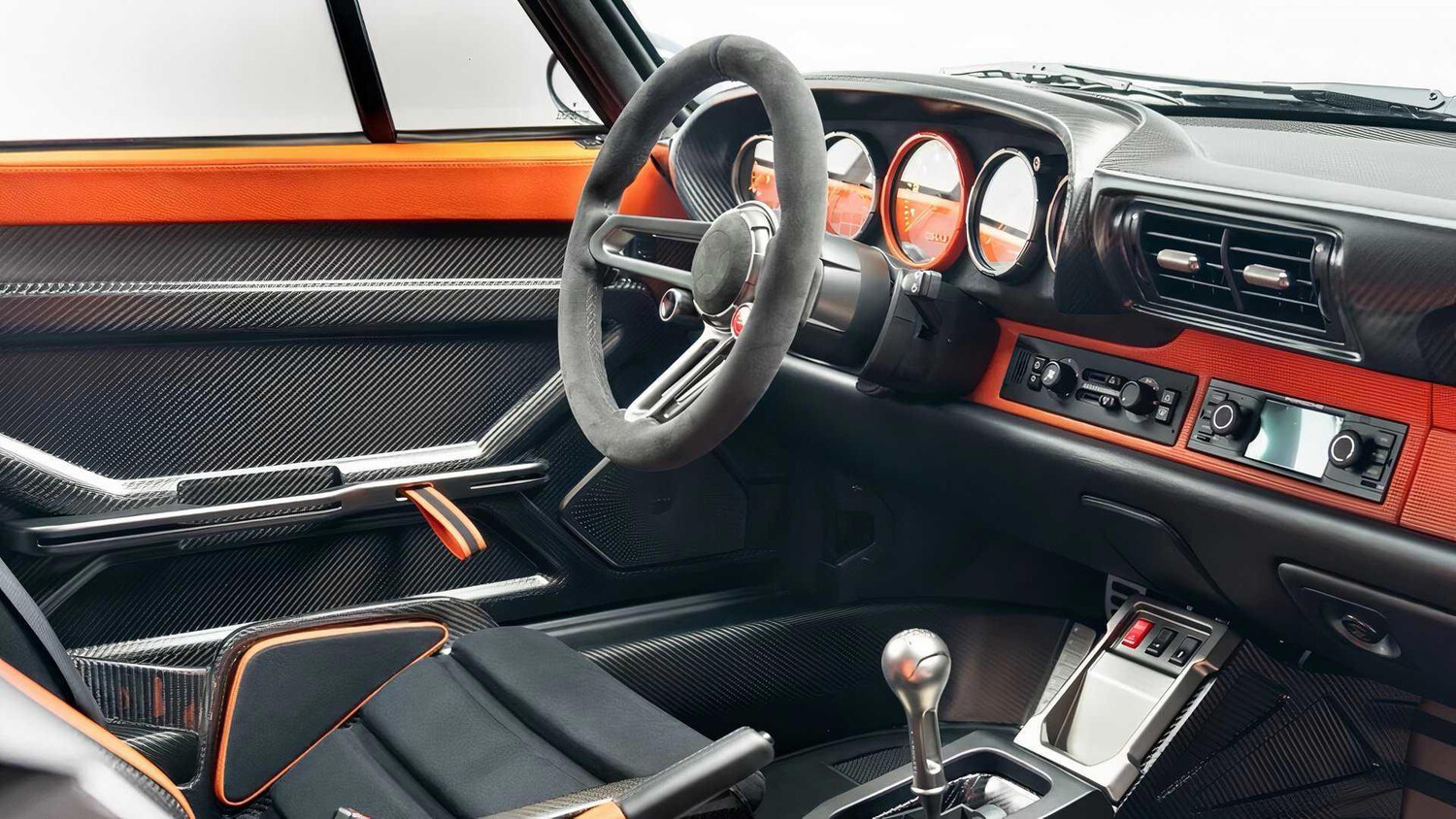
Jump LinksAlcantara vs. Suede, Microsuede, and UltrasuedeThe Composition Of AlcantaraFeel And GripA Material That Sets Cars ApartIs Alcantara better than leather?Why is Alcantara so expensive?What are the downsides of Alcantara?Is Alcantara fake leather?Many sports cars position themselves as high-end, premium luxury goods, often through carrying badges that speak of class and status and being packed to the brim with comfort and convenience features to justify their high price tags. From the inclusion of more performance-oriented powertrains to sophisticated suspension tuning or lightweight body materials like carbon fiber, the treatment also continues inside to make these models feel far more unique than standard production vehicles. This allows a buyer to immediately feel how different a Porsche Cayman GT4 RS is from an equivalent base-spec Porsche 718 Cayman Coupe, for instance.While many sports cars use premium leather as part of their standard upholstery, the truly top-spec models take this a step further and use a special material called Alcantara liberally, often overlaid with carbon fiber trim, polished aluminum, or any combination of the aforementioned.But how did Alcantara first make its way into mainstream production vehicles, and are there any disadvantages to using it that might outweigh the advantages it brings to provide an ‘upmarket’ feel? Let's take a look at the background of what Alcantara is, its origins, and why certain models emphasize its use as part of their factory specification. Alcantara: What Is It Made Of? Ian Wright/CarBuzz/ValnetSo, what is Alcantara and what is it made of? Alcantara is a synthetic suede-like material, composed of 68 percent polyester and 32 percent non-fibrous polyurethane. This material, a hybrid of plastics and hydrocarbons, is produced through a variety of techniques, consisting of the ‘spinning’ of polymer fibers and chemical/textile production processes, such as extraction, needle punching, and buffing; all of which come together to produce this specialized fabric.The origins of Alcantara can be traced back to Japanese chemist Miyoshi Okamoto, who came up with the idea of the synthetic material whilst working for chemical firm Toray Industries (which has also been cited as the world's largest producer of carbon fiber, and Japan's largest producer of synthetic fiber). Since its initial patent, the production of Alcantara material has been led by the Italian manufacturer of the same name, Alcantara S.p.A., which was formed through a joint venture between Italian and Japanese multinational entities, and to this day, is responsible for the production and distribution of the material globally.Within most automotive applications, Alcantara is largely used as a substitute for other high-end materials used to compose the vehicle’s upholstery, such as leather or vinyl; though it can also be used in conjunction with the latter to bring a far more premium feel and appearance for occupants inside. Outside of applications within automobiles, Alcantara can also be used in premium furnishings, fashion accessories, consumer electronics, marine/aviation interiors, and other high-end interior design projects. How Alcantara Became A Motoring Must-Have FiatThe earliest Alcantara interior in a car came about through several concept cars from Italian car manufacturers, which included the Lamborghini Bravo, a one-off developed in collaboration with design firm Bertone that had styling reminiscent of the Lamborghini Countach.But it wasn’t until later in the 1970s that the Alcantara material would be incorporated into production cars, with the Fiat X1/9 being widely credited as the first sports car to feature an Alcantara texture within its cabin design. Other Italian car brands soon followed to be among the first to apply this material in the construction of vehicle interiors, such as the Lancia Thema and Maserati BiTurbo."From that moment, Alcantara became a benchmark for the most prestigious brands, including Ferrari, Lamborghini, Maserati, Porsche, and McLaren thanks to its distinctive qualities: soft touch, grip, durability, comfort, and unprecedented possibilities for aesthetic customization."- Alcantara S.p.A.In most modern vehicles, Alcantara material is applied to sections such as the steering wheel and the transmission lever, and can also extend to portions of the seat upholstery, interior headliner, dashboard sections, and the side door panels/trim. Even if cars don't feature it as standard, it is often an optional extra on performance-themed trims, and it is possible to retrofit any degree of this artificial material through a specialist refurbisher or workshop. The latter is often the case for people who want to restore their well-worn cabin to modern standards or to refresh its appearance.Some of the mainstream automotive brands that are known to use Alcantara materials of varying degrees include, but are not limited to: Honda BMW Maserati Alfa Romeo McLaren Porsche Ford Hyundai Tesla Chevrolet Alcantara vs. Suede, Microsuede, and Ultrasuede The name Alcantara is relatively specific to fabric produced by the company of the same name. Similar materials do exist on the market, however, with suede, microsuede or microfiber, and more referring to a fabric that feels quite similar. Additionally, there are some companies like Ford, Cadillac, and Mercedes-Benz that use a similar material called Dinamic, while Ultrasuede is a term you'll often fine in Mazda and Toyota vehicles. Alcantara And Sports Cars Are A Match Made In Heaven Bring a TrailerIt’s not uncommon to find many sports cars bring use Alcantara fabric generously throughout their interiors, from well-recognized performance brands like the BMW M and Hyundai N Division. Though it is frequently associated with exotic car brands, other brands from Japan, Germany, and the Americas have also begun to utilize the specialized suede fabric within their performance-focused product lineup. Here are some reasons why. The Composition Of Alcantara Gunther Werks Sports cars are often designed with reduced weight in the interest of performance, and one of the benefits of using Alcantara is that is weighs less than conventional interior materials like full-fat leather and dense woven cloth. Some may argue the difference is negligible, but it's still technically true. Feel And Grip Chevrolet Another reason why Alcantara is the material of choice for sports cars relates to how it feels. The argument exists that there is better grip with Alcantara due to its micro-fiber-like texture, and when you're driving a sports car with meaning, you're likely wanting to have a good grasp of your steering wheel. This is often why you'll find cars like BMW M4 Competition can be equipped with a premium-Alcantara-wrapped steering wheel replete with a red 12-o-clock marker, as a nod to its performance aspirations.This is even more true for cars like the Chevrolet Corvette in ZR1 spec - an out-and-out performance-focused vehicle - that has a carbon fiber and sueded microfiber steering wheel. That material is similar in look and feel to Alcantara, and many simply use the term interchangeably, but the choice of this material still supports the facts: Alcantara and sports cars go hand-in-hand. A Material That Sets Cars Apart BMW/Klapped Media Another reason for the use of Alcantara over leather in sports cars is that sports cars are supposed to be a step above the mainstream. Buying a sports car isn't only about spending more money, it's also about belonging to a segment of the driving public that isn't just about buying cars to commute with; whether your reason for buying a sports car is status, being a driving enthusiast, or a car collector, your interest is in a car that isn't like every other car on the road.All of that means sports cars need to stand out - and that implies having exclusive features that set it apart. Alcantara seats and a micro-suede steering wheel are not something you find on the Toyota Camry you're doing the school run with - but hop into the BMW M2 CS, for example, and that's standard.Alcantara interiors are frequently a highlight of low-volume sports car models or those offered by companies that specialize in full top-to-bottom modern restomods/restorations of classic cars, or those that offer unique, one-of-one bespoke commission builds for the clientele who are willing to invest in the means to bring their vision to life. Porsche restomod specialist, Guntherwerks, for instance, is known for employing Alcantara with leather, carbon fiber, and fine aluminum accents to make each build’s cabin exude a sense of premium luxury and performance. Alcantara Advantages And Disadvantages BMW Some of the pros of using Alcantara for car interiors include the following: Higher flame resistance: Certain Alcantara materials can be made flame-retardant, which places them at a significant advantage over standard fabric or leather materials, especially for track-spec cars. It's no surprise that some race cars utilize Alcantara in their tooling or mandatory equipment to meet specific restrictions by their respective motorsports' governing bodies, such as within racing bucket seats. Stronger durability and longer shelf life: Alcantara is far more resilient long-term compared to leather, as it tends not to wear or peel away quickly through regular or hard use. In addition, whereas leather sections on the dashboard or door panels are known to wear rapidly due to UV exposure, Alcantara does not experience the same levels of degradation, as it can maintain greater resistance to heat. Better surface grip and support: Alcantara fabric on specific touchpoints, such as the steering wheel and gear shift knob, provide far better grip for the driver compared to leather or plastic materials. In high-performance vehicles or purpose-built racers, drivers find it desirable for these surfaces to firmly support their hands when controlling the vehicle, especially when performing actions at high speed, like changing direction or manual gear changes. It also plays to their strong advantage to have more grippier surfaces to apply their hands upon when wearing driving gloves, and if not wearing gloves, damp or sweaty palms gripping Alcantara is preferable to leather or other synthetic materials. Weight: Leather upholstery, and synthetic fabrics, weigh far more compared to Alcantara. Character. Many sports car brands also use the material in various interior sections alongside other lightweight materials, like carbon fiber, to emphasize the more prevalent 'sports' character inside. Better warmth and cooling properties: Alcantara can absorb heat and cool far more quickly compared to leather or fabric material, thanks to its added breathability. You're not likely to burn yourself on Alcantara seats on a hot day like you are on leather. Though Alcantara has many positive aspects that add a premium feel to the inside of any car, there are also several cons to consider in the general use and care of Alcantara and similarly-dressed interiors: Higher cost to produce, means more expensive to equip to your car: Manufacturing Alcantara requires a specific process to follow, it requires more specialized tools, manpower, and other supplementary materials to help construct it, which means it can cost more to produce compared to raw cloth or leather. Requires more attentive upkeep: Alcantara upholstery typically requires more attention to keep it in optimal condition, at times requiring specific cleaning solutions and tools to handle it with care. Wear and tear can be more noticeable: A frequent complaint from users is that high-traffic touchpoints that feature Alcantara are more prone to collecting grime and other debris over time (a result of its naturally occurring absorption properties). The material can also wear more noticeably, with very worn examples losing their original softness and displaying rougher edges on contact. FAQs Is Alcantara better than leather? Alcantara is often perceived to be a more premium material than leather due to it's liberal use in high-end sports cars and luxury vehicles. It does have some advantages over leather, but whether it is better than leather depends on what type of material suits your needs. Why is Alcantara so expensive? Alcantara carries a higher price tag compared to other interior materials as it is a synthetic material that needs to be made through a specific manufacturing process. What are the downsides of Alcantara? Some of the downsides of using Alcantara in car interiors include a more expensive price tag (to add as an option or to retrofit); it requires more attention to upkeep; and depending on usage, it can be prone to wear faster over time, especially on common touchpoints like steering wheels, gear shift knobs, handbrake levers etc. Is Alcantara fake leather? Alcantara isn't fake or artificial leather; rather it is a synthetic material made from a combination of polyester and polyurethane that, on the surface, looks and feels similar to that of suede.Sources: Alcantara S.p.A, Fiat, Gunther Werks, Audi, BMW, Bring a Trailer, J.D. Power