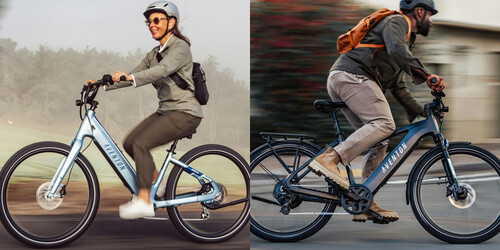
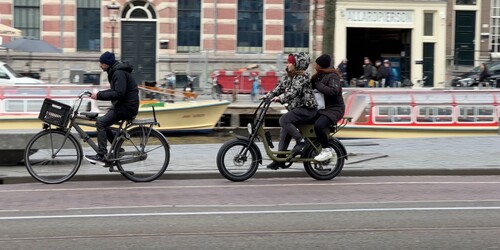
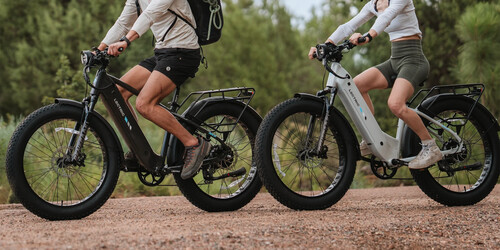
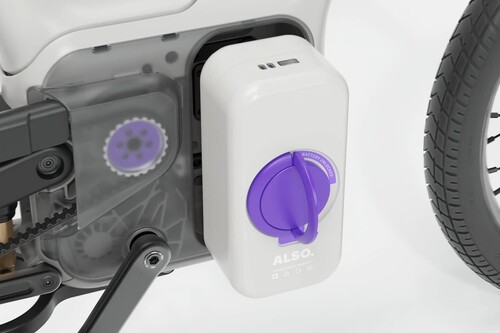
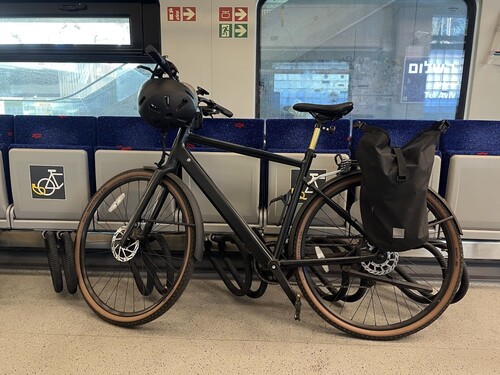
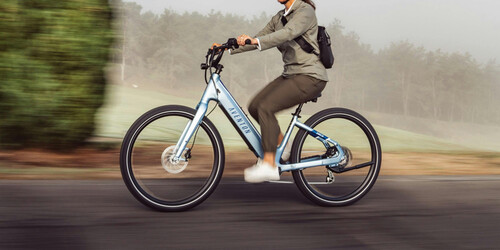
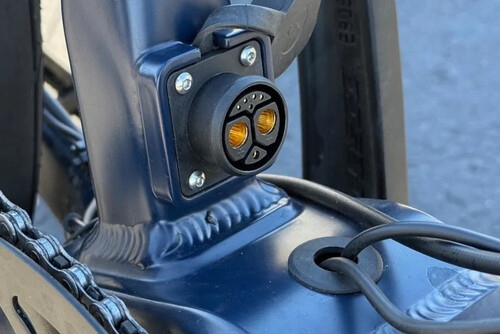
Ride1Up Vorsa ($1,695)This bike, in an elegant two-tone green, sits squarely in the middle of the market. The California-based company, established in 2018 and funded with a $6.5 million Series A round, got noticed pretty quickly for providing well-equipped bikes at reasonable prices.The Vorsa is targeted at the everyday rider, and indeed it quickly fit into my daily routine. The comfortable cruising dynamics are similar to my favored long-term-test Rad Power Radster Road ($2,195).For evidence that the Vorsa was built on a budget, there’s the absence of turn signals, but a brake light is very useful. The display is a color LCD, while many of the cheaper bikes use monochrome. The Velo-supplied seat is comfortable, the metal fenders built to last, and the stem adjustable.A nice feature of the Vorsa is the rider’s chosen level of pedal support remains in place after the bike is turned off—no need to reset it for every excursion. The levels have names: Tour, Sport, Turbo, and Boost. I leave it on Boost, which means I don’t have to use the tab-type throttle much at all. Go-to provider Shimano provides the eight-speed Acera shifting, but it isn’t necessary to change gears all that often. The hydraulic brakes stop the Vorsa without drama or squeak. The Vorsa has a 440-pound payload, and it’s a Class 1-3 e-bike, with up to 28 mph possible. The 750-watt AKM hub motor offers 70 lb-ft of torque. Range is from 30 to 60 miles, depending on conditions. I experienced closer to the latter in summer riding. The 15-amp-hour Reention Flamingo uses Samsung cells. Apple iPhone users will appreciate the Apple FindMy tracking, which helps get your bike back if it’s stolen, and theft is on the rise with the e-bike’s rising visibility and value. The rider can choose between a torque sensor and a cadence sensor, depending on usage, and they work very well to offset pedal fatigue. Lighting is LED. A couple of minor grumbles include charging pins that are easily bent, and the bike’s weight at 65 pounds. If you add on accessories—a front rack and basket, a rear rack extension, an insulated cooler—that goes to 70 pounds. My daughter wants an e-bike, but she doesn’t want to haul 70 pounds up steep apartment stairs every day.Engwe L20 2.0 ($799)Foldable e-bikes have their purpose. They can fit into small spaces and be carried onto trains and up stairs to apartments. They can fit into a car trunk. The main issue, though, is weight.This Class 2 Engwe L20 2.0 folds in half; its handlebars fold down and the pedals fold up. Although skinny, the bike weighs 68.3 pounds (nine of that battery). When Engwe hefting is anticipated, it’s better if you’ve been working out and are on the youngish side.The step-through Engwe, a useful upgrade from the introductory model, is very affordably priced for early-bird buyers. It’s a quality build, and it has power on its side. The 52-volt system is hooked into a 750-watt motor (1,125 watts peak with 55.3 lb-ft of torque). That means it can climb hills easily without the use of the included throttle. It has up to 84 miles of range. You don’t always get dual suspension at this price, but it’s on the Engwe, which is exceptionally composed over rough terrain. The brakes are mechanical—not hydraulic, there’s the economy kicking in—but work well enough. There are front and rear racks to carry stuff, though the front is an $89 option. The practical urban Engwe addresses the same market as the popular and quite affordable folding Lectrics. The two removable battery choices are units with 13 amp-hours (68 miles) and 16 amp-hours (the full 84). Shimano makes the seven-speed shifter. Level three pedal assist seemed just right.On the road, the Engwe’s hot rod motor is rather loud and keeps revving for a bit after you stop pedaling. It comes on rather abruptly with a surge, rather like a car with turbo lag. But once the rider knows what to expect, it’s comfortable enough for cruising. And the ventilated leather seat is nicely designed. The bike can reach 28 mph with pedaling. The more I rode this bike the more I liked it. Minor issues include a color screen that could be brighter, a kickstand that’s too upright, and some pulsing from those mechanical brakes (which got better over time). Turn signals would have been nice, but kudos for the brake light.Infinite Machine Olto (under $3,500)Now here’s something completely different. A Queens-based company (with production in China) has issued its second vehicle, following the much larger $10,000 P1 scooter last year. The Olto is a scooter/ebike hybrid, with the gimmick that it’s an e-bike for the urban bike lanes, and a scooter when you need it to be (with the pedals locked into place as foot pegs).The Olto has a 40-mile range via a removable 1.2-kWh battery pack with six-hour charges. A Supercharger with faster times is available, as is a home battery dock. The Olto has a bench seat like my Pedego Moto, and it’s a comfortable arrangement. The aluminum Olto has some clever features, such as a headlight with a bright setting, GPS, a video camera, and storage under the seat. Bluetooth is incorporated for various functions.I didn’t score a long-term loan with the Olto, but I did ride it around crowded Long Island City streets, and found it stable and well-mannered, with a clear display and good acceleration.People definitely notice it, thinking maybe a Cybertruck was hit with a shrinking ray. The styling is definitely polarizing—you love it or hate it. And the price is pretty high, considering the competition. The Olto is for riders who love to be different.