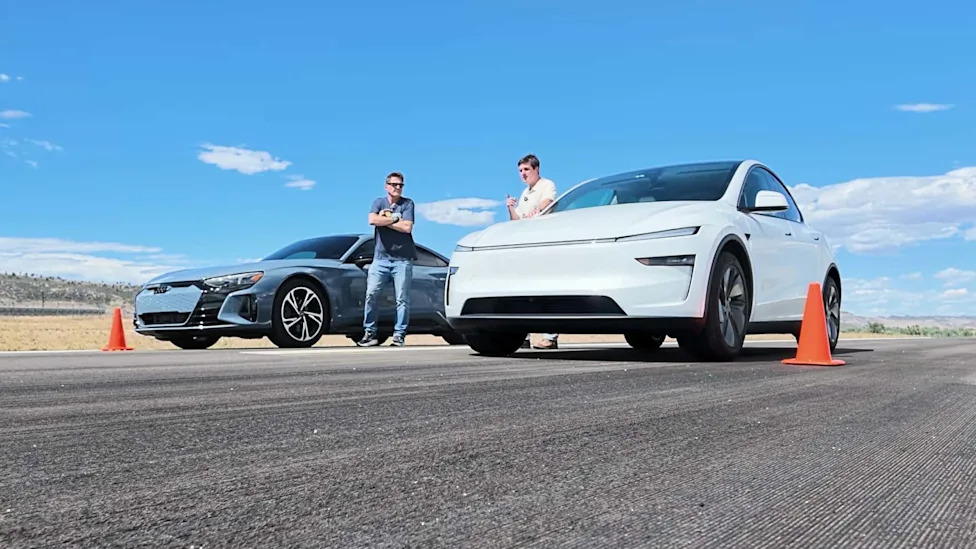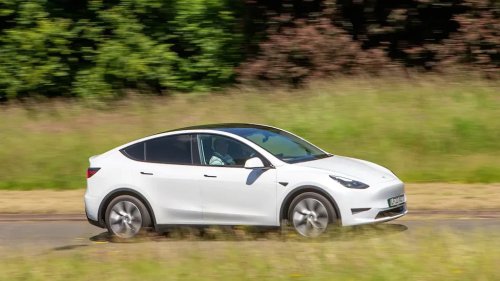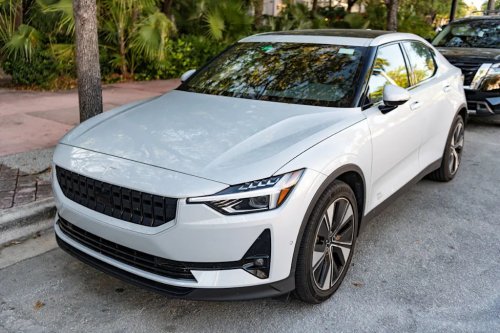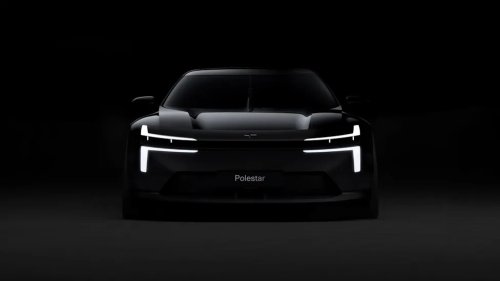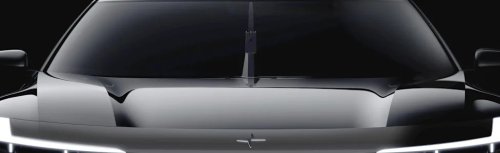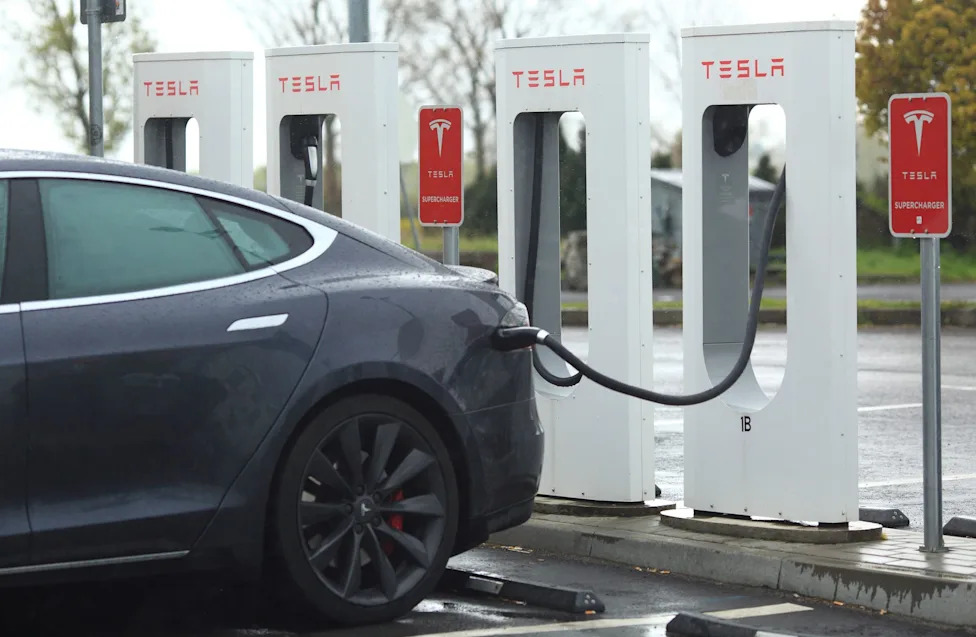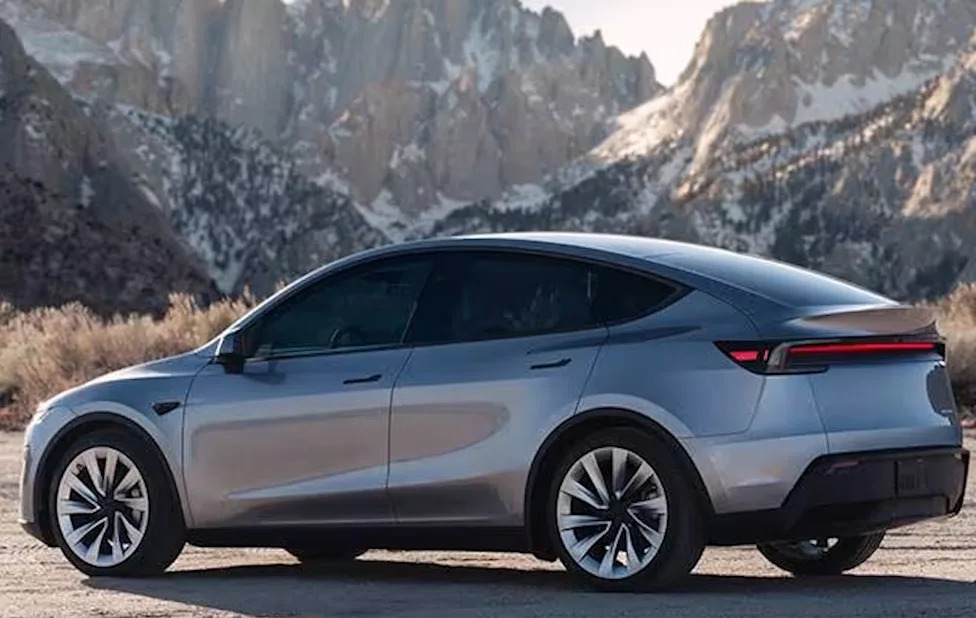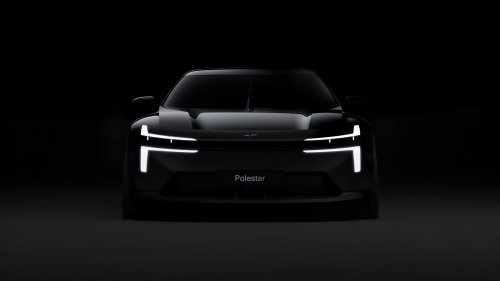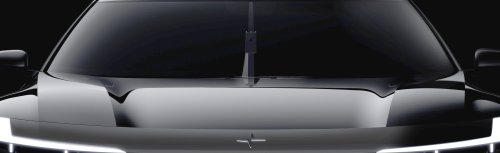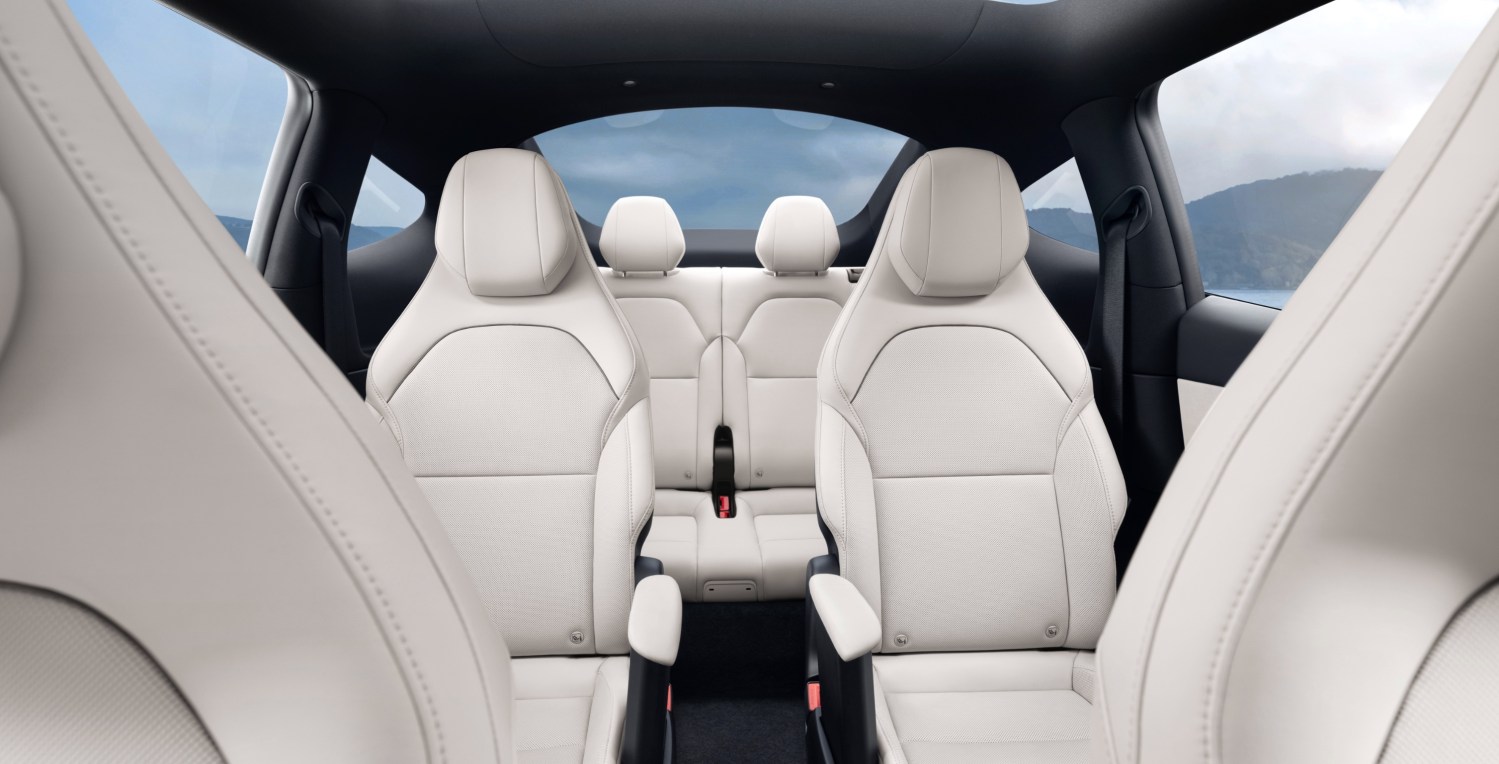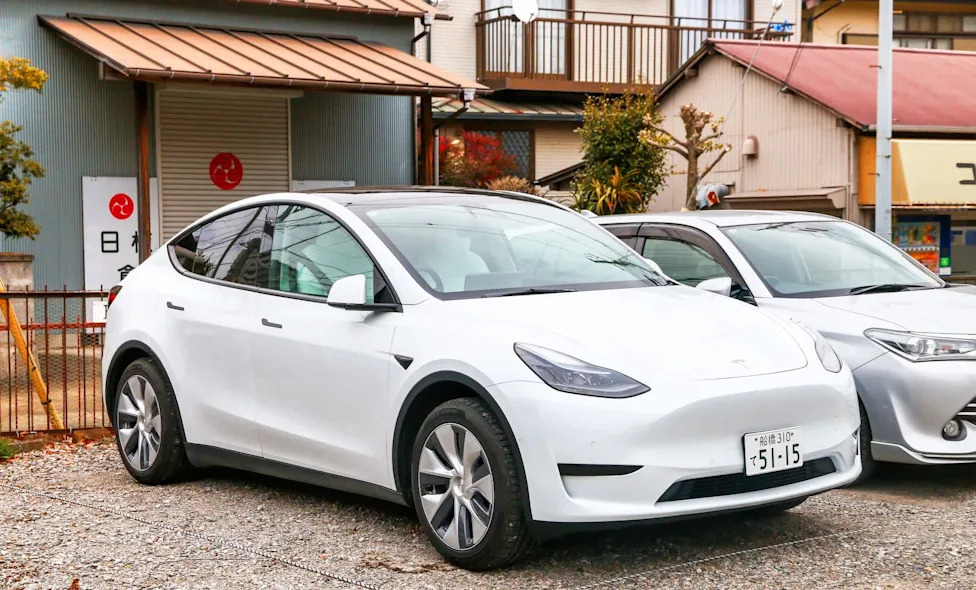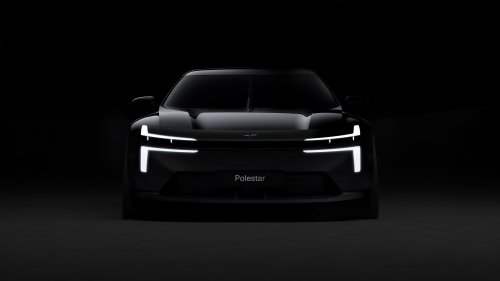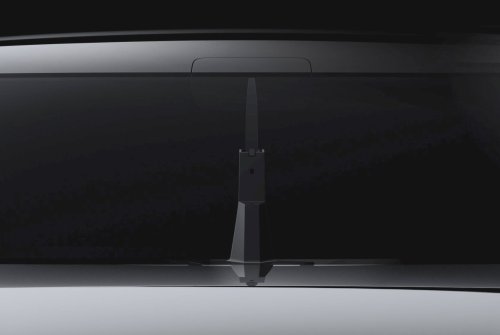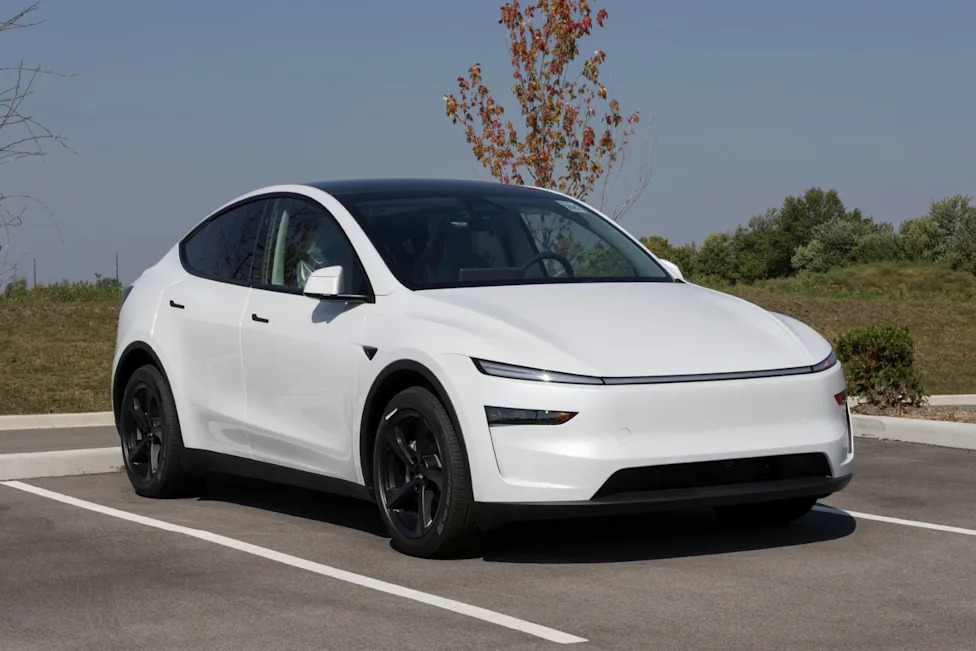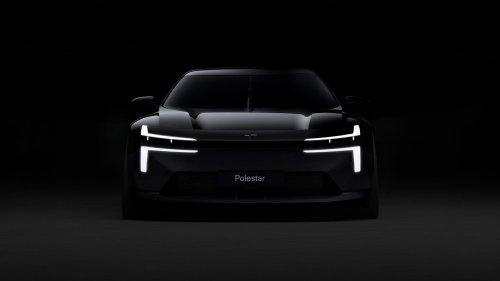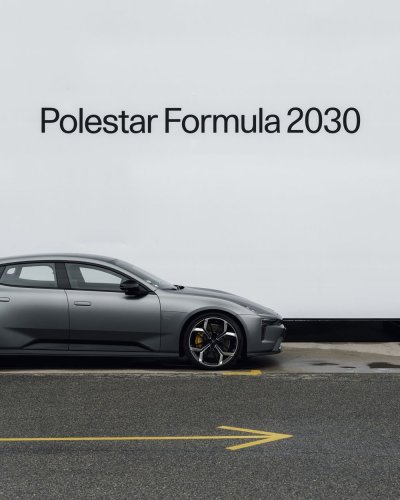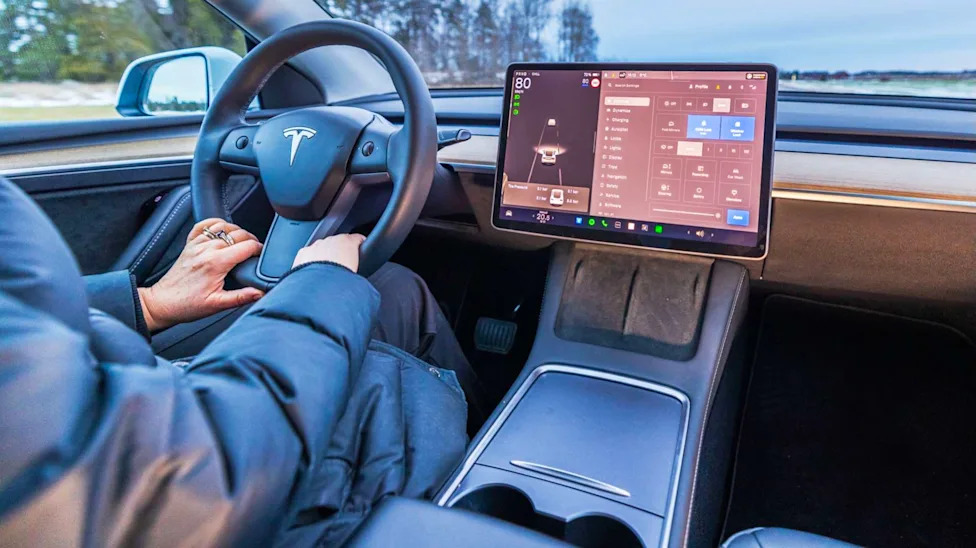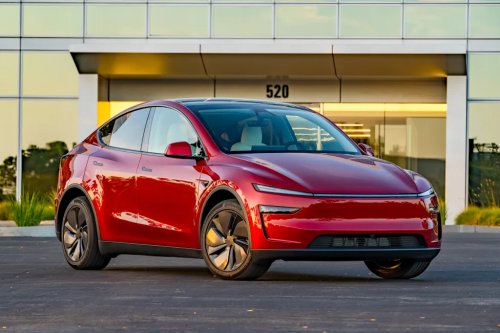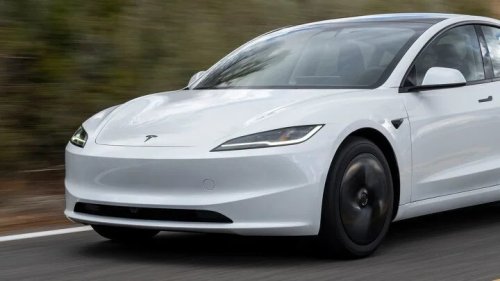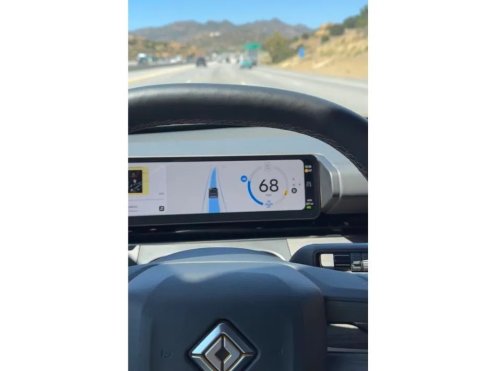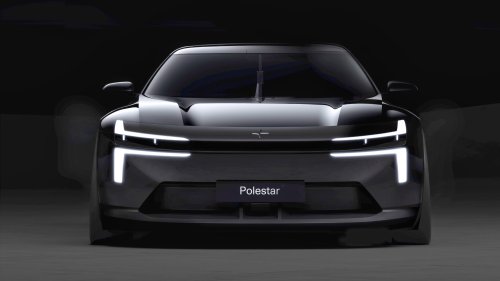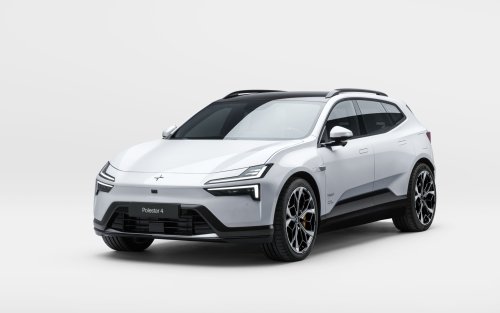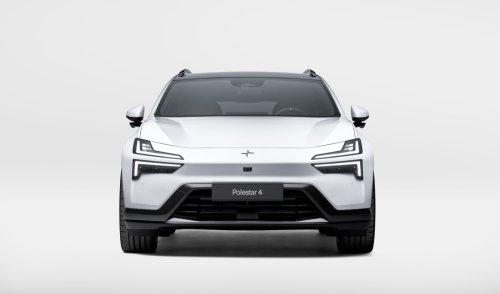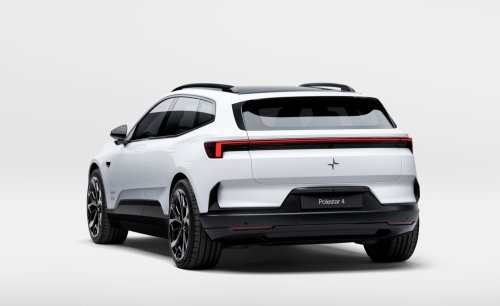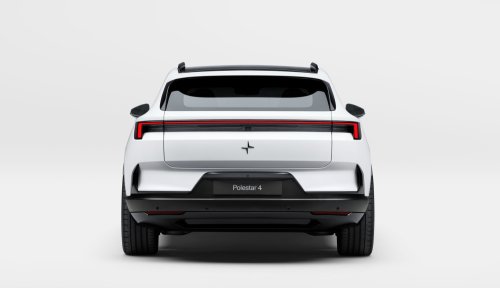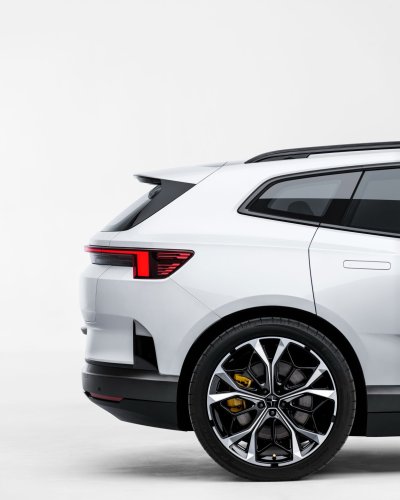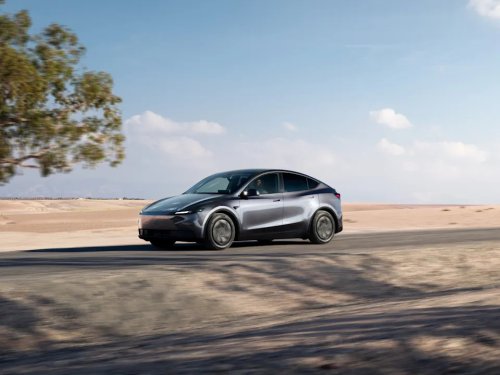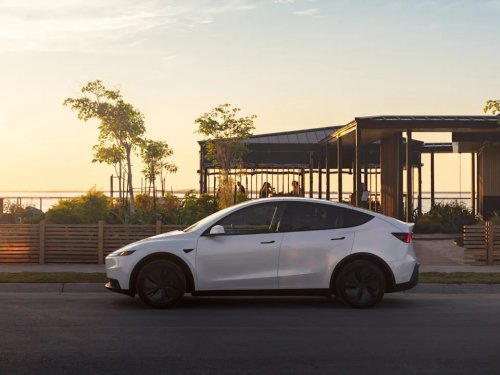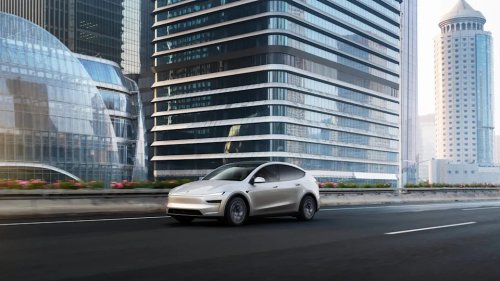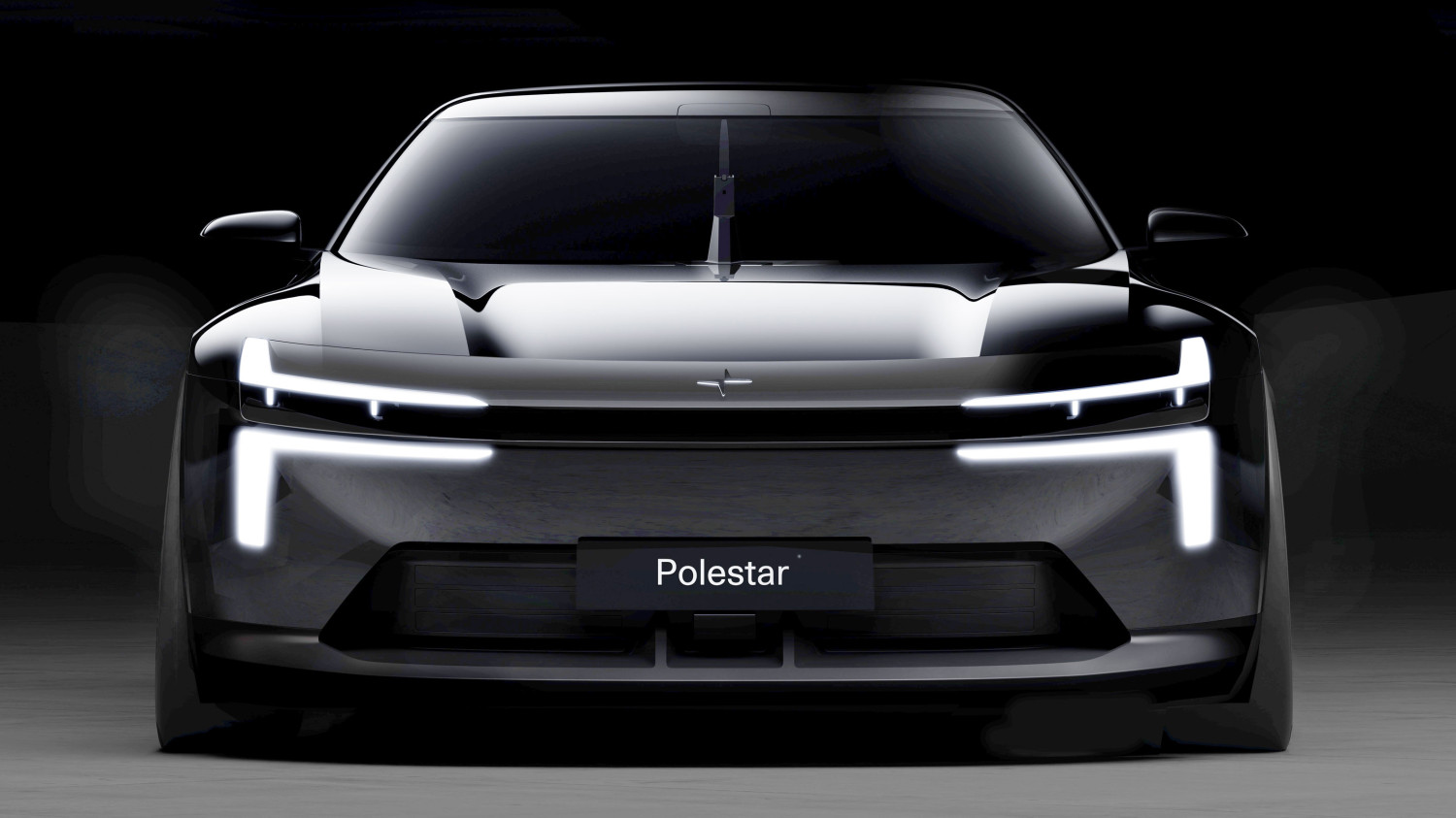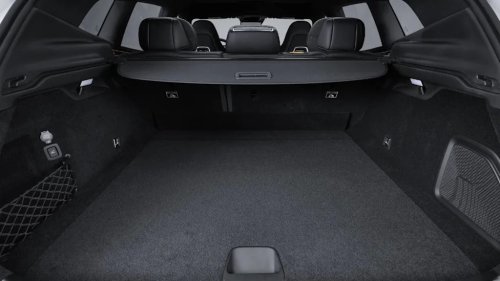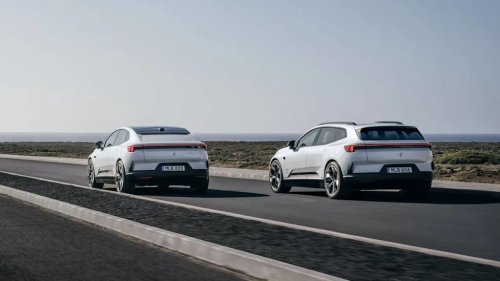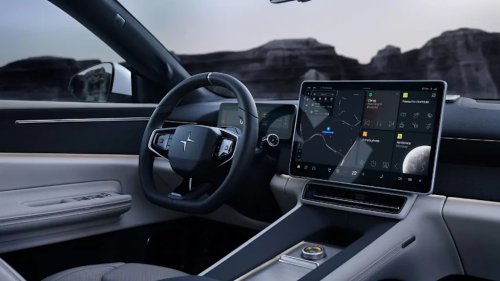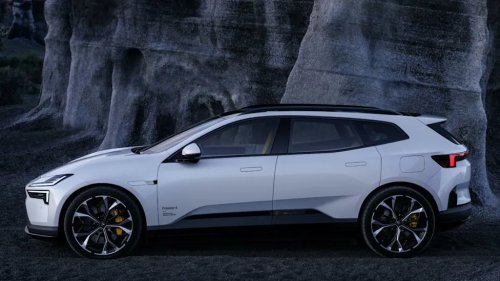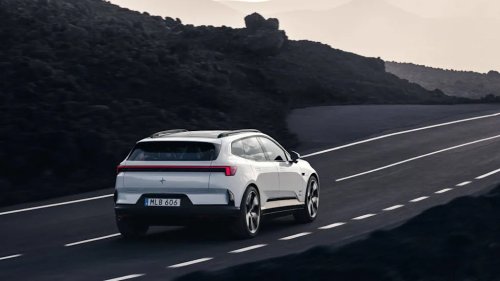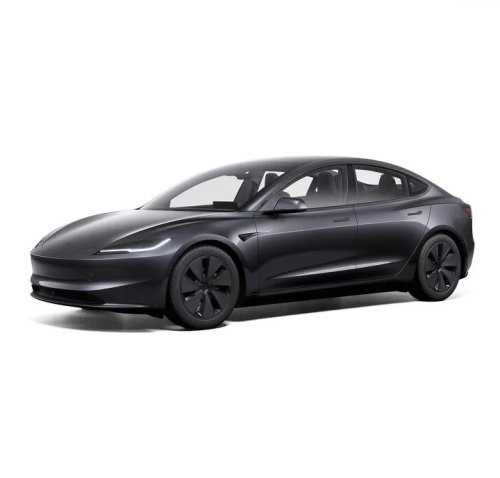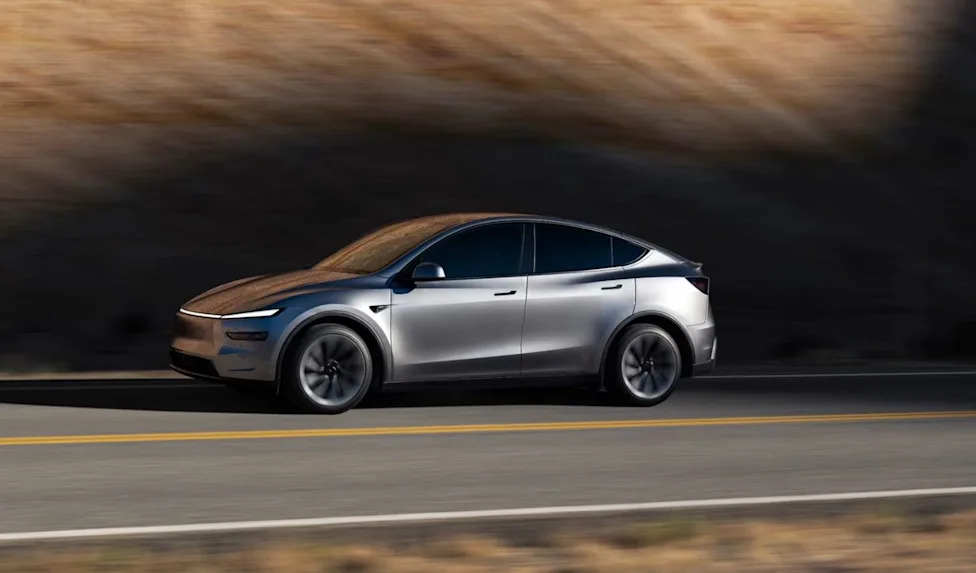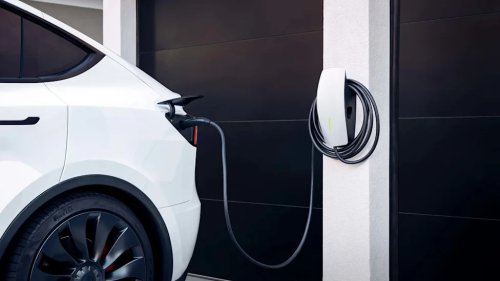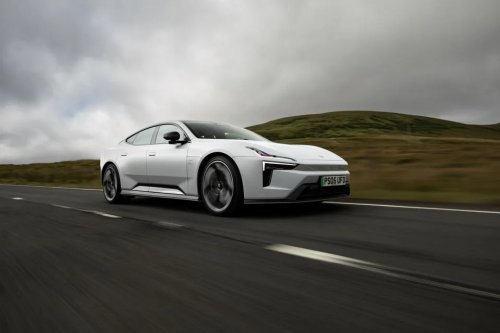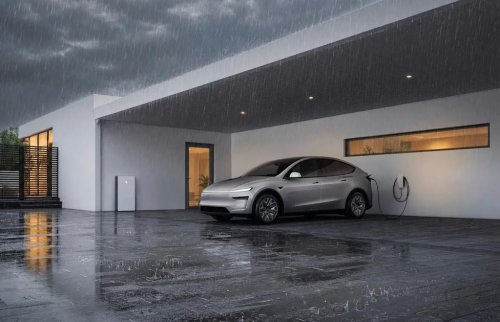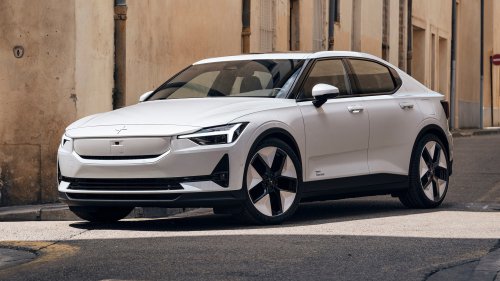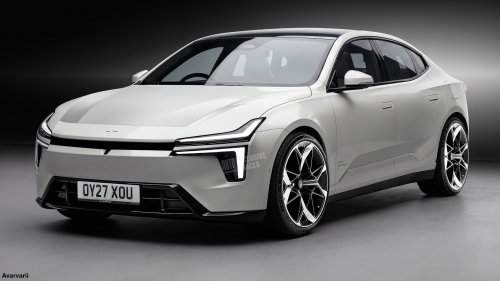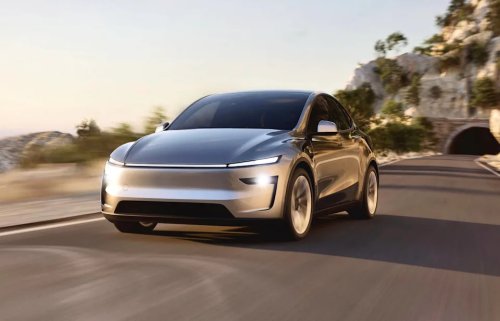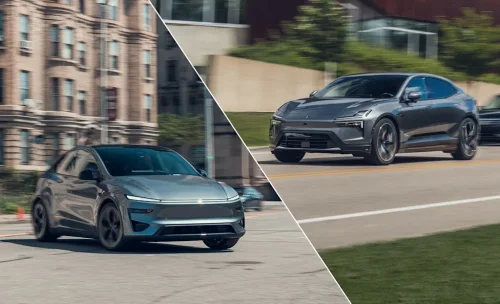
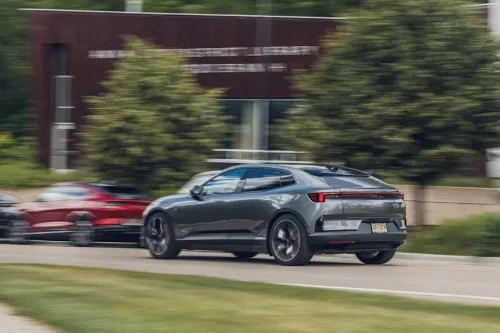
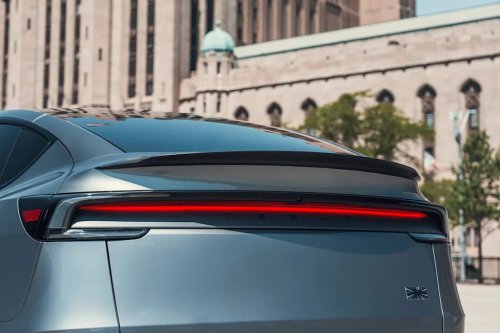
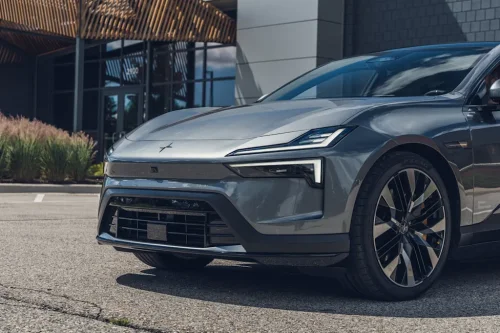
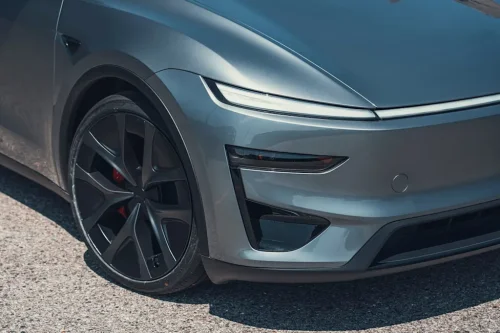
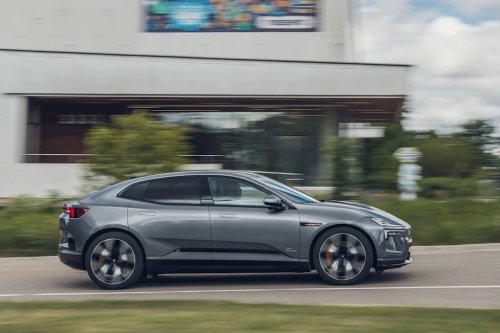
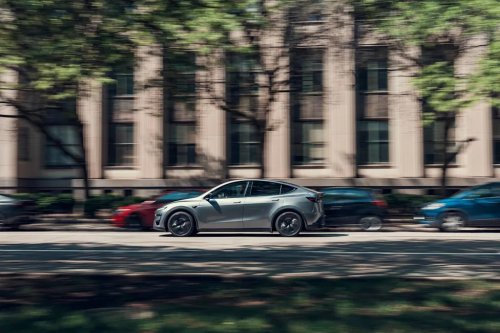
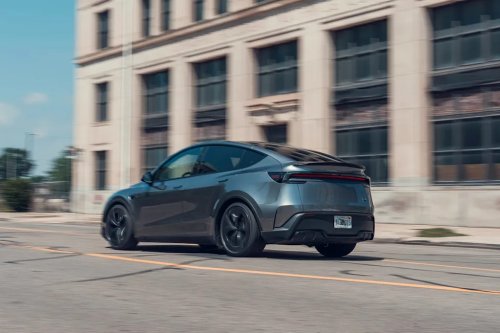



















Performance Model Comparo: Tesla Model Y vs. Polestar 4 Michael Simari and Marc Urbano - Car and DriverWe've reached a point in the electric vehicle evolutionary cycle where the basics are mostly covered, and now there's some room to explore a niche or two. There's no shortage of small electric SUVs currently on the market, and the luxury subcategory is rife with options, too, but what about something a little spicier? That leads us to this test's central question: What exactly does the word "performance" mean when it's tacked to the end of a compact electric SUV's nameplate? And who does it better?Our two challengers enter the frame from opposite positions. The Tesla Model Y couldn't be more mainstream—and not just by electric-vehicle standards. It was the bestselling car in the world between 2023 and 2025, cementing itself as the popular choice. In contrast, the Polestar 4 is a segment greenhorn, with 2026 being its first model year. It now also looks like it will be the 4's last one, at least in the United States, following the news that, starting with the 2027 model year, Polestar will be banned from selling new vehicles stateside under the Connected Vehicles Rule from the U.S. Department of Commerce's Bureau of Industry and Security. So it goes.Michael Simari - Car and DriverRegardless, we forge ahead. The Model Y has always been offered in Performance guise, but with the Y's 2026 refresh came a reinterpretation of the hottest trim's mission objective. The 2026 Model Y Performance has been stripped of some of its previous track-oriented features and is now aimed at pleasing more on winding back roads. Polestar hasn't had the luxury of experimenting with what works and what doesn't when spicing up one of its electric offerings, so the 4 Dual Motor with the Performance and Plus packs takes things a bit more seriously. Let's see if the rookie can topple the veteran.Exterior and InteriorThe Tesla's ovoid shape is well familiar at this point, as it hasn't changed much in the eight years since the Model Y's release. Its mostly unadorned body leaves little to talk about, positive or negative. The Model Y's 2026 refresh, which ushered in light-bar-style headlights and taillights, did breathe some life back into its maturing exterior design, but it only takes a glance to figure out which of our two contestants is Generation Alpha.AdvertisementAdvertisementThe Polestar 4's styling is so bleeding-edge that it teeters on the cusp of trying too hard. Its sharp, coupe-like profile is full of creases and acute angles, and while it achieves the Nordic sophistication expected from the brand, there are a few design decisions that probably should have stayed in the prototype phase. We still have difficulty accepting the 4's lack of a rear window. The digital rearview mirror does a good job of displaying a crisp image of everything looming between four and eight o'clock, but some drivers had spatial awareness issues relying entirely on an image filtered through a camera.Both cars exercise purposeful restraint inside, but the Polestar is superior in overall execution. Tesla can take credit for pioneering the techno-minimalist interior aesthetic that is present in both of these vehicles—and the current crop of EVs more broadly—but the Polestar fully realizes the less-is-more approach with its buttery-smooth textures and top-tier materials that create an almost spa-like cabin ambiance. The tranquil atmosphere was also elevated by some optional extras in our test car, including the $1500 electrochromic glass roof and $3700 nappa leather upholstery.2026 Polestar 4 Dual Motor Performance PlusHIGHS: Spa-like interior ambiance, brutal thrust and brakes to match, spacious rear quarters.LOWS: Discordant driving dynamics, touch-control overload, hefty price tag.VERDICT: Would have benefited from some more time in the oven.AdvertisementAdvertisementWhile the Tesla's cabin might lack the sensory intrigue of the Polestar's, the updated Model Y's interior is certainly a step up from its pre-refresh version. Its materials feel premium to the touch and more solidly screwed together. At first glance, you'd think the Polestar's rakish roof would really eat into trunk room, but the practical rear-cargo space is nearly identical to the Tesla's. In our testing, we fit seven carry-on suitcases behind the 4's rear seats; with those seats folded, we managed 20. These figures mirror those of the Model Y, except for the fact that we needed to make use of the Tesla's frunk to pack in the last of the 20 total carry-ons.Marc Urbano - Car and DriverIt shouldn't come as a surprise that the user experience of both of these hypermodern, reductivist EVs is almost entirely reliant on a central touchscreen. Both feature a huge infotainment display tacked onto the center of the dash, and both can be frustrating to use as a layperson. Nearly all important vehicle controls are nestled within menus, and outside of some steering-wheel buttons, the only physical control point in the pair is the Polestar's volume knob situated ahead of the front cupholders. While we'd prefer more tactile controls, both systems are intuitive enough after some dedicated fiddling time. There is more content to discover within the layers of the Model Y's interface, but it is also easier to navigate.In the Tesla, vehicle information is also displayed on its 16.0-inch central display, while the Polestar supplements its 15.4-inch main screen with a smaller digital display behind the steering wheel that moves some critical information, including the speedometer and battery charge indicator, to its rightful place in front of the driver.Michael Simari - Car and DriverPowertrain and PerformanceLook beneath the sheetmetal, and both challengers wield similar powertrain setups. The Polestar has the edge in output, delivering 536 horsepower to the pavement courtesy of two electric motors, one on each axle. The Tesla also features a dual-motor arrangement, but it trails the Swede in total output with its 510 horsepower. The Polestar's stable might be larger, but those extra ponies are fighting against a much heftier 5254-pound curb weight. The Model Y is 816 pounds lighter at 4438 pounds, but its relative svelteness didn't help it much in a straight-line drag. Both cars were neck and neck as they approached the 60-mph mark—the 4 winning by a nose with its 3.2-second finish versus the Model Y's 3.3-second result.AdvertisementAdvertisementTires also played a major role, as the Polestar's Pirelli P Zero PZ5 Elect summer tires, which were custom developed for the Performance pack, have a massive traction advantage over the Tesla's Hankook Ion Evo all-seasons. The discrepancy was also highlighted on the skidpad, where the Polestar decisively outgripped the Tesla, 0.96 g to 0.88 g. We're sure the margins would've been tighter on equal rubber, but you can't order the Model Y with summer tires, even in Performance guise.Marc Urbano - Car and DriverTesla Model Y PerformanceHIGHS: Confident handling, strong acceleration, still plenty comfortable for everyday use.LOWS: Flavorless design, critical vehicle info placed outside of the driver's sightline.VERDICT: Time and incremental improvements yield a satisfying result.Upgraded brakes are a part of the overall performance equation for both models, but the Polestar takes a more track-inspired approach with four-piston Brembo calipers paired with ventilated discs. The Model Y Performance's brakes are adapted from the ones found on the Premium trim, albeit with larger rear rotors and grippier pads. Both have plenty of stopping power, but the 4's beefier hardware hauled it to a stop from 70 mph in 169 feet compared to 179 feet for the Model Y, aided, of course, by the grippier summer tires.How They Drive and PerformAt this point, sickness-inducing acceleration isn't enough to make a performance EV stand out among similarly rapid contemporaries. And given that these are compact SUVs, we were looking for a more well-rounded approach while sussing out their abilities, although both were still very fast regardless.Michael Simari - Car and DriverAt the helm of the Polestar, the frenzied acceleration felt more difficult to manage. Its steering was the primary culprit, exhibiting a strange blend of pinpoint accuracy and utter numbness that made it difficult to place on demanding roads. The steering heft can be adjusted via the central touchscreen, but none of the three settings could imbue the tri-spoke wheel with any feel from the pavement beneath. The 4 with the Performance pack gets a specially tuned suspension with active dampers that offer Standard, Nimble, and Firm settings, but we couldn't find a sweet spot that truly balanced ride comfort and cornering balance the way that we'd like; the Nimble mode came the closest. Still, the ride was stiff enough to let small road imperfections penetrate the cabin but not quite taught enough to prevent a pervasive gelatinous feeling during hard cornering. With its excellent brakes and potent acceleration, there are certainly some high points within the Polestar's dynamic envelope, but the sum of its parts does not form a cohesive whole.Marc Urbano - Car and DriverStepping out of the 4 and into the Y, it is immediately clear that Tesla has had much more development time to dial in its SUV's on-road demeanor. Its most recent slew of updates addressed torsional stiffness, steering calibration, and suspension geometry, and unlike with the Polestar, everything jibes. The steering is crisp and offers reasonable feedback, and the adaptive dampers do a standout job mitigating body roll in their Sport setting. The consequence of the stiffer ride is slightly frenetic movement over crags and divots, but that can be mostly quelled by popping the dampers into Standard. In addition to the removal of its previous Track drive mode, the refreshed Y Performance also lost the ability to adjust stability control, battery conditioning, regeneration, and torque distribution. But we'd hazard a guess that most owners never even looked for those menu items anyway. Even in its dialed-back state, it's a solid performer where it matters.AdvertisementAdvertisementOf course, you also have the option to remove the driving experience almost entirely from the equation in the Tesla with its Full Self-Driving (Supervised) Level 2 autonomous system, which contradicts the purpose of this test but is still important to mention. While it had a few notable hiccups during our testing, there's a reason why it has garnered so much press, and that's because it works really well. It's also more accessible now, with Tesla offering it as a $99-per-month subscription rather than an $8000 option as it was previously. The Polestar doesn't have anywhere near the same capability as the Model Y, but it does come with the company's Pilot Assist system that has some steering assist and lane-position-holding abilities.Range and ChargingNot only is the Model Y the more buttoned-down of the pair from a performance perspective, but it also has the edge in matters pragmatic. The Tesla earns a 306-mile estimate from the EPA; that's a significant 51 miles more than the Polestar 4's 255-mile EPA range estimate. Neither of the challengers was able to meet their government figures in our 75-mph highway range test, but the Polestar got closer. In our hands, the 4 traveled 250 miles on a single charge, while the Y managed 270 miles. You'll be waiting longer for the Polestar at the charger too. Its 94-kWh battery pack is larger than the new 81-kWh pack found in the Tesla, and the 4 is capped at a peak charge rate of 200 kilowatts compared to 250 kilowatts for the Model Y.And the Winner Is . . .In this case, experience prevails. While the Polestar 4 certainly has some enviable qualities—including its deluxe and spacious interior, ferocious acceleration, and full-bodied brakes—we couldn't shake the feeling that it wasn't quite fully baked. That's especially true when viewed through a performance lens, where its chassis dynamics left a lot to be desired. Then there's its price, which makes it even harder to justify when it comes to overall value. The Performance pack adds an additional $4500 to the Polestar 4 Dual Motor's already-lofty $64,300 base price, and with the previously mentioned interior accoutrements, metallic paint, and the $5500 cabin-enhancing Plus pack, our test vehicle's take-home price ballooned to a truly stratospheric $80,800. If the Polestar's combination of virtues does pique your interest, now's your time to act, as the 4's time on U.S. soil is limited to how long it takes the company to sell off its existing inventory.Marc Urbano - Car and DriverAs with most of Tesla's offerings, the Model Y has always offered a lot for the money, and that is still the case here. You can take home a Tesla Model Y Performance for $59,630, and it's truly astounding how much car you get for that price. Its cabin environs might not coddle the same way as those in the Polestar, and it certainly lacks the aesthetic flair that would make the 4 a hot topic at any industrial design conference, but the Model Y feels like a fully resolved car. It grips in the corners, it's a rocket between stoplights, and it rides well enough to be comfortable in everyday situations. In short, it does what it needs to do to earn its performance badge without betraying its usefulness as a compact electric family SUV.AdvertisementAdvertisement➡️ Skip the lot. Let Car and Driver help you find your next car.Shop New Cars Shop Used CarsYou Might Also LikeGift Guide: Best Ride-On Electric Cars for KidsFuture Cars Worth Waiting For: 2025–2029