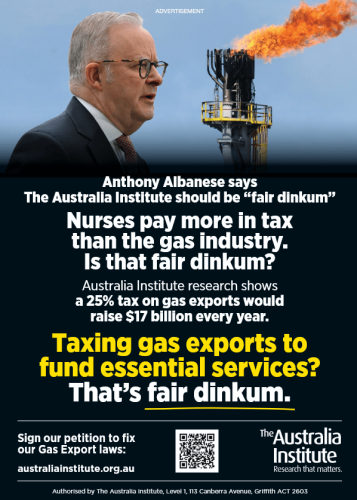
The most talked-about economics book of 2026 fits in your jacket pocket. Here are the five things you need to know. Gabriel Zucman is having a moment. The Paris-born Berkeley economist who coined the term “tax haven” and mapped the hidden wealth of nations is now one the most famous economists globally. His new book, We Need to Tax Billionaires (French original: Les milliardaires ne paient pas d’impôt sur le revenu, Le Seuil), is barely 60 pages long. But it has rattled billionaires, sparked a parliamentary vote in France, and put a concrete policy proposal on the table at the G20. Here’s what matters and why it’s simple. Billionaires pay less tax than their secretaries, and it’s not an accident. The core finding of Zucman’s research is that the very top of the wealth distribution — dollar billionaires — pay a lower effective tax rate than middle-class workers in every country studied, including the US, France, Germany, and the Netherlands. This isn’t a bug or an oversight. It’s the result of deliberate legal structuring. Ultra-wealthy individuals park their assets in holding companies, avoid paying dividends, and never trigger a taxable event. Income taxes were built for wage earners. They don’t touch wealth that never moves. The fix is simple: a 2% minimum wealth tax on fortunes above €100 million. Zucman’s proposal — already dubbed the “Taxe Zucman” in France — is deliberately modest. Anyone with net worth above €100 million would owe a minimum of 2% of their total wealth annually, regardless of how they’ve structured their affairs. This isn’t a wealth tax in the traditional sense. It functions as a minimum income tax guarantee: if you’ve already paid the equivalent of 2% of your wealth in regular taxes, you owe nothing extra. It’s a floor, not a ceiling. The revenue numbers are serious money. Applied globally to the roughly 3,000 dollar billionaires worldwide, a 2% minimum tax would raise around $250 billion per year. Extended to centi-millionaires — those worth over $100 million — the number climbs by another $140 billion annually. In France alone, where the 500 richest individuals have grown from 6% to 42% of national GDP over 30 years, the measure would apply to about 1,800 people and meaningfully close the budget deficit without austerity cuts. The “they’ll just leave” argument doesn’t hold up. The most common objection is capital flight. Zucman’s answer is coordination, the same mechanism already used for the global 15% corporate minimum tax, now in force across 130+ jurisdictions. Once enough major economies participate, there’s nowhere meaningful to flee. His proposal also includes an exit tax for anyone renouncing residency to avoid the levy. Stanford research cited in his analysis shows billionaires are actually less likely to relocate than the general population — the ecosystem of deals, advisors, and influence that makes them rich keeps them rooted. This is a democracy argument as much as an economic one. Zucman’s sharpest point isn’t technical, it’s political. Extreme wealth concentration means extreme power concentration: the power to buy competitors, shape regulation, fund political movements, and set the terms of public debate. Progressive taxation, he argues, isn’t just about revenue. It’s the mechanism by which democracies prevent permanent oligarchy. “Wealth is power,” he writes. Letting billionaires compound at 7–10% per year while paying 0–1% in taxes is a choice. A different choice is available. We Need to Tax Billionaires is published in English by Hodder & Stoughton (ISBN 1399839608) and in German as Reichensteuer. Aber richtig! by Suhrkamp Verlag. It’s available on Amazon and at all major bookshops.



















 +45 others