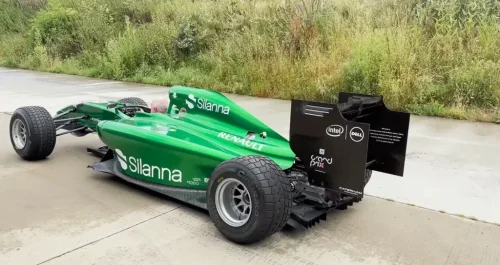
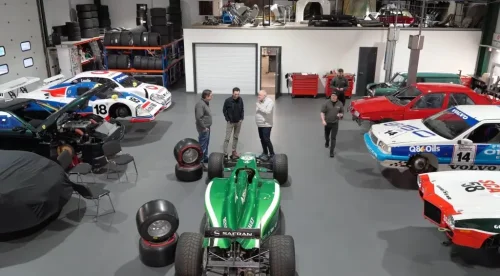
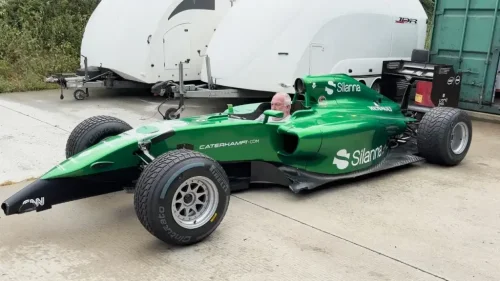
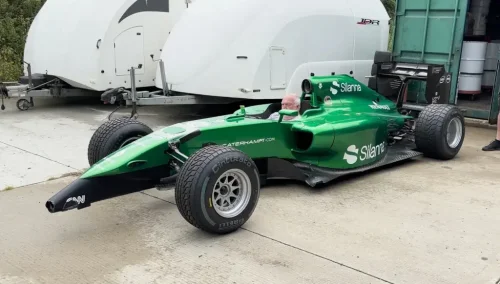
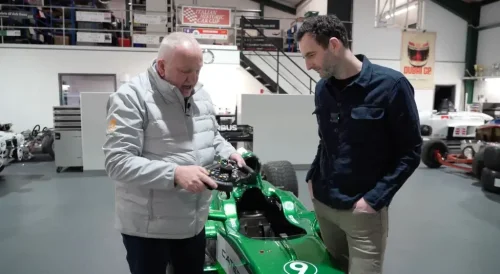
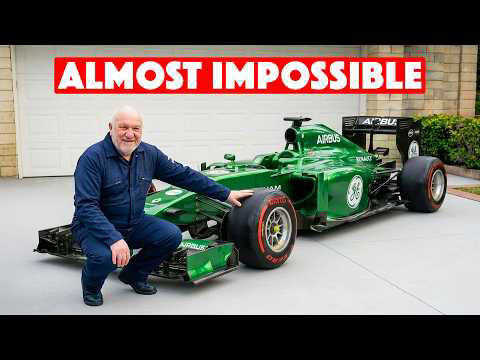
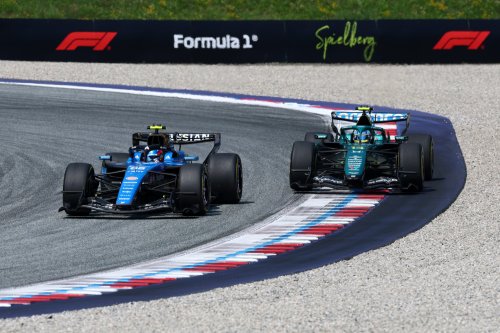
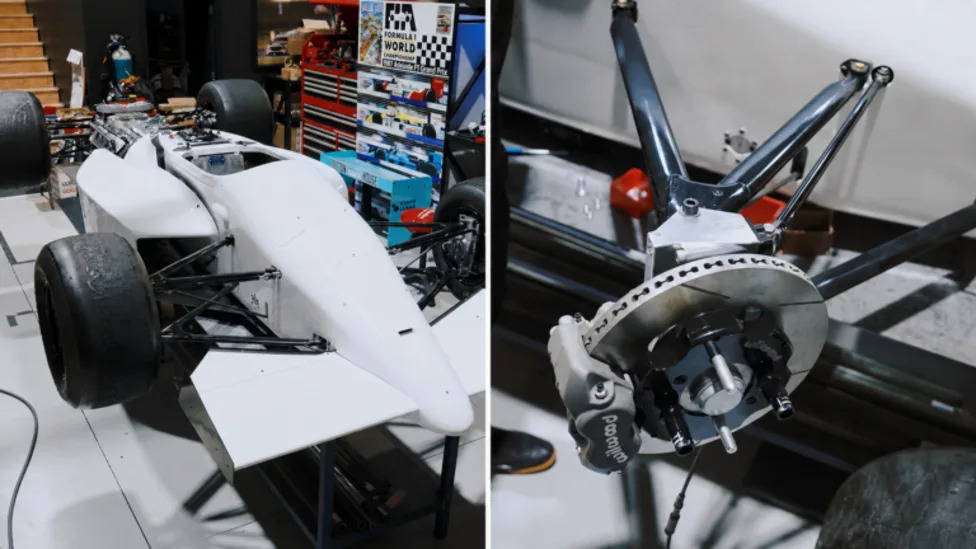
He spent 10 years and six figures rebuilding the car, a process that also came with a lot of inevitable compromises. The price of the steering wheel alone will shock you. Still, at least he now has his own F1 car. Buying an F1 car is difficult, but not for the reasons you think Counter-intuitively, buying an F1 car is probably just as difficult as people think, but not for the reasons you might think. Most F1 cars end up in museums or private collections, especially the title-winning ones, but even more are stored away by the teams for intellectual property (IP) protection. Kevin Thomas/Driver61 Kevin Thomas, an electrician from Burgess Hill – a town in the UK around 40 miles south of London – managed to do exactly that. And then he spent the next 10 years rebuilding his F1 car. It all started with a crash Kevin Thomas/Driver61 The project began with the remains of a Caterham F1 car that was severely damaged in a high-speed crash by driver Marcus Ericsson at the 2014 Hungarian Grand Prix. Following Caterham F1’s bankruptcy later that year, the destroyed ‘tub’ of the car (the carbon fiber chassis) was auctioned off for the surprisingly low sum of £5,000 – around $6,700. Kevin Thomas/Driver61 Kevin spent the next 10 years hunting for original parts both in and outside of the UK, which was tough and expensive. For reference, the steering wheel alone cost him twice as much (£10,000) as the chassis. Buying or renting a compatible, official Renault power unit was completely out of the question. Kevin Thomas/Driver61 “[Renault told me] we’re happy to rent you one, for €2 million a quarter. But we then need to give you a set of our Renault technicians that have to come over, that you have to pay for, to rebuild it after a quarter,” he said. That’s why Kevin ended up integrating a smaller Formula Renault engine – a crucial compromise for the build The host of the Driver61 YouTube channel talked about Kevin’s experience, and he explained why the engine was so important. Kevin Thomas/Driver61 “In an F1 car, the engine isn’t just bolted into a chassis like your road car. It is the chassis. It’s what’s called a stressed member, meaning the back half of the car literally hangs off it. Without the engine, the car would split in half,” he explained. Then came the final (and probably most annoying) part of the deal: the wiring and the electronics. In late 2024, Kevin took the car for a spin for the first time and now, in 2026, the car is track-ready. In total, it cost him between £150,000 and £200,000 – equivalent to $200,000-$270,000. That is not cheap, but definitely a lot less expensive than buying a used F1 car.