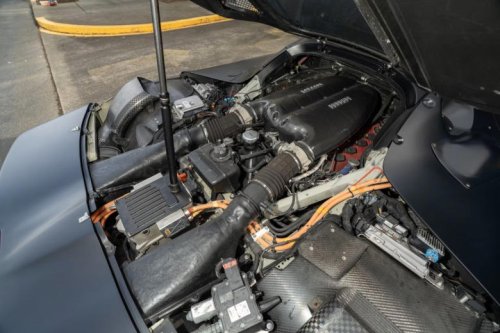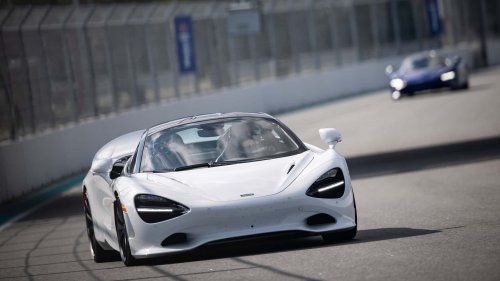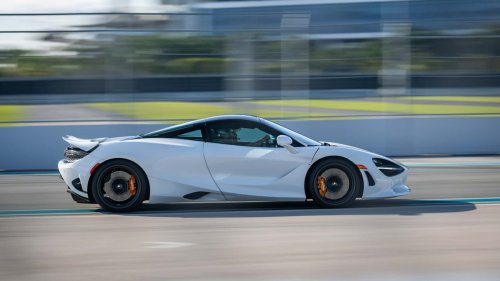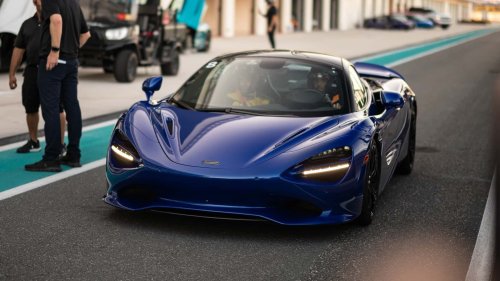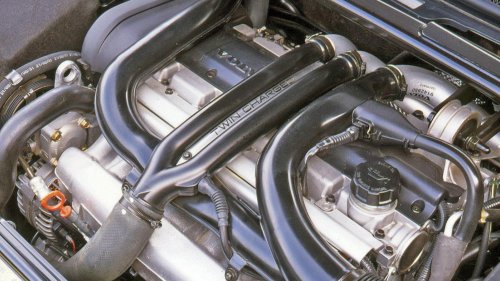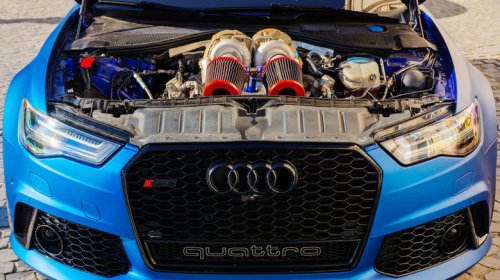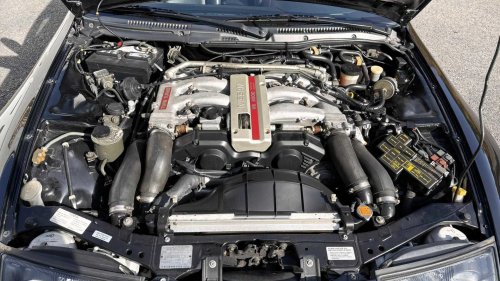
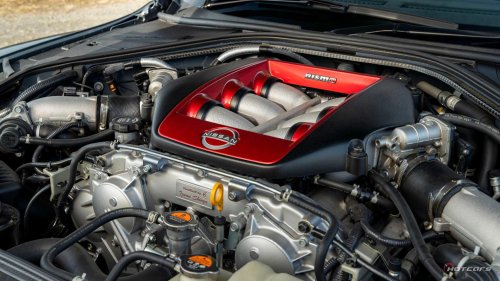
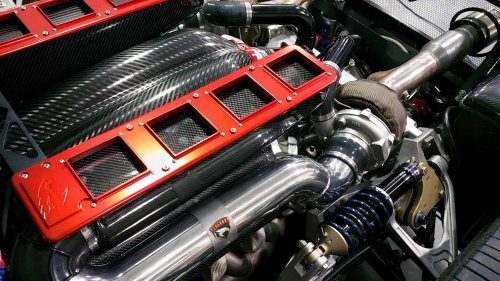
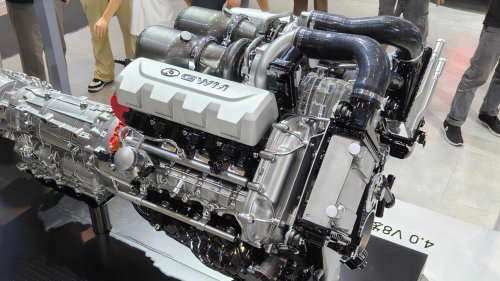
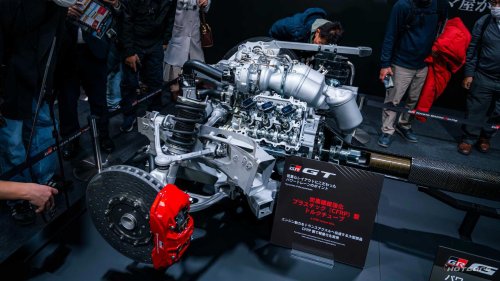



















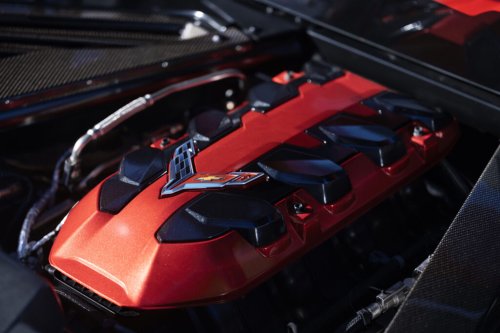



Before 1981, performance was simple. Auto manufacturers just created bigger engines, more cylinders, and louder exhausts like the Pontiac 7.5L V8 engine, used in models like the GTO, Firebird Trans Am, and Grand Prix. Back then, naturally aspirated power was the primary design, and engineers achieved speed solely through displacement. When turbos entered the picture, everything changed. These were small turbines designed to turn wasted exhaust heat into usable power. This was when the industry discovered that a small engine could be wired to punch far above its weight. During this time, the single turbo was king, until it wasn’t.By the time the industry began demanding more power, builders ran into the same problem they'd always had: size. A larger turbo made more boost, but at lower RPMs, it took longer to spin, building speed much slower and hindering drivability. Auto manufacturers and engine tuners needed to stop engines from being laggy, high-strung monsters by finding another way to move more air. They figured out that they had to build two turbos instead of one bigger turbo. That's when the 1981 Maserati Biturbo entered the scene.Unlike a single turbo that handled all exhaust flow, the twin-turbo setup used two smaller units working together to split the workload. Power delivery suddenly became smoother, response became faster, and performance ceilings went higher. But twin turbo systems aren't always the answer. With performance-focused V engines and builds wired specifically for high-output, the twin-turbo setup thrived.Let's break down how these systems work, why they were the step up from the single turbos, and why they are the better options over other forced-induction options. What Is a Twin Turbo Setup? (And What It Is Not) via Bring A Trailer A twin-turbo setup uses two turbochargers in a forced-induction system, working together to supply compressed air to an engine. The goal is to split exhaust energy between two turbos rather than forcing one large unit to do all the work. This helps engineers achieve smoother power delivery, faster response, and higher sustainable output.The arrangement of these twin turbos in most production and performance cars is deliberately so that each turbo handles half the engine’s exhaust flow. That puts one turbo on each cylinder bank on V-engines. Meanwhile, airflow gets divided in inline engines to ensure both turbos share the load evenly. This division allows the turbos to spool sooner and even more predictably by reducing rotational inertia. In single turbo engines, one turbo feeds the entire engine. This system is simpler and cheaper, but it has to be large enough to support peak power. This often increases lag. But, in twin turbos, two turbos bear the workload simultaneously. This provides better response and top-end performance. Then, there's the sequential turbo system – a more complex and less widely implemented two-turbo system – where two differently sized turbos activate at different RPM ranges, one for low speed, one for high speed.However, it's important to note that twin turbo doesn't mean twice the boost. They regulate boost pressure and improve airflow and efficiency. This doesn't automatically make it better. Twin setups add heat management challenges, cost, and complexity. In the real world, approximately 60 percent of modern performance V6 engines are designed as twin turbos as they're the best for drivability and emissions control, rather than single large units. With twin turbo V8s like the AMG, it's easier for engineers to exceed 600–700 horsepower in factory form without compromising street reliability, like the 4.0-liter twin-turbocharged V8 engine in the McLaren 720S that churns out 710 horsepower. The 4.0-liter twin-turbocharged V8 engine in the new Aston Martin Vantage S also produces 670 horsepower. This is nearly impossible for large single turbos to achieve without compromises. How a Twin Turbo Engine Works (Step-by-Step Airflow Story) Claire-Kaoru Sakai, Ayesh Seneviratne / HotCars As already discussed, twin turbo engines efficiently and quickly turn exhaust waste into controlled airflow. Hot exhaust gas exits the cylinders when the engine burns fuel and is routed to spin turbines. In this setup, on V-engines, each turbo is fed by one cylinder bank, while in inline engines, the exhaust is divided evenly. Each turbo spins faster with less effort when it handles less gas. The compressors pull in fresh air with the spin of each turbine and compress it, sending it to the engine. Since it uses two compressors, it moves more air with less delay than one large unit.Either a shared or dual intercooler cools down this compressed air as it gets hot, increasing air density, because denser air equals more oxygen, which equals more power. On smaller turbos with lower inertia, they improve throttle response and drivability by reducing lag, spooling quicker, and delivering boost earlier. Like in the 4.0-liter V8 biturbo M178 engine in the Mercedes-AMG GT, the electronically controlled wastegate on each turbocharger regulates exhaust flow to prevent overboost, ensuring both turbos deliver equal and controlled boost. The ECU manages these to balance pressure. Twin Turbo Configurations — Parallel vs Sequential vs Twin Scroll Falcon It's necessary to understand that not all twin-turbo setups work the same. First, there's the popular parallel twin turbo system, especially on V-engines. One turbo is assigned to one of the cylinder banks, ensuring each turbo handles only half the exhaust flow, operates at the same time, doing the same job, and invariably spools faster than a single large turbo. Most modern twin-turbo V8 and V6 engines, like the Audi SQ7 TDI, Mercedes-AMG C63, and the BMW M3/M4, use this system because they are simpler, more reliable, and easier to tune.The sequential twin-turbo systems employ two different-sized turbos. A small turbo is engineered to deliver boost at low RPM for quick response, while to support top-end power at higher RPM, a larger turbo takes over. In theory, this is supposed to provide the best of both worlds, but in practice, the fact that it requires actuators, valves, and tuning makes it harder to maintain, because of its complex nature and how expensive it is. This is primarily why it's rarely used today, unlike in the 90s with options like the Toyota Supra (A80), Mazda RX-7 (FD), and Porsche 959.Then, there's the twin scroll turbo. This system is often misspelled as twin turbo, but it is still one turbocharger and not two. Its unique design helps it separate exhaust pulses into two channels to improve spool and efficiency. In vehicles like the BMW 335i, Supra, and Subaru WRX, this design is primarily for fast response and strong midrange without the cost and complexity of dual turbos. Twin Turbo Performance in the Real World (V6 vs V8 Applications) Great Wall Motor In a V6, the parallel twin-turbo system is perfect. On each cylinder bank, each turbo creates short exhaust paths and a fast spool. In this layout, efficiency is easier in the packaging. It's easier to avoid excessive heat buildup when high-output engines are fit into these tighter engine bays. Unlike larger naturally aspirated engines, at low RPMs, the engine produces smooth midrange torque and better fuel efficiency. This produces the kind of balance that makes twin-turbo V6s dominate performance-oriented SUVs and modern performance sedans.In a V8, the twin turbo takes the concept further. The twin turbo setup delivers more horsepower from less displacement due to its exceptional power density. The twin turbos move massive amounts of air from the increased number of cylinders, producing exhaust energy without having to rely on a single oversized unit. The twin turbos are wired to ensure the horsepower ceilings are safe even as they're higher, without extreme boost pressure. Torque arrives much earlier than the V6s, and stays flat across the rev range. Heat management is more critical in this setup, but when done right, the performance is excellent. That's why it's favored on luxury performance cars like the Bentley Continental GT, and supercars like the 1,064-horsepower Chevrolet Corvette ZR1. Twin Turbo Kits — Pros, Cons, and Who Should Actually Buy One Ayesh Seneviratne / HotCars Using a twin turbo kit is not like plug-and-play body kits; they require a system-level commitment. To get the system optimal, it requires proper tuning. Most twin turbo kits include two turbochargers, wastegates, blow-off valves, charge piping, intercoolers, exhaust manifolds, oil and coolant lines, and all the necessary hardware you'd need to integrate everything into your engine. The installation process is a lot more complex than on single turbo kits. Labor time is higher because it requires more plumbing, tighter packaging, and tuning requires careful boost and pressure balancing. It's also more expensive because of the added complexity. These twin turbo kits typically cost $1,000 to $4,000 more than single turbo kits in parts alone, while with professional installation and calibration, it can significantly increase the total investment cost gap to approximately $10,000 to $15,000.One Audi R8 ALPHA Twin Turbo Kit on AMS Performance is priced at $33,999.95; meanwhile, a Mustang GT 5.0 Coyote Single Turbo System on On3 Performance could cost up to $6,278.90. However, the massive price gap could be attributed to the class gap in the vehicles. So, who should buy one and why? If you're planning a budget build, a single turbo or a twin scroll kit is the best option. The installation is simpler, but this means outright peak isn't your goal. But, for street performance and track-focused builds, you'd need to shell out the extra cash for twin turbos. They are the best option for smoother power and better drivability.