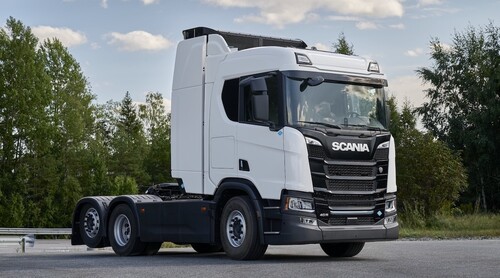
Now US President Donald Trump has upended global fuel markets by waging a war against Iran, policy makers around the world are scrambling to secure alternative fuel supplies. That includes Japan, where the longtime dream of a “hydrogen society” has grown to embrace a new green hydrogen alliance with New Zealand, along with plans for a hydrogen-powered freight shipping corridor between Fukushima and Fukuoka prefectures. The Hydrogen Society Meets Reality The hydrogen society concept refers to the broad application of hydrogen as an energy resource across all sectors, including transportation and residential use as well as heavy industry. The use of hydrogen in refining, steelmaking, fertilizer production and other leading industries long predates the 21st century, but the granular application to individual vehicles and household appliances is a new development, and it is far more challenging. Adding to the challenge is the lack of a sustainable source of hydrogen. The global hydrogen supply of today is extracted almost entirely from natural gas, with coal chiming in to a lesser extent. Alternative sources are available, including water, biomass, wastewater, and discarded plastics, but they have been slow to gain traction. Water electrolysis systems that run on renewable energy have attracted the most attention from public and private sector investors so far, but many projects have fallen by the wayside in recent years. As a new product, green hydrogen has struggled to achieve the efficiency and economy of scale that would enable it to compete on cost with conventional hydrogen. Still, China has cracked the green hydrogen scaleup code, and US President Donald Trump’s war in Iran has provided Japan and other Asia Pacific nations plenty of incentive to double down on alternative hydrogen resources. Green Hydrogen For Fuel Cell Trucks, Eventually Toyota has been among the leading industrial stakeholders promoting the hydrogen society concept in Japan, and the company has been notorious for persisting on fuel cell vehicles even as other automakers move on. Green hydrogen provides the company with a chance to shed the fossil fuel baggage of a hydrogen-fueled society. In 2015, Toyota announced the launch of the Japan’s first green hydrogen facility. Located at a seaport, the wind-powered electrolysis system was earmarked for producing and storing hydrogen for fuel cell forklifts at the port. Further development of a domestic green hydrogen industry has been slow, but the country’s trade relationship with renewables-rich New Zealand provides domestic stakeholders with new import opportunities. Last month, for example, Mitsui O.S.K. Lines (MOL), Obayashi Corporation, Kawasaki Heavy Industries, and Chiyoda Corporation announced the launch of the new Japan-New Zealand Hydrogen Corridor, leveraging New Zealand’s geothermal and hydropower resources for water electrolysis. With all this in mind, the Japan Hydrogen Association has released a phased-in hydrogen supply plan for the proposed Fukushima – Fukuoka fuel cell truck corridor. As indicated by the Japanese news organization The Yomiuri Shimbun on April 5, JHA anticipates that the initial demand can be met domestically with hydrogen byproduct from the country’s steel and oil refining industries, with an eye on launching just a handful of hydrogen-fueled trucks on the route by 2031. If all goes according to plan, green hydrogen will satisfy additional demand, to reach more than 1,000 trucks by 2032. 1,000 Fuel Cell Trucks, Eventually Many (though not all) auto industry stakeholders have thrown in the fuel cell towel for passenger cars. However, activity continues to stir in the area of long distance, heavy duty trucks. The distance between Fukushima City in the north and Fukuoka City in the south is more than 1,300 miles, providing a quick refueling advantage to fuel cell trucks over battery power. As for how JHA expects to enlist 1,000 trucks, that’s a work in progress. Back in 2023, Toyota HINO, Daimler, and Mitsubishi FUSO announced their intention to form a new hydrogen transportation technology collaboration. Toyota and Daimler also followed up last month in a new fuel cell venture with Volvo, providing the three partners with equal ownership of the German fuel cell firm cellcentric. In addition to fuel cell trucks, JHA is also eying hydrogen-fueled trucks with internal combustion engines. Volvo is planning to launch just such a truck, and its strategic alliance with Isuzu could give it a foothold in the Japanese market. Green Hydrogen In The USA Meanwhile, back in the USA, the Biden-era Regional Clean Hydrogen Hubs program quickly fell victim to Trump’s partisan budget-cutting last year. The $7 billion program was intended to decarbonize, expand, and diversify hydrogen production throughout the US, with funding from the 2021 Bipartisan Infrastructure Law. As required by law, the US Department of Energy selected some natural gas projects with carbon capture, though the main emphasis was on renewable sourcing. The selection process was all wrapped up by the time Trump took office last year. He promptly clawed back the BIL funding for green hydrogen projects in California, Washington State, and elsewhere around the US under the guise of subjecting them to a “review” of indeterminate length. In February, 11 states joined California and Washington to sue for recovery of their awarded funds. They have a pretty good chance to prevail, considering that offshore wind stakeholders have successfully beat back Trump’s “review” gambit in court. Prevailing in court is not the same as recovering the funds and reviving the stalled projects. Nevertheless, the green hydrogen economy of the future will stick around long after Trump leaves office as scheduled on January 20, 2029 — peacefully this time, one hopes. Meanwhile, a trickle of sustainable hydrogen activity has continued to wind its way through the US pipeline, Trump or no Trump, and researchers continue to explore new ways to reduce the cost of water electrolysis. Keep an eye on the US firm 1s1 Energy. Profiled by MIT News last week, 1S1 has engineered a high efficiency, boron-based membrane for electrolysis systems, with the aim of cutting energy use by 30% over the current industry standard. Another development to watch is the use of plastic waste as a feedstock. The waste management angle provides a value-added feature that can help offset costs. At the University of Cambridge, for example, researchers are working on a sustainability twofer that recovers hydrogen from plastic waste in a solar-powered reactor, with the help of acid recovered from spent lead-acid batteries. Image: With no end in sight to Trump’s war in Iran, transportation stakeholders in Japan are forging new green hydrogen alliances and laying plans for a hydrogen truck freight corridor (“Establishment of the Japan-New Zealand Hydrogen Corridor” courtesy of MOL).