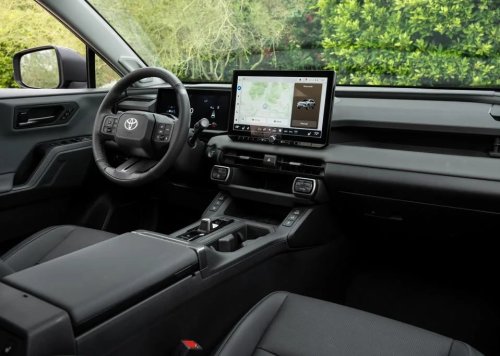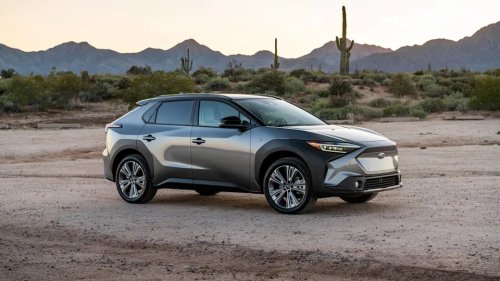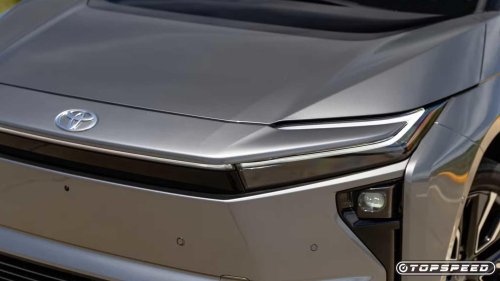
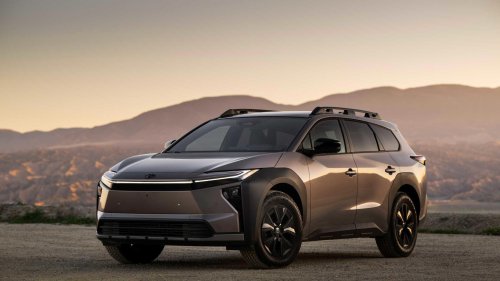
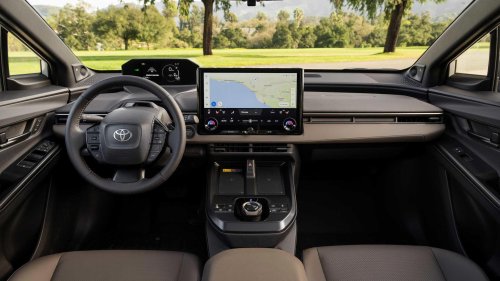
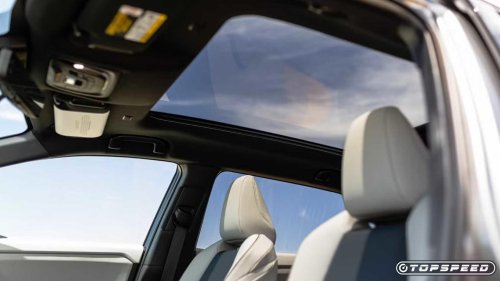
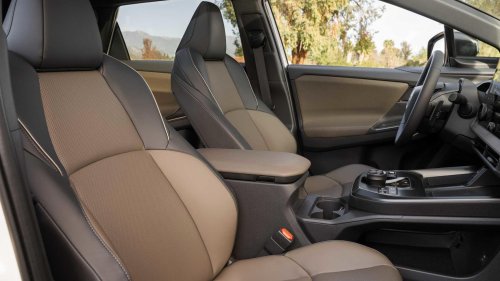
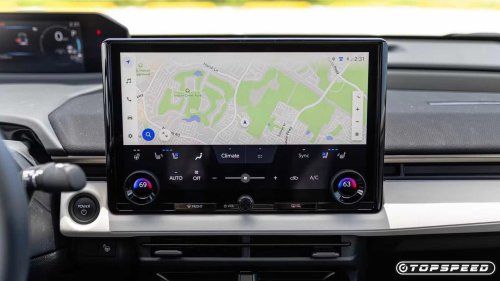
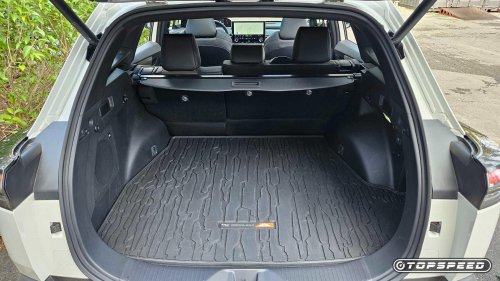
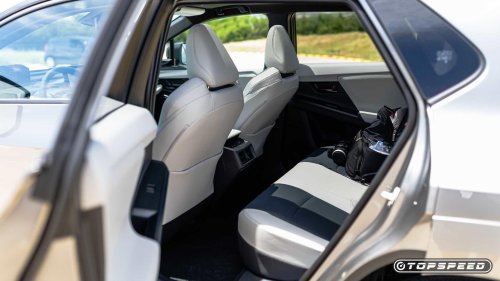
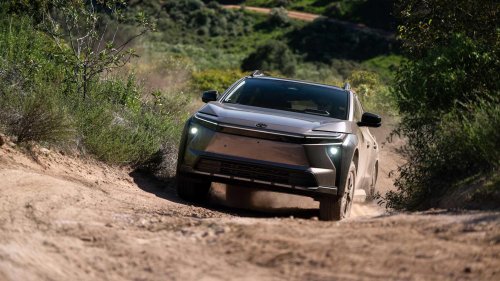
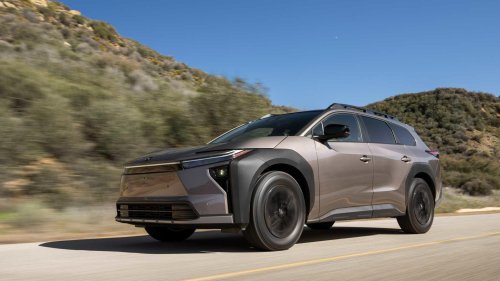


















Toyota Motor North America maintains a powerhouse presence in the U.S. automotive market heading into mid-2026. Its success is primarily driven by the sustained market dominance of its truck and SUV segments. Over the first five months of the year, light trucks and SUVs represented the majority of the company's footprint. Toyota division trucks pulled in 606,035 calendar year-to-date sales and Lexus division trucks added another 124,874 units.Passenger cars remain a steady pillar at nearly 300,000 total units sold year-to-date. However, the manufacturer’s single strongest vehicle type continues to be its versatile SUV lineup, which captured 377,684 sales for the Toyota brand alone through May. Looking at the broader U.S. automotive market performance through the lens of TMNA's footprint, overall volume for the first five months of 2026 has experienced a minor retraction compared to the same period in 2025. Through all of this, one previously undervalued EV SUV has risen through the ranks and achieved an incredible sales performance. Toyota's Conservative EV Approach Chris Chin | TopSpeedToyota’s approach to electrification in the U.S. stands as a distinct counter-strategy to many of its industry peers. The Japanese brand consistently prioritizes a diversified portfolio over an immediate transition to an all-electric lineup. Several leading brands committed early to aggressive timelines for completely phasing out internal combustion engines in favor of battery-electric vehicles. Regardless, Toyota has long argued that charging infrastructure limitations and consumer adoption curves necessitate a more gradual pivot.Instead of a singular focus on pure electrics, the manufacturer relies heavily on a comprehensive portfolio of traditional hybrids and plug-in hybrids alongside its burgeoning BEV development. This approach effectively spreads battery supply across a significantly larger volume of vehicles, reducing overall fleet emissions immediately rather than waiting for mass BEV adoption. While critics initially labeled this stance as overly conservative compared to pure-EV pioneers and rapidly transitioning legacy brands, Toyota's strategy has proven highly resilient. It insulates the brand from the market demand fluctuations and infrastructure bottlenecks that have slowed down competitors with more singular EV focuses. The bZ Experiences Strong Sales Performance 2026 Toyota bZ Woodland-34The Toyota bZ lineup experienced substantial year-on-year sales growth in May 2026. For the current month of May 2026, the standard bZ variant recorded 2,646 units sold compared to 1,352 examples in May 2025, marking a 95.7 percent increase in raw volume and a 103.2 percent daily selling rate increase. This performance was further bolstered by the addition of the bZ Woodland variant, which contributed an extra 184 copies to the monthly total from zero the previous year.Looking at the broader calendar year-to-date performance, this upward trajectory remains highly consistent; the standard bZ achieved 15,600 sales through May 2026 compared to 8,026 examples during the same period in 2025, which represents a massive 94.4 percent volume growth. When adding the 260 year-to-date sales from the Woodland, the entire bZ family has effectively doubled its presence in the market compared to its 2025 baseline. Refined And Well-Fitted Interiors 2026 Toyota bZ Woodland-14 For 2026, Toyota has given its all-electric compact crossover a major overhaul, starting with a streamlined name shift from bZ4X to simply the Toyota bZ. In addition to the Hammerhead exterior redesign and heavily upgraded electric motors, the cabin receives a substantial layout update. The bulky, fabric-covered dash of previous years has been replaced with enhanced soft-touch materials, a slimmer profile that improves outward visibility, and a top-mounted 7.0-inch digital gauge cluster.Chris Chin | TopSpeed The base XLE trim, starting at $34,900, brings a highly competitive suite of standard amenities that is an improvement over the previous model. For cabin comfort, it features dual-zone automatic climate control with integrated dust and pollen filters alongside dedicated rear-seat vents. Drivers are treated to an eight-way power-adjustable seat with lumbar support, a six-way manually adjustable front passenger seat, and standard heated front seats.2026 Toyota bZ Woodland-7 The seating surfaces feature a durable, premium fabric and SofTex synthetic leather combination. A standard heated, three-spoke leather-trimmed steering wheel features integrated paddle switches to adjust regenerative braking on the fly. For convenience, the XLE includes front and rear customizable ambient lighting with 64 colors, a height-adjustable and foot-activated power liftgate with jam protection, rain-sensing variable intermittent windshield wipers with a built-in de-icer, and the Smart Key system operational on all four doors and the rear hatch.Chris Chin | TopSpeed Entertainment and connectivity see a massive upgrade for 2026. Every bZ now comes standard with a massive 14-inch Toyota Audio Multimedia touchscreen, replacing the older 12.3-inch unit. This system features a physical volume knob, dedicated climate dials, over-the-air updates, and natural voice activation. Wireless Apple CarPlay and Android Auto are standard, delivering audio through a six-speaker sound system. Keeping devices powered is easier via a redesigned center console featuring dual Qi-compatible wireless smartphone charging pads side-by-side, accompanied by four high-speed USB-C charging ports.Tom Murphy | TopSpeed Stepping up to the Limited trim for $43,300 transforms the bZ into a luxury-oriented cruiser, building directly upon the XLE’s foundations. The interior seating is upgraded to full SofTex synthetic leather-trimmed upholstery, and the front seats add ventilation functionality alongside the standard heating elements. Rear-seat passengers also benefit from added comfort with standard heated outboard rear seats. One of the standout comfort elements exclusive to the Limited trim is a specialized front radiant foot-and-leg heater designed to warm lower extremities quickly without draining the battery like a traditional forced-air heater. A fixed panoramic glass sunroof with a power sunshade is standard, flooding the cabin with natural light.Chris Chin | TopSpeed Convenience is further elevated in the Limited trim with a digital rearview mirror that provides an unobstructed view behind the vehicle via a rear-mounted camera feed. It also updates the exterior with color-keyed door handles featuring full touch-sensor functionality and massive 20-inch black alloy wheels. On the entertainment front, while the 14-inch touchscreen remains the centerpiece, audiophiles can opt for an available premium nine-speaker JBL audio system that includes a subwoofer and amplifier. Furthermore, the Limited trim grants access to advanced, subscription-dependent convenience tech like the digital key capability, allowing drivers to use their smartphone in place of a physical fob. Toyota's Multiple EV Configurations 2026 Toyota bZ Woodland-20 The 2026 Toyota bZ’s mechanical overhaul is anchored by a significant upgrade to its compact, lightweight eAxle electric motor technology. This now incorporates highly efficient silicon carbide semiconductors to sharply increase power and response. The crossover is available in two distinct drivetrain configurations utilizing either a 57.7-kWh or a larger 74.7-kWh lithium-ion battery pack. Front-wheel-drive models utilize a single, front-mounted electric motor. The entry-level XLE FWD makes 168 horsepower, while upgrading to the FWD Plus or Limited trims raises the output to a more robust 221 hp, allowing the vehicle to sprint from 0 to 60 MPH in 8.0 seconds.The all-wheel-drive configuration introduces dual electric motors, increasing the net system output to 338 combined horsepower. This cuts the AWD model's 0 to 60 acceleration time down to 4.9 seconds. Regardless of the chosen motor layout, the Toyota bZ's top speed is electronically limited to 99 MPH for the sake of optimizing battery thermal efficiency and highway range. Furthermore, the updated electrical architecture grants the bZ a newly competitive utility profile. Toyota claims a maximum towing capacity of up to 3,500 pounds when equipped in its dual-motor AWD format. Front-wheel drive models tow up to 1,500 pounds. Impressive Energy Consumption Across The Range 2026 Toyota bZ Woodland-23 The base bZ XLE FWD with the 57.7-kWh lithium-ion battery pack consumes 25 kWh per 100 miles on the combined cycle, yielding a maximum EPA-estimated driving range of 252 miles. Stepping up to the more powerful bZ FWD equipped with the larger 74.7-kWh battery increases consumption slightly to 28 kWh per 100 miles, but the expanded battery capacity stretches the maximum driving range out to its peak of 242 miles.Opting for the dual-motor bZ AWD setup with the 74.7-kWh pack pulls energy consumption to 30 kWh per 100 miles, dropping the overall driving range to 228 miles. Sitting at the bottom of the efficiency hierarchy is the fully loaded bZ Limited AWD on upgraded 20-inch wheels. The added rotational mass and aerodynamic drag raise consumption to its highest level of 32 kWh per 100 miles, reducing the total EPA-estimated range to a line-minimum 215 miles.