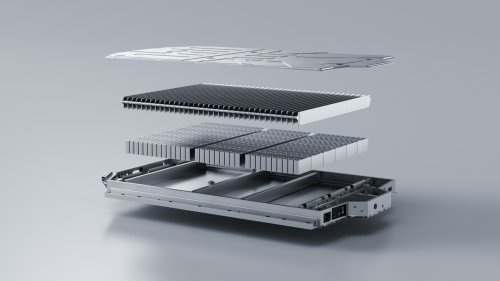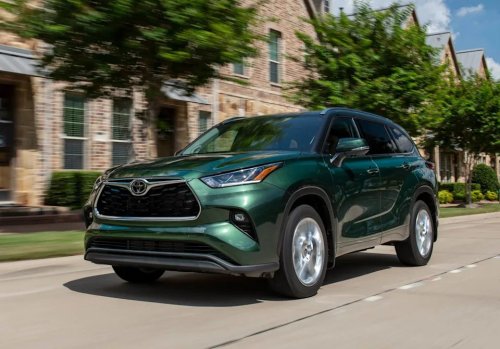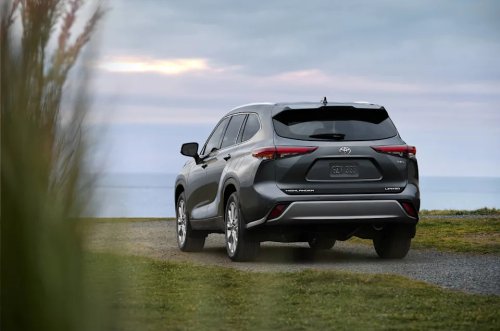
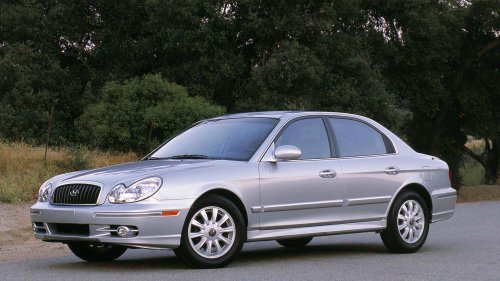
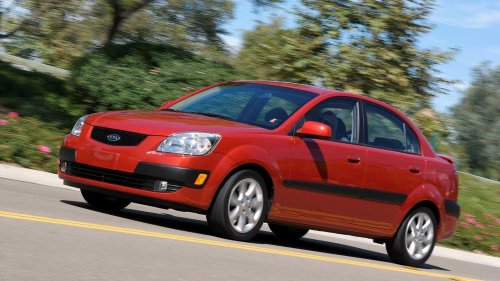
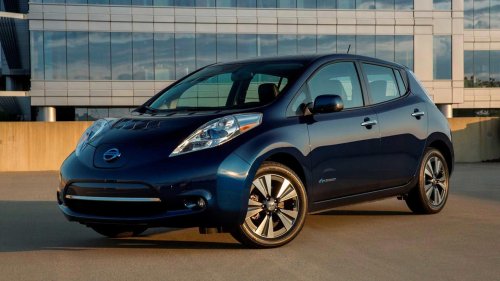
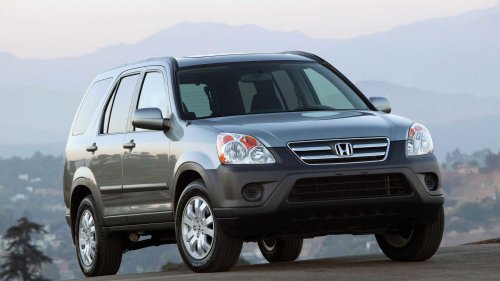
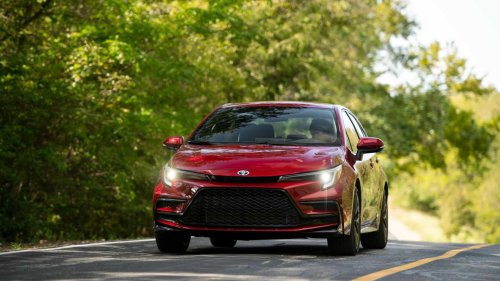
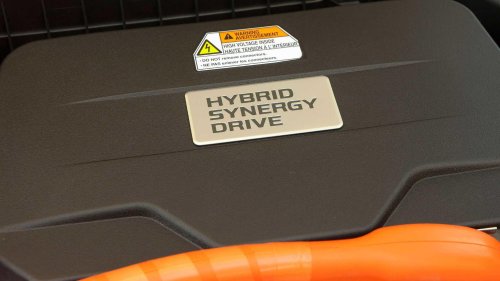
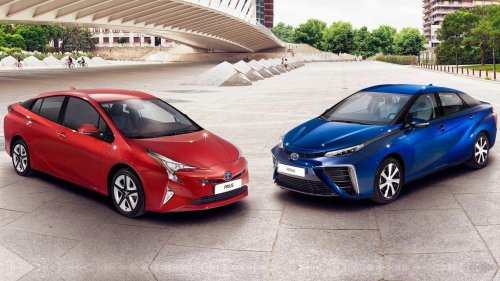
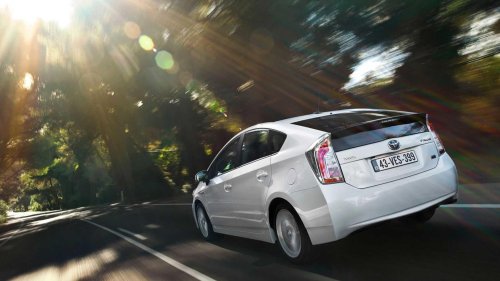



















The prospect of having to replace batteries on a regular basis used to be a deterrent for many people looking into buying a vehicle from Toyota’s hybrid lineup. Years ago, when hybrids were a relatively new addition to the automotive world and a much rarer sight on American roads, there was a lot more uncertainty about how long batteries would last, and how much it could cost to swap them out once they could no longer perform their function.In the present, however, hybrid technology has come a long way. Toyota’s warranty is generous enough to cover most battery replacements on new vehicles, and costs have come down sharply.While in the past getting a hybrid battery swapped out could cost as much as a new car – or a relatively recent used car – today there are only a few highly affordable used cars left that come with a comparable price tag. Let’s take a look at the world of hybrid vehicle batteries, their replacement schedule, and the costs you might face as part of your Toyota hybrid’s maintenance routine. UPDATE: 2026/04/06 17:08 EST BY GERHARD HORN A Battery's Second LifeThis feature has been updated with information on easy accesible diagnostic tools, and how batteries are recycled. How Often Do Toyota Hybrid Batteries Need Replacing And How Much Does It Cost? Toyota If you’re buying a brand new Toyota hybrid vehicle today, you can expect its battery to last somewhere between 100,000 and 200,000 miles, or around eight to 15 years based on the average annual mileage for a driver in the US. However, this does not mean you can expect to be hit with a large bill, as battery replacements will usually be covered under Toyota’s generous warranty.Since 2020, Toyota’s hybrid vehicle warranty provides coverage for 10 years or 150,000 miles, whichever comes first. For comparison, the legal minimum warranty period for electrified vehicles sold in the US is eight years. Pre-2020 Toyotas have a warranty of eight years / 100,000 miles.While most hybrid powertrains typically last between 80,000 and 100,000 miles, Toyota models are often reported to have an even longer lifespan. Some owners of the hybrid version of the Highlander SUV, for example, have reported their vehicles lasting up to 200,000 miles.Toyota In terms of cost, if your battery replacement happens to fall outside of warranty coverage, you still have a few options available to avoid breaking the bank. The different price points available to you vary based on your vehicle and whether you choose a new or refurbished battery pack. For a Corolla Hybrid, you can expect to pay somewhere between $3,000 and $8,000 for a new nickel-metal hydride battery pack. A refurbished one will lower the price to somewhere between $1,500 and $3,500, but will also offer a shorter lifespan and less reliability.In the event that your battery replacement is covered by the warranty, you will also need to keep in mind that choosing a refurbished battery pack may void the warranty going forward, so be sure to double-check before you go ahead and book your appointment. Buying a used vehicle may also mean that the original warranty no longer applies. Why Do Hybrid Batteries Need Replacing? Toyota Hybrid vehicles’ batteries are susceptible to degradation due to a number of factors. These include the type of battery and vehicle, the way the vehicle is used, and temperature/weather conditions.Over the years, multiple cycles of charging and discharging result in the gradual deterioration of the battery’s cells. This results in the electrodes deteriorating and the battery’s performance decreasing. The battery management system loses the ability to perform its function of regulating temperature, regulating voltage, and balancing charge between the battery’s cells. As a result, the battery wears down unevenly, losing part of its original capacity. A hybrid vehicle driven for 200,000 miles is expected to lose up to a third of its original battery capacity, depending on how it has been driven and in what environment.Toyota Driving style is a major factor. A car that’s driven predominantly on a highway will experience slower battery degradation than one driven in stop-and-go urban traffic. Another important element is weather: both extremely hot and extremely cold temperatures are notoriously bad for hybrid vehicles’ batteries, speeding up the degradation process.Automakers have implemented several measures to mitigate the effects of battery degradation, such as sophisticated cooling systems and regenerative braking features. However, none of these measures are enough to prevent the need for battery replacement, which is still a part of long-term maintenance for most hybrid vehicle owners. What Used Cars Can You Get For The Price Of A Battery Replacement? As the price of hybrid battery replacement has gone down over the years, the cost of swapping out a battery in a hybrid vehicle is now comparable to the cost of buying a vehicle on the affordable end of the used market. Here are a few examples of used vehicles you can buy today for roughly the same price as the average Toyota battery replacement. 2004 Hyundai Sonata (around $4,000) Hyundai This Hyundai Sonata is one of the cheapest used car options around that still offers good reliability. JD Power gives it a Quality and Reliability score of 87/100. This model year was located towards the end of the Sonata’s fifth generation, arriving just after a 2002 facelift. The engine lineup included several inline-four and V6 options, paired with a five-speed manual, four-speed automatic or CVT. 2009 Kia Rio (around $4,500) Kia The 2009 Kia Rio arrived on the market halfway through the model’s second generation, just before a facelift. While elsewhere in the world, a 1.4-liter gas inline-four and a 1.5-liter turbodiesel were also offered as part of the model’s engine lineup, in the US the only option was a 1.6-liter gas-powered inline-four engine. JD Power gives the 2009 Rio a score of 72/100. 2015 Nissan Leaf (around $6,000) Nissan The Nissan Leaf was one of the earliest mainstream cars to bring all-electric power to the masses. With its budget-friendly price and compact dimensions, it quickly became a favorite of drivers in search of an urban runabout. Today, as EV technology has evolved by leaps and bounds, the first-gen Leaf has depreciated dramatically.Power comes from a single electric motor. Reliability is very good, with JD Power giving the 2015 Leaf a score of 87/100. 2006 Honda CR-V (around $8,000) Honda The 2006 Honda CR-V is a crossover SUV, released at the very end of the model’s second generation. It is powered by Honda’s K24A1 engine, a 2.4-liter inline-four unit available with both manual and automatic transmission options. Its reliability record is very good, with JD Power giving the model a score of 82/100. Different Types Of Hybrid: An Overview Toyota We’ve talked a lot about battery replacement as a part of hybrid vehicle maintenance; here is a quick overview of the different types of hybrid you will find in Toyota’s lineup, and what kinds of batteries they include as part of their powertrain. Mild Hybrid Mild hybrid electric vehicles, or MHEVs, are the closest to a traditional combustion-only vehicle in terms of day-to-day operation. Their gas-powered engine is connected to a 48-volt battery, which is charged by the engine itself. This battery is too small to change the vehicle’s efficiency or performance by a meaningful amount, and mostly powers things like electronics or small components of the engine.Toyota Traditional Hybrid This is the most common type of hybrid vehicle, and the one that first springs to mind for most people when thinking of hybrid cars in general. The Prius, Toyota’s most famous hybrid model, falls into this category.Traditional hybrids do not need plugging into a charger, as the battery is charged from the engine in a similar way to what happens in mild hybrids. However, in a traditional hybrid the battery serves a bigger purpose. The size of the battery is much larger than in MHEVs, which means the vehicle’s efficiency and fuel economy are noticeably improved. A traditional hybrid vehicle can also sometimes run entirely on electric power, though not to the extent of a plug-in hybrid. Plug-In Hybrid Last of all we have plug-in hybrids, or PHEVs. As suggested by the name, this type of hybrid does not have a battery that is simply charged by the engine. Instead, it requires plugging into a charger in order to take advantage of the hybrid powertrain’s functionality.PHEVs usually have larger batteries than other kinds of hybrids. This allows them to have a short fully electric driving range, typically around 30 to 50 miles. They are the most electrified members of the hybrid family, with higher efficiency and longer range than mild or traditional hybrids. The "Second Life" and Smarter Diagnostics ToyotaBeyond the decreasing cost of replacement, two factors have fundamentally shifted the landscape for used hybrid buyers: the rise of a "circular economy" for batteries and the democratization of diagnostic data. Toyota has been a pioneer in closed-loop recycling. In many markets, the company offers a "core credit" or cash rebate for returned batteries—sometimes as high as $500—to ensure that 98% of the battery materials are diverted from landfills.However, the story doesn't always end at a smelter. Failing packs are increasingly being "remanufactured" rather than replaced. Specialized third-party shops now use "load-banking" to identify specific weak cells within a pack. Because a Prius battery consists of 28 individual modules, a technician can often swap out just the two or three failing blocks for a fraction of the cost of a new pack, effectively resetting the battery's health for years to come.ToyotaFurthermore, the "fear of the unknown" that once plagued used hybrid buyers has been solved by smartphone technology. Inexpensive apps like Dr. Prius or Hybrid Assistant, paired with a basic Bluetooth OBD2 adapter, allow any prospective buyer to perform a "Life Expectancy Test" during a five-minute test drive. This provides a granular look at internal resistance and voltage deltas between cells—data that was once the exclusive domain of dealership technicians.Finally, it is worth noting the shift in chemistry. While older Toyotas relied on Nickel-Metal Hydride (NiMH) for its extreme-weather durability and "unkillable" reputation, newer models are shifting toward Lithium-ion. While Li-ion offers better energy density and fuel economy, the used market is finding that the older NiMH packs are actually easier and safer to refurbish in a home garage. This technical distinction is creating a unique sub-market where "old tech" is becoming a badge of honor for high-mileage DIY enthusiasts.Sources: Toyota