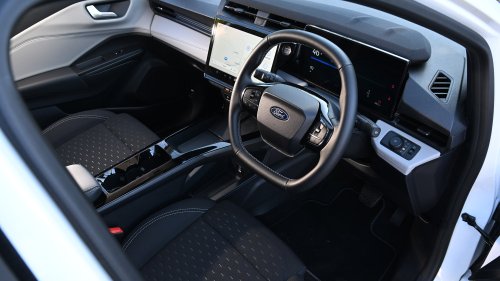
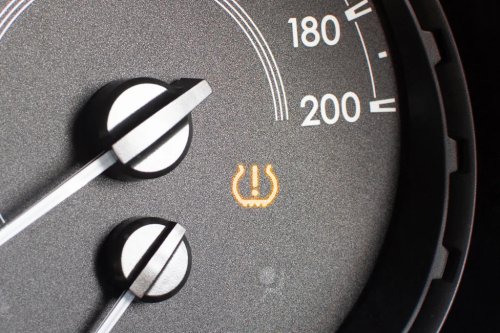
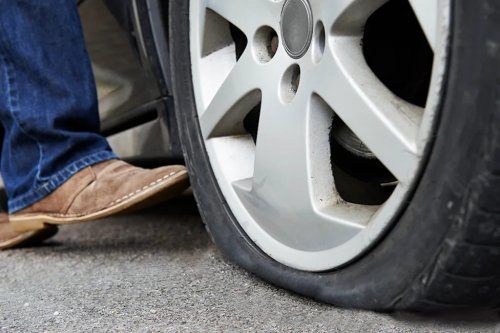
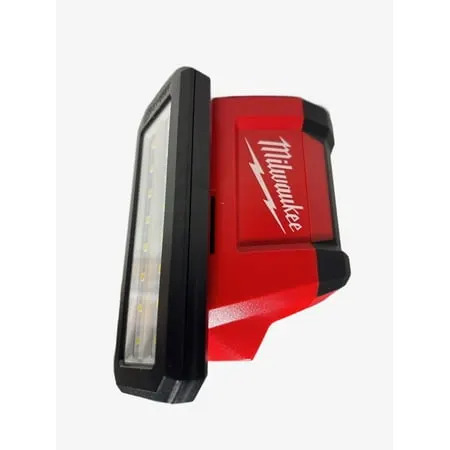
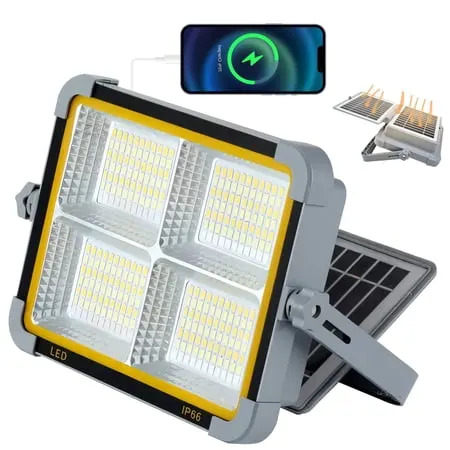
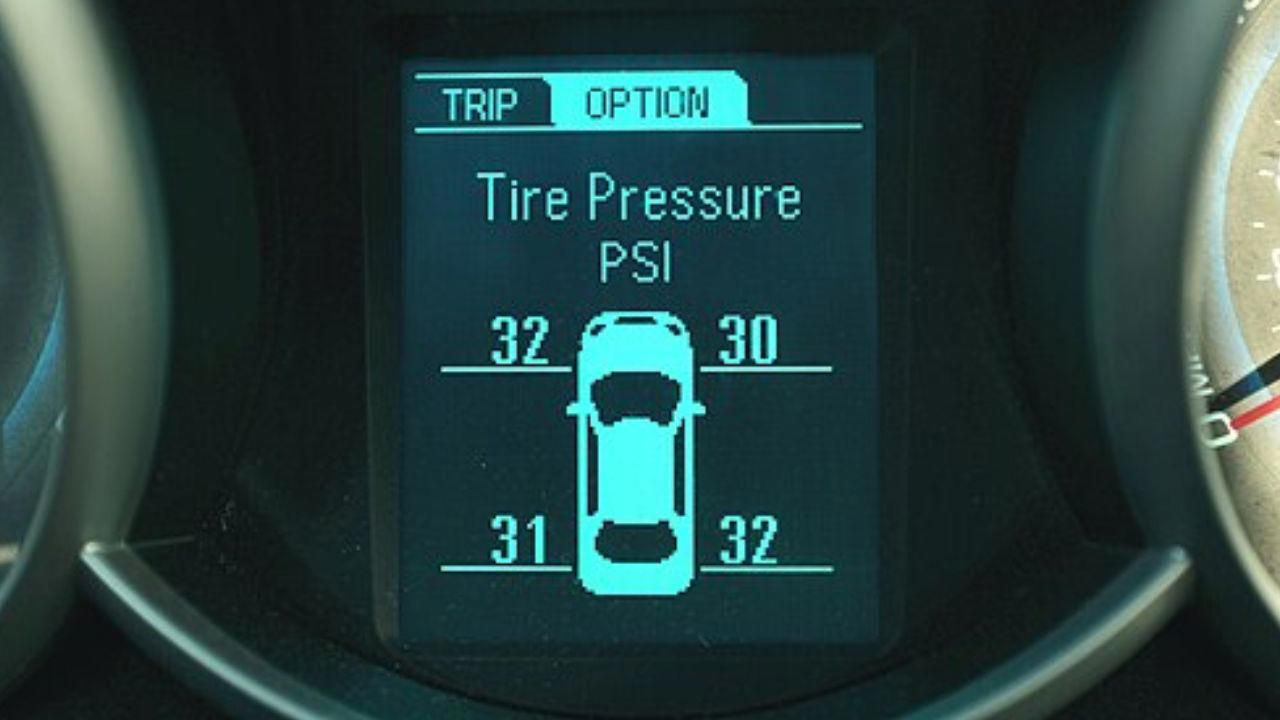
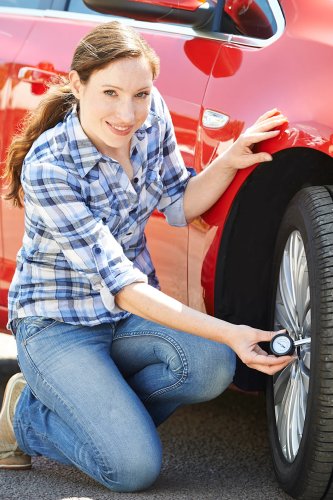
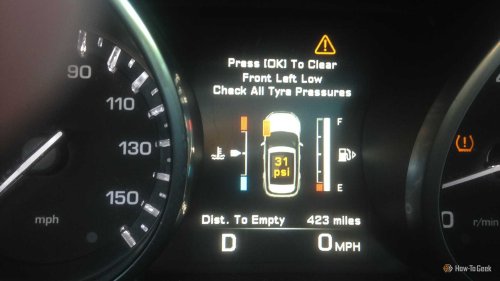
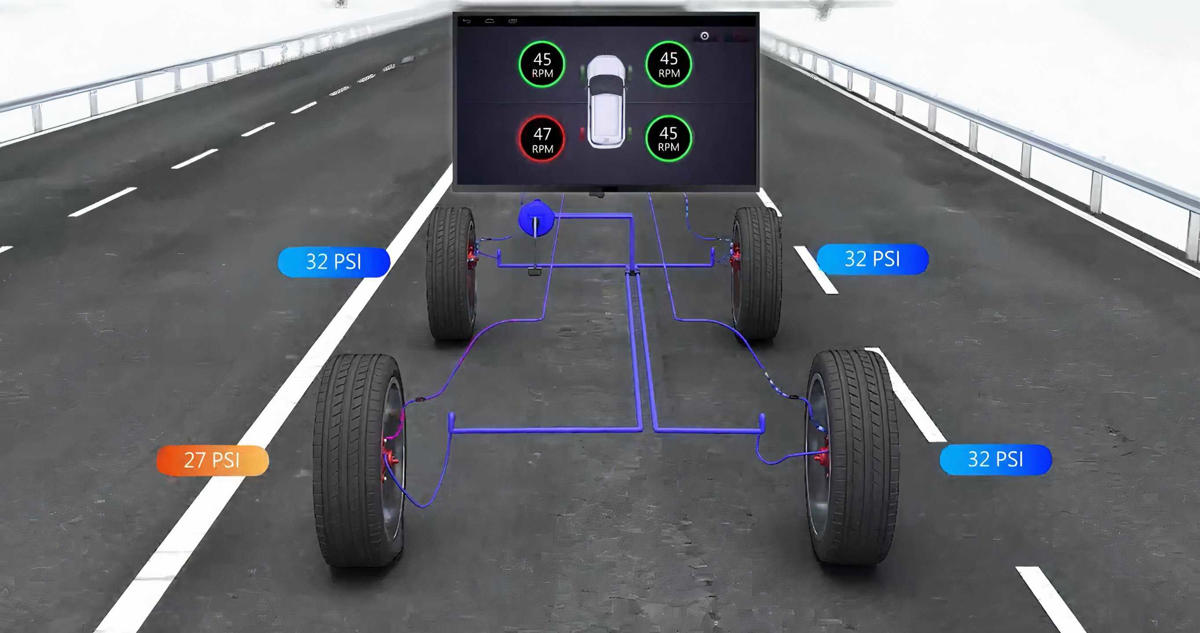
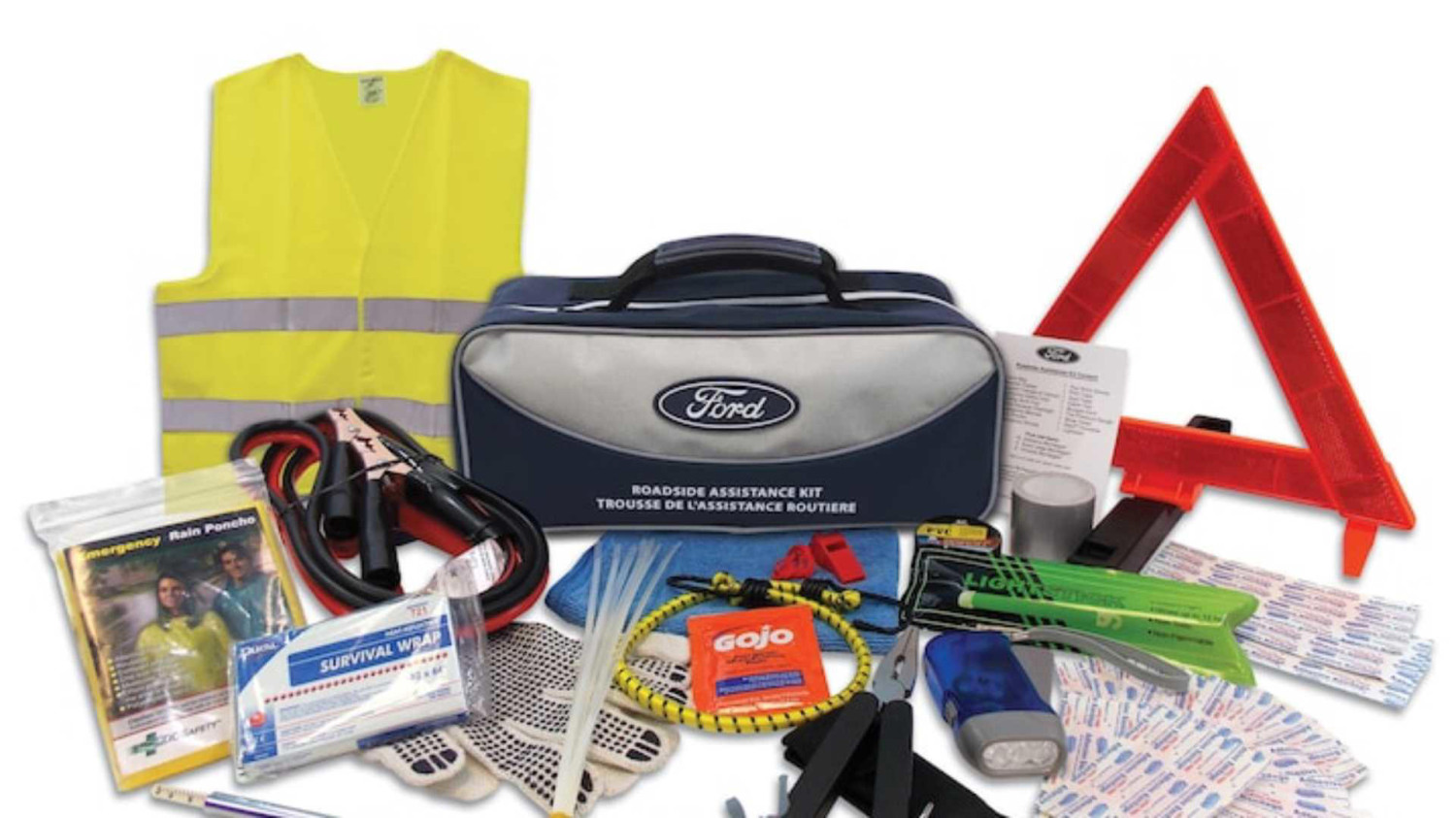
Jump LinksGet Out And LookThe Steadily Lit Low Tire LightThe Blinking Low Tire LightWhat To Keep On HandThe tire pressure light is one of the most common dashboard warnings drivers encounter, and it can appear suddenly, even on late-model vehicles from the 2026 Toyota Camry to the 2026 Ford F-350. When that yellow symbol lights up, it's easy to feel unsure whether it's a minor issue or something more serious.In this article, we walk you through exactly what the tire pressure light means, whether it's safe to keep driving, what to do if the light is flashing, and the essential tools to keep in your car for unforeseen circumstances. Here are the best quick and practical steps to keep you safe on the road in a tire pressure emergency. Tire pressures should always be set to the manufacturer's specific pressure recommendation. This setting is on a placard placed in the driver's door jamb of the vehicle. For the most accurate readings and settings, always check and set pressures when the tires are cold. Tire Pressure Light On: What Do I Do Right Now? Get Out And Look Christopher Smith / CarBuzz / ValnetAlthough there are many lights on the dashboard, the low tire pressure light is especially concerning. Seeing the low tire pressure symbol illuminate can induce panic as it comes with some mystery at the initial onset. Unfortunately, the low tire light does not distinguish a completely flat tire from a tire that is just a few psi (pounds per square inch) low. So, if the car's steering feels near identical to how it usually does, or if the car/truck doesn't seem to be listing to one side or the other, there's a good chance that the tire is just a few psi low and the car is giving you a tire pressure warning.Indirect TPMS animation (Source: MotoLogic) Many vehicles are equipped with a tire pressure monitor within the driver-information display. This enables the driver to see a live read on individual tire pressures. The best thing to do when the low tire light illuminates is reference this interface, and get a read on which tire is low. Regardless of how low the tire pressure is reading, it is highly advisable to find a safe area to pull over and inspect the tire. If the tire is completely flat, you'll need to pull over anyway. However, if the tire is low and not flat, you may have a slow leak, and even some slow leaks can be dangerous to drive on. Can I Keep Driving With A Tire Pressure Light On? The Steadily Lit Low Tire Light A steadily-lit low tire pressure warning light typically means one or more tires has dropped below the recommended pressure threshold detected by the TPMS sensors. The severity of the low pressure situation needs to be determined. Obviously, if the tire is completely flat, it's also likely heavily damaged, mystery solved. However, with some leaks, it's not always that simple. It's not uncommon for tires to lose pressure over time for various reasons. Torn valve stems, small punctures, and bead leaks are all very common sources of other slow tire leaks. Even cold temperatures will cause a tire to lose its air.According to Ideal Gas Law, when the temperature of a gas decreases, its pressure decreases if the volume stays the same. So, for every 10-degree drop in temperature, a tire's pressure typically drops 1–2 psi. This is a common occurrence that many drivers expect in the cold winter months, and it will certainly trip the low tire pressure light.Many tire pressure sensors trigger at around 25% below the manufacturers recommended cold tire pressure setting. Although there is no universal safe minimum tire pressure, a common guideline used by many safety experts is that tires above 25–28 psi are generally safe to drive on for short distances at reduced speeds. Below this range, the risk of tire damage, poor handling, and blowouts increases significantly. The Blinking Low Tire Light A blinking low tire pressure light is a different scenario. However, it's still wise to get out and inspect all the tires for any obvious problems. Fortunately, there is a strong likelihood that you won't find any. When the low tire light is blinking, it's typically the tire pressure monitoring system letting you know that there is a fault somewhere in the system. In most cases, this is due to a faulty sensor or dead sensor battery. All the tires can be properly inflated, but a sensor is no longer transmitting a reading.This is a job for a repair shop that has the proper equipment to dismount the tire, install a new sensor, and recalibrate the system if needed. According to the RepairPal website, the national average for TPMS sensor replacement can cost anywhere from $246 to $350. Of course, the price will vary greatly depending on the year, make and model of the vehicle. If the sensor requires a re-learn or programming procedure, the price could go up another $50 to $100, often depending on shop labor rates. Being Prepared For Tire Pressure Emergencies What To Keep On Hand Ford There is nothing like being prepared for when your stuck on the side of the road. It is of the utmost importance to maintain proper air pressure in the vehicle's spare tire, and have an understanding of how to operate the tools associated with installing the spare tire in the event of a flat. Additionally, having the right supplies can significantly reduce frustration, time spent on the side of the road, and the possibility of getting hurt. Here is a quick list of some key items that will help you get back on the road, or at the very least, out of harms way. A high-quality roadside safety kit High-quality, low gauge jumper cables (preferably 20-ft long) A tire gauge A four-way lug wrench Rags First aid kit High-lumen flashlight w/extra batteries Road flares & safety triangles/cones Small jumper box High-vis safety vest with reflective strips A good roadside safety kit will have many of these items in it already and there are numerous companies that offer a wide range of kits for different budgets. One last thing to consider that many shops and technicians may frown upon for various, is a can of fix-a-flat. This is a notoriously polarizing product, with mixed results (depending on the brand and the hole in the tire), but for a last-ditch effort to get you to a safer location or even a repair center, it may be worth using, and it doesn't take up much space in the trunk."When the TPMS symbol appears on your dashboard, it means at least one of your tires is significantly underinflated. You should inspect your tires and check the pressure with a gauge."-NHTSA


















 +39 others