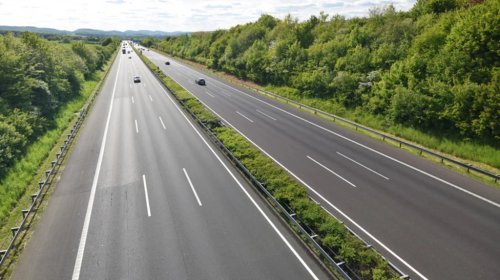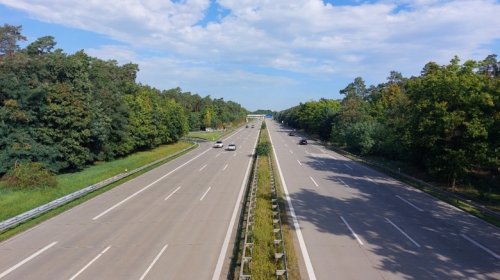
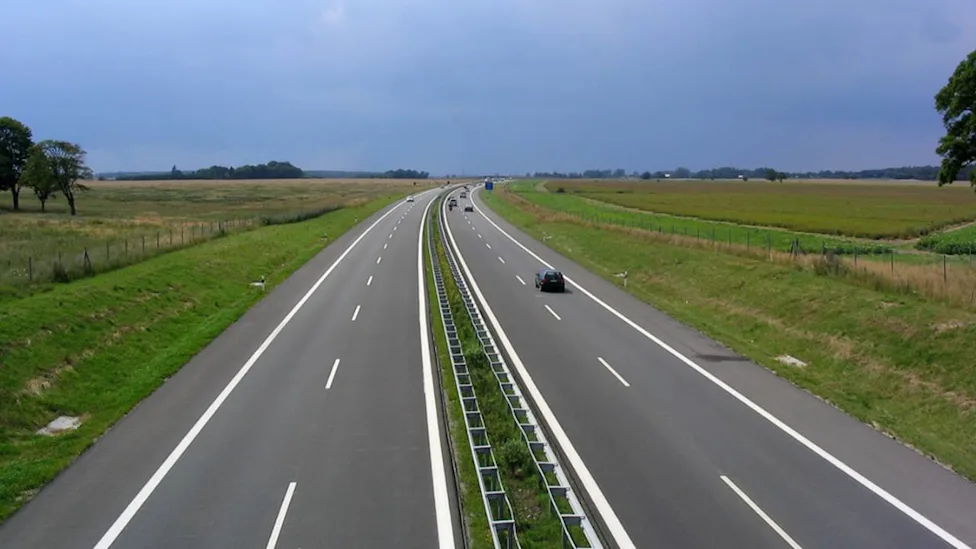



















Image Credit: Massimo/X.On a clogged stretch of Autobahn cutting through a forested hillside, hundreds of drivers performed a maneuver that looked almost choreographed. Cars hugged the outer edges of the highway, leaving a perfectly open corridor through the middle of gridlocked traffic.The 13 second clip shared Friday by X account Rainmaker1973 did not show flashing lights or speeding ambulances. Yet the empty strip of asphalt slicing through the jam carried a powerful message about how some countries approach driving as a shared civic responsibility rather than an individual contest for road space.In Germany and Austria, the formation is called the “Rettungsgasse,” or rescue lane. It is not a courtesy gesture or a voluntary act of kindness. It is the law, enforced with fines and backed by a driving culture that treats emergency access as a collective obligation.AdvertisementAdvertisementThe video has resonated online because it captures something larger than traffic management. It offers a glimpse into how trust, discipline, and public compliance can transform even standstill congestion into an organized system that protects lives.A Highway Rule That Became a National HabitImage Credit: Darkone - Own work, CC BY-SA 2.5/Wiki Commons.The rescue lane system has become one of the defining features of German and Austrian motorway culture. The moment traffic on multi lane highways slows to a crawl or stops entirely, drivers are expected to position their vehicles to create a central corridor for emergency responders.Cars in the left lane move as far left as possible. Vehicles in all other lanes shift to the right, sometimes edging onto the shoulder where safe. The result is a continuous passageway running through the center of the traffic jam, allowing ambulances, police vehicles, and fire crews to reach crash scenes without being trapped behind stationary traffic.The concept sounds simple, yet its effectiveness depends almost entirely on mass cooperation. A single driver drifting into the corridor can obstruct vehicles carrying paramedics to critical injuries or firefighters responding to a major collision further ahead.AdvertisementAdvertisementGermany strengthened enforcement of Rettungsgasse laws after years of complaints that blocked emergency access was delaying response times on crowded Autobahns. Violators can face steep fines, driving penalties, and in severe cases investigations for obstructing emergency services.Why Seconds Matter on Congested RoadsEmergency medicine experts have long argued that response times often determine survival rates after serious crashes. On high-speed roads such as the Autobahn, where impacts can be catastrophic, delays of even a few minutes may carry life or death consequences.That urgency helps explain why the rescue lane has become deeply ingrained in driver education across German speaking Europe. Motorists are taught the procedure early during licensing programs and are regularly reminded through highway signage, radio traffic bulletins, and navigation alerts.The system also reflects the realities of modern traffic density. European motorways carry enormous volumes of vehicles, especially during holiday travel periods when congestion can stretch for miles. Without a designated emergency corridor, ambulances would have little chance of weaving through tightly packed lanes.AdvertisementAdvertisementThe viral clip demonstrates how drivers can collectively solve a problem before emergency vehicles even arrive. Instead of waiting for sirens, motorists anticipate the need in advance and create the space preemptively.A Window Into High Trust Road CultureThe video’s appeal lies partly in the striking visual symmetry of the traffic formation. Yet many viewers have interpreted it as evidence of something broader about public behavior in countries where compliance with shared rules tends to be culturally reinforced.German and Austrian traffic law requires drivers to form a Rettungsgasse (emergency vehicle lane) whenever traffic comes to a halt on the autobahn due to some emergency allowing ambulances, fire trucks, police, or any other emergency response. pic.twitter.com/lel7657qrm— Massimo (@Rainmaker1973) May 22, 2026Road safety analysts often describe Germany’s driving culture as highly system oriented. Drivers are expected to follow lane discipline rigorously, maintain awareness of surrounding traffic, and prioritize predictable behavior over improvisation.That culture becomes especially visible during congestion. In many parts of the world, severe traffic jams trigger aggressive lane changes, shoulder driving, or attempts to gain marginal advantages over neighboring vehicles. The Autobahn clip instead shows motorists sacrificing personal convenience for collective efficiency.AdvertisementAdvertisementThe rescue lane is therefore more than a traffic tactic. It is an example of how infrastructure, law enforcement, and social expectations can align to produce orderly cooperation under stressful conditions.As the video continues circulating online, viewers are not simply reacting to an empty lane between cars. They are responding to the rare sight of hundreds of strangers acting in unison without direct supervision, all because they understand that somewhere ahead, somebody may urgently need help.If you want more stories like this, follow Guessing Headlights on Yahoo so you don’t miss what’s coming next.