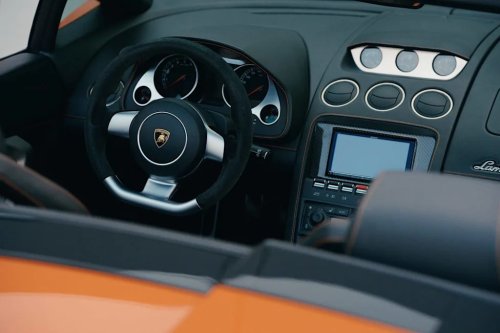
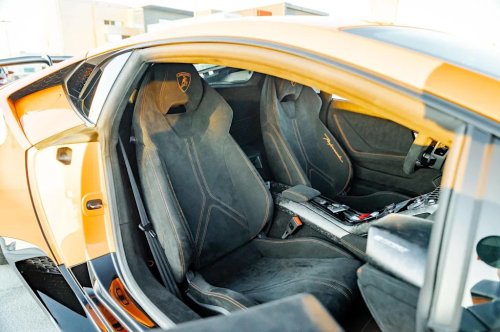
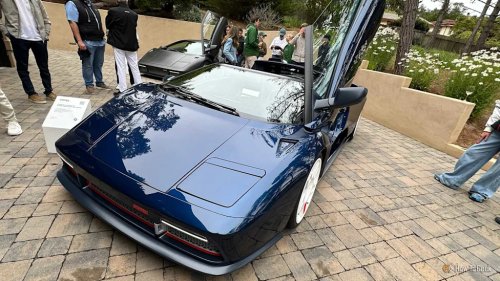
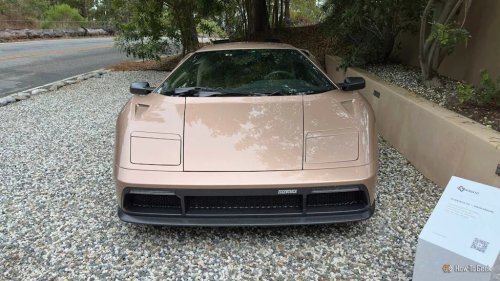
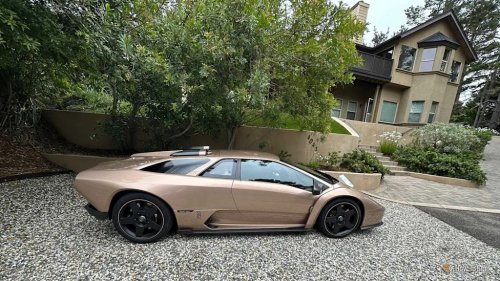
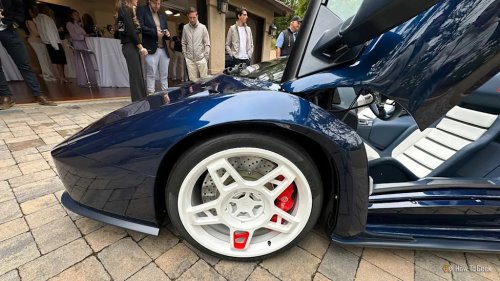
This Lamborghini SVJ Roadster's Bring a Trailer Auction Got Pulled Mid-Bid, and the Comments Section Deserves the CreditA Lamborghini Aventador SVJ Roadster listed for sale on Bring a Trailer this week racked up nearly 10,000 views and more than 800 watchers before the auction simply disappeared. No winning bid. No reserve-not-met notice. Just a quiet "withdrawn" tag and a 45-comment thread that reads like an open case file.The car itself isn't the interesting part. It's a track-focused Aventador variant with a naturally aspirated 6.5-liter V12, a seven-speed automated manual, Haldex all-wheel drive, carbon-ceramic brakes, and active aerodynamics, one of roughly 800 SVJ roadsters built before Lamborghini retired the Aventador platform entirely for the hybrid Revuelto. None of that got this car pulled from auction.What got it pulled was arithmetic. A handful of commenters cross-referenced the seller's photos against an older listing from a different dealer, then matched that against a public Instagram comment written by a previous owner. The numbers didn't line up. Bring a Trailer paused the sale within hours, at the seller's own request, so the mileage history could be sorted out before anyone's money changed hands.AdvertisementAdvertisementThat's the real headline. Not the car. The verification system that caught the problem before it became someone's very expensive, six-figure mistake.Four owners, one lease, and a mileage gapThe listing came from a California dealer called WOB, operating out of Newbury Park. The car had been registered in both California and Florida, and Carfax showed 24 service records tied to a clean accident history. It also showed four previous owners, one of them a personal lease, on a car that is barely five years old. The digital cluster in the seller's own photos read 4,842 miles. Carfax's own records showed a more recent reading of 5,320 miles.A gap like that, on its own, isn't automatically evidence of anything. Odometer readings get logged at different moments in time, and a car can rack up a few hundred miles between a service visit and the day listing photos get taken. That kind of gap is normal. It's the discrepancy that surfaced a few comments later that wasn't.The paper trail the seller couldn't out-runCommenters dug up a second data point: a different California dealer had listed the same car back in May with an odometer photo showing roughly 4,700 miles, even while paperwork for that sale listed 5,320. A separate account, traced back to a previous owner and shared publicly online, filled in the rest of the timeline. That owner said they'd bought the car from a private seller in Tampa without carefully checking the mileage, later paid a Miami specialty shop to verify it, and learned the readings didn't match. When that owner sold the car again, they disclosed the roughly 1,100-mile discrepancy to the next buyer in writing.AdvertisementAdvertisementThat's a phrase worth pausing on: a dealer signed what's known in the industry as a "TMU acknowledgment," short for True Mileage Unknown. It's a specific box on an odometer disclosure statement, and it exists because federal law makes odometer fraud a real crime, not just a used-car cliché. Under the Truth in Mileage Act, dealers and private sellers are legally required to disclose the actual mileage on a title transfer, and knowingly passing along a false reading can carry real financial and criminal exposure. TMU is the industry's escape hatch: instead of guaranteeing a number nobody can verify, a seller can disclose that the true mileage simply isn't known, and shift the risk onto the next set of eyes.Odometer fraud didn't go away. It just went digitalHere's the part most owners never think about until it happens to their car. A mechanical odometer had one number, in one place, connected to one spinning cable. Roll it back and you were done. A modern Aventador doesn't work that way. Mileage gets logged in the instrument cluster, but it's also referenced by the engine control unit, the transmission controller, and often the airbag module, each keeping its own independent record for its own diagnostic purposes. Rewriting the number on the dash doesn't necessarily rewrite it everywhere else.That's exactly the gap one commenter raised in the thread, asking why nobody had simply plugged in a scan tool and cross-checked the mileage stored on the car's other control modules against the number on the cluster. It's a fair question, and it's also the reason mileage tampering on newer cars tends to get caught by mismatches rather than by a rolled-back number looking obviously wrong. The fraud moved from a screwdriver under the dash to a laptop plugged into a diagnostic port. The forensic trail moved right along with it.The seller noted in the comments that the car had recently gone through an inspection at an official Lamborghini dealership without any flag on the mileage. That's not a contradiction. Franchised dealer inspections are built to check brakes, fluids, tires, and cosmetic condition, the things that determine whether a car is safe and sound, not to run a forensic audit of every module's internal mileage log. Nobody does that unless something specific tips them off first. In this case, the tip came from a stranger on the internet with a screenshot, not from anyone who had ever touched the car professionally.A five-year-old car on its fourth owner isn't being driven. It's being flippedStep back from the odometer question for a second and look at the ownership pattern by itself. This is a 2020 model year car. It has covered somewhere around 5,000 miles in roughly six years, and it has already burned through four owners, including a lease. That's not the biography of a car somebody bought to drive and enjoy. That's the biography of a car that got financed, leased, flipped to a dealer, flipped again, and financed once more, changing hands faster than most commuter sedans.AdvertisementAdvertisementThat churn isn't unique to this car, and it isn't new to Lamborghini's flagship, either. We've covered a widebody Murciélago LP640 whose low mileage and complicated ownership trail raised its own set of questions, long before SVJ Roadsters existed. Limited-run Lamborghini specials stop being cars the moment production ends and start behaving like commodities, bought by people who are betting on scarcity rather than planning road trips. The SVJ Roadster was never going to escape that cycle. It was built in numbers small enough, and hyped hard enough, to guarantee it.That speed is exactly what creates the opening. Every additional flip is another set of paperwork, another dealer with an incentive to close quickly rather than dig deep, and another chance for a discrepancy to get carried forward instead of caught. Nobody in a fast-moving chain of flippers is strongly incentivized to be the one who slows the deal down and asks uncomfortable questions about a few hundred missing miles. It took a comment section with no financial stake in the sale to actually do it.The comments section is doing a dealer's job nowBring a Trailer's staff paused the auction directly in the comments, crediting the seller for flagging the concern once it surfaced. The seller, for his part, said he'd been sent hundreds of messages within a single morning and wanted to research the car's full history rather than push the sale forward under a cloud, adding that he wants there to be "never a question on any car we own, sell or consign." Whether that research ultimately clears the car or confirms the worst fears in the thread, the process itself is the story worth remembering.This is where Bring a Trailer has quietly become something more than an auction site. Its comment section functions as an unpaid, crowdsourced verification layer that no Carfax report or factory service check fully replicates, because a Carfax report is only as good as what gets reported to it, and a factory inspection is only looking for what it was designed to find. We've seen paperwork trust break down at the dealership level before, too, including a financing scandal where the same cars got sold on paper more than once. The common thread isn't that people are uniquely dishonest in the exotic car business. It's that the paperwork trail was never built to survive this many hands touching it this quickly.What this is actually aboutThis isn't really a story about whether one specific Lamborghini's odometer was tampered with. That question is still open, and it deserves to be settled with facts rather than internet speculation. The real story is how thin the mileage-trust chain still is at the very top of the car market, where the buyers have the most money on the line and, in theory, the most reason to be careful. Digital odometers were supposed to make fraud harder. In practice, they mostly moved the target.AdvertisementAdvertisementIf you're shopping for any low-mile exotic with more than one or two names on the title, treat a Carfax report as a starting point, not a verdict, and remember that four owners in six years is itself a piece of evidence worth weighing before you ever get to the odometer. As more SVJs, Performantes, and other landmark limited-run cars from the last decade enter their first real resale cycle among speculators rather than original buyers, expect more of these threads, not fewer. The dealership vetted this one and missed it. The internet caught it in an afternoon.Join our Newsletter, follow our Instagram page, and connect with us on Facebook.




















 +72 others