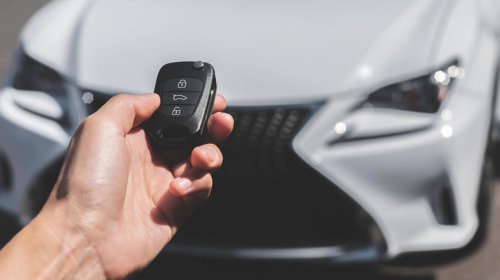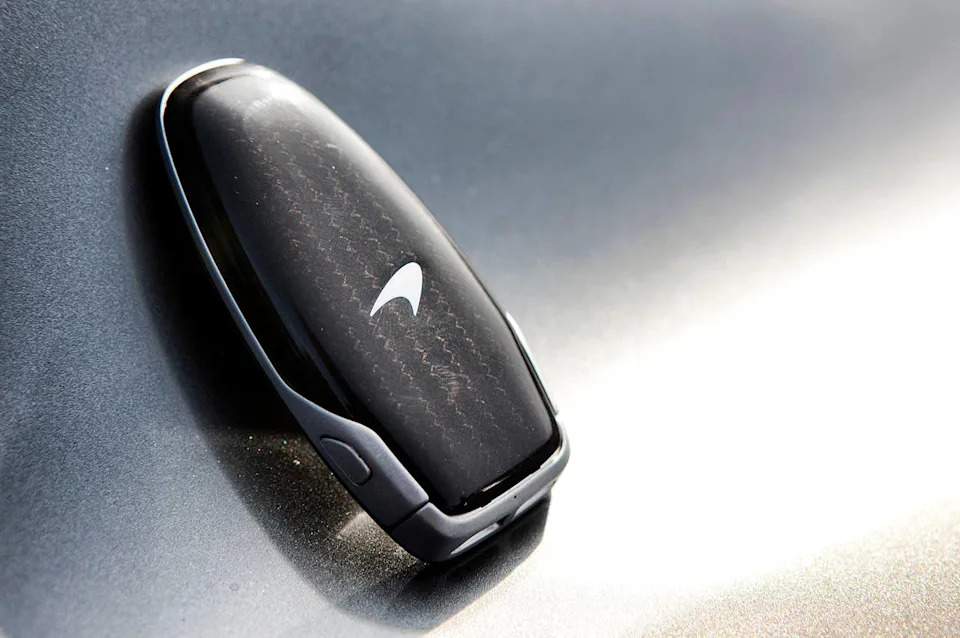
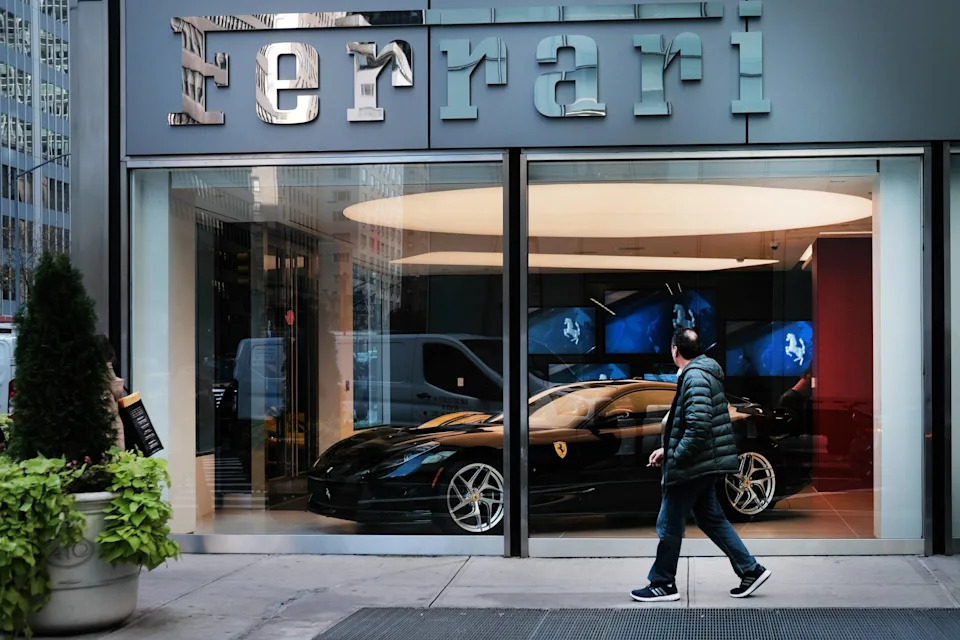
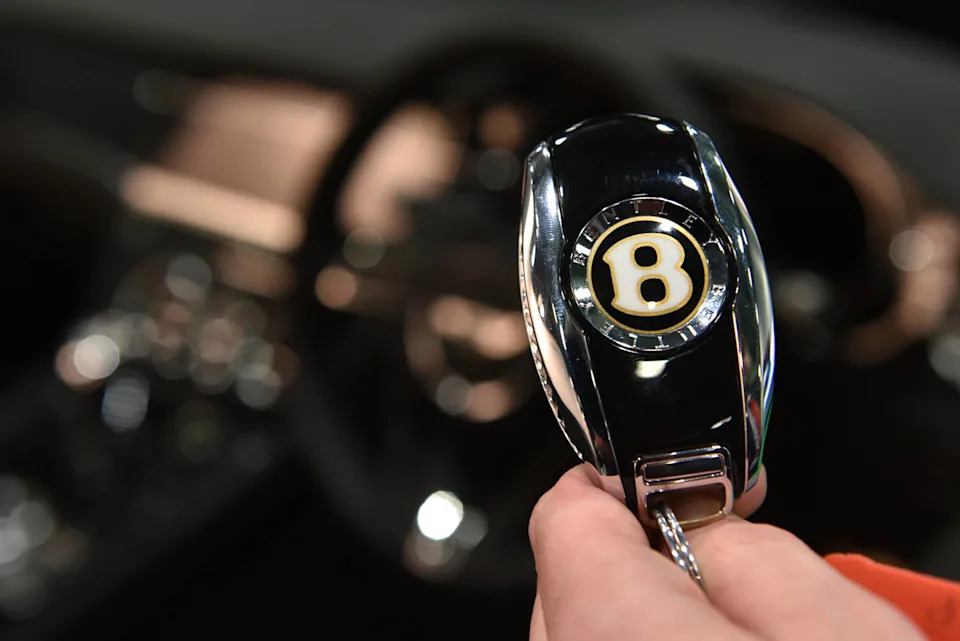


















This is Why Luxury Car Keys Are Gen Z's Trendiest AccessoryAutoblogJames OchoaFri, September 25, 2026 at 12:00 AM UTCAdd us on GoogleAutoblog and Yahoo may earn commission from links in this article.Personalize, AccessorizeIf you scroll through enough car content on TikTok, Instagram Reels or YouTube shorts lately, you might get a few videos from a specific genre tucked into your algorithm. These clips usually show a guy, usually somewhere between sixteen and twenty-five, pulls a Lamborghini or Ferrari key fob out of his pocket, sets it on a restaurant table or dangles it in view and says nothing. There is no car in frame, nor do they really say anything as an explanation. Just the fob with the badge and branding clearly visible, makes the implication do all the work. Half of the people in the comments immediately call it out as fake, while the other half don't seem to care. That tension is the whole trend, and the word this generation uses for it is LARPing — short for live-action role-playing, a legitimate term borrowed from tabletop gamin and cosplay culture, now repurposed to describe performing a lifestyle you don't have.AdvertisementAdvertisementThe keys themselves are, almost without exception, not real. Replica fobs sold on TikTok Shop, AliExpress, and Taobao under names like "rep keys" — makes near-identical copies of Lamborghini, Ferrari, Mercedes-Benz, and Rolls-Royce key housings for anywhere from five to sixty dollars. Some are sold openly as novelty items or collectibles for enthusiasts who'll never own the real car, but a growing share are bought specifically to be flashed.View the 2 images of this gallery on the original articleBut why keys?The idea of accessorizing to project perceived status isn't new, but it's well documented that Gen Z has been buying counterfeit designer goods to project a lifestyle they don't exactly have. Surveys on the topic have found that a majority of young American consumers see nothing morally wrong with buying or using counterfeit luxury items, which is a noticeable shift from their elders. But what is new about this specific phenomenon is the specific choice of prop — the car key.Unlike a fake watch or handbag, a key doesn't need to survive scrutiny from a judgemental critic or "expert." Nobody expects to see an actual Lamborghini or Ferrari parked outside a college bar or nightclub; it just needs to read correctly for the three seconds it's on camera or on the table. See, a key implies a car exists without one being in front of you. If somebody has a Ferrari or Lamborghini key in their possession, it implies that a Ferrari or Lamborghini is within their orbit; even if it is parked at home or in a far-away Montana garage "in storage." It is a much easier lie to pull off than a fake bag or watch sitting in front of someone under direct light. It's a flex with a built-in alibi, and sometimes that alibi can sound cooler than the truth.Spencer Platt / Getty ImagesPretending as a PersonalityExistent or non-existent cars aside, the word that is used to describe this whole phenomenon has its own strange history totally separated from its present-day meaning among the youth and youthful. The term 'LARP' started as shorthand for 'live-action role-playing,' a phenomenon that is rooted in tabletop games like Dungeons & Dragons. The acronym itself was coined in gaming circles in the 1990s and printed in rulebooks right alongside terms like game master and NPC. For decades it meant exactly what it sounds like: dressing up and acting out a character at an organized event, foam swords included.AdvertisementAdvertisementOnline culture pulled the word away from its geeky roots and repurposed it as an insult for anyone seen as performing a life they don't actually live. Linguist Adam Aleksic has described the shift as the internet simply swapping in a new word for an old idea, with LARPing sliding into the space the term "performative" ( as in the similar "performative male" phenomenon) used to occupy. A twenty-four-year-old interviewed by USA Today about the trend put the modern usage more bluntly, calling it out as someone whose actions are "not actually authentic to who they are as an individual."Not everyone treats the label as purely negative. Some corners of the internet have flipped it into self-help talk; they argue that consciously performing the identity you want can be a legitimate first step toward actually building it. According to them, embodying a trait is how you'd eventually have it for real. A media psychologist who studies youth and social platforms has warned there's a real cost buried in the joke too, noting that a generation raised entirely online tends to measure itself against exactly the kind of curated performance a fake key represents, a dynamic she's described as a cycle of constant comparison. Both readings can be true of the same fob on the same table: a harmless bit to the person filming it, and a small, steady contributor to the comparison economy; everyone scrolling past it is also stuck inside.One recent essay on the broader LARPing trend tied it to something bigger than any single insult, describing an ongoing shift where subcultures and communities collapse down into aesthetics — visual shorthand anyone can put on without the history, effort, or belief system that originally built the thing being copied. A movement or scene becomes a "-core" tag, reduced to a look you can assemble over a weekend rather than a set of ideas you spend years growing into, and the essay treats that flattening as a real loss for whatever community gets aestheticized this way, not just a harmless style choice. However, car culture just fits that pattern almost too neatly. Most of the time, a real Lamborghini or Ferrari owner has, in the overwhelming majority of cases, spent years accumulating both the money and the enthusiast fluency the hobby demands. The presence of a fob skips straight to the visual payoff without any of that underneath it.John Keeble / Getty ImagesView the 2 images of this gallery on the original articleWhat This Actually Means for AutomakersWith this in mind, it would be ebay to conclude that a company like Lamborghini, Ferrari, or Porsche to see this and want it stamped out — at the end of the day, it's copyright infringement. But the marketing reality is more complicated than a simple trademark problem. Every fake key flashed on a for-you page is, functionally, free brand advertising and awareness exposure to exactly the demographic these automakers need to be building desire in decades before they can afford it. AdvertisementAdvertisementIn short, nobody LARPs with a key for a Kia — even if it's for a Stinger, or the top-line Telluride X-Pro SX Prestige, which inches close to $60,000. The brands getting replicated are, without exception, the same handful of aspirational nameplates that have anchored car-poster-on-the-bedroom-wall culture for generations — Lamborghini, Ferrari, and Porsche. In its own backwards way, this trend acts as a real-time popularity poll of which automotive brands still carry enough cultural weight to be worth faking. On the other side of that coin, there is risk. Fakes can chip away at a luxury brand's exclusivity over time, especially if fakes become too prevalent. But that's precisely the dynamic at play here, since the entire point of key LARPing is public display. If flashing a fake Lamborghini fob becomes background noise instead of a novelty, the brand's actual owners lose some of the rarity signal they're paying a seven-figure price to access.For automotive marketers specifically, the more useful takeaway might be about which brands drive desire. Even for a generation that can't afford the car, choosing to perform ownership of it in public shows that they are invested in the mystique. That's a far stronger signal of brand equity than a traditional awareness survey would ever capture.The Poster on the Wall, UpdatedIf we are able to take two steps back, there is another way that we can look at it. Every generation has had its own low-cost way of "performing" their car desire before it could actually afford the real thing. That meant taping a poster of a Lamborghini Countach above your bed, displaying a die-cast Ferrari F40 on a shelf, or a Matchbox Porsche 911 pushed around a bedroom floor. What's changed isn't the meaning, but rather the format. A poster or playing with toys was somewhat private, seen only by whoever walked into that bedroom or whoever brought what to a playdate with other children. A key fob pulled out at a restaurant table, whether filmed and uploaded or not, is public and performative by design. It is built for an audience that can react to it in real time. The LARPing trend isn't really about deception at its core. It's the oldest habit in car culture, wanting to be near the object of desire before you can own it. The keys may be fake, but the brand loyalty isn't.AdvertisementAdvertisementThis story was originally published by Autoblog on Sep 25, 2026, where it first appeared in the Features section. Add Autoblog as a Preferred Source by clicking here.