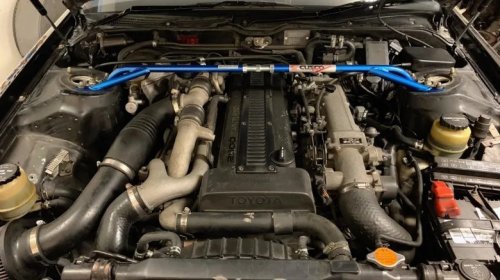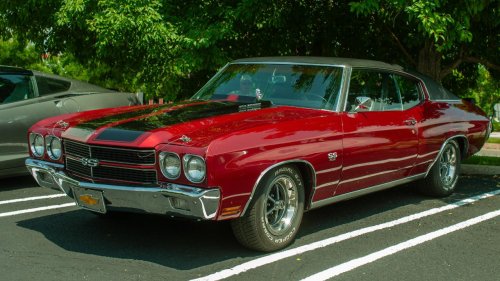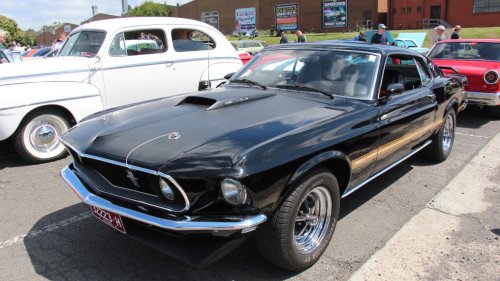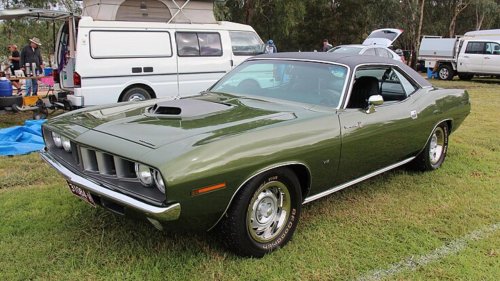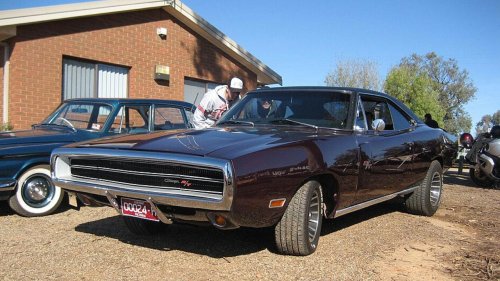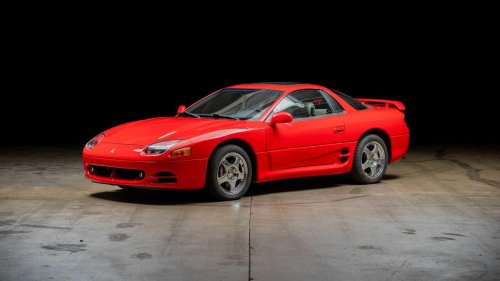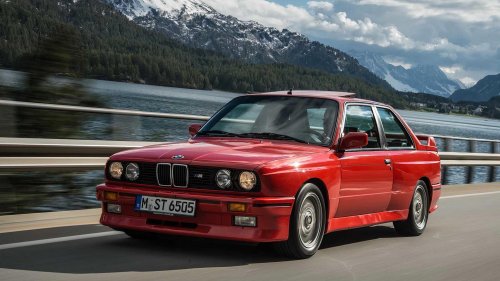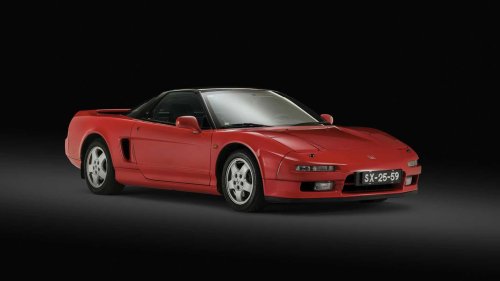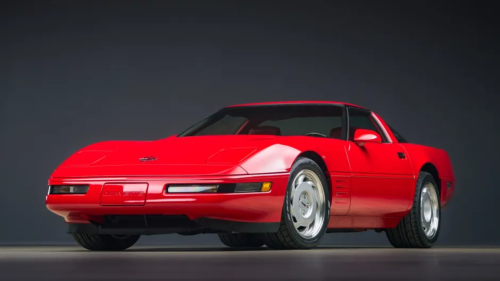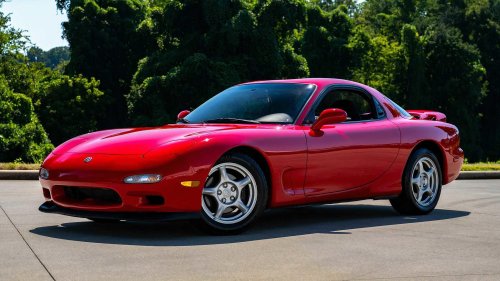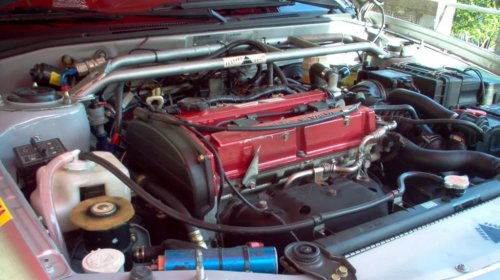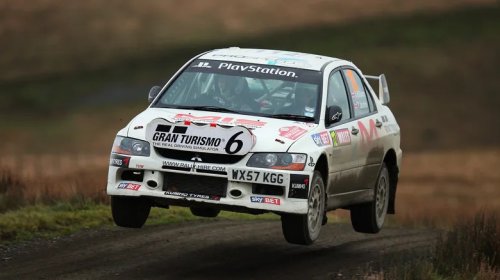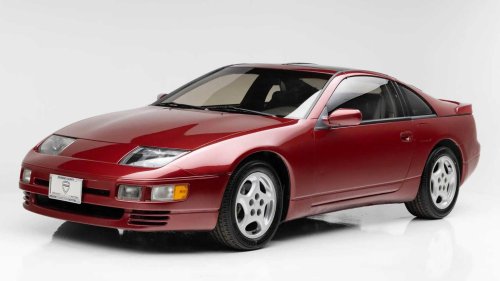
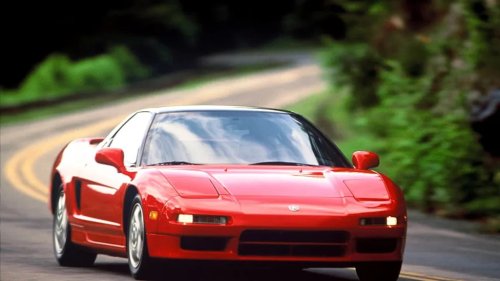



















Autoblog and Yahoo may earn commission from links in this article.They Can't All Make 276 Horsepower, Right?If you spent any significant time playing Gran Turismo on your Playstation as a kid, you probably haven't noticed something particularly strange about some of the cars. It seems like all these fast cars from different brands, touted to be faster than one another, seem to make the same amount of power. The Nissan Skyline GT-R: 276 horsepower. The Toyota Supra: 276 horsepower. The Mazda RX-7: 276 horsepower. The Mitsubishi Lancer Evolution: 276 horsepower. The Honda NSX: 276 horsepower. A coincidence so uniform, so perfectly repeated across cars with completely different engines and made for different purposes, that it could only mean one thing: someone had decided that 276 horsepower was the number, and everyone had agreed to stop there.However, the 276 horsepower number wasn't a technological ceiling. It wasn't a quirk of the era's engineering. It was the product of a handshake; one of the most consequential informal agreements in automotive history that was made among Japan's most powerful automakers at the end of the 1980s and quietly maintained for the better part of two decades. The story of how that agreement came to be, and how it was slowly, systematically ignored by the very people who agreed to it, is the story of why the JDM cars of the 1990s remain the most beloved performance machines of their generation.Jeff Overs/BBC News & Current Affairs via Getty ImagesView the 2 images of this gallery on the original articleThe Problem Nobody Wanted to Talk AboutTo understand the so-called "gentleman's agreement," you have to understand how things were going in Japan at the end of the 1980s. The country was in the midst of an economic bubble of extraordinary proportions; money was everywhere and consumer confidence meant that people were spending on cars, luxury goods and other conspicuous purchases. As a result, the Japanese auto industry had to compete with imported machines from Germany and Italy; which triggered a race to produce some of the most technically sophisticated cars ever built. The R32 Nissan Skyline GT-R, the mid-engined Honda NSX, the Toyota Supra. These were not ordinary cars; they were statements of engineering ambition that stood Japan's ground against the rest of the world.AdvertisementAdvertisementBut while Japan's automakers were going crazy with its engineering ambitions, the roads they were meant to roam were getting dangerous. Through the 1980s, traffic deaths had climbed steadily, peaking at more than 10,000 deaths per year by 1988. The streets of Japan, which are densely populated and narrow in the cities, and lethally twisty in the mountains, were simply not the kind of roads built for the kind of performance cars that its domestic car industry was selling to its newly-minted well-to-do. To make matters worse, illegal street racing had been a building problem that was partially driven by the bosozoku; the infamous youth gangs who brashly modified coupes and sedans and motorcycles and used public roads as their racetracks.Bohemian Nomad Picturemakers/CORBIS/Corbis via Getty ImagesThe Japan Automobile Manufacturers Association (JAMA) had seen this kind of situation before. Back in the mid-1970s, a similar set of concerns around street gangs and road deaths had prompted informal calls for restraint. But by the late 1980s, with cars getting faster and roads getting more dangerous, the pressure to act had become impossible to ignore. JAMA stepped in and proposed something unusual: a voluntary, self-imposed ceiling on power output for all domestically sold production vehicles. This didn't require any new laws or act by their equivalent of Congress, not did it require the police to come up with new ways of policing. Automakers simply agreed in the interest of reputation and road safety, that 280 PS, or 276 horsepower, was the limit.The agreement was quietly formalized in 1989, under JAMA chaired at the time by Shoichiro Toyoda. It covered cars sold in the Japanese domestic market (yes, JDM) specifically, and it also came with a companion rule. Alongside the 280 PS limit, they agreed to cap all cars to a 180 km/h (~112 mph) speed limiter on all new vehicles. The idea was simple; cap the power, cap the top speed. Keep the lawyers and legislators off everyone's back, and avoid the kind of horsepower war that had played out so destructively in America twenty years earlier.Jerry Haynes/NY Daily News Archive via Getty ImagesView the 2 images of this gallery on the original articleThe Warning From AmericaIn contrast, things fared out wildly differently in the United States. The infamous horsepower wars of the late 1960s was a textbook example of what unchecked and unregulated competition looked like at the corporate level. In an escalating arms race of cubic inches and quarter-mile times, Pontiac, Chevrolet, Ford, and Chrysler shoved bigger and even bigger V8 engines into the engine bays of a new breed of muscle cars, which were then sold them to teenagers and other young drivers with heavy right feet and a dream to go fast.AdvertisementAdvertisementThe consequences were grim enough that the insurance industry eventually intervened with surcharges so punishing they effectively priced young buyers out of high-performance cars. In turn, the government followed with tighter safety and emissions regulations. Detroit's muscle car era didn't end; it was strangled. And the Japanese automakers of 1989, watching their own roads fill with casualties, decided they would rather write their own rules than wait for someone else to write them.In that sense, the 276 horsepower ceiling was an act of institutional self-preservation dressed up as civic responsibility; that is if these newfangled Japanese cars actually made 276 horsepower.AcuraView the 3 images of this gallery on the original articleThe Cars That Obeyed — On PaperIf you would have probably guessed, virtually none of these cars actually made 276 horsepower. The agreement was a gentlemen's agreement in the truest, most technically literal sense. There was no testing authority, no independent verification and no penalty for fudging the numbers. Manufacturers simply declared their power figures, and everyone nodded along as if nothing was wrong. What these engines actually made, was another question entirely.AdvertisementAdvertisementThe most famous example is probably the R32-generation Nissan Skyline GT-R. In the years following its release, independent dyno testers consistently showed that the RB26DETT produced well north of 300 horsepower stock. Some tests even suggested over 320 horsepower, depending on the variant. The R33 and R34 that followed were the same. Nissan knew and the Japanese motoring press knew. Enthusiasts knew, but nobody sounded the alarm and made it an issue.However, the GT-R wasn't the lone wolf in all this. Track testing and dyno analysis consistently suggested the stock twin-turbo Mark IV Toyota Supra and its hallowed 2JZ engine was actually pumping between 320 and 330 horsepower. Similarly, dyno numbers for the FD-generation Mazda RX-7 showed that its twin-sequential rotary produced anywhere from 30 to 40 horsepower above its official 276-horse claim. The Mitsubishi Lancer Evolutions, particularly the later generations, were also widely understood to have actual power outputs beyond 276. Even the Honda NSX was suspected of producing more than its declared number.YOSHIKAZU TSUNO/AFP via Getty ImagesBreaking FreeIn essence, this was a horsepower war conducted entirely in invisible ink. The 276-horsepower numbers on the spec sheets were something that everyone maintained because it served everyone's interests. Manufacturers could sell increasingly capable performance cars without triggering attention from either the public or the Japanese government. Buyers got cars that outperformed their paper specifications and the agreement remained technically intact because nobody's official figures exceeded the ceiling.By the early 2000s, the fiction was becoming harder to maintain. The cars had gotten so good, and the gap between claimed and actual power so wide, the agreement had become almost ceremonial and more like a ritual gesture toward restraint that carried decreasing practical meaning.AdvertisementAdvertisementThe formal end to the agreement came in 2004, with the pact broken by the introduction of a powerful, new vehicle. That year, Honda introduced the fourth-generation Legend (Acura RL), a flagship luxury sedan that would be powered by a 300-horsepower V6. It was the first time a Japanese manufacturer had officially, publicly, and without apology declared a power output above the agreed ceiling. The agreement, which was never legally binding and honored only in form rather than substance, went away without spectacle or fanfare. Marc GANTIER/Gamma-Rapho via Getty ImagesConclusionAll in all, the Japanese auto industry's gentleman's agreement was far more than a simple cap, it was a complex act that allowed the Japanese automotive industry to appear civically responsible, and manage the risks of government intervention and public backlash while still making the best cars they possibly could. For nearly two decades, the 276 hp claim served as a public ritual of restraint, allowing cars like the Supra and Skyline GT-R to be developed with superior performance without a hard focus on high horsepower figures. As a result, a generation of JDM classics not only outperformed their paper specifications, they cemented a legendary status among enthusiasts for outright character. Ultimately, the 276 horsepower number in Gran Turismo is just a small detail. The true legacy is an era of engineering excellence that created some of the most beloved and influential performance machines in automotive history.This story was originally published by Autoblog on Jun 4, 2026, where it first appeared in the Features section. Add Autoblog as a Preferred Source by clicking here.