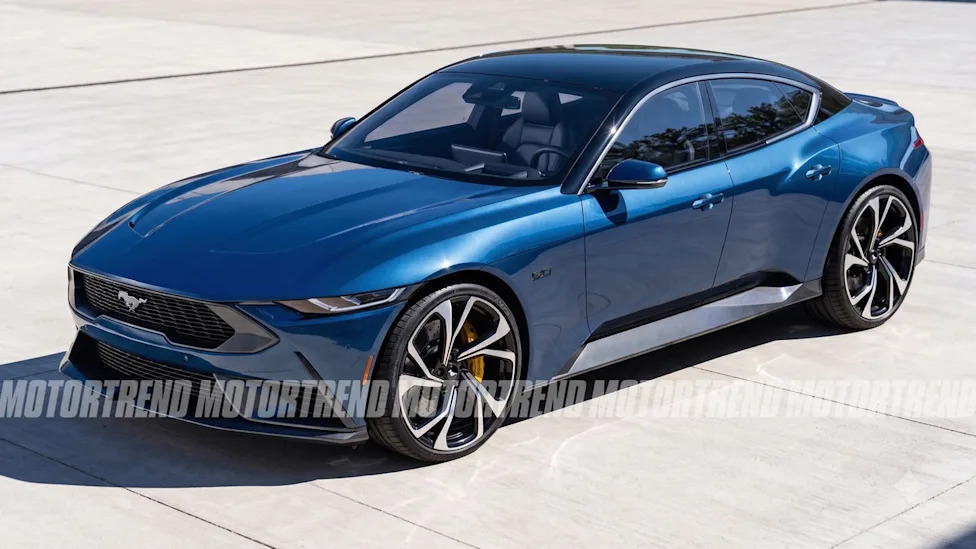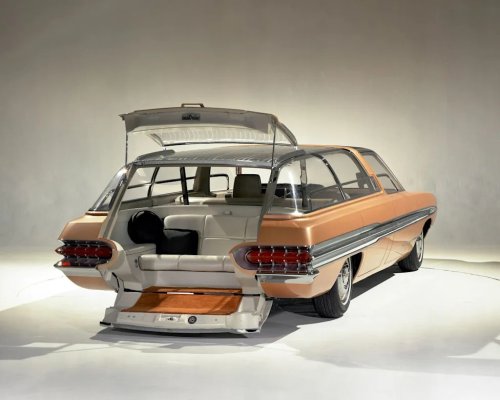
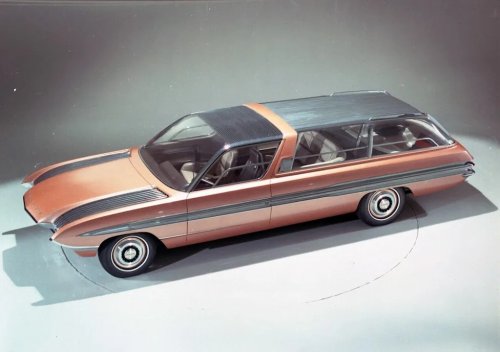
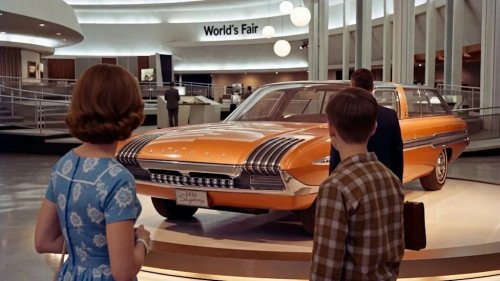
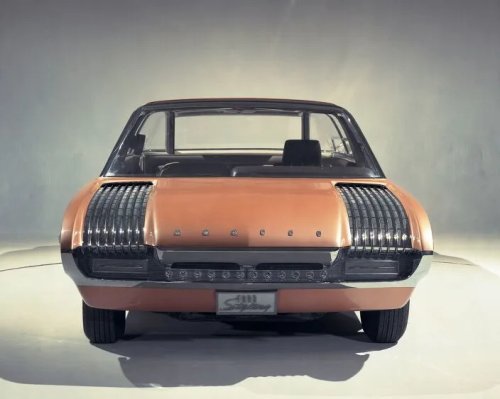
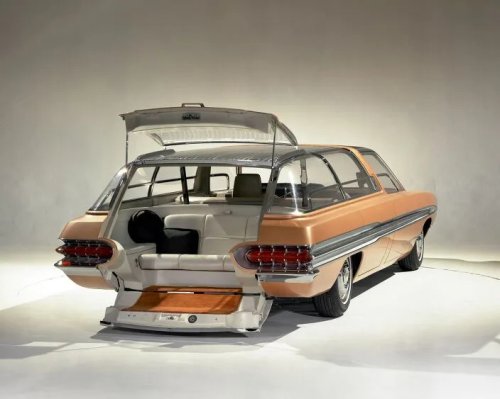
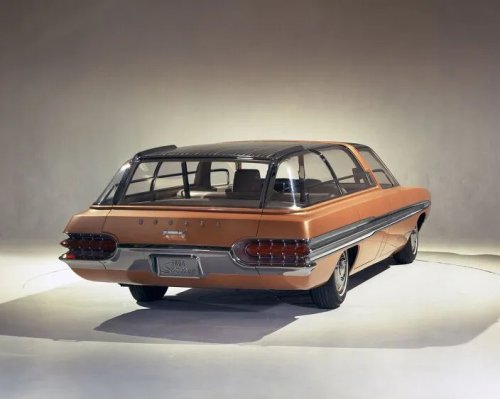
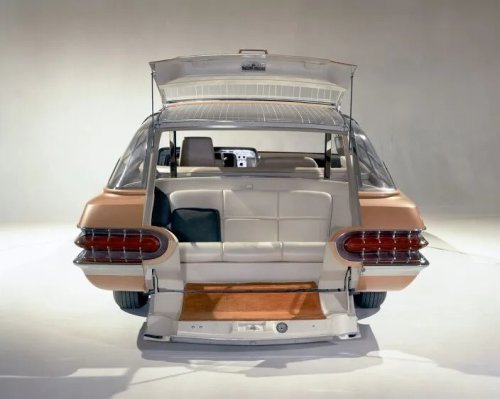
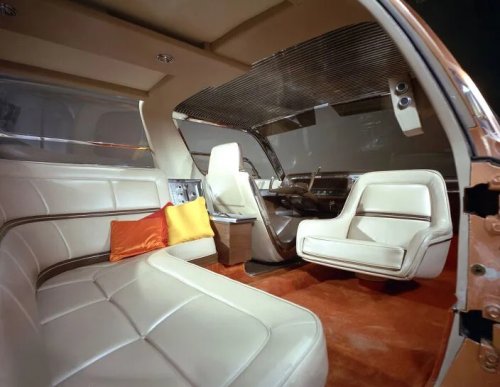
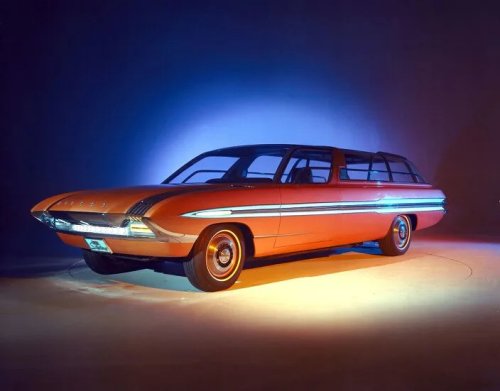
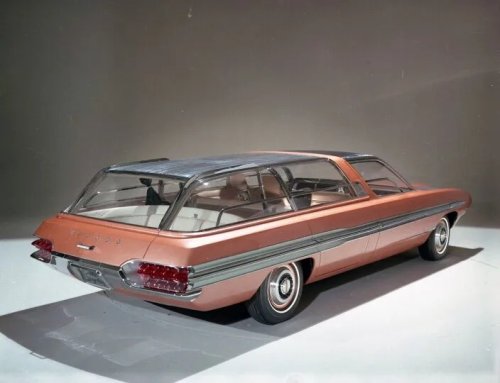
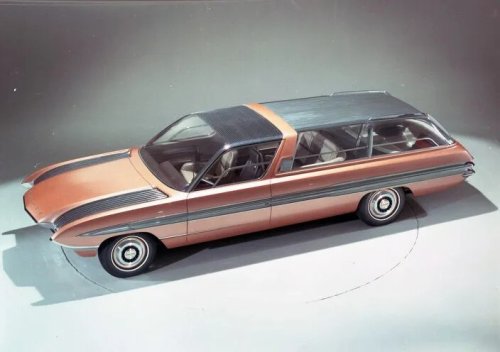
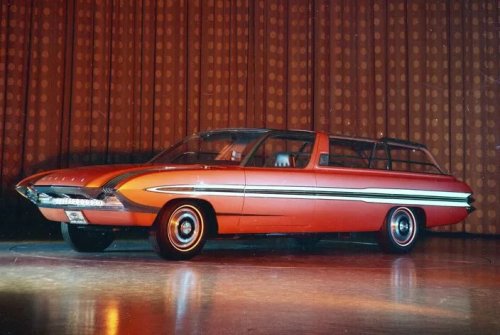
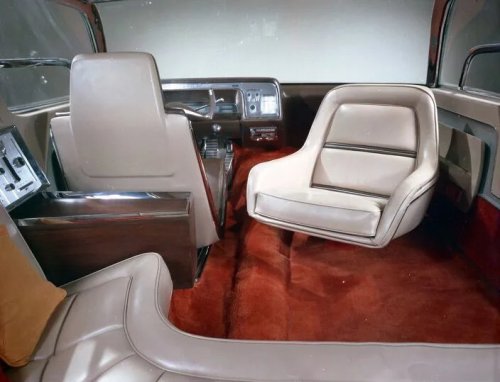
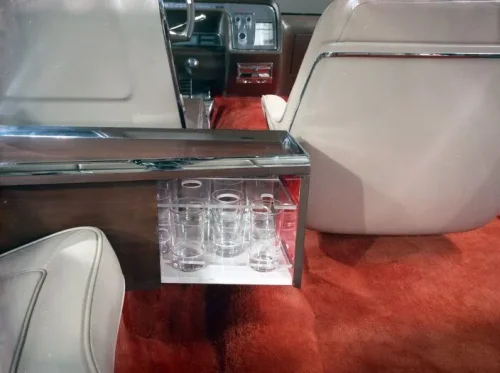
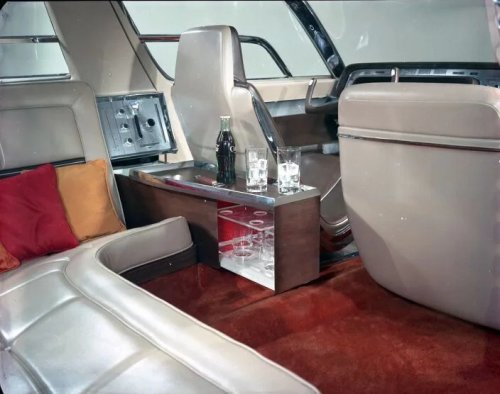
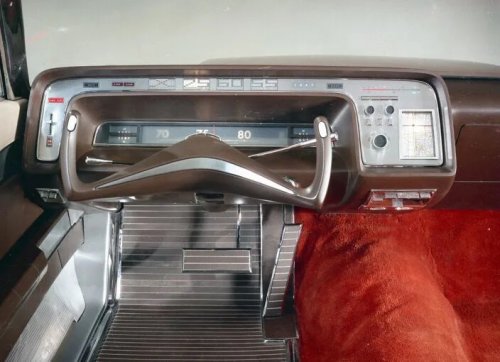
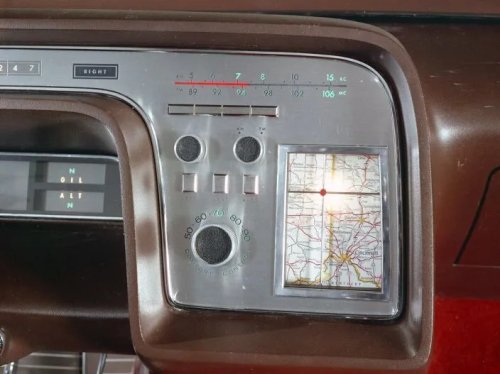



















this fords wagon from 1964 literally has a living room sofa insideOriginally revealed at the 1964 New York World's Fair, the Ford Aurora was a futuristic, ultra-luxurious station wagon packed with radical ideas that predicted several pieces of modern automotive technology decades before they reached mass production. Now, more than 60 years later, the company has released a stylized, period-authentic digital short film imagining what a big-budget, mid-century Madison Avenue vehicle reveal would look like if built with today's AI production tools.The Ford Archives team has deployed modern generative artificial intelligence filmmaking tools to resurrect one of its most ambitious mid-century design studies.this fords wagon from 1964 literally has a living room sofa insideThe 1964 Aurora: A "Rolling Laboratory"The Aurora was developed under the watch of Gene Bordinat, Ford's vice president and director of styling, as an "X-car"-a non-production conceptual experiment designed solely to test the limits of passenger comfort, advanced ergonomics, and lighting technology.AdvertisementAdvertisementThe concept interior was divided into three dedicated living zones. Up front sat the driver's "command post," which completely ditched a traditional round steering wheel in favor of a padded, concave steering bar enabling variable-ratio steering with just a half-turn lock-to-lock. The middle section acted as a premium open-concept living area, housing a standalone swivel armchair, a curved sofa large enough for three adults, a built-in oven-refrigerator combo, three independent radios, and an integrated beverage cooler.The rear of the wagon featured a dedicated children's "romper room." To give parents peace of mind on long family road trips, the rear area could be completely sealed off from the rest of the cabin via a power-operated glass partition.this fords wagon from 1964 literally has a living room sofa insidePredicting the Future of Car TechThe Aurora's sheet metal featured 23 unique experimental design assets. Instead of conventional high beams, the front end packed a bank of 12 individual one-inch headlamps. The side panels featured body-side "spears" illuminated by electroluminescence-a legacy technology that converts electrical current straight to light without generating heat.The vehicle also incorporated several features that successfully anticipated modern luxury trends:AdvertisementAdvertisementPre-GPS Navigation: Long before satellite tracking existed, the Aurora featured a physical dashboard map that automatically adjusted and oriented itself to reflect the car's real-time directional location.Variable Sunroof Transparency: The large overhead glass panel could shift from fully opaque to crystal clear at the touch of a button.Clamshell Cargo Tailgate: The rear utility gate folded flat into a carpeted step, while the upper glass liftgate retracted directly over the roof structure.AdvertisementAdvertisementAdvertisementAdvertisementAdvertisementAdvertisementBringing the Past Into the Present via Gen-AIThe newly released project follows an archival initiative where Ford historians digitally rendered unproduced 1960s Mustang design concepts in period-accurate paint finishes. For National AI Day, the team took the vast treasure trove of original Aurora blueprints, press collateral, and physical photos, feeding the data assets into generative AI film models.The resulting short film adopts the voiceover narration styles, aspect ratios, and visual grain patterns of a 1960s promotional movie. To show off the car's feature set, the AI-generated video simulates a classic cross-country American road trip, depicting the low-slung concept wagon traveling along Route 66 and visiting iconic landmarks like Mount Rushmore, Death Valley, and Yellowstone.According to Ted Ryan, Ford's chief archivist and historian, these flights of fancy are critical to long-term engineering. Ryan noted that previous concepts like the 2002 Thunderbird and the Ford Airstream concept (which later evolved into the Ford Flex production crossover) prove that ideas from these rolling laboratories consistently trickle down into consumer driveways. While the Aurora's L-shaped sectional sofa layout hasn't made it to assembly lines yet, its foundational ideas-such as rear-seat entertainment screens, integrated vehicle refrigeration, and live dashboard mapping-ultimately rewrote the rules of the family vehicle.This article was co-written using AI and was then heavily edited and optimized by our editorial team.AdvertisementAdvertisementBecome an AutoGuide insider. Get the latest from the automotive world first by subscribing to our newsletter here.