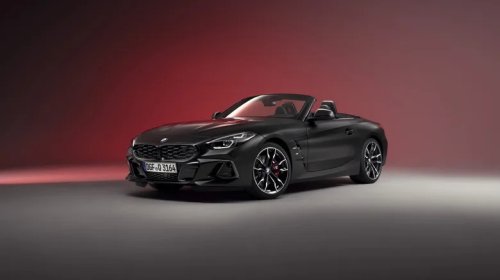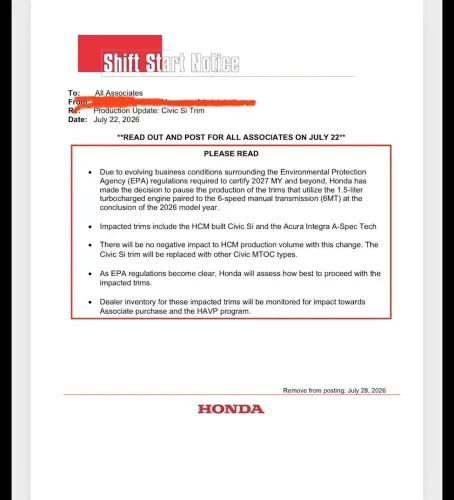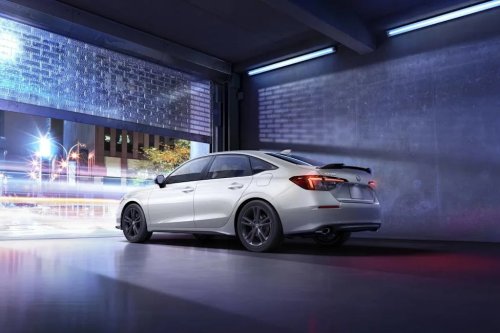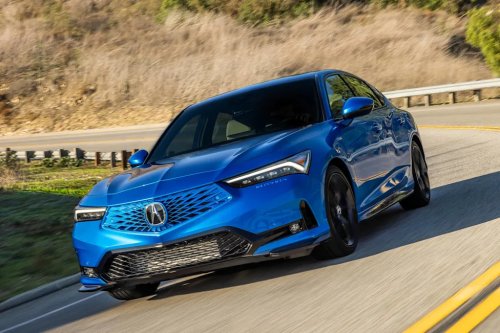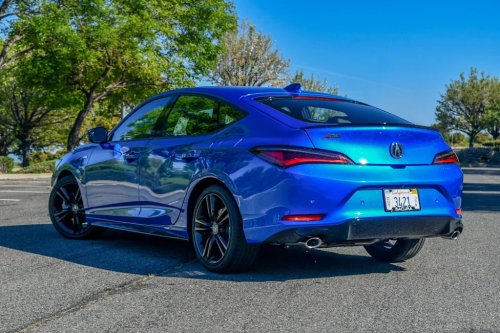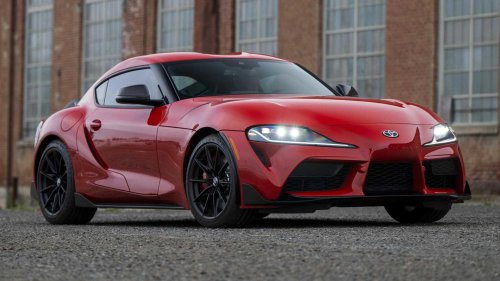
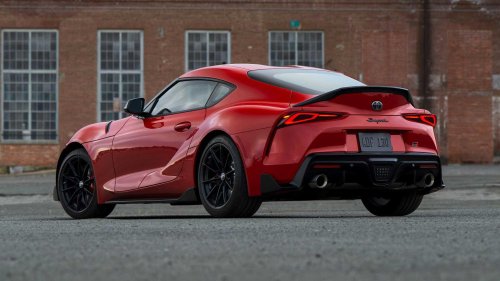
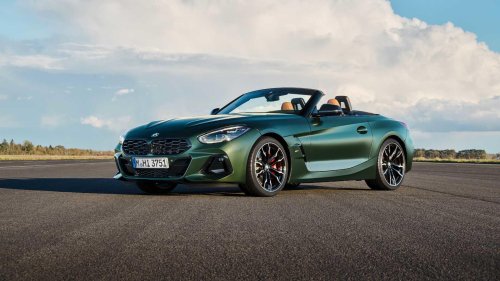
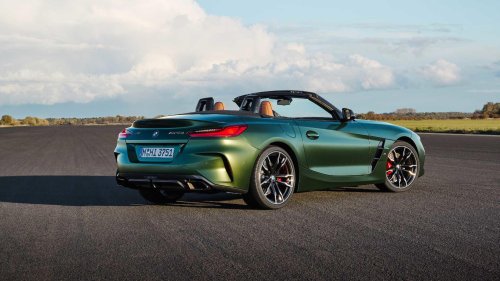
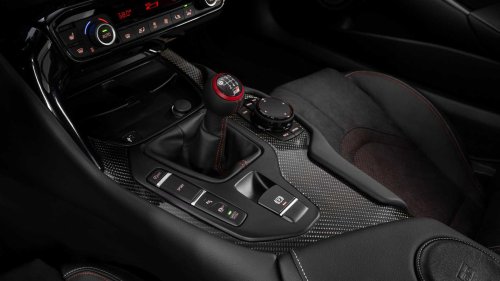
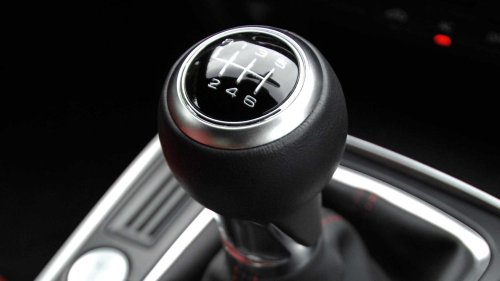
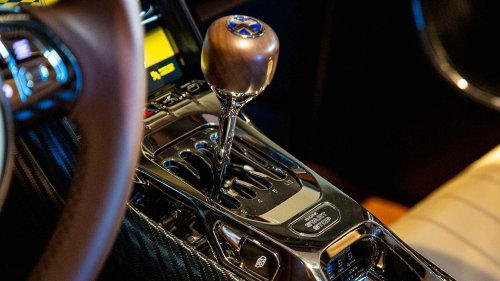



















The number of sports cars with a manual transmission available in the US is rapidly dwindling. As consumer preferences shift, and other factors such as electrification influence automakers’ design decisions, the manual transmission is becoming an endangered species, even in the domain of performance-oriented cars.Two of the models in this shrinking category have recently gone out of production, which means this could be the perfect time to grab one of them before they become rare collectibles and prices shoot up. We’re talking about the BMW Z4 and the Toyota GR Supra, the platform-sharing siblings created through a collaboration between the brands.The two models are built at Magna Steyr’s manufacturing facility in Austria, and share BMW’s B58 3.0-liter turbocharged inline-six engine, which produces 382 horepower and 368 pound-feet of torque in both cars. Let’s take a closer look at them, and the sports car world’s overall shift away from manual transmissions. The Toyota GR Supra 3.0 ToyotaThe fifth-generation Toyota Supra, known as the GR Supra, was a long-awaited model among car enthusiasts. It made its debut in 2019 and went on sale for the 2020 model year, over two decades after the previous generation had gone out of production. The manual version of the new model, however, was not initially part of the lineup. The GR Supra was launched with an eight-speed automatic transmission, built by German manufacturing firm ZF. However, for the 2023 model year, a six-speed manual transmission was also made available.While the GR Supra was offered with a selection of two BMW-built engines (one being the B58, the other being the B48 turbocharged 2.0-liter inline-four), the manual transmission was only made available with the B58-powered 3.0 version of the model. The Supra’s Final Edition arrived on the US market last year, and was also powered by this engine; it featured a unique black-and-red color scheme and a few mechanical upgrades.Toyota While the manual 2026 Supra started at $56,900, prices for this beloved model are already rising well past that point on the used market. The cheapest used examples for the manual version start around the $50,000 mark, while the most expensive ones will set you back around $80k.Now that the model is no longer available as a new vehicle, we expect used prices to soar to even greater heights, as cars get snapped up by dedicated enthusiasts. This is especially true of the manual version of the model, since manual sports cars are becoming a rarity. The BMW Z4 M40i BMW The GR Supra’s sibling model, the third-generation BMW Z4, arrived on the market slightly before its Toyota counterpart; it went on sale for the 2019 model year, although the two cars were developed alongside each other. The Z4’s design took some inspiration from an earlier model in the Z series, the Z8, which was produced between 1999 and 2003. Unlike its second-gen predecessor, which had a retractable hardtop, it is equipped with a soft-top convertible roof, a design throwback to the model’s first generation.BMW The engine and transmission lineup followed a similar trajectory to the Supra’s: while both the B48 and B58 engines were available, it wasn’t until the 2024 model year that the six-speed manual transmission was offered alongside the eight-speed automatic. This transmission was exclusively available in the B58-powered M40i model, and was offered as part of what BMW calls the Handschalter (Hand Shift) option package.As is the case with the Supra, the manual Z4 is now set to become a sought-after model in the wake of its discontinuation. The manual 2026 Z4 started at $67,150; on the used market the lowest prices are around the same level, but the most expensive examples sit around the $75,000 mark. Why Are Manual Transmissions Disappearing From American Sports Cars? Toyota The demise of the manual Supra and Z4 is a marker of a wider shift in the automotive world. Sports cars – one of the last bastions of the manual transmission on the American car market – are now also making a move away from it as consumer demand changes. Fewer young drivers entering the automotive world today are learning how to drive a manual car, which leads to a shrinking pool of potential customers.Although there are some key advantages to having a manual transmission in a car built for enthusiasts, namely a more engaging and hands-on driving experience, this has not been quite enough to stave off the tidal wave of discontinuations. Several models that previously offered a manual now no longer do so, and others are hanging on by a thread.There are several reasons behind this change, of which shifting consumer preference is only one. Here are some of the core driving factors behind the disappearance of manual transmissions from American sports cars.Audi UKEmissions regulations and efficiency: Even in the world of high-performance cars, which are typically not thought of as “green” vehicles, carbon emissions are an increasingly large part of the equation. Complying with regulations is paramount; having a manual transmission on board often makes that difficult due to poorer fuel efficiency, leading automakers to move towards alternative solutions.Performance: In a world where automakers are fighting over hundredths of a second in an attempt to beat world records, even the smallest difference in performance has an impact. Today’s sophisticated automatic transmissions typically perform better when it comes to metrics such as 0-60 acceleration or the quarter mile.Electrification: While sports cars have resisted electrification a little longer than their more pedestrian counterparts, there’s no denying that electric and hybrid powertrains are playing an increasingly large role in this sector of the automotive world. Pairing a manual transmission with a hybrid powertrain or a fully electric one is virtually unheard of; as more and more electrified models join the market, there are increasingly fewer opportunities for drivers to shift their own gears. In What Direction Is The Sports Car World Heading Instead? Máté Petrány/CarBuzz/Valnet Although the Z4 and the Supra are very close siblings, they will be going in different directions in the future. The Z4, it appears, has reached the end of the road, with BMW not having plans for a next generation or a successor model any time soon.Toyota, on the other hand, has confirmed an upcoming new generation for the Supra. At this stage, little is known about this sixth-generation model. Toyota may reach out to BMW again despite the Z4 no longer being in production, choose to build its own platform, or even collaborate with a different automaker. It is unlikely, however, that a manual transmission will be in the picture. A far more likely possibility is that the new Supra will be electrified in some form, and that it will be equipped with an automatic transmission.A similar trend is emerging in the wider world of sports cars. Once thought of as the domain of “boring” daily drivers, electrification is now being used as a way to enhance performance, a phenomenon that was kicked off by the “Holy Trinity” of hybrid supercars and later trickled down to more affordable models.Toyota The manual transmission, however, is unlikely to be completely killed off. Several automakers are coming up with creative ways to keep it alive; Koenigsegg pioneered the simulated manual, with a few other brands following its example. Traditional manuals are also surviving in a few pockets of the automotive world; according to Hewland Engineering, a transmission manufacturer, there has recently been an uptick in the demand for manual transmissions, suggesting there is still some appetite on the part of car enthusiasts.Although the manual Z4 and Supra are no longer with us, car enthusiasts are not completely out of options when it comes to buying a manual sports car. This is likely to be the case for many years to come: although consumer demand is changing, there is still a sizable cohort of die-hard fans who are unwilling to let go of manual transmissions completely.Sources: BMW, Toyota