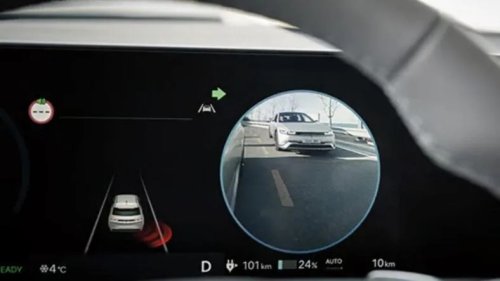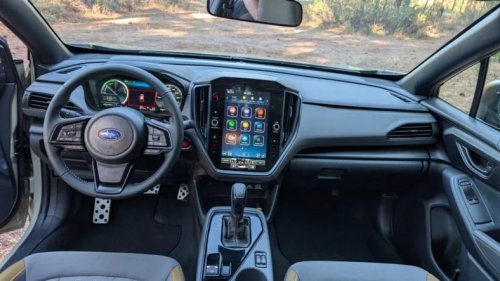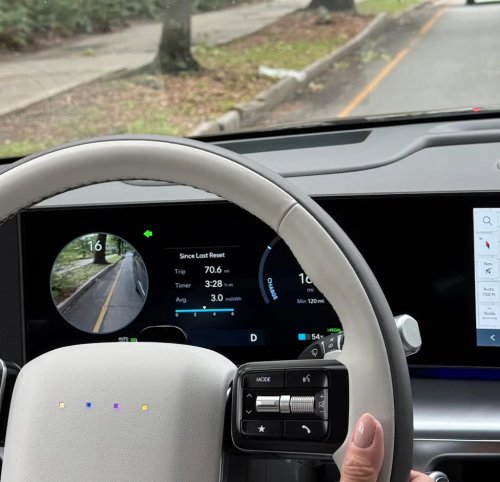
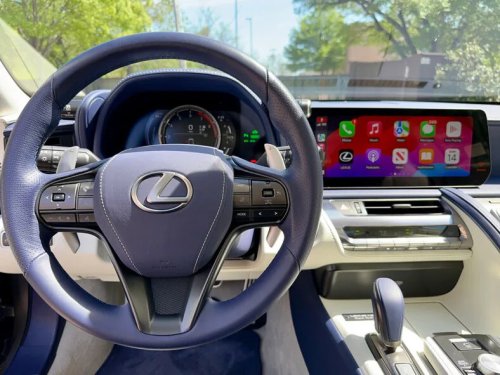
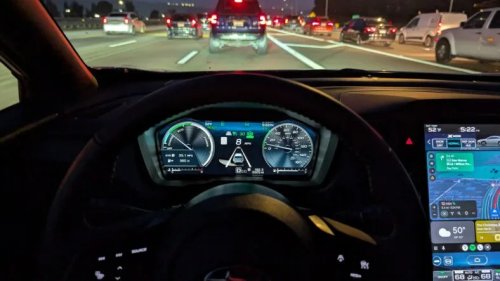
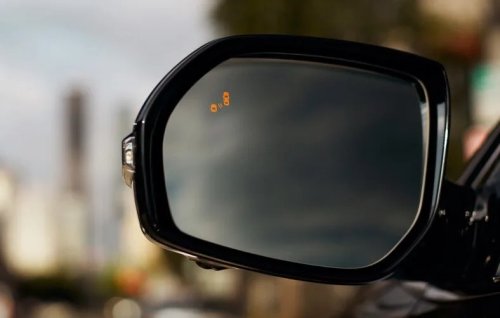
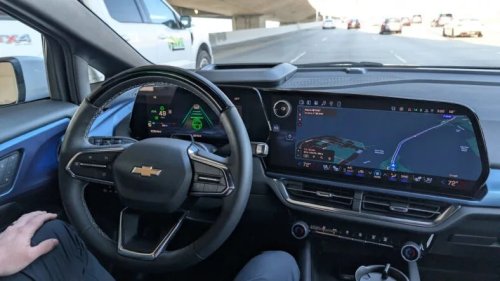
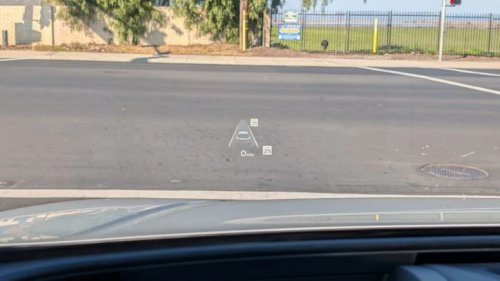
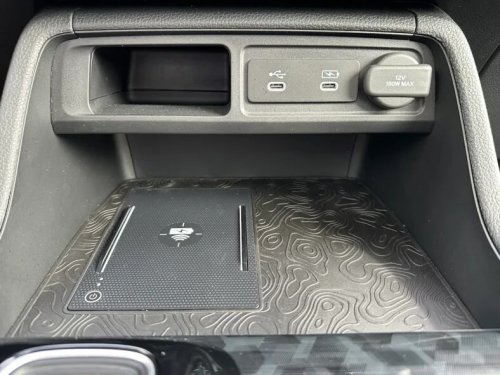
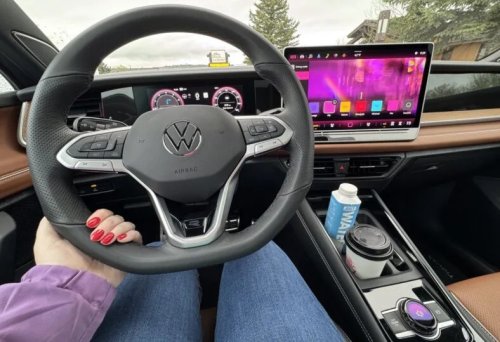
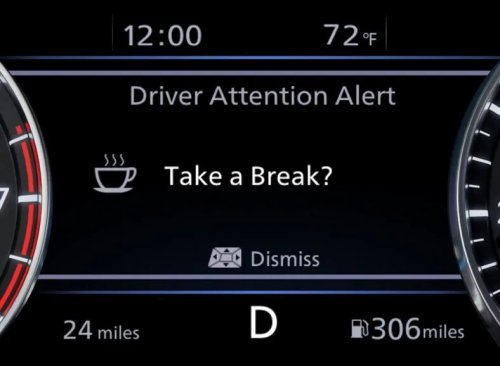
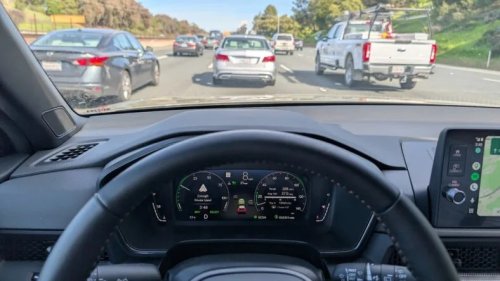
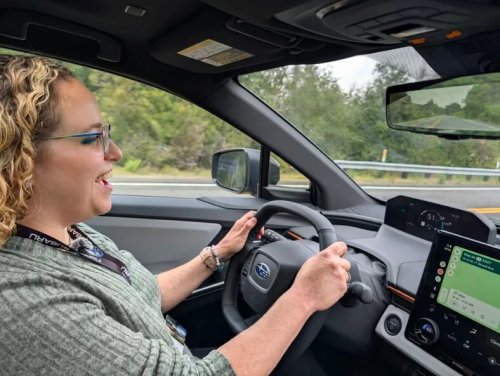



















Scotty ReissKeeping your eyes on the road is becoming more difficult as cars become more technologically advanced. Thankfully, these 9 features can help reduce distracted driving.We all know that taking our eyes off the road—even for a second—is incredibly dangerous. No safe driver will tell you it's a good idea. But according to recent crash data from institutes like the National Highway Traffic Safety Administration (NHTSA) and the Insurance Institute for Highway Safety (IIHS), distracted driving effects more of us than we'd like to admit.The NHTSA reports that over 300,000 people are injured by distracted drivers every year. Worse, at 55 mph, taking your eyes off the road for just five seconds means driving the entire length of a football field blind. IIHS roadside observational studies consistently find that roughly 8% to 10% of drivers were messing with their phone, talking on a handheld device, or touching their screens during the day.AdvertisementAdvertisementWhile all manufacturers in the US pack their cars with safety features to keep you and your family safe, such as pedestrian detection, front- and rear-cross traffic alert, and automatic emergency braking, many are backing that up with systems specifically designed to keep your eyes where they need to be and your hands off that dang phone.This story is 100% human-researched and written based on actual first-person knowledge, extensive experience and expertise on the subject of cars and trucks.1. Phone Mirroring is Literally Your Phone On a Bigger ScreenThe Lexus LC500h offers Apple CarPlay and Android Auto.Apple CarPlay debuted in 2014 (originally announced as "iOS in the Car"), followed quickly by Google's launch of Android Auto in 2015. Both companies shared the same mission: project a simplified, driver-friendly interface onto your vehicle's multimedia screen to keep you from messing with your handheld device behind the wheel and, therefore, reduce distracted driving.Instead of fumbling with your phone, essential features like saved navigation destinations, curated playlists, and contacts are adapted for quick, at-a-glance access. Even better, integrated voice assistants—Siri or Google Assistant/Gemini—allow you to make or take calls, have texts read to you with the ability to respond to them, or reroute navigation completely hands-free.AdvertisementAdvertisementIn my 2011 Subaru Forester, which has an aftermarket head unit that supports Android Auto, my favorite capability is simply saying, "Hey Google, get directions to the nearest Starbucks drive-thru," and seeing the route pop up or change instantly without touching my phone.How it works is simple (and cool): Your phone is both the microphone and the device that completes the task, using your phone's much faster processor. Because your phone and car stay seamlessly in sync, there is zero temptation or reason to pick up your phone.Read: 13 New Car Technology Systems that Show the Force is Definitely With You2. Lane Keep Assist Keeps You CenteredLane Keep Assist being used in the 2026 Subaru Crosstrek Sport HybridLane Keep Assist is a system I call "the feature by many names," as it's packaged and named something different depending on the manufacturer, but the intent remains: if you start drifting, many new cars will alert you when you start drifting or wandering, and will even step in to keep you in your lane if needed.Sometimes you can use it by itself while driving, and sometimes you can only use it while you're using adaptive cruise control. Sometimes it's on all the time. Usually you'll get an audible warning that you're leaving your lane, then a haptic warning (like a vibrating steering wheel), and then if those are ignored, the car may correct its own placement to avoid an accident.AdvertisementAdvertisementMy dad finds it frustrating, but if you're trying to change lanes and don't use your turn signal, it can trigger the warnings and initiate a correction. To avoid that when you drive, use your signal, and your car won't try to correct you. It's a computer—it just reads the steering input, sees that you're leaving your lane, and assumes you're about to be involved in an accident.Read: 9 Easy Ways to Add New Technology to Your Old Car3. Your Car Has Eyes On the Back of Its Head (Blind Spot Detection)A side mirror showing the Blind Spot Detection system workingThis feature has been around long enough to be one of the most underappreciated safety features. The first car to have it was none other than the Volvo XC90 back in 2003, and it used cameras in the side mirrors to alert a driver when another car was within a certain distance from the car's rear with a light near the bottom of the mirror. When that light came on, the driver knew not to merge.Today, it functions the same way—but most manufacturers use radar sensors in the rear bumper, as they're less susceptible to being blocked by the weather. Nowadays, new cars will issue an audible warning, too, to make double sure you're aware of a car approaching quickly from behind. It's a feature I got so used to that when I climb into one of my old cars, I have to remind myself my car doesn't have it.Some cars will even block you from merging lanes if a car is in the lane next to you, like we've seen in Nissan's Intelligent Blind Spot Collision-Avoidance and Hyundai/Kia's Blind-Sport Collision Avoidance Assist. Though most stick to the visual and audio warnings, unless lane keep assist kicks in.Read: Tips and Tools for Teen Driver Safety4. Vibrating Warnings Keep Help Reduce Distracted DrivingMy husband using Super Cruise in the 2026 Chevy Equinox EV LT 2. Look, no hands!For some automakers, chime tones and flashing dash lights simply aren't enough; they add haptic warnings that vibrate to reduce distracted driving. Many car makers—such as General Motors vehicles including the Chevy Equinox EV and Cadillac Lyriq—feature these haptic alerts with vibrating seats or steering wheels that pulse to get the driver's attention. GM's Safety Seat, for example, alerts a driver backing up that a car is approaching by vibrating the seat on the specific side the danger is coming from; it can also pulse if you attempt a lane change into a blind spot or get too close to the trash bins in your driveway.AdvertisementAdvertisementOther manufacturers, including Hyundai, Kia, Jeep, and Subaru, incorporate tactile steering wheel vibrations to alert you to lane drifting or immediate collision risks. This physical feedback cuts through road noise, prevents warnings from becoming white noise to the driver, doesn't startle sleeping passengers the way loud alarms might, and serves as one of the most valuable safety features for drivers who are deaf or hard of hearing.5. Heads-Up Displays, Well, Keep Your Head UpA heads-up display can show varying information, depending on the carFunnily enough, a heads-up display (or sometimes called "head-up" display or "HUD," depending on who you're talking to) is one of the oldest safety features to date. It first debuted in the US in 1988 on the Oldsmobile Cutlass Supreme, and it only showed the car's speed. So, to say they've come a long way since then is a serious understatement.Now, depending on the car, it can show navigational cues, your speed against the posted speed limit, road traffic signs, cruise control information, what song you're listening to, who's calling you, safety messages and warnings, and so much more. Many are customizable, too, letting you pick what information is shown, how bright it is, its position and size, or you can turn it off completely. Though why would you?Its mission is simple: put important information directly in your line of sight on the windshield so there isn't a reason to shift your gaze to a screen or phone.6. Some Companies Make it Deliberately Difficult to Access Your PhoneThe newly redesigned phone and charge cubby in the 2026 Honda PassportThere are a few companies that simply live by the saying, "You can't play with your phone if it's not easy to get to." While that might be a flaw to some people, for the sake of safety, it's a win. For instance, the Ford Explorer and Expedition have deep, horizontal pockets specifically designed to make it harder to grab your phone while driving, since the height of the entrance is narrow.AdvertisementAdvertisementIn the Ford Expedition, higher-trim models have a motorized center console that slides back, and it's deep, but that's where your phone is designed to sit. Out of sight, and out of reach. Mercedes-Benz designed the C-Class, E-Class, and GLC with a wireless charger that's inside a recessed well beneath the multimedia screen, and in some trims, that comes with a cover to keep you from grabbing your phone.It's all meant to keep you alert. After all, with voice assistants and phone mirroring, you don't need it in hand anyway.7. Speed Warnings Can Save You Money If You Lose TrackI loved the responsive media infotainment screen and digital gaugesI have some personal experience with this one. Sometimes, when you're driving a car that rides so smoothly, it's difficult to know exactly how fast you're going. Since I wear dark sunglasses, most HUDs are difficult for me to see during the day. During a recent road trip, I happened to look down and see that I was going over 90 MPH because the car was so quiet and smooth. I was lucky enough not to run into a police officer, but I easily could have. If it had what companies call Speed Limit Assist, I would have absolutely been aware of it sooner.Companies like Hyundai, Kia, Genesis, Toyota, and Lexus use cameras and map data to show you the posted limit on your driver information screen. With Hyundai, Kia, and Genesis, exceeding the speed limit will trigger a flashing icon and a warning chime. Toyota and Lexus's function works similarly: there will be a flashing icon on the dash to warn you that you're speeding.AdvertisementAdvertisementUnfortunately, this is one of the most hated safety features, as they're very sensitive. The Korean brands will warn you if you go over the limit by 1 or 2 MPH. With Toyota and Lexus, there aren't any audible warnings, but it can (and usually is) turned off. It's one of the most underrated safety features for teen drivers, though.8. Drowsy Driver Alerts Help Remind You to Take a BreakThe driver attention alert coming on in the 2026 Nissan SentraThis is one of the most thoughtful safety features, and I've seen it pop up on a few occasions. I was road tripping in a new Land Cruiser from Bend, Oregon, to Seattle, which is about a 5.5-hour drive. Right as I got to the three-hour mark, I heard a ding, ding, ding! and looked at the dashboard to see a small, steaming coffee cup with a message that read, "You've been driving for 3 hours. Time for a break?"After I saw that, I looked up and saw a sign for a rest stop in three miles. And I thought to myself, "The car's right; it has been a while. I should walk around a bit, have a snack, and then get back on the road."And that's exactly what that warning is for: to serve as a gentle reminder that, unlike the car itself, we are not machines, and we're safer drivers when we're not drowsy, distracted, and tired. Taking a break may add a few minutes to your arrival time, but on a road trip, it can make a huge difference in the quality of your driving.9. Hands-On the Wheel Alerts Will Keep You in ControlUsing adaptive cruise control in the 2026 Honda Civic HybridUnless you're in a GMC, Chevy, Cadillac, Buick, Ford, Rivian, Tesla, Mercedes-Benz, Lucid, or BMW, most modern cars require you to keep your hands on the wheel whenever driving assist systems (like adaptive cruise control or lane keep assist) are turned on. Even though the car will do the stopping, going, following, and sometimes lane changing for you, you are still the one in control. Forcing you to hold the steering wheel is just the car's way of checking that you are paying attention. I like to imagine the car yelling at me in a New York accent, saying, "Hey! You! Keep your eyes on the freakin' road!"AdvertisementAdvertisementCars check for your hands in two ways. Older setups, like those in many Subarus, Toyotas, or Hondas, look for a slight tug on the wheel. Because they measure resistance, the car might beep at you even if your hand is resting on the wheel simply because you aren't wiggling it enough. Newer cars, like many BMWs, Volkswagens, and recent Hyundais or Kias, use touch-sensitive steering wheels that work like a smartphone screen. You do not have to fight or pull the wheel; just resting a couple of fingers against the rim is enough to show the car you are there pulling the puppet strings.If you take your hands away, the car will quickly warn you with a bright dashboard graphic, an urgent chime, and sometimes a vibration through the wheel or seat. If you continue to ignore it, the car will not just turn off in the middle of traffic. Instead, some will briefly tap the brakes to try to wake you up in fear that you're sleeping, or they'll disable the driving assist system. If you still do not take over—like in a sudden medical emergency—some brands, like Mazda, Subaru, Volvo, VW, or Honda, will then assume you're unresponsive and turn on their hazard lights, slowly bring themselves to a safe, complete stop in the lane, unlock the doors, and call 911. New Subarus will even pull themselves over.Make No Mistake, You're Still the One in Charge, Despite the Safety FeaturesThe Uncharted is a well-balanced little EVIt is important to highlight one key word woven throughout this article: assist. As every automaker emphasizes in the owner's manual, you are solely responsible for controlling the car. These technologies and safety features are engineered to reduce driver fatigue and catch critical mistakes—not replace your awareness, take over the wheel, or fix bad driving habits.The crash data speaks for itself. Even surrounded by radar, cameras, and haptic warnings, drivers keep fiddling with their phones and screens, which unfortunately results in too many serious injuries and deaths. The safety features and driver assist functions built into modern cars are there to work with you, not drive for you.AdvertisementAdvertisementFor the sake of the people sharing the road and the family waiting for you at home, use these built-in tools for their true purpose: keep your hands on the wheel, your mind engaged, and your eyes on the road and reduce distracted driving.Related HeadlinesI (Barely) Escaped When Rain Swamped the Highway. Here's What to Do In a Flash Flood on the Road10 New Car Safety Features That Keep Your Family, and Your Car, Safe On the RoadThe 2026 Jeep Grand Cherokee L Summit Was My Family's Favorite Review—After a Week, It Became Mine, TooRead more at A Girls Guide to Cars