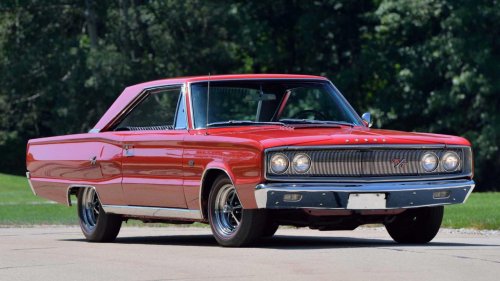
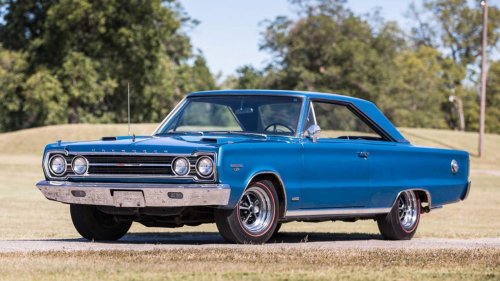
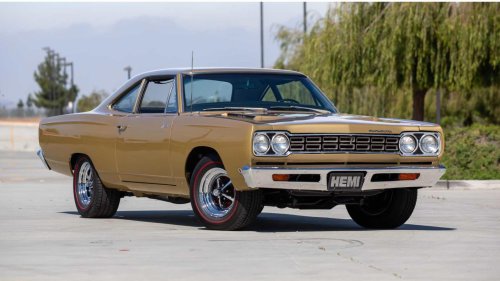
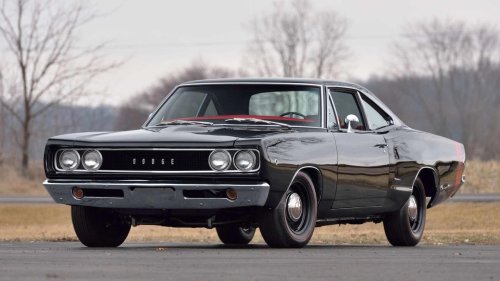
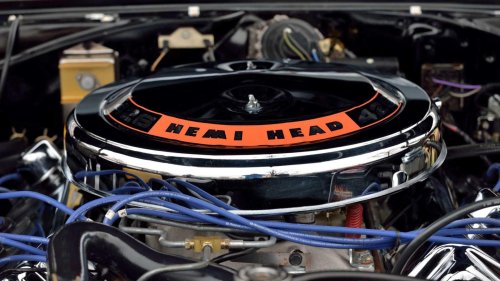
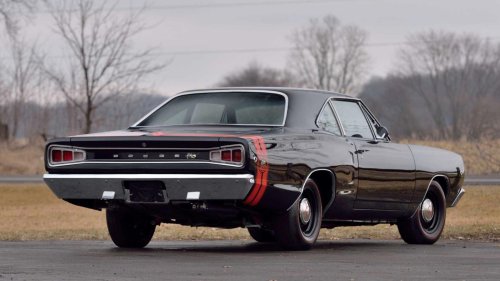
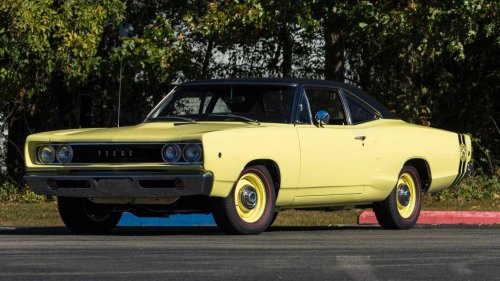
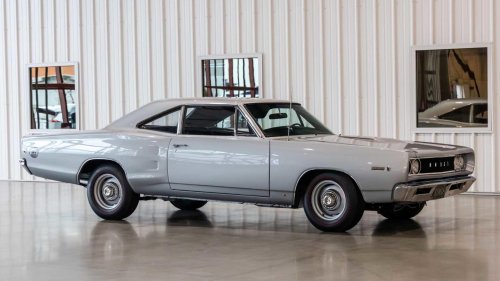
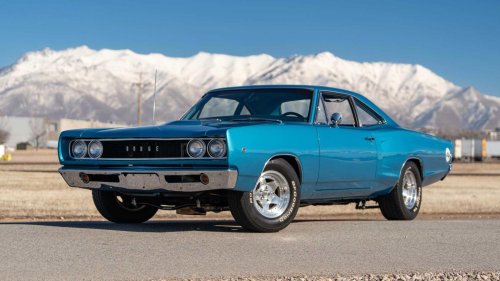
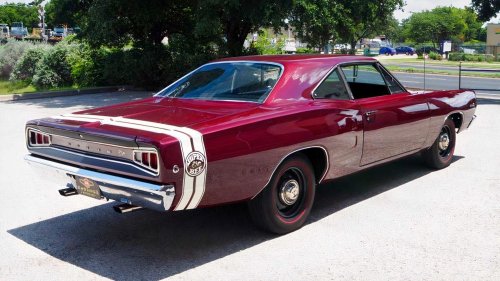
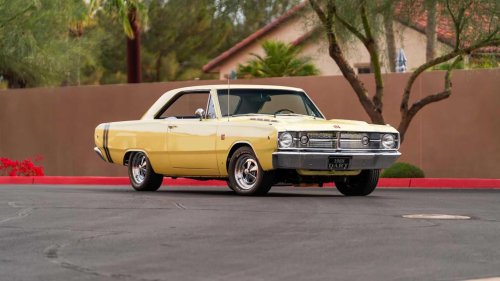
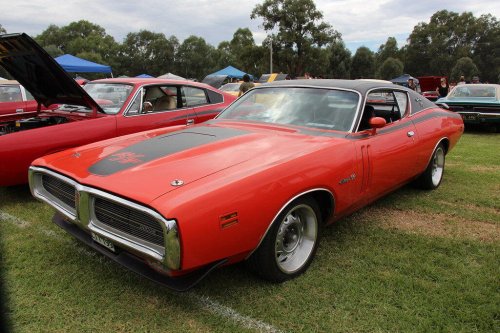
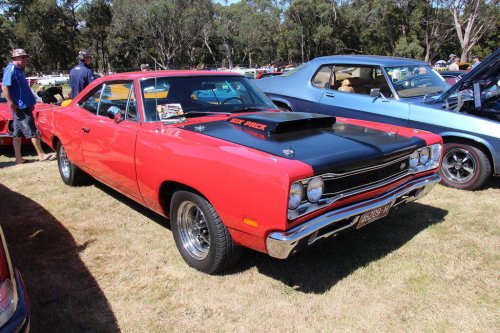
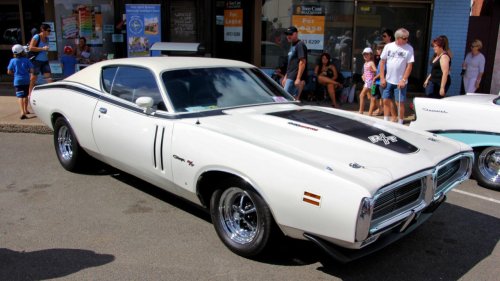
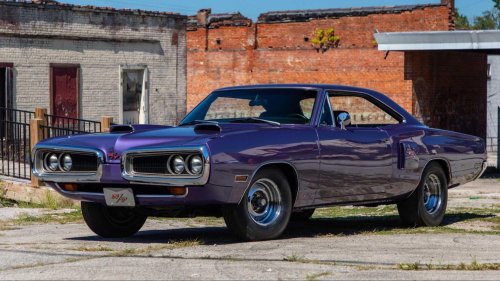
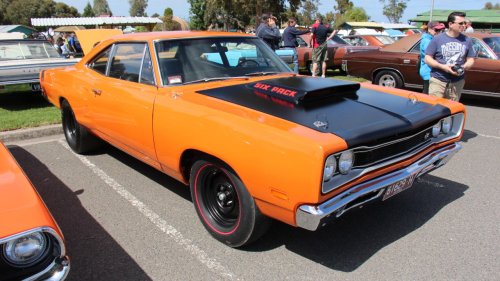
There are safaris in Africa in which the super wealthy can plop down serious cash to hunt big game like rhinos and elephants. This is not a discussion of the ethics of big game hunting, though we cringed just as much at the death of Cecil the lion as we did when a bunch of classics were swallowed up by a giant hole under the National Corvette Museum, but rather pointing out how profoundly lazy it is. On these safaris, the rich "hunters" are provided with a guide who leads them to their prey, which is a lot less like hunting and more of a target practice kind of thing.To get any kind of thrill out of hunting, the prey has to be elusive and cunning, requiring skill on the part of the stalker. This is true when chasing down classic muscle cars as well, because landing something common, no matter how cool it may be, isn't the same visceral experience as a rare cherry barn find. There are no more dedicated hunters than Mopar enthusiasts, who will do just about anything to find a low-production Hemi unicorn car or a one-of-two drop-top Holy Grail. There is one Hemi-equipped Dodge muscle car that Mopar hunters obsess over more than Captain Ahab with that white whale, that's every bit as hard to catch and just as powerful. Dodge Muscle Bears The R/T Mark Mecum When the iconic 426 cubic-inch Hemi V8 hit the streets in 1966, it was available to option in any Dodge or Plymouth intermediate model, including four-door sedans and family station wagons. In 1968, Chrysler decided this was a bad idea and mandated that the 426 Hemi be allowed only in designated muscle cars, which meant the top trims of the Charger, Coronet, Super Bee, and later the Challenger. In 1967, however, Dodge decided to get a head start on the impending rule, by creating the R/T (Road and Track) package for the two-door Coronet. With a standard 375-horsepower 440ci V8, the Coronet R/T was upgradable to the fearsome 425-hp 426 Hemi, and realistically was Dodge's first real muscle car of the Golden Age, as the Charger was a pony car kind of thing at that point. Mopar B-Body Gets Luxurious Mecum Over at Plymouth, they also wanted to get a jump on the designated muscle car rule, but had a slightly different idea on how to do it. The Belvedere-based 1967 GTX came loaded with every option, feature, and creature comfort Plymouth offered, standard. It got away with being marketed as the "gentleman's muscle car" because it was the 1960s and cancel culture didn't yet exist, and it brought Cadillac-esque luxury to a legit street brawler.Like the Coronet R/T—and let's face it, they were the same basic set of wheels—the GTX was equipped with the 440 or could be optioned with the more expensive 426. A base '67 Coronet had a $3,199 sticker price, while the '67 GTX with a Hemi could run up to $4,200, which is almost exactly $1,000 more. A thousand bucks doesn't sound like much today, and there isn't anyone reading this who wouldn't gladly drop that kind of coin for a Hemi upgrade, but back then it was equivalent to almost ten grand, and that was a lot of money. Chasing After the Road Runner Mecum The original appeal of the muscle car was a cool-looking, powerful ride that was affordable, and while the GTX held fast on the first two, Plymouth obliterated the third parameter. Maybe out of a sense of guilt, or perhaps just to bring balance to the streets, Plymouth did a 180 from the GTX with the bare-bones speed machine Road Runner.Introduced in 1968, the Road Runner was a big-block V8 and not much else. While the GTX came with everything, the Road Runner could be ordered with deletes aplenty, like radio, carpet, and back seats, to save even more money. With a starting price of $2,870 for a 383ci V8, there was so much meat left on the bone that upgrading to the $714 Hemi still only made it a $3,584 car. Needless to say, this was very appealing and the '68 Road Runner is the Mopar that got more 426 Hemis than any other model. ’68 Dodge Super Bee Actually Takes The Sting Away Mecum The Road Runners were literally flying off the dealership lots. Dodge's sales division demanded their own version of a stripped-down street machine, which the Styling Office put together in time for a 1968 mid-model year debut. The Super Bee was essentially a Coronet R/T with fewer features, slightly different sheet metal, and a much more aggressive logo. The bumblebee on wheels mascot was based on Dodge's "Scat Pack" bee medallion, which was a marketing push for its performance cars that were guaranteed 14-second or better rides straight from the factory. The Super Bee name was as logical as it gets, because it was a B-Body Dodge that was positively Super.The Super Bee differed from the Road Runner with body accents and grille, but it also had a longer wheelbase (117 inches) as well as being 65 pounds heavier. The biggest appearance difference for the Bee was the open rear wheel wells that, if equipped with wide tires, made it look like a belligerent street bruiser. None of the pictures of a '68 Hemi Super Bee that we have here are equipped with wheels remotely cool-looking, but that's due to the rarity of it and owners desire to keep them as original as possible. The '68 Super Bee wasn't quite as cheap as the Road Runner, but with a $3,027 starting price, it definitely took the sting off of buying a performance car. Hemi-Powered Mechanized Bumblebee Mecum Like the Road Runner, the Super Bee came standard with a 335-hp 383 V8, unless factory air was included, which dropped the output by five ponies, and had the ultimate Hemi upgrade. With the 426 Hemi option, the '68 Super Bee cost $3,741, which is $35,799 adjusted for inflation, so it wasn't a wallet-buster and was actually a great price for such an amazing high-performance car. 426 Hemi Specs While the '68 Road Runner was a run-away hit, moving 44,599 units, the Super Bee was only a modest success, or even a flop depending on your perspective, with just 7,842 cars sold. It was introduced mid-model year, so that was a factor in the lower sales, but it certainly didn't take the world by storm like the Road Runner. Of the '68 Super Bees sold, only 125 of them were equipped with the 426 Hemi, making them among the rarest Mopars there are. Killer Bee Swarms the Streets Mecum In 1968, neither Ford nor GM, and especially AMC, had anything that could touch a Hemi in a red-light challenge, which is another way of saying Dodge and Plymouth cars ruled the Golden Age. The '68 Hemi Super Bee's only competition was from other Mopars and the quirky thing about that is the 425-hp and 490 pound-feet of torque of the 426 V8 behaved differently depending on what car it was equipped in.A '68 Plymouth Hemi GTX was the slowest with a 13.6-second quarter-mile, while the Dodge Charger Hemi R/T as well as the Hemi Super Bee pulled 13.5-second ETs, and the Road Runner was quickest with a 13.4-second run. Granted, all of these times are similar and, depending on the driver, could be different, but not all Hemi-powered Mopar were the same. Maybe the biggest take here is that Hemis kicked all the ass in the classic era, while everyone else was posing 14 and 15-second grocery getters as muscle cars. Budget Bee Becomes Super Collectible Mecum The '68 Super Bee, even with the Hemi option, was an affordable high-powered street machine when it first came out, but in subsequent years has become a top-dollar collectible. Hagerty fixes the fair condition value of a '68 Hemi Super Bee at $35,400, which is about the inflation-adjusted original MSRP. For a good condition version, it takes $66,700 to bring one home, but that's still a pretty great awesome price. The Concours condition, however, runs all the way up to $157,000, which is a completely outrageous amount of money for something that started out as a budget ride. J.D. Power, which bases its values on real world sales, has the '68 Hemi Super Bee even more expensive, with a high retail value of $161,600, which is an eye-popping 5,328% increase in value from its original MSRP. Super Bee Hunting Requires Patience Mecum The '68 Hemi Super Bee is up there but is actually kind of affordable compared to other rare 426-equipped Mopars that can fetch millions at auction. The thing about this particular ride is that it's a lot more rare. There are scads of Hemi Chargers, Challengers, and 'Cudas listed on auction sites, but we could only find five '68 Hemi Super Bees that have ever been put up. Again, there were 125 made, but very few of them ever cross the auction block, to the frustration of enthusiasts who are searching for a 426 Bee.Classic.com, which tracks auctions from all the major houses, has logged exactly two '68 Super Bee sales in the past year, neither of which were Hemis, and Bring a Trailer has never sold even one. Despite their elusiveness, the '68 Hemi Super Bee remains a relatively affordable Mopar, with the highest sale we could find being that silver bad boy pictured above, which sold for $126,500 at Mecum Indy 2025. Beware of Bogus Bees Mecum Because the '68 Super Bee is so rare and awesome, some unscrupulous sellers try to pass fakes off as the real deal. That car in the picture above was put up for auction as a '68 Hemi Super Bee, which it technically is, but it didn't sell because Mopar fans aren't so easily fooled. The car has a VIN of WM21H8A342798, which identifies it as a 1968 Super Bee with a 383 V8. The "M" of the VIN tells us it's a Super Bee, and the "H" is the engine code for a 383, while a 426 Hemi would have a J code. It seems counter-intuitive that the Hemi isn't an H code, but that's just the way things are. For this car, the seller replaced the engine with a 700-hp 572 V8, which is kind of awesome, but as a non-numbers-matching ride, it doesn't have a lot of appeal with Mopar purists. Why The Super Bee Is A Keeper Bring a Trailer The Mopar faithful are a religion, or maybe more like a cult with dogma and rituals, and there are sub-sects, though there has never been a schism. The Super Bee branch is among the most fanatical, which this editor can attest to as a 30-year convert, complete with a mechanized bumblebee tattoo and "Super Bee Parking Only" sign on the garage door. The reason for this loyalty is that there's something truly special about the Super Bee that is hard to express in words.All classic Mopars kick ass, but the Super Bee has a mascot with a face which gives it a sense of humanity, like it's your buddy who will pound anyone who messes with you. Also, the Super Bees from all years, 1968-1971, are on the rare side, so they have an anti-establishment punk rock vibe. Mostly, however, Super Bee owners put in the work to acquire one, so there's a sense of accomplishment in having one in the driveway that doesn't come with a more common ride.Sources: Classic.com, Hagerty, J.D. Power