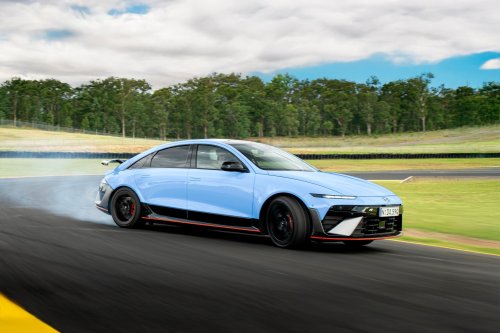
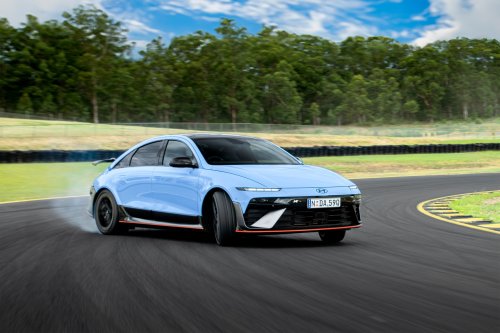
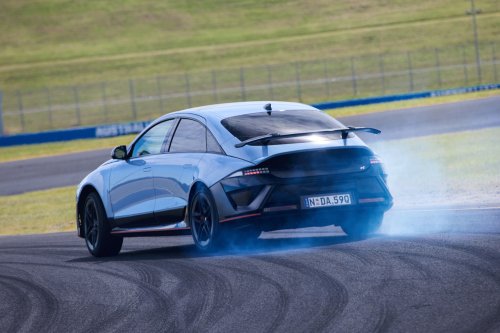
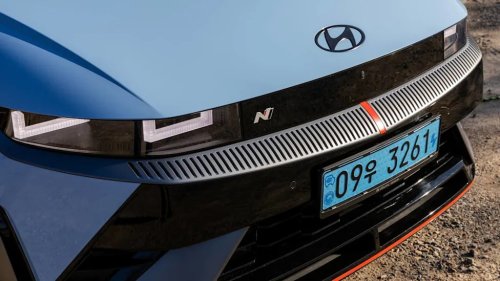
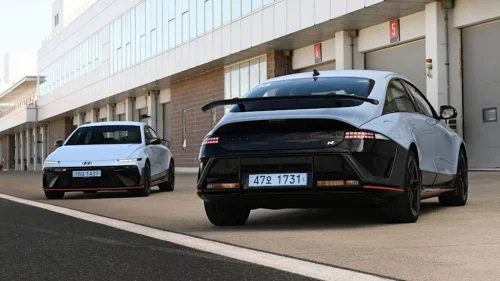
The trouble started in 2011. That's when German brand Volkswagen officially introduced its Soundaktor technology in the Golf GTI and "R" models. Considering the model derivatives, you'd probably think that it is some special go-faster gadget that provides the engine with a few more horses. Alas, it doesn't do that at all. Instead, the Soundaktor uses electronic tricks to enhance the car's engine sound inside the cabin, emitting fake car sounds through a separate speaker in the cabin.There are no extra horses in the game, just extra in-cabin noise. In other words, fake engine sounds make you feel better about your performance car while you drive it, while the exterior noise levels remain relatively muted.This is the story behind fake engine sounds, 15 years in the making... and far from being done. Dial In A Bit More Roar! VolkswagenIt is rather ironic that the company behind the so-called Dieselgate scandal was also responsible for introducing active sound design (ASD) technology to the production car market. Electronic systems were involved in both instances, with VW's ASD system first introduced in the Golf GTI and R models. Four years later, the Volkswagen Dieselgate scandal would rock the German automaker, the company's emission-defeating devices no doubt causing some lasting reputational damage.Interestingly, the brand's Soundaktor technology was, by all accounts, developed as a system that should have a positive impact on environmental matters. Here's why: with increased emission and noise level regulations due to be introduced at the time, car companies were effectively forced to make their performance cars run quieter and, ultimately, with fewer emissions. VW's answer was an innovative electronic system that uses the vehicle's sound system to enhance the car's engine sound inside the cabin, while the actual exhaust noise levels are kept down to a reasonable level.Volkswagen The theory is great... while the car's passengers enjoy the (fake) sound effects from the high-performance engine, the folks from the local retirement village won't feel compelled to summon the police to deal with the noisy car, blasting past their front porches.It seemed like the perfect solution. In previous generation Golf GTIs, the company had included a so-called "noise pipe", which sent pressurized air from the intake system into the cabin, adding a level of engine noise to the interior. In 2011, the electronic Soundaktor replaced the noise pipe system. Not that many GTI fans mourned the discontinuation of the older pipe noise system. GTI owners often removed the system, scoring more space under the hood, as well as a horsepower or two.Good or bad noise, the Volkswagen electronic Soundaktor system was soon copied by other car companies, introducing their own versions of the technology. Today, many car companies use a similar system, aiming to enhance the in-car driving experience while keeping tabs on the noise emitted by the engine and exhaust. As with most things, some car companies just do it better than others. It's A Sound Off... PorscheSeveral car companies use active sound design (ASD) technology to enhance the driving experience in their more performance-oriented cars. The list includes BMW, Audi, Porsche, Volkswagen, Ford, Acura, Lexus, Hyundai and Kia. What? Even Porsche, maker of some of the finest performance cars on the planet? Surely Porsche doesn't need to fake engine sounds. Well, as it happens, Porsche has a bunch of specialists called acousticians that craft the sound made by every Porsche model. From the latest 911 GT3 RS to the entry-level Cayenne, they work their sound magic on all the cars.The sound effects of a car are a complicated business, and may also comprise several elements. Some cars feature a special performance exhaust system that offers two settings, changed via a flap located inside the exhaust system. The settings normally comprise normal and loud settings. In some cases, the options are loud, and obnoxiously loud.Miltek Fake electronic engine sounds play an even more important role in Porsche's electric range. Since electric motors are virtually silent, and a Porsche is a Porsche, the acousticians worked their magic on the brand's performance EV's like the Taycan Turbo S. It is a complicated business, and the sounds created are all authentic, sourced off actual parts of the drivetrain that sound good. Less attractive sounds are filtered out. Tobias Hillers from Porsche's Sound and Concepts team explains: "Anything that sounds like a dentist's drill or streetcar has to go."The team then amplifies the best sounds and deletes the worst ones. The result is emotional, rather than obstrusive, but present and unmistakable.Another company that has focused heavily on active sound design technology is Hyundai.HyundaiThe Hyundai Ioniq 5 N performance EV uses the N Active Sound+ system, and it takes the whole fake sound thing to another level. The Hyundai is fitted with internal and external speakers, transmitting custom fake engine sounds that include pops, bangs and revs. The driver can select between Ignition, Evolution and Supersonic modes, each with a unique fake sound effect, both in and outside the 5 N.The Hyundai is also fitted with the N brand's e-Shift system, which effectively fakes the gearshifts through paddle shifters, located behind the steering wheel. If one is going to fake the engine to such a degree, best go the whole nine yards with the fake business, right?BMWBut back to internal combustion engines fitted with ASD systems. And a prime example of the species is the F10 BMW M5. Powered by a 560-hp, 4.4-liter V8 breathing through two turbochargers, the M5 is also a high-end, luxurious sedan. To enhance the driving experience, BMW's engineers linked the M5's stereo system to the engine management system, and linked to a stored audio file with the 4.4-liter engine's sounds.The system links the throttle opening, the revs and other perimeters, and discreetly adds some V8 to the cabin via the high-end sound system. Relatively simple, but very effective. Especially considering many of the M5's passengers will probably not even be aware that such a system exists, but will just savor the roar of that V8. Is That A Lambo V12 In Your Back Pocket? LamborghiniThe sound that a car makes is essentially the heart and soul of the car. Yes, a Tesla with 1,000 hp may be considerably faster than a 100-hp hatch that roars and pops and bangs, thanks to a high-performance custom exhaust, but chances are pretty good that the driver of the little hatch will have a bigger smile on his or her face after a blast around a racetrack.Thankfully, car companies realize this too, hence the creation of cars like the Hyundai Ioniq 5 N. So what will cars in the future sound like? Well, we reckon they may sound exactly what the owner wants them to sound like. Active sound design (ASD) systems are getting ever smarter and more realistic, and cars of the future, especially the 'heartless' electric ones, will most probably feature advanced ASD systems, so owners can choose any car sound on the planet, press a button, and that car will sound like the engine selected. And it will be perfectly synced with the driver inputs, too.Electric car companies may also add some paywalls along the way... the more exotic and cool the sound, the more dollars you will have to pay. If Volkswagen can play that game with horsepower, surely that will also eventually happen to car sounds.For now, cars powered by internal combustion engines will, hopefully, only feature sound augmentation, and not sound replacement. But that will probably eventually become a thing, too.So what about companies that specialize in high-performance exhaust systems? Systems that not only add a few horses to the game, but also bring the right noise to the game?Specialist UK performance exhaust company Miltek has clearly recognized the signs of the times, and adapted. The company now offers a state-of-the-art ASD system, which blasts internal combustion engine sounds through the car's entertainment system, and also projects that sound through external speakers. The system is synchronized to the car's electronics, so it perfectly simulates an internal combustion engine revving. Several other companies are following suit.Hyundai There are also a number of aftermarket products that you can buy off the shelves. One consists of an on-board diagnostics (OBD) module, which links to a cellphone app via Bluetooth. Then it is simply a case of selecting your preferred engine sound (with more than 70 options), and you can turn your two-liter diesel BMW into a Lamborghini Aventador, the sound matching the throttle inputs, and beamed over your car's speaker system.The real McCoy engine sound is still the first prize, especially when there is a performance exhaust in the game. But, a rumble is a rumble, and if it can help turn a fast and efficient EV into something a bit more exciting, then it is probably not a bad deal after all.