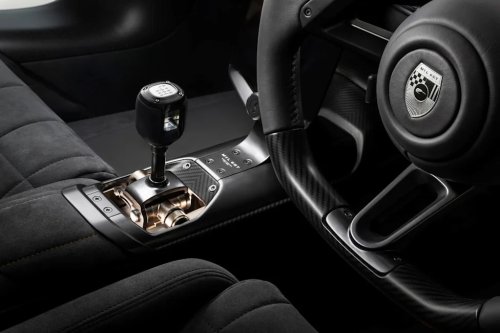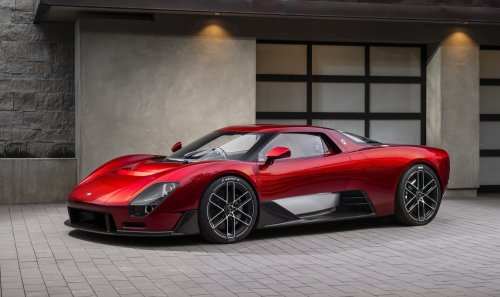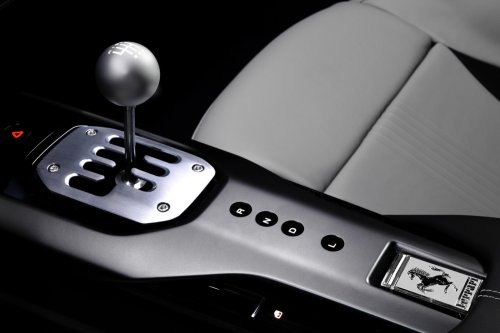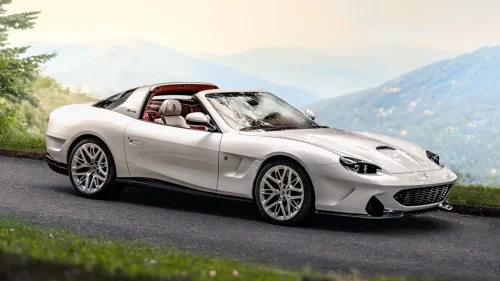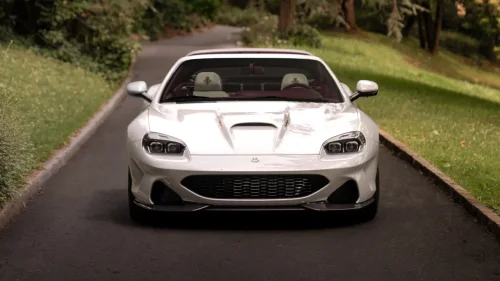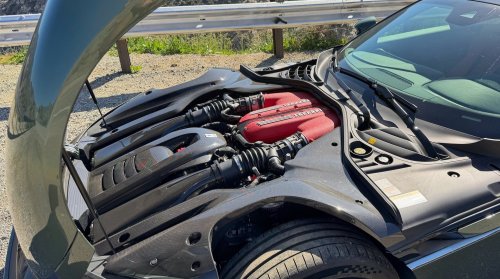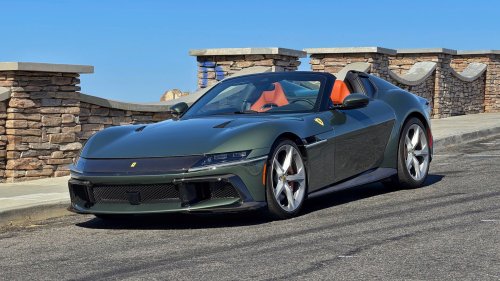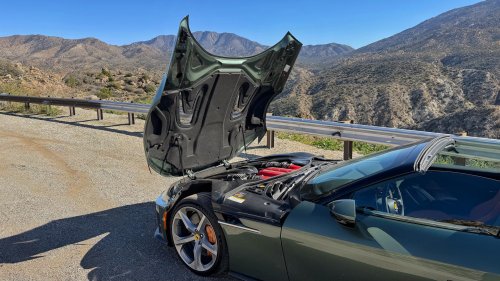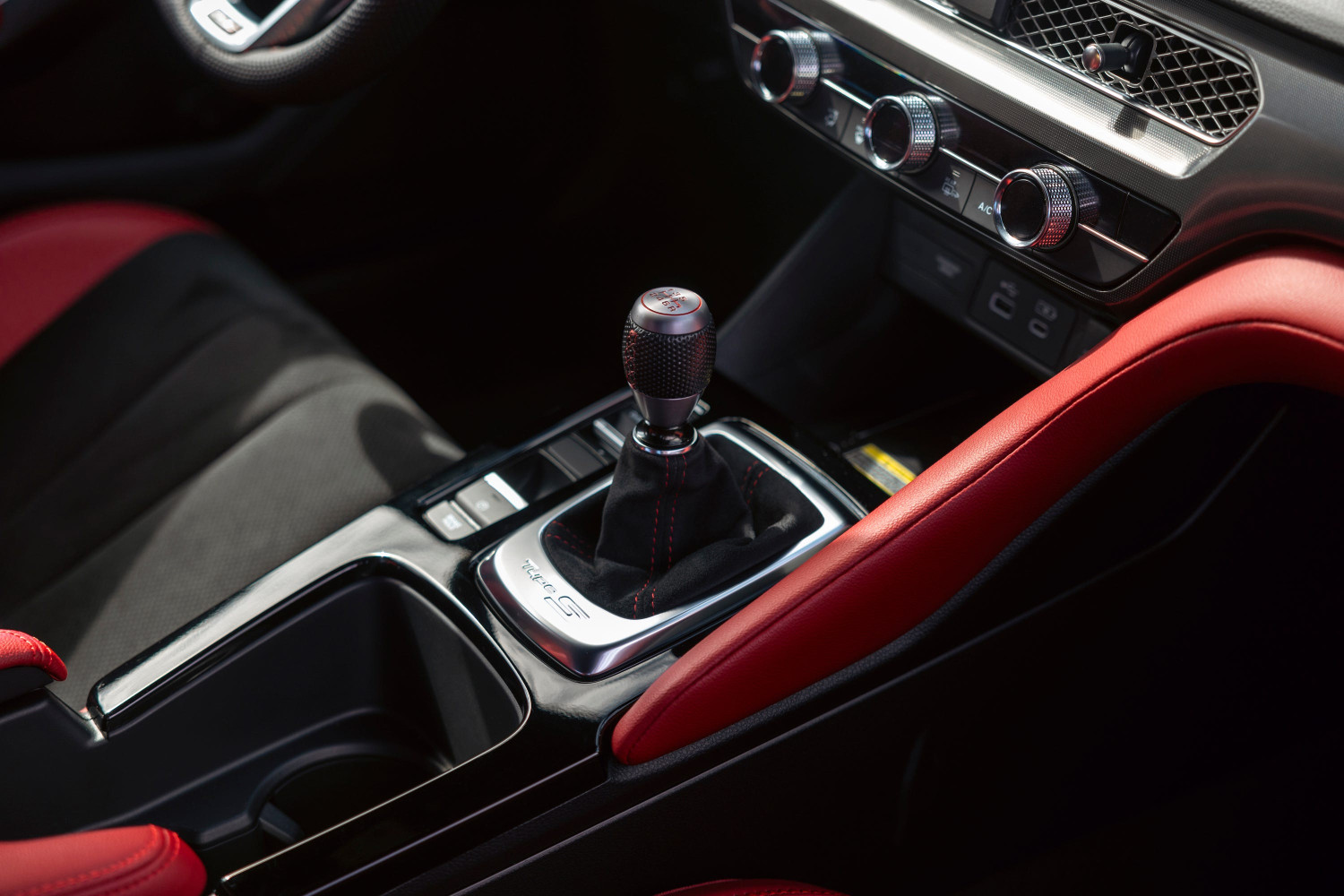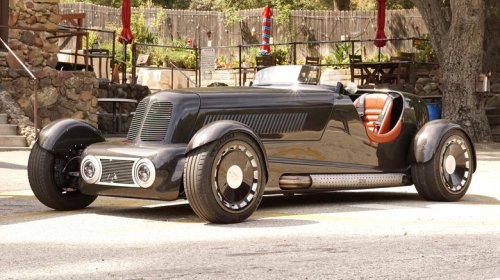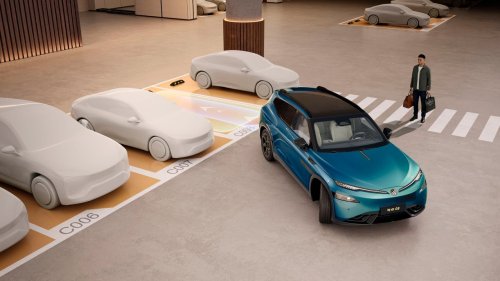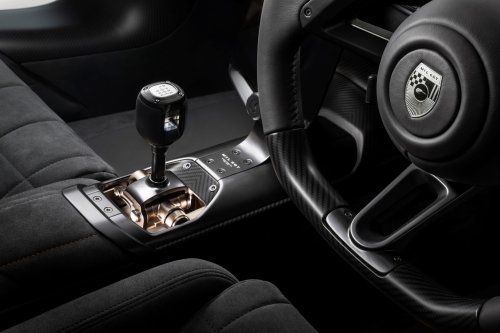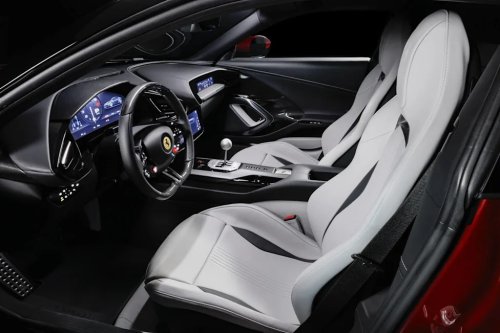
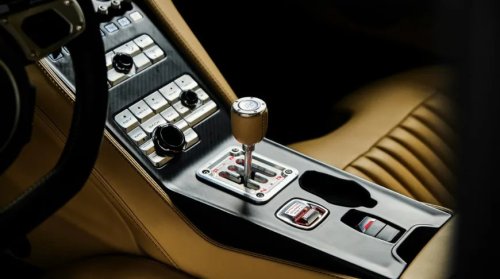
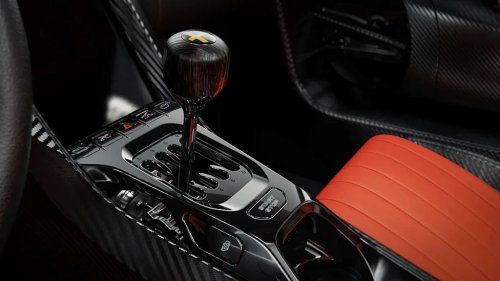
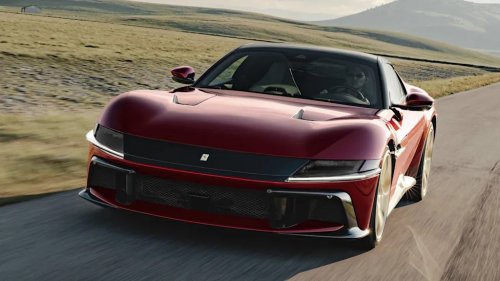
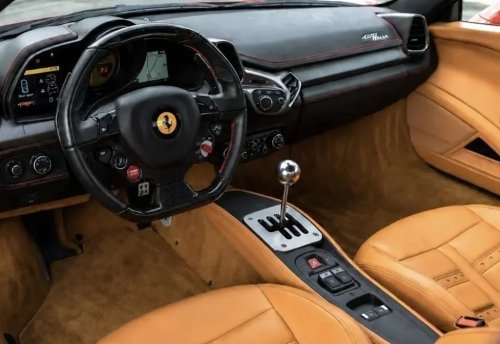
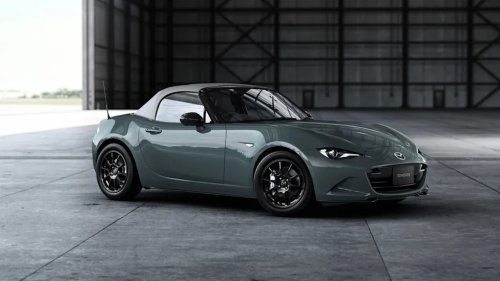
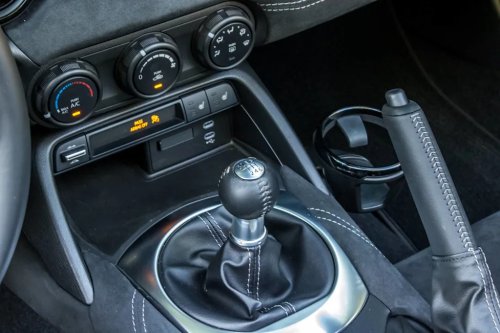


















Autoblog and Yahoo may earn commission from links in this article.Faux NoLet me start this article by saying I'm a dedicated manual transmission guy. I absolutely love roping my own gears, and I care more about having three pedals than a ton of power. As long as a car has a manual transmission, I can enjoy the pure thrill of driving and it doesn't even have to be on a track or the open road. Toyota, Ford, and Subaru have applied for patents to create simulated manual transmissions, but some automakers have actually built them for cars they're selling. It's like Hair Club for men but for transmissions.FerrariFake manual transmissions are becoming a serious strategy for automakers that want to keep the emotional appeal of shifting while moving to EVs and hybrids. While they're not anywhere near mainstream yet, their use by exotic car manufacturers could lead the way to more widespread use. These systems use software, sensors, and sometimes real clutch pedals and H-pattern shifters to mimic the feel of a traditional manual—even down to reeal stalling like a proper manual. That raises a bigger question: are we watching the last chapter of the true manual transmission, or just a reinvention meant to please the modern driver?What is a Fake Manual Transmission?2021 Ares Design Panther EvoAuto DailyA fake manual, or simulated manual, is an electronic system that recreates the experience of driving a stick shift in a vehicle that doesn't actually need one. The hardware may include a clutch pedal and gear lever, but the actual shifting is handled by software and motor control rather than a mechanical transmission.AdvertisementAdvertisementRather than relying on mechanical linkages and hydraulic fluid to disengage a real clutch, these systems use computer inputs to create the same experience: the clutch pedal uses springs, cams, and sensors to mimic the resistance and biting point of a traditional manual, the shifter moves like a real gear lever but sends a digital signal to the ECU instead of physically changing gears, and the software tracks engine and wheel speed closely enough to simulate stalling if the driver releases the virtual clutch the wrong way.Toyota's patent for a fake manual for EVs is the clearest example. It uses a virtual manual setup with a clutch pedal and shifter, and if the driver chooses the wrong gear or botches the clutch work, the EV can cut torque, apply the brakes, and mimic a stall. In some cases, the system is even designed to let the vehicle roll backward or lurch the way a novice manual driver's car might.Why Automakers Want ThemKoenigseggThe main reason is emotional engagement. EVs are quiet, fast, and efficient, but many enthusiasts miss the rhythm and involvement of shifting gears, so automakers are trying to bring that sensation back through software. That's why Honda's Prelude uses simulated shifts in its hybrid setup and Hyundai's Ioniq 5 N uses fake gear changes and sound effects to make an EV feel more alive.There's also a practical business case. Manual transmissions are disappearing because demand is low and development costs are high, while automatics, hybrids, and EVs dominate new-car planning. If a fake manual can satisfy enthusiasts without requiring a real manual gearbox, that may be the easiest way to keep the idea of shifting alive. They can be operated in automatic mode, as well, so it can pull double duty depending on the driver's desire or traffic conditions.The Supercar AngleFerrariSome supercar builders are experimenting with "manual by wire" setups that pair a traditional-looking shifter and clutch pedal with a dual-clutch automatic underneath. Ferrari's 12Cilindri Manuale is the most dramatic example: the pedal and lever are real in the cabin, but they send electronic commands to an existing eight-speed dual-clutch transmission.Rezvani MotorsRezvani's QuickShift kit takes a different path by adding a gated lever to modern Ferraris without restoring a true manual gearbox or clutch pedal at all. The result is a more theatrical driving experience, but not a mechanical manual in the old sense. It looks like the real thing, paying homage to Ferrari's famous gated metal shifter, but the lack of a third pedal means it doesn't come close to mimicking that portion of driving engagement. It's all hand movement and listening to the engine.What This Means for True ManualsJapan-Spec 2026 Mazda MX-5 Miata Pure SportMazdaAdvertisementAdvertisementThe rise of fake manuals does not automatically mean the end of real mechanical versions. But it does show that automakers see manual-style engagement as valuable even after the mechanical manual itself has faded from the mainstream. There are only a handful of cars left with true three-pedal, mechanical manual transmissions left. In other words, the industry is preserving the feeling because it no longer wants to preserve the hardware and because there are generally so few takers except for enthusiasts.Chase BierenkovenThat said, the real manual is already a niche product in new cars, and the downward trend is a real thing. Cars like the BMW M2/M4, Mazda MX-5 Miata, Porsche 911 Carrera, Toyota GR86/Subaru BRZ and the Subaru WRX are becoming unicorns. If fake manuals prove popular, they may become the compromise that keeps enthusiasts happy while the true stick shift keeps shrinking into a specialty feature for a few sports cars and collector-focused models.Final ThoughtsFake manuals are both a tribute to the motoring past and a warning that old school mechanical manuals are dying. These fake manuals honor the appeal of the stick shift, but they also suggest that the real thing is becoming too rare, too expensive to build, or too impractical to keep everywhere. The magical interplay of driver, clutch, engine, and shifter is, in our opinion, irreplaceable. We have yet to find out for ourselves how these fake manual systems replicate the real thing.This story was originally published by Autoblog on Jul 24, 2026, where it first appeared in the Features section. Add Autoblog as a Preferred Source by clicking here.