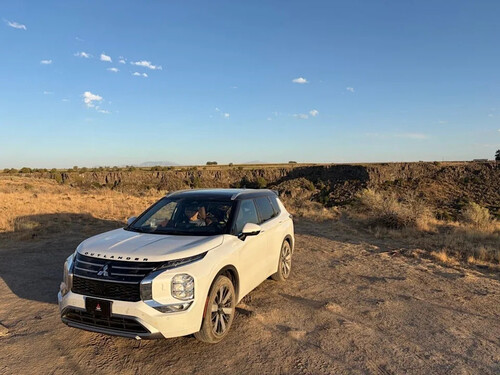
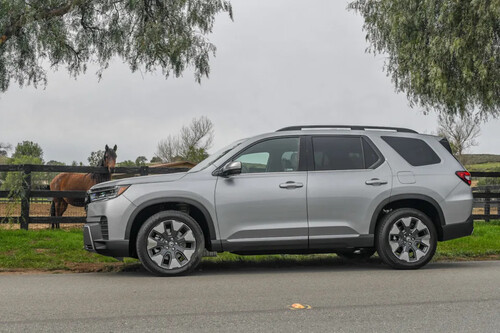
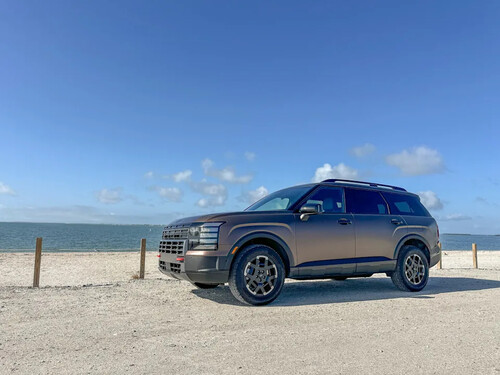
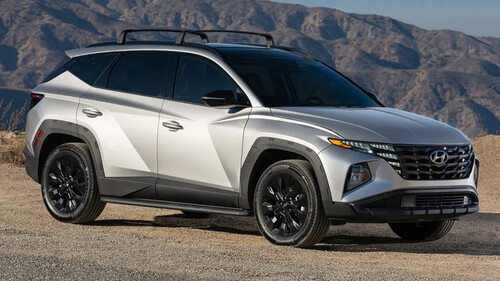
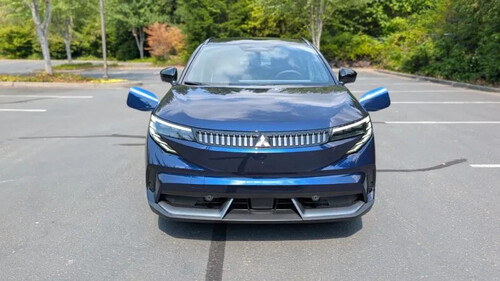
Are CVT Transmissions Reliable? Some Are Far Better Than OthersAutoblogCobus F. PotgieterSun, September 20, 2026 at 3:30 PM UTCAdd us on GoogleAutoblog and Yahoo may earn commission from links in this article.Continuously Variable Transmissions (CVTs) have become very common in modern cars because of their numerous benefits. First of all, they have no gears and instead use a reinforced steel belt or chain that runs on two variable-diameter pulleys that vary the diameter of the input and output sides to effectively give you an infinite number of gear ratios by simply sliding up and down the pulleys. This makes them very smooth and free from the jolting and pauses of gear shifts, because there aren't any gear shifts.It also means that the transmission can keep the engine spinning in its optimal speed range to provide maximum power or maximum economy, depending on the driver's demands. Because of this, the engine revs often tend to stay the same while the speed increases, which is the "slipping-clutch feel" or "CVT drone" people often complain about. In fact, some manufacturers have started moving away from CVTs again.CVTs Are Not Created EqualNot all CVTs work the same. Some rarer types of CVTs don't use this system of pulleys and friction belts. A toroidal CVT (below) uses tilting power rollers and bowl-shaped discs to smoothly pass the power between discs, and can handle significantly higher torque loads than belt-based systems, but is very rare in cars.Nissan toroidal CVTUser Yones via WikimediaThe other increasingly common type is the e-CVT, or electronic CVT, used by brands like Toyota and Ford, which uses a planetary gearset and electric motors to blend the power from the gas engine and electric motors by varying the motor speed. They are considered very reliable because they eliminate the belt system. In this article, we focus only on belt-drive CVTs.Factors Affecting CVT Transmission ReliabilityThese factors most affect a CVT's reliability:HeatOverheating will quickly accelerate wear and destroy a CVT. This can happen during hard driving, with sustained high engine speeds, and when towing. If you drive your car hard, or it works hard, it may be best to avoid a CVT altogether. Even if you tow within your vehicle's rated towing capacity, extreme conditions may still generate excessive heat in CVTs with insufficient cooling margin.MaintenanceThis is possibly the most common reason for CVT failure. It is critical to stick to the manufacturer's stipulations for CVT maintenance and oil changes.AdvertisementAdvertisementTo make a CVT last:Change the CVT fluid every 30,000 to 50,000 miles, or according to the manufacturer's prescription. Consider significantly reducing the change interval if you tow frequently or drive in city traffic constantly.Use the exact CVT fluid prescribed by the manufacturer, which is formulated for your CVT. Putting anything else in the transmission can damage it and may leave you without recourse when it comes to warranty claims.Avoid an aggressive driving style, sustained high engine revs, or frequent heavy towing.Avoid a used car with a CVT unless you have verifiable proof that all the CVT maintenance was carried out on schedule by a qualified professional.Honda CVT cutawayDriving ConditionsAs we've intimated above, driving conditions can reduce CVT lifespan. Ample cooling-system margin is required for high-torque CVT applications, but towing and heat buildup will still reduce transmission life. If you live in a very hot area, or you tow frequently, consider a more traditional torque-converter-based planetary automatic transmission. Do research on your CVT to determine its reliability. Some CVTs still use clutch packs for pulling away from rest, and these can wear out. A CVT that has a torque converter for pulling away may be preferable, especially when you do a lot of stop-start driving.Most Unreliable CVTsThe older the CVT, the worse it generally is, because earlier designs were more unreliable, and those cars have now been on the roads for a long time, so the transmissions are tired and prone to failure. Older generations of Nissan X-Tronic CVTs were unreliable, especially in the 2000s, and were the subject of several class-action lawsuit settlements in March 2020 (for 2013+ CVTs), March 2022 (mostly older Pathfinder and Rogue CVTs), and mid-2025 (2015-2018 Murano and Maxima CVTs). Try to avoid CVTs in Nissan Altima, Sentra, Rogue, and Pathfinder models between the years 2007 and 2014, which sometimes fail before 100,000 miles.AdvertisementAdvertisementSome older Mitsubishi Outlander CVTs have also failed at above-average rates, and past Jeep Compass models with the Punch-built transmission have had CVT trouble mostly because a CVT is not really suited to the heavy-duty use and off-roading some owners subject their Jeeps to, accelerating wear and heat buildup. Earlier Subaru Lineartronic generations should also be avoided, particularly the earlier 2010-2018 TR580 in the Outback.Subaru TR580 CVT Teardown by I Do CarsI Do Cars/YouTubeMost Reliable CVTsThe newer the CVT, the more reliable it generally is. Manufacturers have ironed out the kinks and learned from past mistakes and lawsuits, and the CVTs from the latest generations of Toyota, Honda, and Subaru vehicles are considered the most reliable. Toyota's latest K120 CVT built by Aisin (below left) has a torque converter to pull away and a planetary gearset and physical first gear, just like a regular automatic, before first gear hands over to the CVT, once on the move. This lets the belt drive operate in its most efficient range, where wear is lower, and it takes the strain off the belt system in low-speed, high-torque situations. It should translate into excellent longevity.Toyota K120 CVT cutawayWest Edmonton Mall ToyotaView the 2 images of this gallery on the original articleSubaru's latest Lineartronic CVT (above right) is robust and built for high-performance applications like the WRX and off-road vehicles such as the Forester, so it seems to have ample reliability and cooling-system margin. It also uses a torque converter to connect the transmission to the engine, so there's no clutch wear in slow going. Nissan also seems to have mostly sorted out its X-Tronic reliability issues, and CVTs in general have become much more reliable in their latest generations, but avoid anything before 2019. Honda's latest Earth Dreams CVT also lasts very well if properly maintained, often exceeding 200,000 miles. The latest Jatco CVT in the Mitsubishi Outlander also seems to have become properly reliable at last.CVT Vs. Automatic Transmission ReliabilityCVTs are generally not considered as reliable as the traditional planetary automatic transmissions used for generations, but they're getting better. The planetary gearbox is a known quantity, and many shops know how to service and maintain them, while CVTs are more specialized transmissions that need fresh oil more frequently. A traditional automatic transmission of a sound design and with frequent maintenance can easily exceed 200,000 miles, which is still more than most CVTs can do.Final ThoughtsSo, are CVT transmissions reliable? The CVT's track history is patchy, and they are not all created equal. Early generations are to be avoided, and any used CVT without a meticulous dealer service record should not even be considered. The presence of a tow hitch should be cause for a pause, and may indicate that the transmission has worked hard and is tired. Keep in mind that many CVTs cannot be repaired or rebuilt, and must be entirely replaced at great cost when they fail.AdvertisementAdvertisementThough the latest generation of CVTs has become a lot more reliable, they must still be approached with circumspection, and no maintenance gaps or signs of strain can be tolerated, else you may be up for a hefty bill in the near future. So it really does depend on a lot of factors, but if everything checks out as a resounding "OK", you should be able to proceed without too many worries.This story was originally published by Autoblog on Sep 20, 2026, where it first appeared in the Car Buying section. Add Autoblog as a Preferred Source by clicking here.