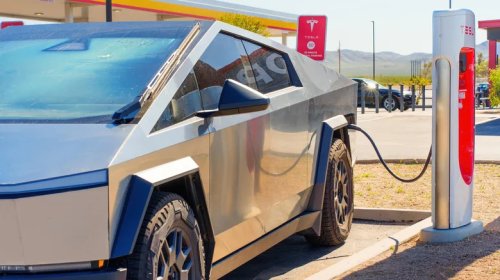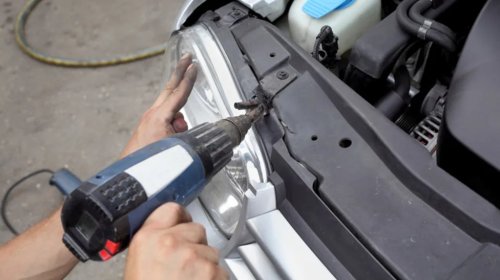
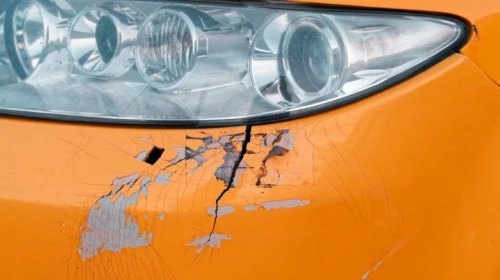
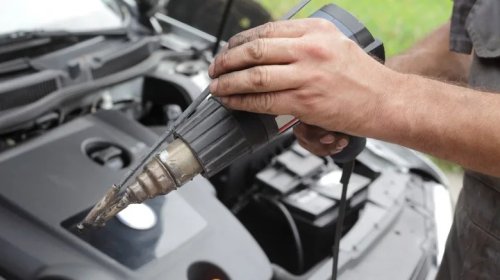
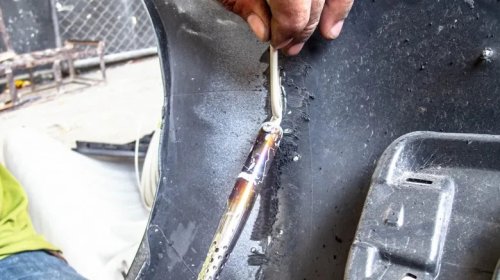
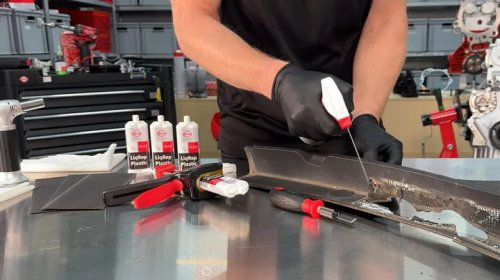



















Plastic welder used on a car headlight - sima/ShutterstockDid you know that plastics can be welded, like metal? It's a pretty common practice in the automotive industry. But this doesn't apply to all plastics and some forms of welding are complex enough to require training. The barrier to entry can be pretty high, as most welding equipment is not cheap. Still, you can get pretty strong bonds for those plastics that can be welded. The resulting repair tends to be a lot more durable, as it's typically able to stand up to vibrations and high temperatures.Using plastic adhesives doesn't result in quite as strong a bond, but they do work. In fact, they're the only choice for plastics that can't be welded. Plastic adhesives are also easier to use for amateurs, from a learning standpoint. However, the procedure can be much more tedious than welding and, let's face it, not as fun. It's not just a matter of laying down some glue between plastic pieces. There is a lot of cleaning and sometimes sanding involved. There is also the time it takes to cure, which makes the process much more time-consuming than welding. On the other hand, tools are much cheaper and adhesives can be used to bond different types of plastics together, as well as bonding the plastic to other materials, like fiberglass or metal.Plastic repair is important since plastics make up significant parts of your car. For example, bumper fascias are often made from plastic.AdvertisementAdvertisementRead more: What Causes Foggy Headlights (And How Can You Fix Them)?The two types of plastic and plastic repairCracked bumper with plastic cover in need of repair - lukasz_wojcik/ShutterstockThere are lots of different "types" of plastics, and plenty of big scientific names to go along with them. For the purpose of our discussion here, we're going to break them down into two categories: thermoplastics and thermoset plastics. Thermoplastics can be welded, while thermoset plastics can't, since they don't melt. Thermoplastics have the ability to be melted, then cooled down and hardened into a new shape. Polypropylene is the most common type of thermoplastic used in automotive applications and it's found in the vast majority of bumper covers. Polyurethane, meanwhile, is a thermosetting plastic commonly used in automobiles.Plastic welding works out great for thermoplastics, since it produces the strongest results with a lower rate of failure. And there are multiple ways to do it. Nitrogen plastic welding is the strongest method, because it eliminates oxidation. It uses a nitrogen welder to melt the damaged plastic together with a melting rod. Another method is hot air welding, which melts a filler rod and the damaged plastic at temperatures up to 590 degrees Fahrenheit, depending on plastic type. Then there's airless plastic welding, which works a lot like soldering, and is much slower than hot air plastic welding. Other types include laser welding, spin welding, hot plate welding, friction welding, vibration welding, and ultrasonic welding.Plastic adhesive repair involves applying glue-type bonding material with an applicator to the plastic surfaces. It's more accessible to DIYers, but takes much longer than welding.The pros of plastic weldingPlastic welder used on car - Simazoran/Getty ImagesA big advantage of plastic welding is that the result is much stronger than with plastic adhesives. The reason for that is that welding melts the two pieces of plastic into each other. The molecules bond so that they become one piece with 80%-100% of the strength of the original piece. So, a plastic weld is much more durable. It doesn't succumb to extremes in temperatures as easily, lasting three to five more thermal cycles than plastic adhesives. It also withstands vibrations and impact better.AdvertisementAdvertisementPlastic welding is the way to go for compatible plastics that are used to support weight, rear and front bumpers, and dashboard frames. They are more durable and less likely to fail, which means you can save money in the long run. Materials (not equipment) are generally cheaper than those used for applying plastic adhesives.Plastic welding takes less time than applying plastic adhesives, as well. There's not as much prep work, for one thing. You also don't have to wait for it to cure, and you'll be able to get to hard-to-reach spots that are pretty tricky or maybe impossible when applying adhesives. And there's less of a breathing hazard from welding compared to using plastic adhesives, depending on the type of welding you do. In fact, the nitrogen from the welder displaces oxygen to block ash, smoke, and other contaminants, making for a cleaner process.The cons of plastic weldingUsing plastic welder to fix bumper - spmodify/ShutterstockAs we pointed out, not every type of plastic can be welded. Only thermoplastics weld well. Regular nitrogen welding doesn't work on thermoset plastics like polyurethane and cross-linked polyethylene. An airless plastic welder can be used on thermoset polyurethane, but it won't be a true weld. The only thing that melts is the welding rod, which will bond the plastic together.While airless plastic welders can cost several hundred dollars, professional-grade nitrogen plastic welders can cost thousands. Then, of course, there's the nitrogen that has to be refilled. Using that equipment — especially nitrogen welders – requires training, which adds to the time and cost. And we're not talking about just learning how to use the equipment. You'll have to learn how to identify different types of plastics, since weldable plastics are not all compatible with each other, and they melt at different temperatures. That means you have to be careful to use the right rod, as it may be incompatible with the base plastic you're trying to repair. AdvertisementAdvertisementThere is a whole reference guide that technicians can consult by looking up the number of the plastic. Speaking of compatibility, you can't attach plastic to a different material very well through welding. Welding plastic to metal, fiberglass, or rubber doesn't work as well as using plastic adhesives.The pros of plastic adhesivesSince thermoset plastics can't be welded, using adhesives is really the only choice when repairing the plastic, short of replacing it altogether. But therein lies another advantage of plastic adhesives — they can be used on both thermoset plastics and thermoplastics. The bond from the adhesives won't be as strong on thermoplastics as welding, but it will do in a pinch, especially if you don't have welding equipment lying around. That speaks to the flexibility of plastic adhesives, which is also shown by the fact that you don't have to worry about whether you're joining two incompatible types of plastic. In fact, adhesives can also be used to join plastic to other kinds of materials, like metals. And it is possible to make a very strong glue. While not specifically a plastic adhesive, Tesla uses a ridiculously strong repair glue to repair Cybertrucks.Of course, with plastic adhesives you don't have to start out by buying expensive plastic welders, which makes them more budget-friendly in the short term. Applicator guns aren't incredibly pricy. 3M sells a manual one for around $100. You can also get empty cartridges for less than $15 on Amazon.The learning curve for applying plastic adhesives isn't quite as steep as plastic welding. There are even OEM requirements that welders be certified before repairing certain plastic components. We couldn't find any such requirements for plastic adhesives.The cons of plastic adhesivesPerson preparing surface of car part for application of two-part plastic adhesive - Elring – Das Original/YouTubeThe bonds that come from plastic adhesives generally aren't as strong as the results from a weld. After all, the two pieces of plastic aren't melted together like they would be if they were welded. They're basically glued together, with the strength of the bond depending on how well the adhesive holds. That's why plastic adhesives fail more than plastic welds. Plastic adhesives can typically achieve just 30% to 50% of the strength of the original material, compared to 80% to 100% by plastic welding.AdvertisementAdvertisementUsing the right adhesive is important. While Tesla, as noted, uses strong glue for repairs, it had to recall Cybertrucks because the wrong glue was used to attach body panels, causing them to fall off.Repairs done using plastic adhesives are more likely to succumb to extremes in temperature and strong vibration. They're more time-consuming than welding repairs, too. Surface areas may have to be perfectly prepped for the adhesives to work. Then they take time to cure before any more work can be done on the area of repair. There are costs to consider, as well. While the initial purchase of tools — like the applicator gun and container clip — may be cheap, the adhesives themselves are not. We found a container of 3M Scotch-Weld structural plastic adhesive for about $60. Both types of plastic repair have their uses. They're often used together on the same repair jobs. The key is to know what kind of plastic you're working with.Want more like this? Join the Jalopnik newsletter to get the latest auto news sent straight to your inbox, and add us as a preferred search source on Google.Read the original article on Jalopnik.