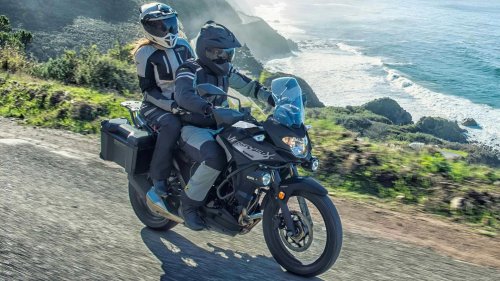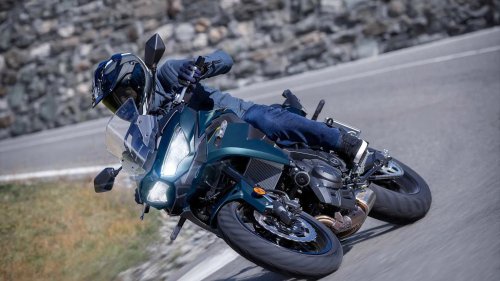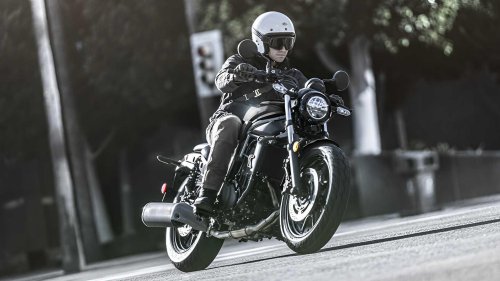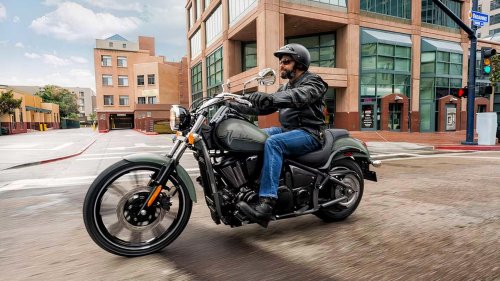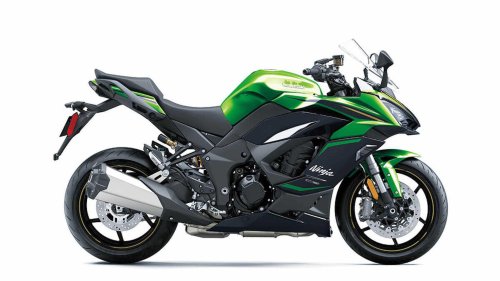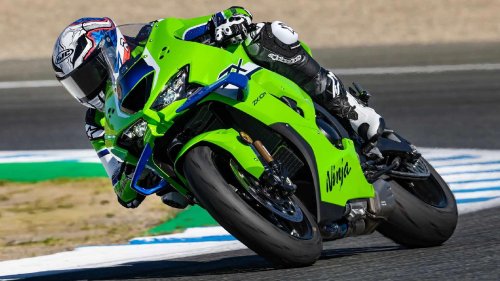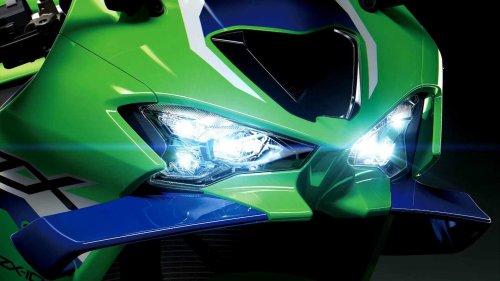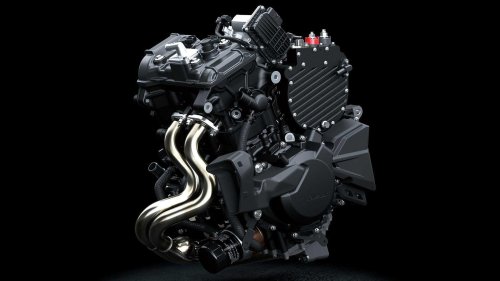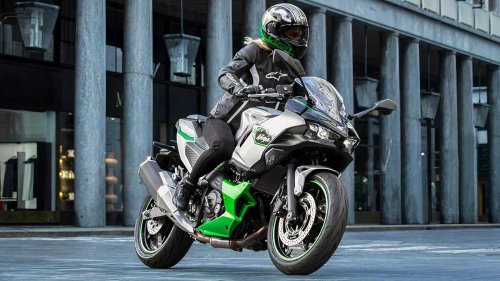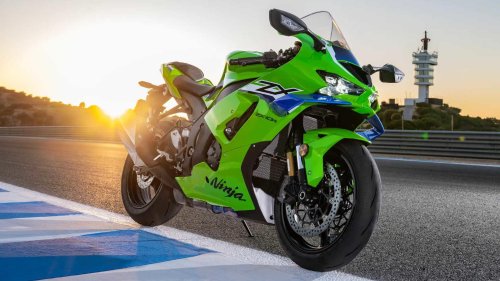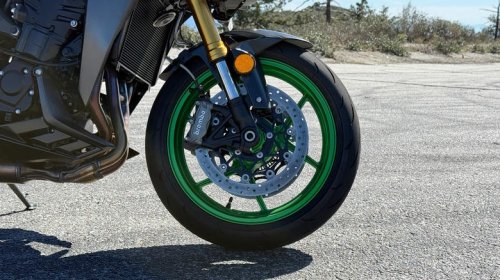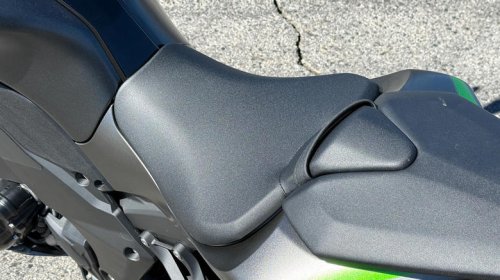
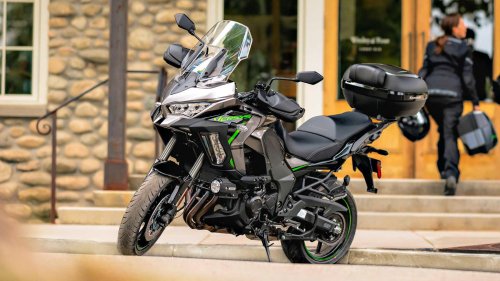
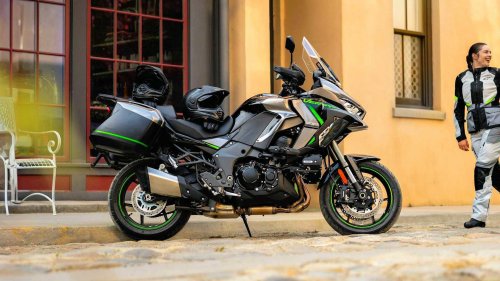
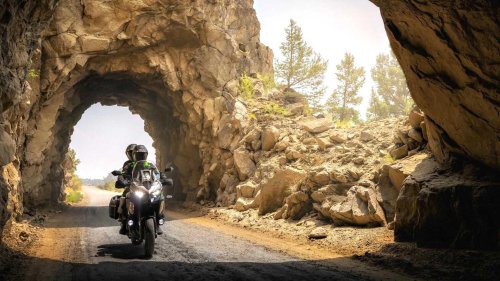
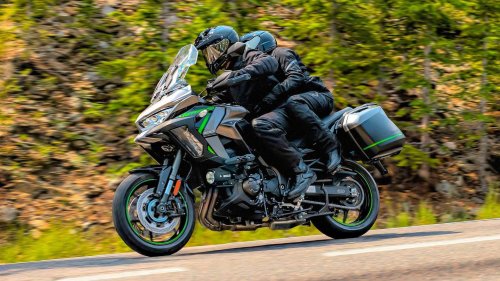
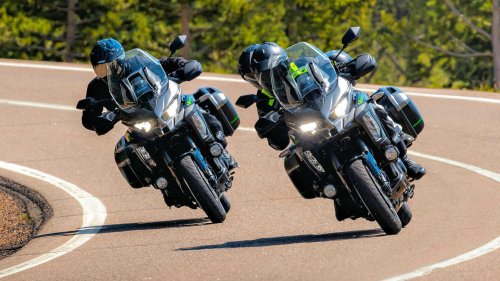
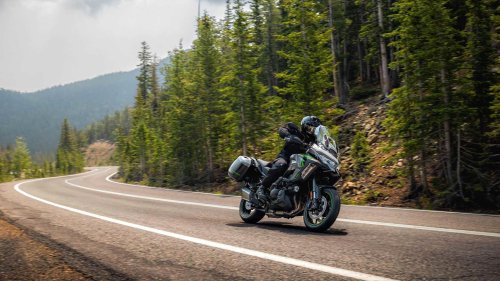
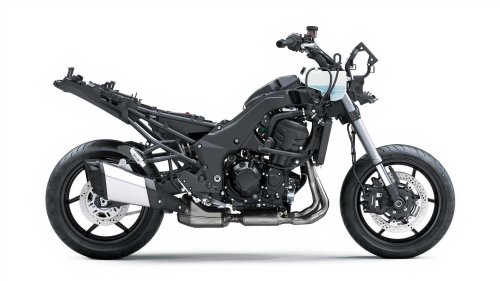
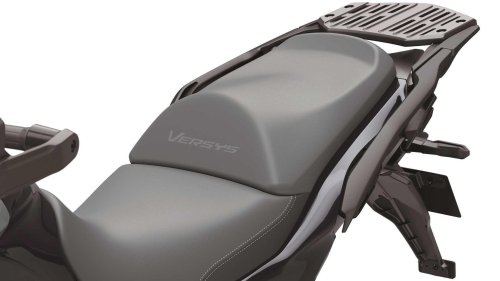
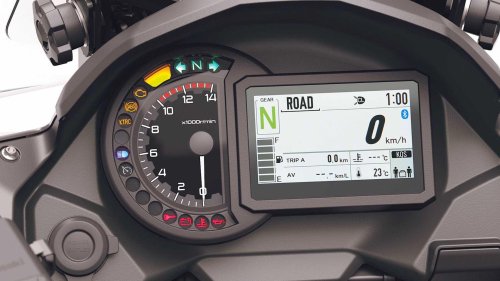


















So you want a Kawasaki motorcycle that can take on endless freeway jaunts on your tours. The good news is that thanks to the brand’s impeccable reliability record, almost all of its bikes will do 500-mile days without complaining. What’s not so good is the fact that Team Green’s touring bike lineup is rather small in 2026. So while Kawasakis excel at 500-mile days, only a few bikes will keep you comfy enough to achieve that goal.You can count these bikes on your fingers, as the choice stands between two crossovers and two traditional tourers. The former wears the Versys tag, while the latter belongs to the Vulcan series. Considering the Vulcans haven’t had updates in around two decades now, our recommendation for a Kawasaki that does 500-mile days inevitably belongs to the Versys lineup. The Non-Negotiables For A 500-Mile Day On A Motorcycle Honda Doing 500 miles in a day is no easy task. It challenges both you and the machine. You need to fight distractions, soreness, and the weather, while staying alert enough to tackle any surprises that vast American freeways can throw. For this alertness, you need to be fatigue-free first and foremost. That means comfort is of utmost priority, with no sore spots or awkward angles. Even something as small as footpeg size can make life difficult on these long days.Kawasaki As for the machine, the motorcycle needs to keep running reliably without overheating, taking all the external stresses on the chin without backing down. That’s usually achieved via an understressed engine, which has been honed over the years. Bonus points if the engine is available worldwide, as parts availability is much less of a headache in that case.BMW At the same time, the motorcycle needs modern-day technologies to keep you stress-free if things get hairy. Again, all these conveniences and technologies should be trustworthy. Just imagine you travel to a high-mountain pass thinking heated grips will save your hands from freezing, only to realize the tech has failed. Keeping all these in mind, there is only one Kawasaki that comes to mind as a 500-mile day companion. The Versys 1100 LT SE Is The Ideal Kawasaki Capable Of 500-Mile Days With Ease Kawasaki We’re talking about the Kawasaki Versys 1100 SE LT—Team Green’s flagship crossover-type touring bike right now. More importantly, this is the only touring bike from the brand with updates in recent years. Neither the Versys 650 nor the Vulcan 1700 duo has received notable updates in quite some time. In contrast, the flagship Versys recently switched to a new engine, while also gaining some new tech for making your life easier.This also makes the best sense price-wise, with the base MSRP set at $19,499. That helps it undercut the Vulcan 1700 duo by a couple of hundred dollars, while being around $9,000 more than the Versys 650 LT. Yes, that’s a big jump over the 650, but it’s well-justified when you look at the equipment on offer. You also get 2x horsepower here, thanks to the over-1000cc powerhouse. Credibility And Comfort Run High On The Versys 1100 LT SE Kawasaki The deeper you dive into the Versys 1100, the more you’ll realize just how credible the entire package is. It’s not trying to set new standards in the segment by boasting game-changing equipment. Instead, it gets you proven elements all over. Chief among these is the powerhouse. Updated 1,099cc Inline-Four Engine Brings Smooth Performance Kawasaki Before the 1100, we had the Versys 1000. It debuted in 2012 and featured Kawasaki’s 1,043cc inline-four engine, which proved ultra-reliable over these 13 years. Now, the 1100 builds on that by featuring an updated 1,099cc powerhouse. It’s essentially an upsized version of the 1,043cc engine, with a 3 mm longer stroke, a new piston shape with a higher compression ratio, a new intake funnel length, a new intake port shape, and a new cam profile.So not only will it be as reliable (if not more), it also promises to be safer for the environment. As for the output, you get a respectable 133 horsepower and 82.5 pound-feet. Given its understressed nature, the performance kicks in just 9,000 RPM and 7,600 RPM, respectively. That is quite low by inline-four crossover standards.Kawasaki The new mill also has an updated transmission for company. The fifth and sixth gears are longer here to help the engine take on 500-mile days on the highway with less stress at cruising speeds. In the long-term, you will also appreciate the service intervals of every 7,600 miles and a claimed efficiency of 42 miles per gallon. Seems less, we know, but it’s better than what Suzuki claims for its GSX-S1000GX. Features Electronic Suspension From The Specialists At Showa Kawasaki Good ride comfort is a valuable asset on long tours, and electronic suspension is arguably the best for tackling all the surprises. After all, it keeps fine-tuning the suspension on the go, so you have a pliant ride at all times. Accordingly, the Versys 1100 has that as a standard inclusion. Showa’s Skyhook EERA (Electronically Equipped Ride Adjustment) technology takes center stage, comprising 43 mm USD forks and a BFRC monoshock.Kawasaki These use information from the IMU and ECU every 10 milliseconds and work in tandem with Kawasaki Electronically Controlled Suspension technology (KECS). So you can use the three base semi-active settings—Sport, Road, and Rain—that automatically tune the suspension for maximum confidence. There’s also a Rider setting that lets rebound and compression adjustment on the fly, along with three different preload settings (rider only, rider with luggage, and rider with passenger and luggage). The latter can be further fine-tuned by 10 levels of adjustment. There’s A Pinch Of Sportiness, Too Kawasaki Kawasaki might call the Versys an “adventure” touring bike, but this is clearly a road-biased creation. The biggest giveaway of that is the sports bike-like twin-tube aluminum chassis and bolt-on subframe. You also get 17-inch alloy wheels at both ends, with actual sports bike-like tire sizes (120/180-section). For braking, the front wheel houses dual 310 mm front disc brakes and a single 260 mm rear disc. All three have Nissin calipers.Don’t expect outright sportiness, though, as this is a really large tourer with larger-than-life dimensions. These include: Seat height: 33.1 inches Tank capacity: 5.5 gallons Wheelbase: 59.8 inches Ground clearance: 5.9 inches Suspension travel: 5.9 inches Weight: 571 LBs (without saddlebags) Roomy Perch And Luxury Creature Comforts Sweeten The Pot Kawasaki Lastly, there’s the on-board experience. You’re positioned in a commanding upright posture, with the tushy on a large perch, the feet on mid-set footpegs, and the hands on a tubular handlebar. An adjustable windscreen shields you from the wind, while the protruding bodywork and knuckleguards do the same for your knees and hands. Once aboard, you’ll also appreciate the giant instrument cluster.Kawasaki It’s the best of both worlds, comprising an analog tachometer with a large rectangular TFT on its right. The latter has varying brightness levels and two display modes, where one has “the easy-to-read, calm layout offers a substantial amount of information immediately” and the other “was designed with sport riding in mind”, according to Kawasaki.The setup also serves as a window to the electronic and creature comforts. Two power modes, three modes of traction control, ABS, and a two-way quickshifter are all standard, thanks to a Bosch six-axis IMU setup. The experience is enhanced by heated grips, cruise control, cornering lights (mounted on the fairing), and smartphone connectivity (to enable vehicle info, riding log, phone notifications, and turn-by-turn navigation).Source: Kawasaki USA