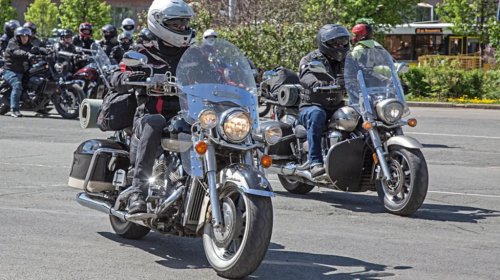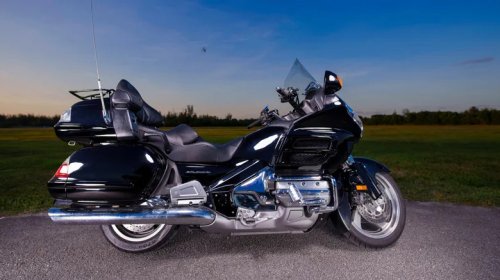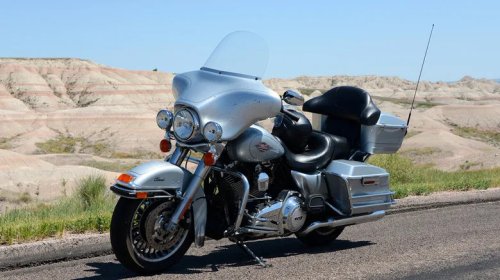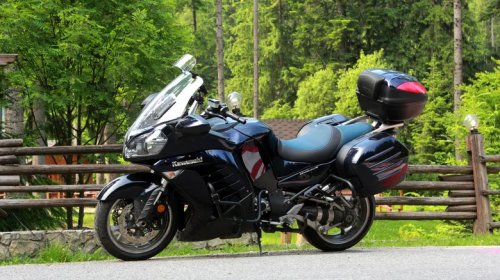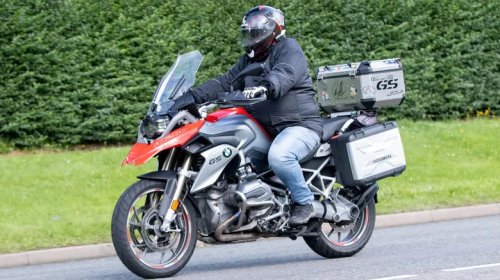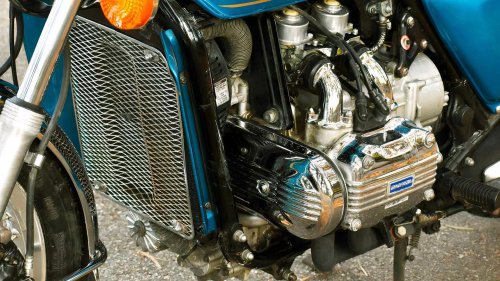
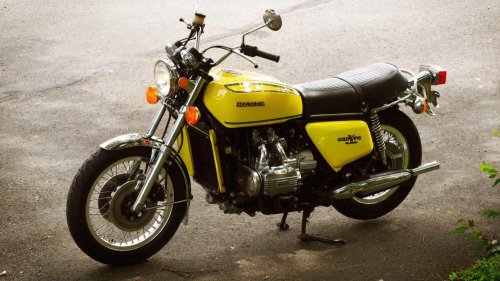
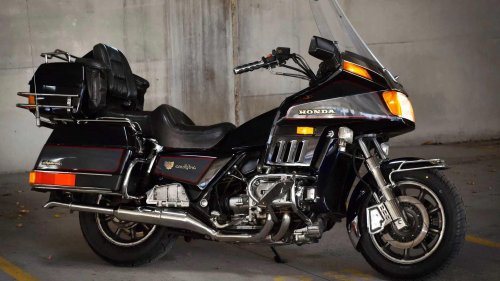
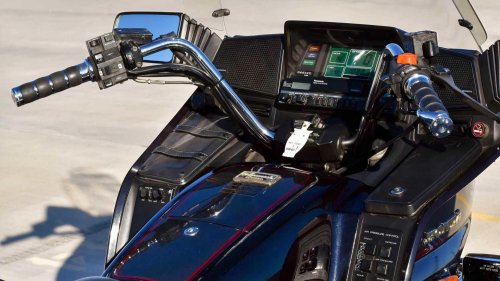
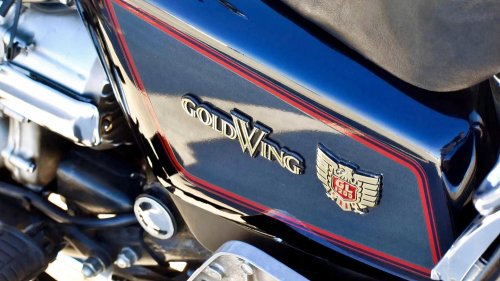


















Harley-Davidson has always been a fairly conservative company, and a large chunk of its fanbase doesn’t seem to have a problem with that. On the contrary, it faced a fair bit of backlash from traditionalists whenever it tried to do things differently or dared to stray from its roots, even if doing so would've helped it remain competitive in an ever-changing market. The seventies were a particularly rough time for the company and that's what we're here to talk about today, more specifically the way it almost lost its footing in the touring segment in light of Japan's industry-wide assault.In fact, it was one particular model from Honda that nearly ended its reign. But that came as a result of internal struggles rather than conservative buyers, so let us first focus on the other side of the story and examine some of the instances when thinking outside the box was met with criticism from its fans. We've seen it happen with the V-Rod several years ago and more recently with the electric LiveWire, both of which were vehemently rejected by Harley purists for lacking that quintessential Milwaukee character. Storm Clouds Gathering Over Milwaukee Bring a TrailerThe same thing happened when The Motor Company tried to get into the cafe racer game with the XLCR back in the late seventies, as those conservative fans never failed to make their wishes abundantly clear. Thus, it shouldn’t come as a surprise that Harley stuck to the tried-and-true formulas over the years, but doing so has often placed the American brand under threat. It's what we're seeing today with declining sales and the recent closure of over 70 dealerships in North America, which means Harley-Davidson's new leadership must implement some serious changes to keep the marque alive.We’ll have to wait and see how it all plays out, while finding some reassurance in the fact that Harley managed to weather the storm and navigate difficult times in the past. For instance, it survived the onslaught of cheaper, more refined Japanese machinery back in the day, albeit with a helping hand from Uncle Sam under the Reagan administration. Tariffs on Japanese bikes over 700cc were introduced in 1983, AMF’s ownership of the company had ended two years earlier, and issues like quality control were quickly being remedied. The company had recovered by 1987, so it will hopefully be able to pull off a similar turnaround in our day and age. The Touring Segment Finds Itself In Japan’s Crosshairs Bring a TrailerOne of the biggest threats to Harley’s market share during that tumultuous period in the seventies and eighties was the Honda Gold Wing. It endangered Milwaukee’s dominance over the touring segment to a much greater extent than anything else out there, setting a new standard for what a proper tourer should be. It all started in 1975 with the Honda GL1000, the very first iteration of the Gold Wing nameplate and rather basic compared to those which came later on. That’s not to say it wasn’t fantastic, though, as it featured a ton of notable characteristics to place it ahead of the curve.One of them was its liquid-cooled 999cc flat-four powerplant, whose cylinder layout made it incredibly smooth compared to Harley’s V-twins. A shaft drive was implemented instead of a belt or chain for easier maintenance, and many people were quick to praise the Gold Wing’s refined character. It made motorcycles like the FLH Electra Glide seem crude and outdated by comparison, but the funny thing is that Honda didn’t even intend to create a fully-fledged tourer at first. The GL1000 naturally gravitated toward that segment thanks to its comfort and ability to travel long distances effortlessly. From GL1000 To GL1800: How The Gold Wing Has Evolved Over The Years Bring a TrailerAnother interesting quirk was its fuel tank placement, being located below the seat rather than in front of it. This brought about a lower center of gravity for better handling, while the fake tank above the engine was actually used to store the bike's electronics. The year 1980 brought us the second generation of the Gold Wing nameplate, in the form of the GL1100 with a bigger 1,085cc engine and a deliberate focus on luxury touring. This was particularly true for models like the Aspencade and Interstate, which came with large front fairings, storage panniers and even stereo systems straight from the factory.Engine capacity grew yet again in 1984 with the introduction of the GL1200, now displacing 1,182cc. Four years later, the Gold Wing evolved even further in its fourth generation and was now powered by a massive 1,520cc flat-six with 100 hp and 111 lb-ft of torque at its disposal. Heck, it even had a reverse gear to help riders maneuver around 800 pounds of Japanese heft, and this is when the Gold Wing became the pinnacle of luxurious touring. But Honda wasn’t done with it just yet, so an even bigger, 1,832cc fuel-injected mill was added to the fifth-gen GL1800 in 2001. Sharper handling and better overall performance were on the menu, too, making the updated GL a more enjoyable ride.Lastly, the current iteration of Honda's touring icon debuted in 2018, now kitted with things like double wishbone front suspension, a redesigned chassis, and cutting-edge electronics, among others. The Gold Wing is still going strong half a century since its initial release, but let us now go back to the past and focus on the rivalry with Harley-Davidson. The Motor Company didn’t exactly go head-to-head with Honda the way you might think, instead looking to solve its own internal issues like we’ve mentioned earlier. It would've been a losing battle to try creating a "Gold Wing killer," so the core identity of Harley's lineup remained intact. What Harley Did To Adapt And Survive Bring a TrailerAside from fixing quality and manufacturing issues once AMF was no longer in charge, Milwaukee also introduced the Evolution engine in 1984. It was less prone to oil leaks and far more reliable, all while retaining that authentic Harley personality without compromise. Just-in-time manufacturing (inspired by Toyota) and statistical quality control became the norm, and all these factors played a much bigger role in saving the brand than Reagan's tariffs did. In the end, their impact on the Gold Wing was fairly limited, as Honda was able to adapt and work its way around them to a degree.Production had already been partially localized in Marysville, Ohio before they came into effect, ensuring reduced exposure to these new policies and giving Honda enough breathing room to keep doing its thing. In addition, Gold Wing buyers weren’t as price-sensitive as those in other segments, so the model always remained competitive despite any attempts to take it down. Because these early GLs seemed virtually invulnerable to the U.S. government's involvement, Harley's survival really depended on it evolving to meet the market's new expectations. Technology vs. Heritage Bring a TrailerWhen all was said and done in the late eighties, the touring segment found itself split into two camps. One valued comfort, refinement and technology, while the other was more interested in heritage and brand identity rather than outright performance or innovative tech. That divide persists to this day and it's unlikely for things to change anytime soon, but it does look like Harley will have to pull off some similar moves once again to stay alive. It’ll have to do it on a much bigger scale, though, and we’re hoping they can turn things around before it’s too late.