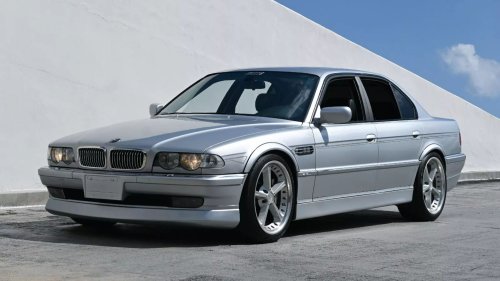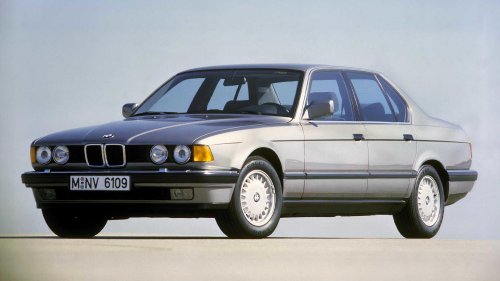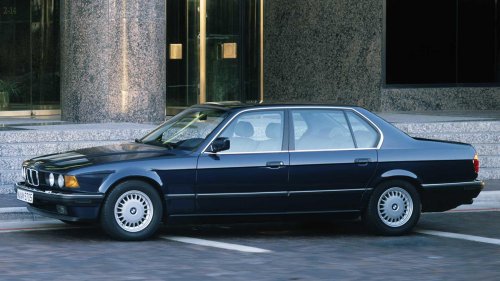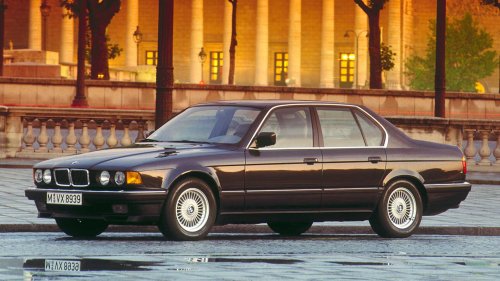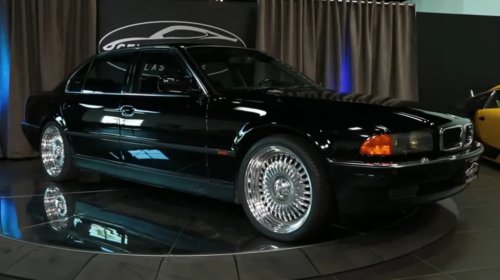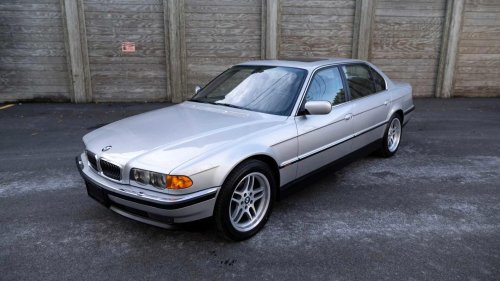
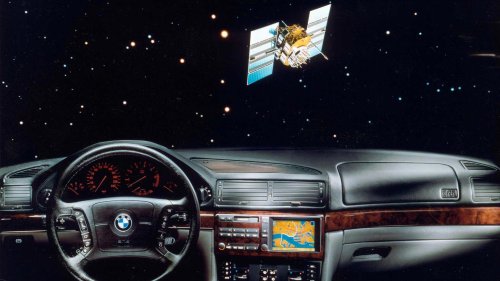
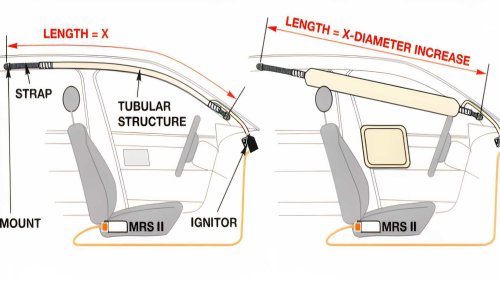
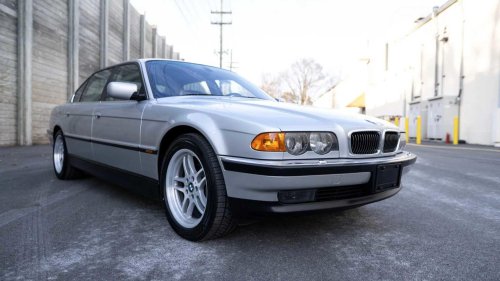
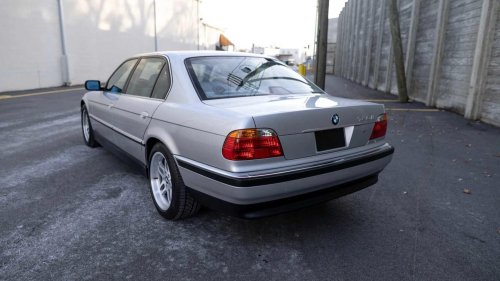
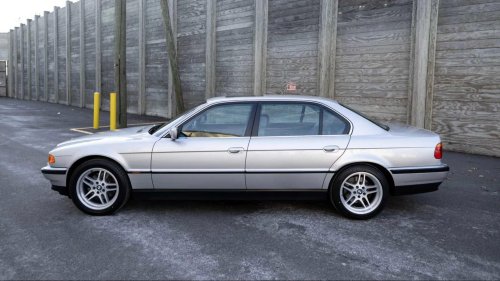
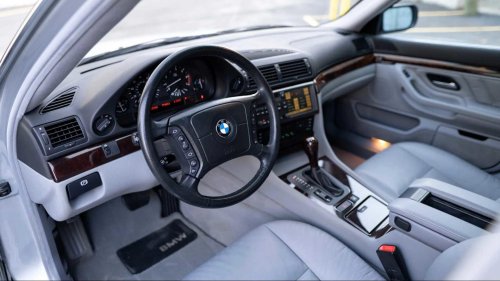
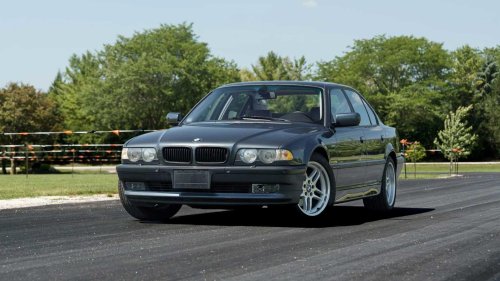
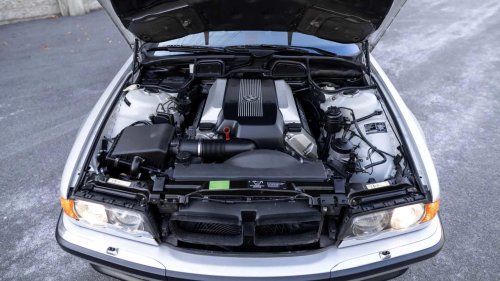
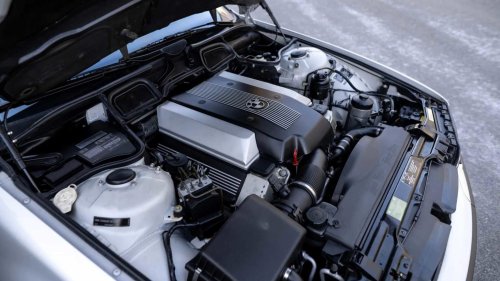
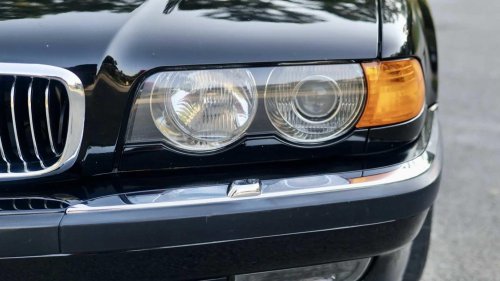


















Throughout automotive history, new innovations and features are always being introduced, particularly within the luxury sector. The E38-gen BMW 7 Series, for example, showcased a litany of innovative features, while also losing a tried-and-true one. Upon the model's debut, it would become the first European car to offer satellite navigation.It would also be the first series-production car in the world to come with side-curtain airbags. However, while it gained those two groundbreaking, new innovations, it lost something near and dear to the gearhead's heart: a manual transmission. Unfortunately, we never got to enjoy the stick shift E38 here in the US when it was new. BMW's E38 Proved To Be A Pivotal Model Bring A Trailer The E38, third-gen BMW 7 Series, debuted in late 1994 as a 1995 model for the US market as a replacement for the aging E32, second-gen 7 Series. Despite its mid-90s launch, the E38 had actually entered its preliminary design phase several years prior. It seems that BMW was well aware that the E38 needed to be much higher-tech, more stylish, and much more modern than the model it was to replace.BMW To solve the issue of needing to be more high-tech, BMW had quite an ace up its sleeve. An all-new satellite navigation system was offered. The system was produced by Philips with input from BMW, and carried the model name "CARIN", or "Car Information and Navigation." The option was priced around $1,800 when sold new, and took advantage of CD-ROMs to update the system. While other navigation systems had already been on offer since Honda's 1981 debut of the Gyrocator, BMW's CARIN system was the first to be offered on a European car.BMW The innovations didn't stop there, either. Next up on the E38's list of new features was its side-curtain airbags, making it the first series-production car to offer them in earnest. BMW developed the system and called it the Inflatable Tubular Structure, or "ITS." It was designed to act as a means to protect the E38 passenger's heads in the event of a side impact. It was also designed to stay inflated longer than standard airbags, which allowed the ITS to provide a softer cushion if the car had been involved in a rollover accident. The material used to make the ITS airbags was also designed to be more robust, as it was meant to help shield occupants from flying glass or other sharp pieces of debris. The E38 7 Series' Development Bring A TrailerMaking the most technologically-advanced series-production 7 Series ever conceived didn't happen overnight. The initial design and development phase began in 1988, just two years after the previous-gen E32 7 Series entered production. At first, the E38's styling was nailed down, and it took two years to complete. BMW designer Claus Luthe was at the helm at first, although he was replaced by another designer by the name of Wolfgang Reitzle in 1990.Bring A Trailer By the end of 1990, work on the rest of the model began. By early 1991, the design was finalized by BMW's top brass, and a concept model was ready for testing in the summer of 1993. Then, on February 17th, 1994, the production version was revealed to the world at a press event. Order banks were opened the very same day. At first, only the 740i and 740iL models were in production, with the 750i/750iL following suit in November 1994.Bring A TrailerOnce the E38 7 Series hit US shores in 1995, models were put up for sale with a starting price of $57,900 for the base 740i model. In today's money, that shakes out to around $123,570. Once the 750iL hit the market, it sported an entry-level price of $89,900. When adjusted for inflation, that number is around $191,864, quite a pretty penny for a stretched, V12-powered Bimmer. However, it's important to note that it was, in fact, the most technologically-advanced full-size BMW ever mass-produced. What You Got With Your E38 7 Series Bring A TrailerBeing BMW's flagship sedan, the E38 7 Series was jammed full of tech and features normally seen as out-of-reach luxury items. Of course, leather-trimmed seats came standard, and 14-way powered "Comfort" seats were offered as an optional upgrade beginning in 1998 for front-seat passengers. "Contour" seats were also available, which added a bit more bolstering at the expense of some adjustability. Dual-zone climate control is standard, with tri-zone climate control offered as an option. Tri-zone-equipped E38s added an HVAC control system for rear seat passengers. A power-sliding moonroof and an electronic rear sunblind came standard.As for tech, the pièce de résistance of the E38's offerings was the aforementioned CARIN satellite navigation system. In addition, buyers could spring for a 14-speaker Bose premium sound system that took advantage of four subwoofers. BMW's ACS-T traction control was offered, as well, alongside Dynamic Stability Control. Buyers could also spring for two types of window glass, the first of which was called "Dual-Pane Glass," which offered more sound deadening than standard. Additionally, laminated, break-resistant security window glass could be selected. BMW E38 7 Series Sport (1999–2001) Bring A TrailerBeginning in 1999, BMW began to offer a Sport trim for the E38 7 Series. While the massive, comfort-oriented flagship would never set lap records at the Nürburgring, the Sport grade did help it gain just a bit of athleticism. With the package, buyers were granted things like a sport-tuned suspension, which was both firmer and slightly lower than stock. Special sport seats and a sport-style steering wheel were present, as well, along with a unique set of 18-inch wheels. The 4.4-liter V8 remained untouched, and a five-speed automatic was the sole transmission on offer for US-bound models. 0-60 mph was taken care of in 5.9 seconds, and its top speed was limited to 155 mph. Under The Hood Bring A TrailerWhen the E38 first hit the market, it was offered with a single engine. The mill, a 4.0-liter V8, belongs to BMW's M60 engine family, and carried the model code "M60B40." While it produced a respectable amount of power, the M60B40 suffered from cylinder wall degradation. The reason being, it was lined with a compound called Nikasil, which, over time, would erode due to high-sulfur fuel. This caused the M60B40 to lose compression and, in some cases, burn oil.Bring A Trailer In 1997, the 740i/740iL was granted the use of the M62B44, a 4.4-liter V8. The new mill largely phased out the Nikasil lining, although a handful of early-production examples did receive it. Power and torque were bumped up slightly. Then, in 1999, the M62B44 received what BMW called a "technical update," which increased torque output by 15 foot-pounds. The V12 engine used by the 750iL was a 5.4-liter engine belonging to BMW's M73 family. Like the 4.4-liter V8, the V12 received a technical update in 1998, although both power and torque output remained the same. The E38 Wrapped Up Bring A TrailerWhile it's a crying shame that we never got to experience a brand-new, manual-equipped E38 in the States, we were still gifted its technologically-savvy self, with its all-new navigation system and its revolutionary side-impact airbags. At least they are import eligible under the 25-year import rule now, should a stick-shift European luxo-barge take your fancy. Without a doubt though, even lacking a manual, the E38 7 Series is a special car, hands-down.