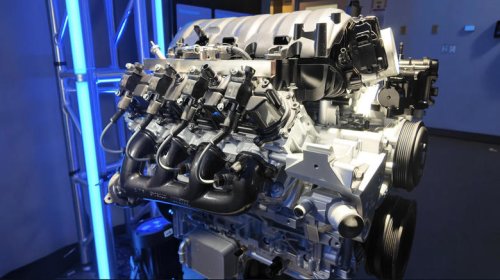
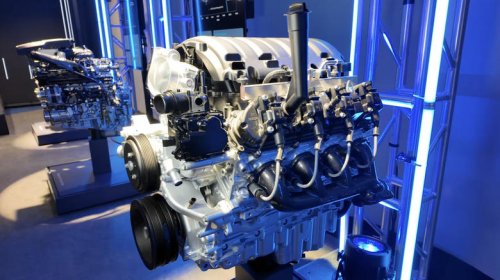
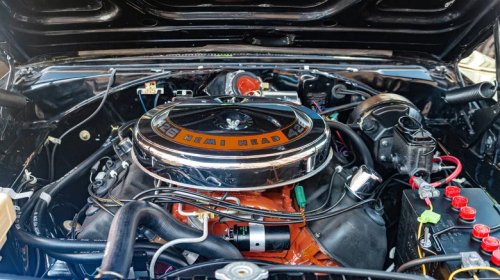
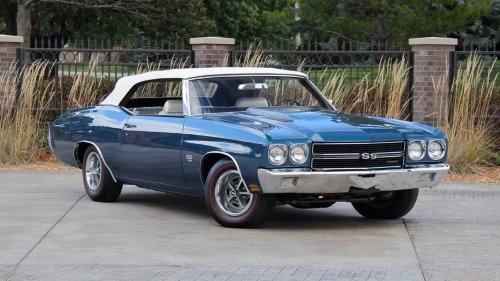
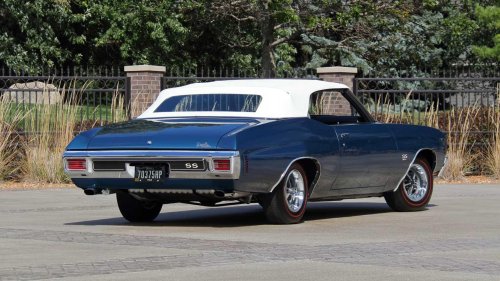
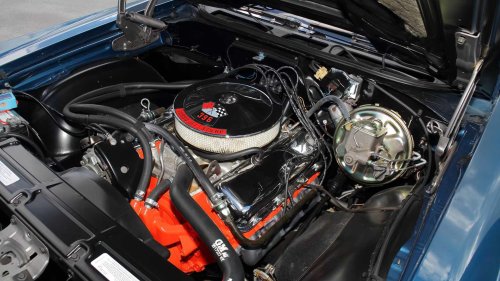
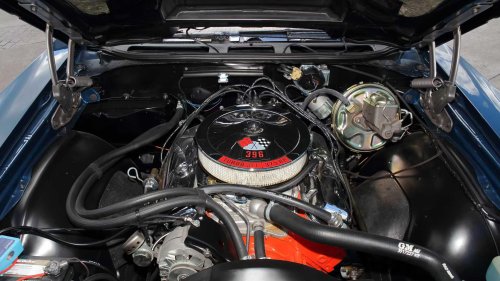
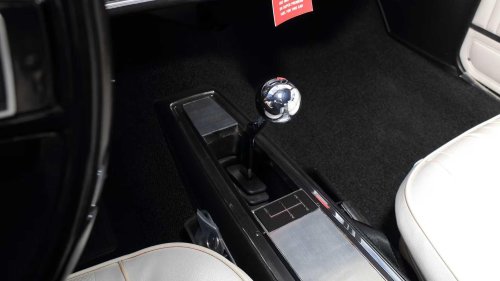
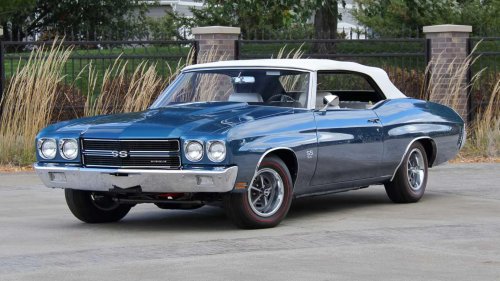
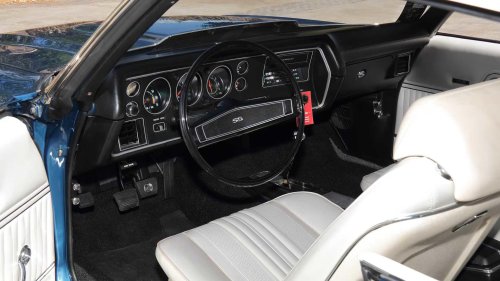
In the golden era of muscle cars, horsepower was the ultimate currency. Showrooms were filled with chrome and bright paint, as manufacturers competed to see who could build the loudest, fastest machines on the road. However, Chevrolet was hiding a paradox in the order forms.While basic models were marketed to everyone, one of the most aggressive engines ever built for an intermediate platform was missing from the flashy promotional brochures. It was a high-performance ghost, available only to the few who knew. Today, we explore why Chevy kept this secret option so quiet and how it became one of the most sought-after collector pieces in 2026. The Quiet Performance Strategy: Why Chevrolet Played It Cool Via: Mecum Auctions During the late 1960s, General Motors operated under a very specific set of internal rules known as the Gentleman’s Agreement. At the time, GM corporate leadership was wary of the growing horsepower wars. They implemented a strict policy that prohibited any engine larger than 400 cubic inches from being installed in their intermediate-sized cars. While brands like Pontiac and Oldsmobile were finding creative ways to skirt these rules, Chevrolet had to be more calculated. They wanted to dominate the streets, but they had to do it within the boundaries set by the front office.This created a significant PR dilemma for the brand. On one hand, Chevrolet’s reputation was built on Winning on Sunday, Selling on Monday. High-performance victories at the drag strip translated directly into showroom traffic. On the other hand, the late sixties brought intense scrutiny from government safety regulators and insurance companies. If Chevy leaned too hard into marketing "race cars for the street," they risked skyrocketing insurance premiums for their customers and unwanted attention from Washington. The goal was to provide maximum power without painting a target on the company’s back.To solve this, Chevrolet utilized a strategy of targeted, under-the-radar marketing. Instead of featuring their most potent engine options, they relied on word-of-mouth among the racing community. This high-output option in the Chevelle SS was intended for the serious performance enthusiast who spent their weekends at the local track and knew exactly which boxes to check on the order form. By keeping these options out of the mainstream spotlight, Chevy ensured that the average commuter wouldn't accidentally buy a car that was too aggressive for daily driving, while the true gearheads could still get the power they craved. The Chevelle L78 396: Factory-Built Weapon For The Drag Strip Via: Mecum Auctions When most people think of a 396 V8, they think of the standard big-block power that made the Chevelle SS a household name. However, the L78 was a completely different animal. It wasn't just a slight upgrade; it was a high-compression, solid-lifter beast designed for one thing: maximum acceleration. While the standard 396 engines used hydraulic lifters for a smoother, quieter ride, the L78 used mechanical solid lifters that allowed the engine to rev much higher. Combined with massive rectangle-port cylinder heads and a huge four-barrel carburetor, the L78 was essentially a racing engine that just happened to have a factory warranty.Chevrolet had good reasons to keep this specific option discreet. The L78 was a niche product that was both expensive to build and demanding to own. Because of the solid lifters, the engine required periodic manual adjustments—a task far beyond the skill set of a typical driver. It was a high-maintenance thoroughbred muscle car that needed a buyer who understood the mechanical intricacies of a race-tuned powerplant. If a casual buyer had walked off the lot with an L78, they likely would have found it too loud, too finicky, and perhaps even a bit temperamental for grocery runs.Via: Mecum Auctions Because of these complexities, the L78 remained an unspoken availability. It was often buried deep within the dealer’s order codes, frequently overshadowed by the more street-friendly 325 or 350 horsepower versions of the 396. The Chevrolet sales team rarely pushed the L78 because they didn't want to deal with the inevitable complaints from customers who weren't prepared for its raw nature. This effectively acted as a filter, ensuring that these rare Chevelles only ended up in the hands of people who could appreciate and handle their uncompromising performance. The 396 V8's Secret L78 Option Pushed 375 HP Via: Mecum AuctionsThe L78 was the absolute peak of 396-cubic-inch performance. While Chevrolet officially rated it at 375 hp, most enthusiasts and engine builders of the era considered that engine output extremely conservative. The real magic happened inside the block, where an 11:1 compression ratio worked in tandem with legendary rectangle-port cylinder heads. These heads were designed to flow massive amounts of air, allowing the engine to breathe far better than the standard oval-port versions found in more common Chevelles.Via: Mecum Auctions Supporting this power was a suite of heavy-duty hardware. The engine featured an aluminum intake manifold and a massive Holley 780 CFM carburetor to feed its hunger for fuel. Unlike the smoother hydraulic lifters in lesser models, the L78 used an aggressive mechanical flat-tappet camshaft. This required the driver to manually adjust the valves, but it allowed the engine to scream toward a 6,500 RPM redline.Via: Mecum Auctions To handle this violence, Chevrolet mandated specific drivetrain components. You couldn't get an L78 with a basic transmission; it required the heavy-duty close-ratio Muncie M21 4-speed manual as standard. But the rare M22 Rock Crusher was also an option. Power was sent to a 12-bolt Positraction rear end, usually fitted with steep gears for maximum off-the-line punch. The F41 heavy-duty suspension kept the car planted, turning the Chevelle into a race-ready package that could dominate a drag strip on Saturday and drive to work on Monday. Rarity, Documentation, And Value Of The Chevelle L78 In 2026 Via: Mecum Auctions The L78 is significantly scarcer than the standard SS 396. In 1969, for example, Chevrolet produced over 86,000 Chevelle SS units, but only about 9,486 were equipped with the L78 engine, of which a mere 19 units were convertibles. Because many of these cars were bought specifically for racing, a large percentage were modified, crashed, or blew their original engines on track. This high attrition rate means that finding a surviving, factory-correct example in 2026 is incredibly difficult.Because it is so easy to drop a big-block engine into a standard Chevelle, a "tribute" build car is worth a fraction of the real thing. For collectors, documentation like the original factory build sheet or the Protect-O-Plate is essential. These documents prove the car was born with the L78 code at the assembly plant. A numbers-matching car, where the VIN stamped on the engine block matches the car’s chassis, is the gold standard that separates a fun driver from a world-class investment.Via: Mecum Auctions As of early 2026, market values reflect this extreme rarity. While a standard SS 396 might sell for $55,000 to $70,000, a genuine, well-documented L78 Chevelle convertible frequently commands between $85,000 and $145,000. The Sport Coupe is valued between $45,000 to $100,000. Values depend on rarity, condition mileage and various other qualities. Exceptional examples, particularly convertibles or cars with rare color combinations, have been known to climb even higher at major auctions. What was once a well-kept secret has transitioned into a blue-chip asset, proving that Chevy’s hidden performance option was worth the wait.Sources: General Motors, Classic, Hagerty, Mecum


















 +30 others