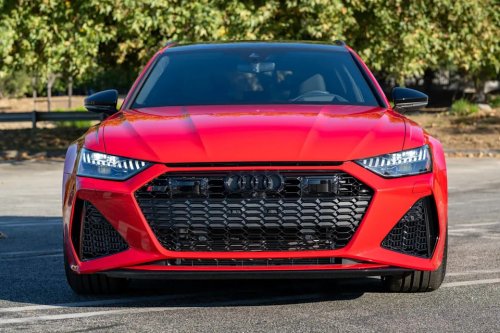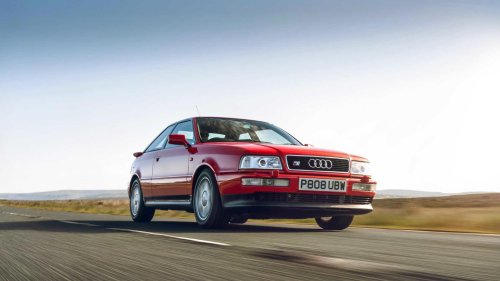
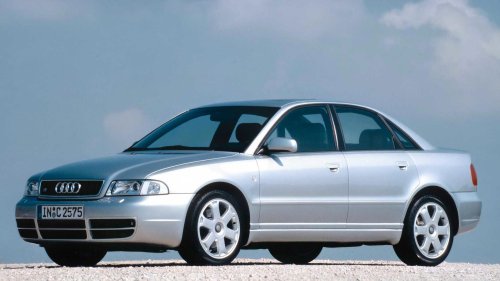
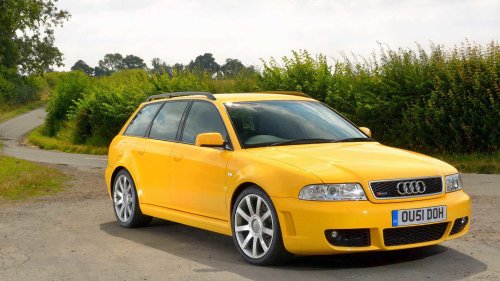
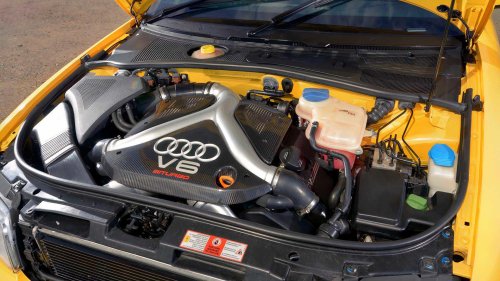
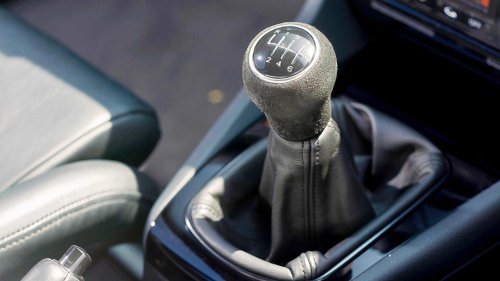
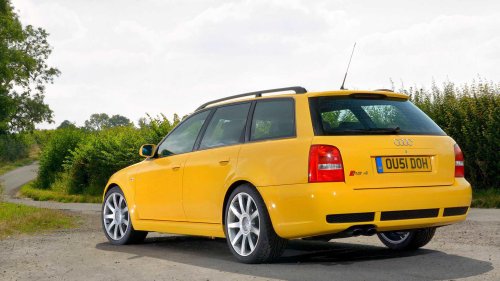
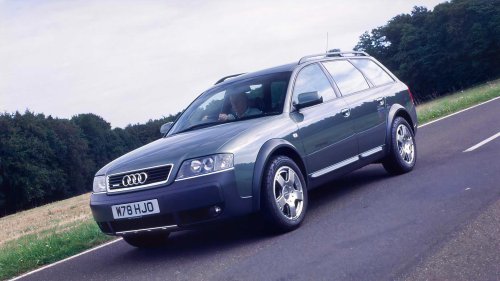
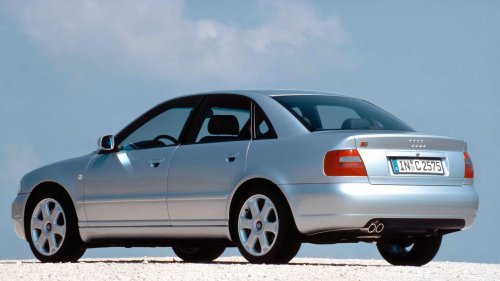

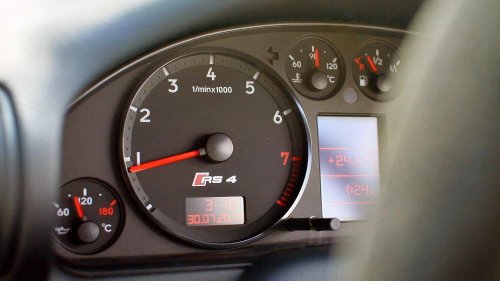



















Numerous engines continue to attract fans alike, regardless of how old and outdated the powerplant may seem. Such platforms include Toyota's iconic 2JZ, Ford's proven Cosworth-codeveloped engines, and the Audi twin-turbocharged 2.7-liter V6. The German automaker dropped this 2.7T V6 onto the scene almost 30 years ago now. Despite a smattering of newer platforms that outperform the old V6 on paper, enthusiasts still turn to the old lump for their performance fix. Audi's Transition Into The Biturbo V6 Era AudiAudi already had a well-established performance arm before the arrival of its twin-turbo V6. Models like the original Quattro helped to elevate the automaker's high-performance appeal, while later releases like the S2 and the RS 2 continued to shape that success. Under the hood of all these pre-V6-era performance models was Audi's iconic inline-five engine.Available in lesser models as a naturally aspirated engine, or boosted in more interesting applications, this inline-five engine was hugely important in proving that Audi could take on rivals such as BMW and Mercedes-Benz. That engine saw Audi find success not only on showroom floors but also across World Rally Championship stages and in track-racing circles, notably with wild IMSA racers.However, while the inline-five dominated throughout the 1980s and '90s for Audi, by the dawn of the new millennium it was getting a little long in the tooth. Audi's S and RS range was up for renewal, and the automaker needed something new and exciting to continue where the hot inline-five left off. Its answer was to develop an all-new engine, this time with two turbochargers, an extra cylinder, more capacity, and extra grunt.Audi The biturbo V6 debuted alongside the B5-generation Audi S4 in 1997. Although it didn't arrive in the US until 2000. As the years progressed, so did the engine's applications. It would go on to power the second-gen Audi A6, in both regular and Allroad guise, as well as the RS 4 Avant in select markets where the model was available.Audi This would be the V6's ultimate guise, with tweaks from Cosworth enabling it to deliver a mighty 380 hp. As it happens, the engine was capable of far more, but the factory never delivered that extra oomph. Instead, it was the aftermarket scene that unlocked the full potential of Audi's potent twin-turbo V6. The 2.7T V6 Quickly Became A Tuner's Favorite AudiThe S4 was the fastest of the bunch, at least in the US, thanks to its smaller footprint compared to the C5 A6-based models that shared the powertrain. It was no slouch, even in completely stock guise, delivering a decent dose of power to all four wheels. It was no BMW M3 rival; that's where the now import-eligible RS 4 stepped up, but the S4 had more than enough potency to do battle with models like the 330i or Mercedes C320.It didn't take long before tuners discovered ways in which they could tweak US-bound models to meet and then exceed the RS 4's output, though. The forbidden wagon sported a pair of upgraded turbochargers, K04s to be exact, as opposed to the S4's smaller K03 units. Upgrading to the larger RS turbochargers was a fairly simple install, provided tuners also equipped the powerplant with the appropriate inlet pipes and oil lines. Further upgrades such as intake tweaks, larger injectors, high-performance fuel pumps, and freer-flowing exhausts soon saw S4 power figures comfortably north of the 300-hp threshold, and knocking on the door of 400 hp.Performance-minded owners saw no reason to stop here, though. Aftermarket turbocharger kits, both twin and single, coupled with the correct hardware, see outputs soaring north of 600, and built motors with RS 6 or GT28 turbos can reach figures around the 1,000-horsepower mark. That places Audi's V6 nearly into Toyota 2JZ and Nissan RB26 engine territory, which explains why tuners still crave the platform to this day.Audi A number of wild builds over the years have been based around this powertrain, and thanks to the untapped performance gains on offer, it's also a popular choice for engine swap builds. Most commonly seen is the engine dropped into similar Audi and Volkswagen platforms. These make for great sleeper builds, although some tuners have gone in the other direction, and dropped the 2.7T into early Porsche Boxster shells. It's a versatile and capable engine for sure, but it's certainly not without its shortcomings too. Reliability Concerns Audi The platforms that support these engines from the factory are now 25 years old, and, as is usually the case with aging Germans, they are very maintenance-intensive. Further complicating matters for enthusiasts is that these cars, while appreciating now, were cheap for a long time. The situation means there are a whole heap of examples being poorly maintained and thrashed by those with limited mechanical sympathy, and, as such, these cars are likely to be real money pits.For any prospective buyers, these are the notorious weak points of Audi's biturbo V6. Getting preventive maintenance addressed before making modifications might not be exciting, but addressing these areas first should set buyers up for a more enjoyable long-term ownership experience. Turbochargers can be prone to failure. Rebuilds are a sensible option, although upgraded units are perhaps the more attractive route if the standard units are suspected to have failed. These engines are old, so oil and coolant leaks are common. Watch out also for PCV failure, which may present symptoms like a dropping coolant level. This V6 is an interference engine with a timing belt. If the belt snaps, it's the end of the line for the lump as a whole, so either verify a recent belt change, or factor one in. Generally speaking, there is always something to fix on an old 2.7T engine, and that's especially true for modified engines. Having said that, there are plenty of examples with north of 150,000, or even 200,000, miles on them, which shows just how durable they can be when given the right TLC. How Much A Biturbo V6 Audi Will Cost In 2026 Audi Any model with a 2.7T under the hood is a car that enthusiasts desire, so the days when buyers could pick up a smart example for pocket change are gone. There is some good news, though: while prices have certainly been on the rise in recent years, well-maintained stock examples ripe for preservation or serving as a clean slate for a new project are still perfectly attainable on a $20,000 budget. B5-generation S4 sedans and wagons are not plentiful, but likely the easiest to source in good condition. Collector-grade cars fetch $25,000 and above, but solid examples of the marque regularly trade hands for between $15,000 and $25,000. The C6-generation A6 is a rare car with this engine, but clean examples do sell for around $5,000 to $8,000 less than comparable-mile and condition S4s. It's finding one that's tricky. The Allroad is a solid option for bargain-hunters. These are more plentiful than the standard A6 with a 2.7T, and $10,000 will secure an average example that's ready to be used and maintained. While the larger cars are more affordable, it's worth noting that the S4 is worth more for a reason. They are lighter, nimbler, faster, and more commonly equipped with the six-speed. For anyone after a high-performance project and not just a cool daily, it's probably worth spending the extra for an S4.Audi Or, for the really well-heeled enthusiast, an RS 4 Avant is the ultimate choice. These have begun to surface in the US over the last 12 months or so as they have finally reached import-eligible status under the 25-year import rule. Expect to spend around $50,000 for an average example, or over double this amount for a truly special, low-owner, low-mileage car. Generally speaking, collectors want these in or close to factory standard condition. The Biturbo V6 Continues To Be A Fan Favorite Audi Newer Audi models are faster out of the box, easier to tune, and not necessarily more expensive to buy. Buyers need not even splash out on an S or RS model, thanks to the way both the older 1.8T and 2.0T VAG engines respond to tuning. Yet tuners still seek out the 2.7T for big-power builds, and the reason isn't necessarily rooted in clear logic.These platforms don't offer the best power-per-dollar ratio; in fact, they can be notoriously tricky to maintain and keep in top shape. What they do offer, though, is a wonderfully analog driving experience, bolstered by violent power delivery, and a seriously devoted fan base. The culture that surrounds these early V6 models, and indeed the I5 models that precede them, is what keeps so many returning to the platform.Audi Specialist shops throughout the US and Europe mean there is always someone knowledgeable to turn to, whether for tuning advice or routine servicing tips, and the scale of shows and the frequency of meet-ups keep community spirit alive for owners. There will always be quicker cars and easier-to-tune platforms — modern VAG models are renowned for how easy they are to transform with a simple ECU tune — yet buyers will always treasure the 2.7T for its character and community.