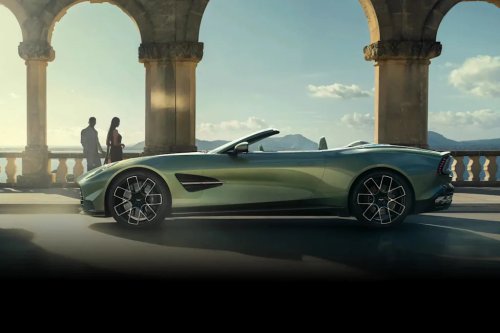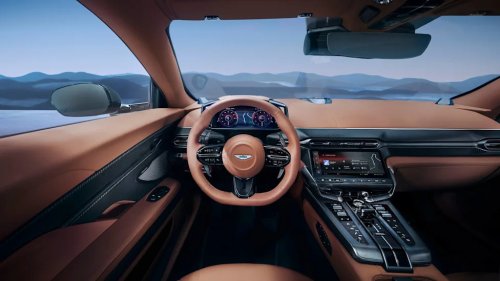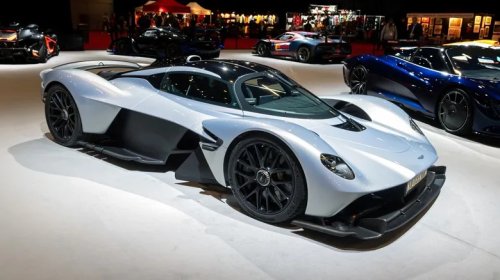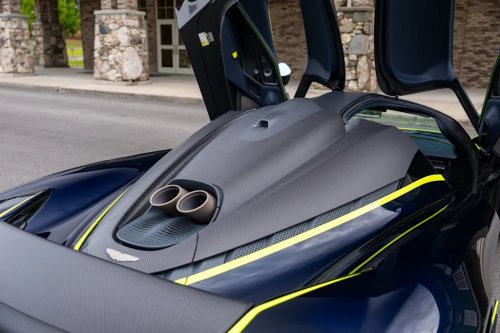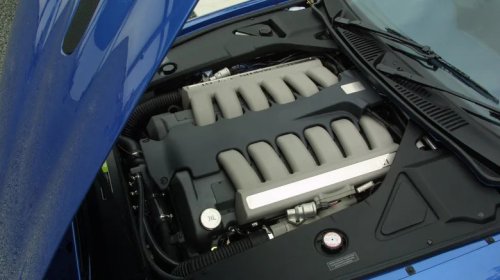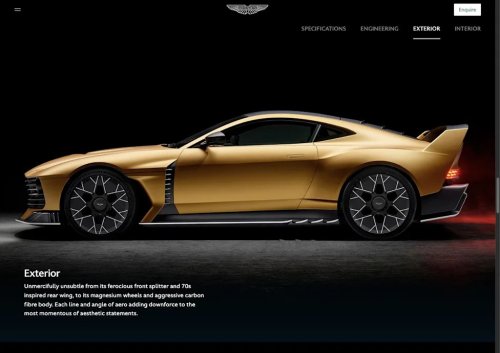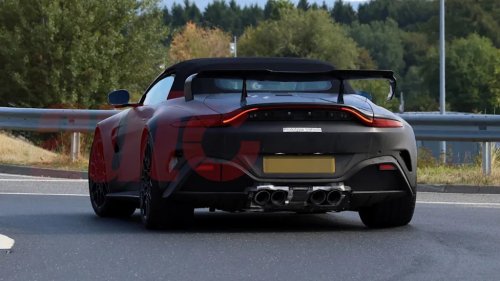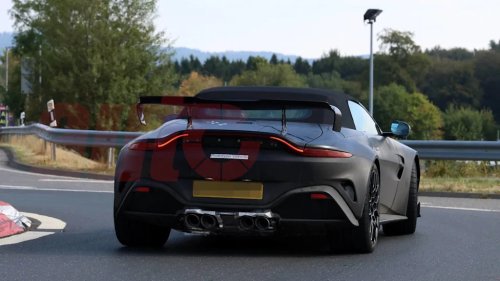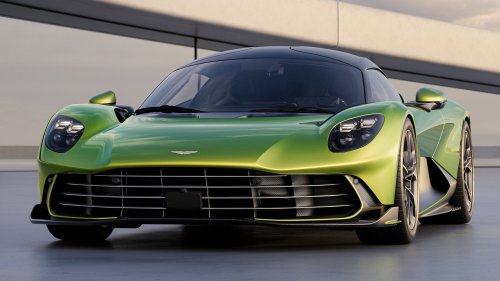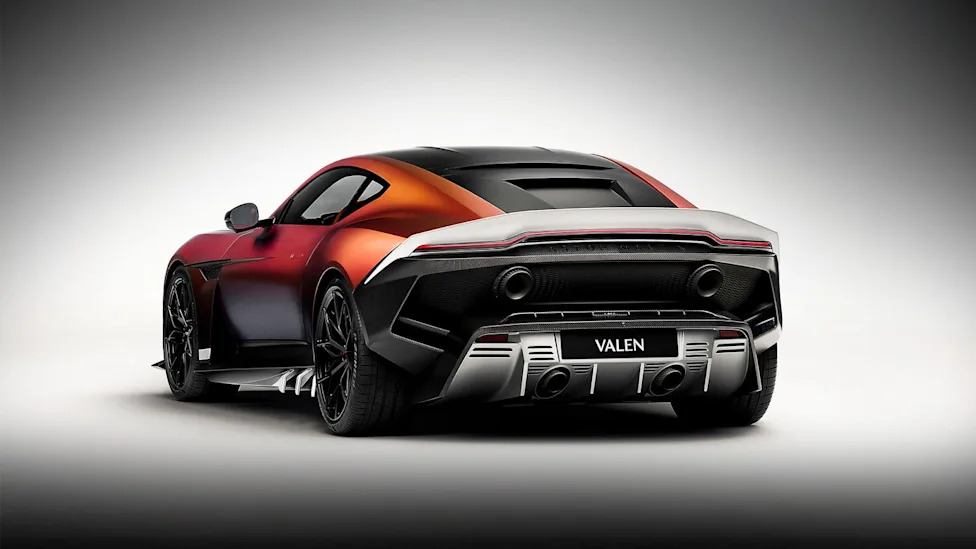
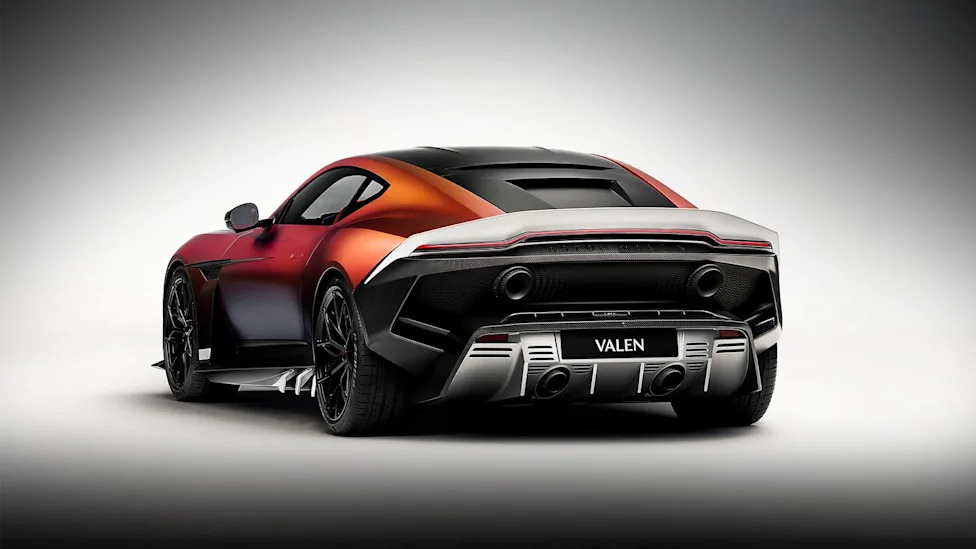
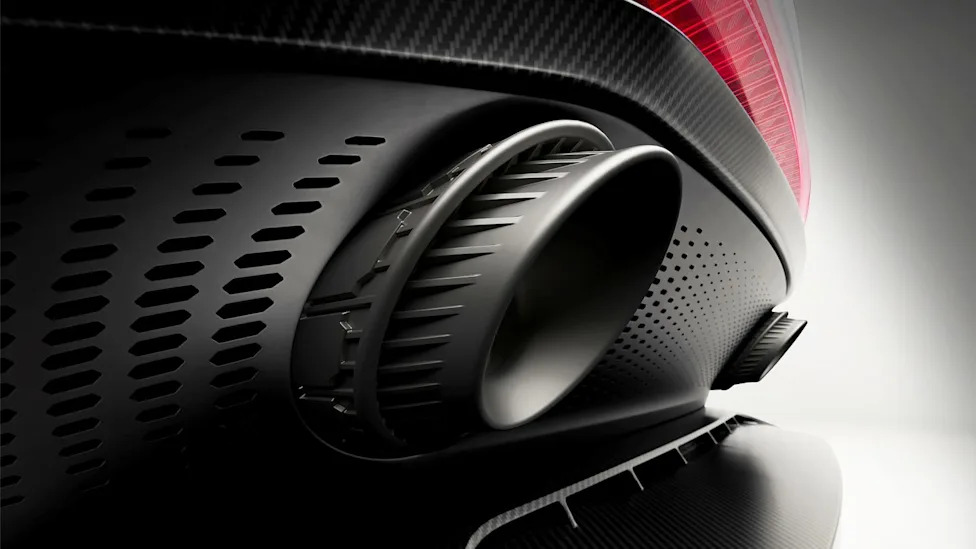



















Why the Aston Martin Valen's Exhaust Is UniqueAston MartinExhaust note volume is a tricky formula for supercar manufacturers to get right. It needs to be loud enough to entice enthusiasts, but not so loud that the volume violates the law. But Aston Martin believes it has found the perfect balance with its newest model, the Valen.The Valen is a bespoke model based on the current Vanquish and produced by Aston Martin's bespoke division, Q. With 838 horsepower on tap from its twin-turbo 5.2-liter V-12, the Valen is hardly a slouch when it comes to acceleration, but perhaps the most enticing part of the limited-production supercar is its exhaust. The asymmetrical quad-tip exhaust makes this car 50 percent louder than the Vanquish it's based on; Aston Martin wanted to focus on sensations behind the wheel of the Valen, and the exhaust system routing was an essential part of that plan.Aston Martin"This has to be a thrilling car at low speed. The attribute of going really fast and all that is easy now, because of EVs and everything else. What people talk to us about is, to give us back the feeling," Alex Long, managing director of special vehicle operations at Aston Martin Lagonda, said at a media roundtable prior to the car's Monterey Car Week launch. "'We want lots of sound. We know you're up against [particulate filters] and all the other stuff that's coming from hybridization—but [we wanted to] build something broad, something really loud, as loud as you can.'"AdvertisementAdvertisement"'And build something that, when I drive it, I feel it at all speeds,'" he continued. "Cars nowadays come alive dynamically at super high speeds—beyond almost highway speeds—and that's taking the thrill away from being able to go and enjoy a car on a drive. The exhaust strategy is an integral part of that."The setup starts at the back of the 5.2-liter V-12, where it's divided into 12 separate titanium header pipes. Because the engine is mounted behind the front axle, the headers are closer to the cabin than in most front-engine vehicles, adding a few extra decibels inside. (Long said the Valen doesn't feature any artificially integrated exhaust noise in the cabin, and actually has less sound-deadening material.) The pipes then thread directly underneath the seats, adding another layer of vibrational feedback, before merging into four separate exhaust ports.But the sonic trickery isn't over just yet. The Valen's titanium tips are split into upper and lower levels: the upper-level exhausts remain open 24/7, while the lower-level ones have valves that are actuated by drive mode and throttle position. The angular routing of these exhaust pipes also impresses, as it allows the trunk to retain six cubic feet of storage capacity. However, Aston Martin chief creative officer Marek Reichman admitted that the focus on a roaring exhaust note forced some packaging compromises.Aston Martin"Normally, you open a trunk, and you've got those areas on the side of the trunk; you don't have a lot of that now because that exhaust mounts through there. If you think of the reason you want this car, it's so that people can hear you, first of all. Therefore, we decided to compromise on the total width and volume of the trunk, but still give it a usable trunk," Reichman said.AdvertisementAdvertisementAston Martin didn't specify how many decibels the Valen will be capable of putting out, but it did clarify that owners won't have to reach felony speeds to enjoy the engine note; the peak sonic rate of the exhaust arrives around 2500 rpm, Long explained. That means the Valen isn't much louder than its sibling models at wide-open throttle, and thereby complies with existing noise regulations."How often do you see 6000 rpm in a daily drive? Very rarely. Anything beyond second gear, there goes your license," Long said. "The idea is very loud, low speed, more enjoyable, and so that's how it's being represented. On the inside of the car, it's all about natural sound."You Might Also LikeIf You Can Only Own One Car, Make It One of TheseThese Are the Most Popular Cars by State