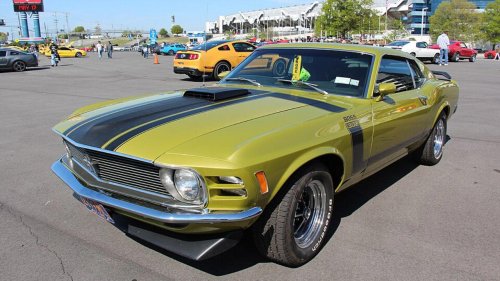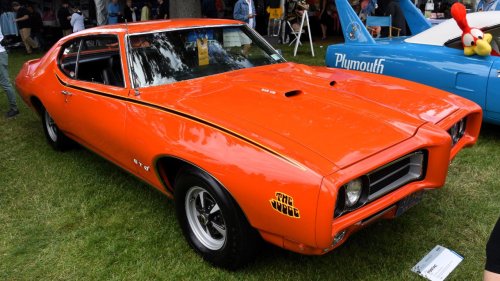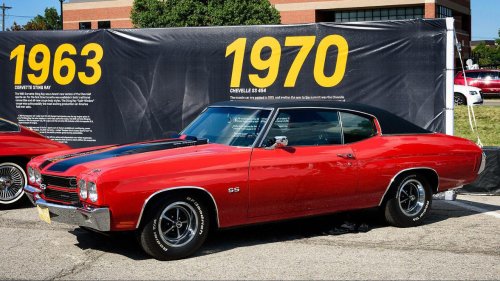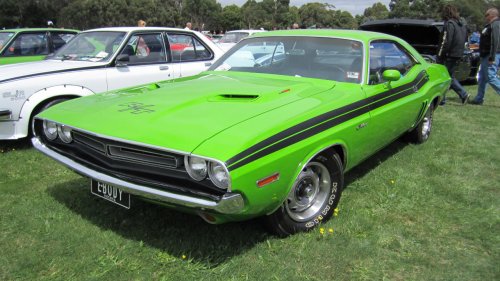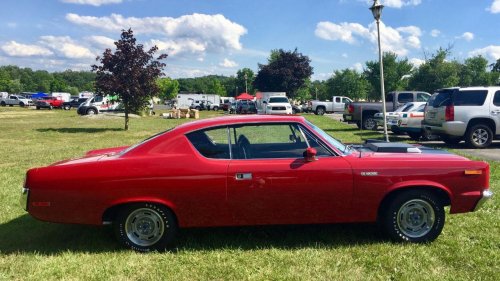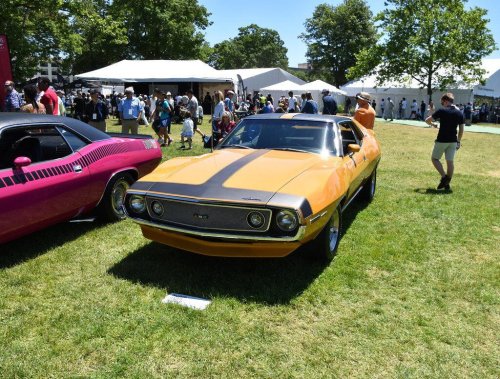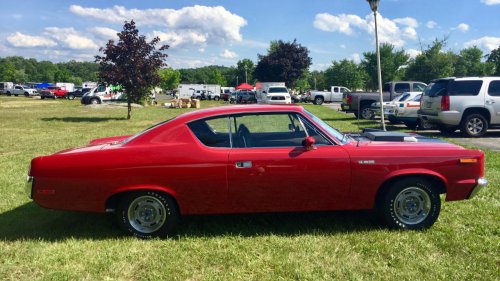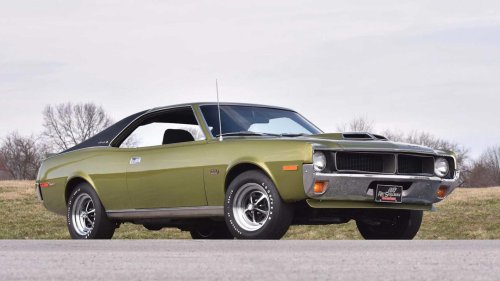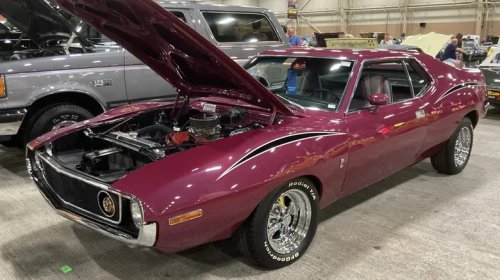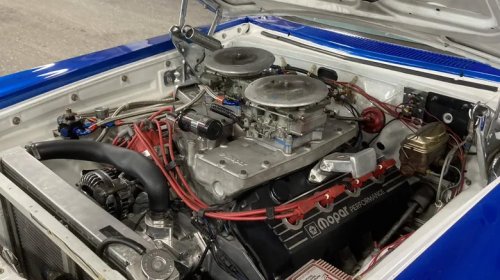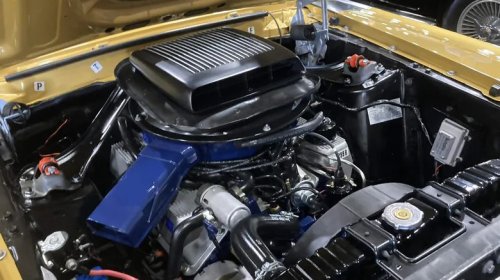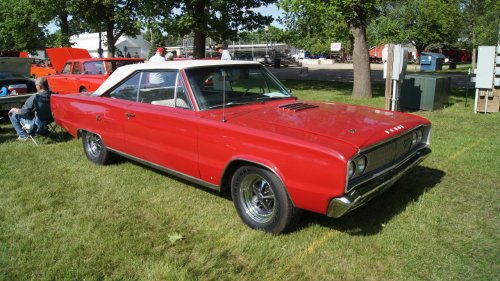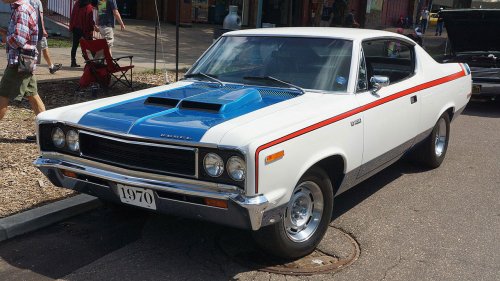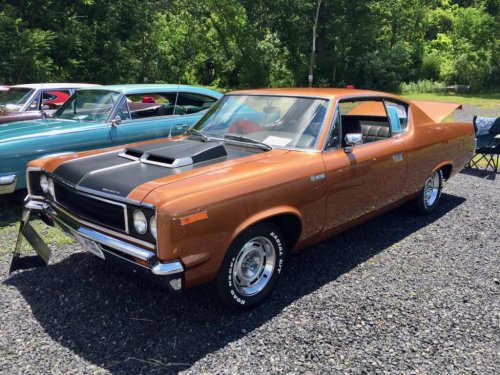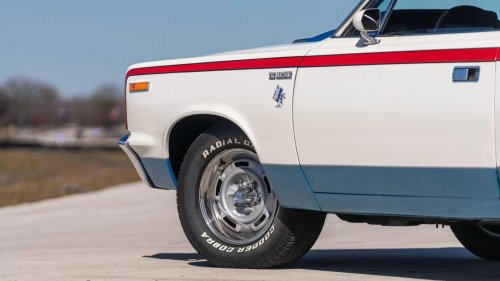
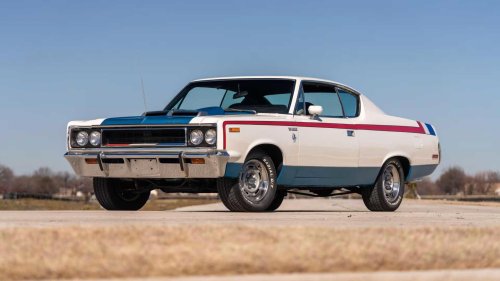
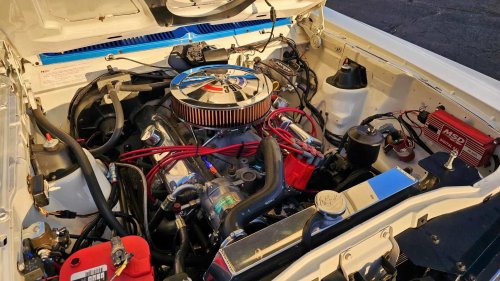
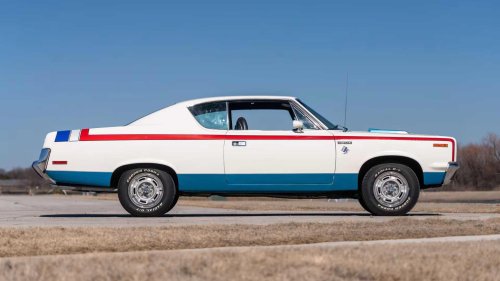
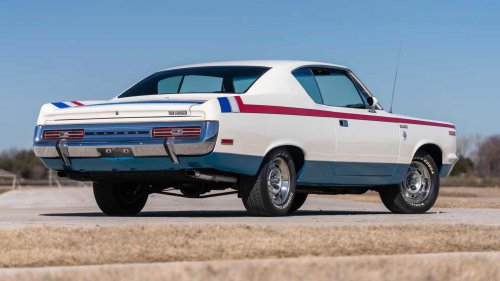



















The muscle car wars of 1970 were dominated by familiar names. Pontiac had the GTO. Chevrolet had the Chevelle SS. Ford had the Boss 302 and the Cobra Jet Mustangs. These were the cars that filled magazine covers and drag strip bleachers, and the manufacturers behind them had the marketing budgets to make sure nobody forgot it. American Motors Corporation, the perpetual fourth player in Detroit, had none of those advantages. What AMC did have was a 390 cubic-inch V8 with forged internals, an engineering team that knew how to make it sing, and enough audacity to wrap the result in the most patriotic paint scheme the muscle car era ever produced. The Manufacturer Detroit Never Took Seriously Mecum American Motors Corporation entered the 1970s as the smallest of the four major American automakers, and it carried a reputation that had nothing to do with performance. AMC was the company that built the Rambler, the Gremlin, and the Ambassador, cars that prioritized economy and value over excitement. The brand's dealer network was a fraction of the size that Ford or Chevrolet commanded, and its advertising budget was smaller still. When AMC tried to compete in the performance space, the automotive press treated it as a curiosity rather than a serious contender. The prevailing assumption was that a company known for budget transportation could not build a genuine muscle car.That assumption was wrong. AMC had been developing its V8 engine family since 1966, and unlike the Big Three, which maintained separate small-block and big-block families, the independent automaker used a single block architecture for all of its V8 engines. The 390 version sat at the top of the range, and in its standard form it produced 325 horsepower and 420 lb-ft of torque with forged steel crankshaft and connecting rods as standard equipment. Those forged internals were not a performance option. They were the baseline, built that way because AMC lacked the production volume to justify separate casting and forging programs. The result was an engine that could handle far more abuse than most owners would ever demand of it. The 1970 AMC Machine Ran a Quicker Quarter Mile Than the Boss 302 Mustang MecumThe 1970 AMC Rebel Machine, known simply as "The Machine," arrived with a specially tuned version of the 390 V8 producing 340 hp at 5,100 rpm and 430 lb-ft of torque at 3,600 rpm. The engine breathed through dog-leg port heads that flowed 20% better on the exhaust side than the previous design, an aluminum intake manifold, and a 690-cfm Motorcraft four-barrel carburetor feeding a ram-air induction system with a functional hood scoop.Period testing recorded 14.4 seconds through the quarter mile at 99 mph. The Ford Mustang Boss 302, one of the most revered performance cars of 1970, managed 14.57 seconds at 97.57 mph in equivalent testing. The AMC was quicker. It was also cheaper, with a base price of $3,475 compared to the Boss 302's $3,720.The Machine's visual identity was unmistakable. The first 1,000 units wore a patriotic livery of white bodywork with bold red and blue reflective stripes running the length of the car and wrapping over the trunk. A hood-mounted tachometer sat integrated into the ram-air scoop, giving the driver a line-of-sight view of engine speed without looking down. Power reached the rear wheels through a Borg-Warner T-10 four-speed manual transmission with a Hurst floor shifter, and a Model 20 Twin-Grip limited-slip differential with 3.54:1 gears kept both tires hooked. Station wagon rear springs gave the Machine an aggressive raked stance that looked fast standing still. The Group 19 Parts That Could Make the Machine Even Faster Bring a Trailer What separated AMC from the Big Three in the muscle car era was not just what the factory built, but what the dealer could install afterward. AMC's Group 19 performance parts catalog offered a range of upgrades specifically designed for the 390 V8, and they transformed the Machine from a 14-second car into a genuine 12-second weapon.The most significant offering was a dealer-installed service package that included headers, a more aggressive camshaft, and a revised intake manifold. With these parts fitted, output climbed from the factory 340 hp to approximately 472 hp. Period testing of Group 19-equipped Machines recorded quarter-mile times of 12.73 seconds, a figure that made anything short of a purpose-built drag car look slow. The forged steel crankshaft and connecting rods that came as standard equipment in every 390 meant the bottom end could handle the additional power without modification. Why AMC Gets Systematically Overlooked Mecum The Machine was faster than a Boss 302, cheaper than a Boss302, and rarer than a Boss 302. It should be one of the most celebrated muscle cars of the era. Instead, it remains a footnote. The reasons are structural, not qualitative. AMC produced approximately 2,326 Machines in total, of which roughly 600 are believed to survive.Ford built 8,641 Boss 302 Mustangs across 1969 and 1970. Fewer Machines were built, fewer survived, and fewer people grew up with one at the local dealership or on the cover of a magazine. AMC's advertising budget could not compete with Ford's, and the brand's association with economy cars made it difficult for even the enthusiast press to take the Machine seriously as a peer to the established names. The car was a one-year-only model that disappeared before it could build a following, replaced by the AMC Matador for 1971. What the 1970 AMC Machine Costs Today MecumThe Machine occupies one of the most compelling positions in the collector muscle car market. Market data shows well-preserved examples trading between $55,000 and $145,000 depending on condition and originality, with the red, white, and blue cars commanding a premium over single-color examples. For context, an equivalent-condition Boss 302 Mustang trades for significantly more despite being objectively slower through the quarter mile. The gap exists entirely because of badge recognition: Ford is Ford, and AMC is AMC.For collectors who value performance over prestige, the math is straightforward. The Machine offered more horsepower, more torque, and a quicker quarter mile than the Boss 302, at a lower price then and a lower price now. With approximately 600 survivors from a production run of roughly 2,326 cars, the Machine is genuinely rare. It is also one of the few muscle cars from 1970 whose performance credentials actually support the hype, and the fact that so few people know about it is the reason it remains attainable. That will not last forever.Sources: Hagerty, Classic.com, American Motors Corporation, Mecum, Ford.