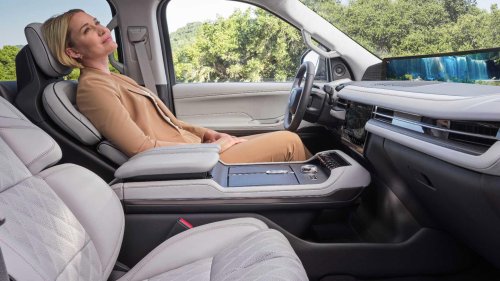
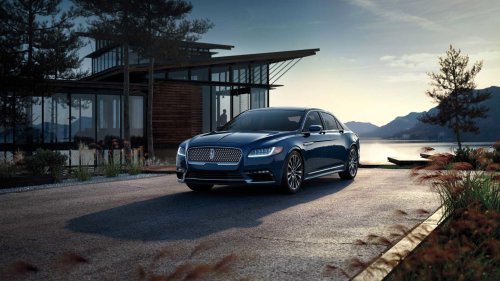
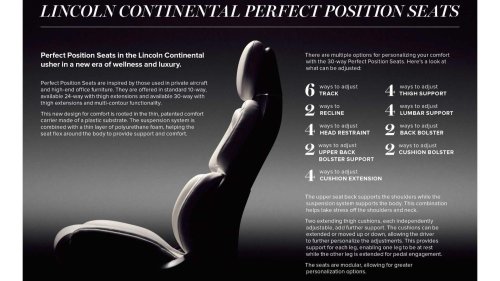
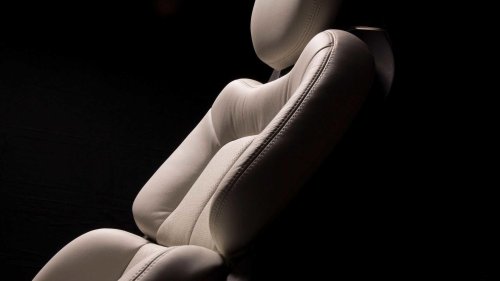
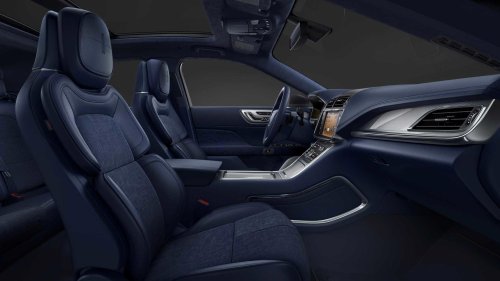



















Do you remember the days when you could slide your driver’s seat back and forth and tilt the seat back a little, but that was about it? In what many perceive to be the “good old days,” that was all the flexibility you got when trying to adjust your seating position, and even in the most luxurious of cars.However, today, you can often be spoiled for choice, with a level of flexibility that some people find overwhelming. Those choices could be great if you're living with some kind of injury and seeking specific support, but in truth, how much adjustability do you need? And could something like Lincoln's 30-way Perfect Position seating option be really useful engineering, or is it just some luxury car theater? One Restless Leg Explains The Whole Idea LincolnOne of the most revealing functions within Lincoln's 30-way Perfect Position system is its split thigh support. In a conventional power seat, the lower cushion generally moves as one piece, and that's usually enough for most short runs, but in a typical long drive, Lincoln knows that two legs work very differently. During such a long-distance journey between two far-off states, one leg may be resting for most of the time while the other operates the throttle and the brake. And in this specific situation, a cushion that might feel supportive under the left leg could start to feel very restrictive under the right.With this and other challenges in mind, Lincoln came up with a novel idea for its latest Continental model. Its 30-Way Perfect Position seating system allows each thigh cushion to extend and move independently, so one leg can properly rest while the other is in the perfect position for pedal engagement. And the solution also understands that comfort isn't just about softness, but should be about posture, pressure, and the way that a driver's body actually behaves when it's behind the wheel.With this approach, Lincoln appears to be aiming at drivers who often have to shift their body position awkwardly to try and remove pressure from one thigh. Those drivers usually find it hard to do that and chase the perfect alignment when they’re trying to concentrate on the road ahead. Lincoln's comprehensive approach is clearly to try and make its high-end cars feel a lot less tiring when those miles really start to rack up. Lincoln Built The Continental Around Comfort, Not Cornering Lincoln Lincoln introduced the revived Continental for 2017 and, in doing so, tried to breathe some life into one of America's most recognizable luxury nameplates. The new Continental would be competing in a market where German sedans were on the prowl, with all of their sport sedan precision on display. And in this context, Lincoln chose to go down a different road rather than try to create a specific 7 Series rival. Instead, it would build an American luxury sedan that fully centered around quiet, long-distance comfort.While Lincoln designers therefore paid particular attention to features like the front seats, the car itself was a reasonably solid proposition as well. The technical specifications for the 2017 Lincoln Continental show that it came with several engine options, including the range-topping 3.0-liter twin-turbo V6. This produced 400 hp and 400 lb-ft of torque on the right 93 octane fuel, pairing with a six-speed SelectShift automatic and all-wheel drive.The bold Continental went on sale for around $45,000 in 2017, and you could choose from a range of options, including those 30-way adjustable front seats on Select models and above. However, if you did want the adjustable seats, you'd need to add around $1,500 to your check. Overkill For Short Trips But Necessary For The Comfort Mission Lincoln If you only used your Lincoln Continental for short trips around town, you could argue that the 30-way Perfect Position seat option was overkill. Most drivers in this situation would set a basic position and ignore most of the available movement options. During those short trips, their minds would never wander to seat adjustments, and they would simply get down to the business of the day instead. But if a buyer had long-distance travel in mind and was getting this Lincoln because of its self-proclaimed luxury mission, then the story might be different.For those who wanted to dial in their ideal seating position, Lincoln offered many options, such as six-way track adjustment, two-way recline, four-way head restraint adjustment, two-way upper back bolster support and four-way cushion extension. You could also select four-way lumbar support, two-way back bolster adjustment, two-way cushion bolster adjustment, or four-way thigh support. And if you did your sums correctly, that should reach the advertised 30 ways.Of course, not every owner would even try some of those adjustments, let alone fiddle with them every day. But Lincoln's comprehensive solution did give people with different body types or conditions more chances to find a position that could help alleviate stress points. And the solution certainly seemed to work in the real world, with one driver who had than 1,000 miles of onboard experience noting that their 30-way Perfect Position seats were a revelation.Someone traveling with knee and hip replacements loved the seats because they could get the support exactly where they needed it for their comfort and ongoing recovery. And others found it much easier to enter and exit the vehicle if they had mobility challenges, due to the way that they could configure those seats.Lincoln went to town with this seat project, filing more than 50 US patent applications and making an additional 100 disclosures. These included items such as the flexible comfort carrier, which was a plastic substrate combined with a thin layer of foam, meant to flex around the body. And while these seats weren't magic and were just a large combination of real-world individual adjustments, they still represented an engineering solution that sought to find an answer to a real physical problem. The Navigator Made The Seat Feel Less Like A Sedan Gimmick Lincoln While Continental introduced the 30-way seat to the market, Lincoln's Navigator may have been the better home for the idea. After all, a full-size luxury SUV like this is where people tend to expect space and calm rather than any sport sedan tension, and it could be in more regular use for big family road trips.So, in 2018, Lincoln put this solution into some versions of the Navigator, which came with a twin-turbo V6 producing 450 hp as well as a 10-speed transmission. This upgraded vehicle featured a high-strength aluminum alloy body that was 200 lbs lighter than the previous vehicle, and you could choose the Perfect Position seating option for both the driver and front passenger seats. And in this purposeful SUV, the 30-way adjustable seat concept just seemed to be part of the vehicle's basic promise rather than an extravagant answer to a subtle problem. The Best Luxury Trick Is The One You Stop Noticing Lincoln There was always a danger that a 30-way adjustable seat could trigger sensory overload and become too complex for its own good. After all, no new vehicle owner wants to turn into a systems engineer just to figure out menus, motors, and fine adjustments when they simply want to get on with their day. There was simply a risk of that outcome if designers tried to cram so many adjustments into one menu stack. But Lincoln also included a personal profile system that would automatically recall seat positioning, so drivers who took the time to carefully set the seat up, rather than constantly fiddling with it, could take the fullest advantage.Today, the Continental may be gone from the lineup, but the Navigator still includes the signature 30-way Perfect Position seat option. And if the company has retained the solution since the days of the 2017 Continental, Lincoln must be getting the right amount of feedback from its customer base to support any ongoing efforts.Lincoln's perseverance suggests that buyers are happy that they can solve an irritation that may only appear after 150 miles of driving, when the lower back may want a different curve or one thigh might need more support than the other. And it also suggests that its 30-way Perfect Position seat may not represent numerical overkill after all, but an idea that's perfectly welcome in the real world.Sources: Lincoln, Ford.