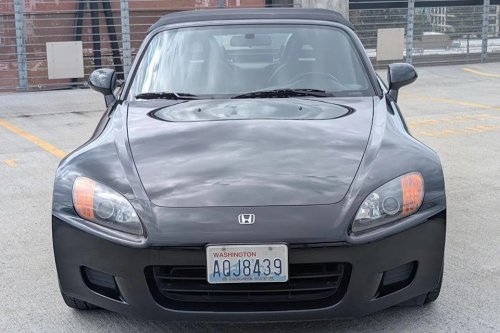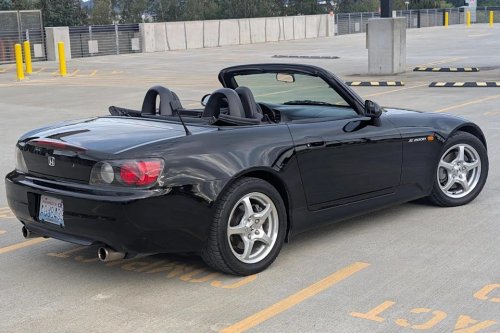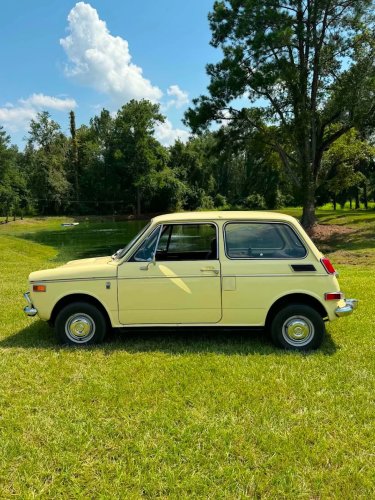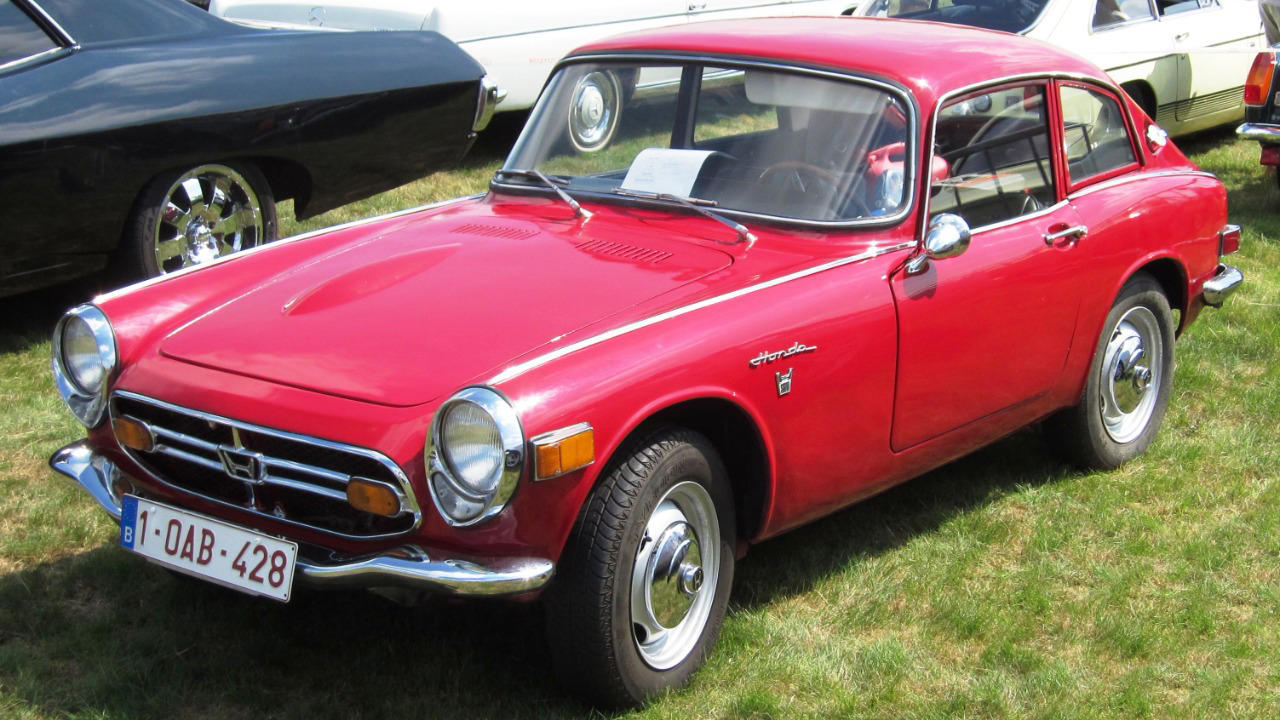



















The 1968 Honda S800 doesn’t look fast until you hear it revThe 1968 Honda S800 looks almost dainty in modern traffic, a sliver of chrome and glass that could pass for a city runabout. The illusion lasts only until the tiny four cylinder spins toward five figures on the tachometer and the exhaust hardens into something closer to a motorcycle on full song than a polite sports car. That disconnect between appearance and sound is exactly what has turned this small Japanese roadster into one of the most characterful performance cars of its era. Born from a company that built its reputation on high revving bikes, the S800 translated that obsession with engine speed into a compact, usable sports car. On paper it is modest, with a sub one liter engine and power figures that barely trouble a modern hatchback, yet the way it reaches those numbers and the intensity of its delivery created a template that still shapes how enthusiasts talk about Honda performance today. From Tokyo curiosity to serious sports car Honda arrived at the mid 1960s sports car party as an outsider. The company had made its name in low capacity motorcycles and had only recently stepped into car production when the Honda S800 appeared at the 1965 Tokyo Motor Show. It replaced the Honda S600 and moved the company further into the territory occupied by cars such as the Datsun Fairlady and various European lightweights. The new model was still compact, but it signaled that Honda intended to compete head on with established sports car makers rather than simply build curiosities. As a product, the S800 fit neatly into the emerging class of small, affordable sports cars. It was sold as a coupe or an open roadster and, as one detailed overview of the explains, it targeted rivals such as the Datsun Fairlady and Fiat 850 Spider. That comparison is telling. Honda was still a young carmaker, yet it was already confident enough to benchmark European and Japanese specialists that had been building sports cars for years. The car did not just rely on styling or badge appeal. It carried technology that reflected the company’s motorcycle roots and its appetite for engineering complexity. The S800 used a small displacement engine that revved far higher than the typical European rival, and early versions even experimented with chain drive to the rear wheels before production settled on a more conventional layout. The message was clear: Honda would use advanced mechanical solutions to extract performance from small capacity hardware. The tiny engine that screams At the heart of the 1968 Honda S800 sits a 791 cubic centimeter four cylinder that reads like a motorcycle engine adapted for road car duty. The unit uses a double overhead camshaft layout and breathes through multiple carburetors, a configuration that allowed it to spin to very high engine speeds for a production car of the time. Period specifications describe outputs around 70 horsepower from that 791 cubic centimeter capacity, with some references noting that this gave the S800 a top speed close to 100 miles per hour and a redline near 9,500 revolutions per minute, which underlines just how aggressively tuned this little engine was for its size. Contemporary and modern enthusiasts are fascinated by those numbers because they speak to a different philosophy of performance. Rather than chase displacement, Honda embraced its background in low capacity motor cycle engines and pushed for efficiency at high rpm. One technical summary notes that the S800, like the S600 before it, continued the advanced engineering of its predecessors and drew directly on Honda experience with low capacity motor cycle engines. That connection explains why the S800 feels so different from many contemporaries that relied on larger, slower revving units. The engine’s character is not just an abstract specification sheet point. Modern video reviews capture the way the little four cylinder climbs toward five figures on the tachometer with a hard edged mechanical wail. One detailed drive published in Oct by a channel called Furious Driving shows the car being worked through the gears, supported by a sponsor called Diamond Brightite, and the footage makes clear that the S800 is happiest when the driver keeps the engine spinning close to its upper range. The presenter in that Oct Driving review repeatedly comments on how eager the engine feels once it passes the mid range and how much it rewards commitment. Other enthusiasts echo that impression. A separate review recorded in Jun, focusing on a 1967 example, highlights how the car comes alive once the tachometer needle swings past the middle of the dial. The presenter in that Jun video review notes that the S800 needs to be revved to deliver its best performance, which aligns with the factory redline figures and the broader Honda philosophy of building engines that thrive on rpm rather than low end torque. Why it does not look fast Part of the S800’s charm lies in the way its styling hides its intent. The body is petite and almost delicate, with thin pillars, modest wheel arches and gentle curves. To an untrained eye, especially when finished in a soft color, it could be mistaken for a simple commuter car from the 1960s rather than a machine capable of spinning to 9,500 revolutions per minute. That visual understatement is amplified by the car’s dimensions, which are tiny compared with modern sports cars. Several period and modern descriptions emphasize just how small and light the S800 is. One classified listing for a right hand drive cabriolet describes it as one of very few Cabriolets registered in the UK and lists figures such as 791 cubic centimeters, 70 brake horsepower, 9,000 revolutions per minute and a weight of around 790 kilograms. The author of that description of one calls those numbers remarkable, and the weight figure explains why the car can make so much of its modest power. From a modern perspective, the S800’s proportions and brightwork can make it appear more like a classic cruiser than a performance machine. The narrow tires, tall sidewalls and simple steel wheels do not signal aggression in the way that contemporary wide alloys and low profile rubber do. Even the coupe version, with its slightly more formal roofline, looks more like a tidy grand tourer than a track toy. That mismatch between visual cues and dynamic potential is a key reason why the car still surprises people when they finally hear it at full throttle. Owners and restorers often lean into that contrast. A social media post from Aug describes a 1968 Honda S800 Coupe that has been restored and emphasizes how the Coupe showcased Honda engineering brilliance and marked an important step in the brand’s rise as a global automaker. The author of that Aug Honda Coupe frames the car as a piece of history, yet the photos show a modest, almost demure machine that gives little hint of the intensity available once the engine is pushed. Hearing the revs for the first time For many people, the moment the S800 clicks from “cute classic” to “serious performance machine” comes the first time they hear the engine rev freely. The double overhead camshaft design and small displacement encourage the driver to chase the upper reaches of the tachometer, and the sound hardens into a metallic, high pitched note that feels closer to a race tuned motorcycle than a typical 1960s car. Modern recordings capture this effect vividly, with microphones placed near the engine bay or exhaust to highlight the change in tone as the revs rise. One widely shared clip on social media focuses on a 1968 Honda S800 powered by a DOHC 791 cubic centimeter engine. The post specifies that this particular car produces 71 horsepower and 49 pound feet of torque and notes that it was built by Daniel Wu. The accompanying video in that Oct Honda DOHC shows the engine revving cleanly through the range, and the soundtrack makes clear why enthusiasts talk so much about the car’s voice. The numbers 71 and 49 would not raise eyebrows in a modern spec sheet, yet the way they are delivered through a tiny, free revving unit is what makes the car feel special. Another enthusiast video on a short form platform describes a 1968 S800 as the grandfather of the S2000 and mentions a figure of 76 horsepower for that particular build. The creator explains that the car was built with a best friend from high school over eight months, which underlines how the S800 inspires personal projects as much as it does formal restorations. The reference in that Jun 1968 S800 to the S2000 is not accidental. Many owners and commentators see a direct line from the high revving S series cars of the 1960s to the later S2000 roadster. Multiple reviewers also highlight how the S800’s gearing and throttle response encourage drivers to keep the engine on the boil. The Jun review of a 1967 car mentions that the gearbox ratios are closely stacked, which makes it easy to keep the engine in its sweet spot, while the Oct Furious Driving video shows the presenter working the shifter frequently to maintain momentum. The combination of light weight, short gearing and a rev happy engine means that the S800 feels fast even when the speedometer numbers are modest by modern standards. How Honda’s rev obsession began The S800 did not emerge in isolation. It was part of a broader Honda story that revolved around high engine speeds and efficiency. A detailed buyer’s guide points out that there is a common misconception that the Mazda MX 5 was the first truly successful Japanese interpretation of the classic British sports car formula. In reality, Honda had already explored that territory with the S series cars, combining everyday usability and superb efficiency with a willingness to rev. The author of that Honda S800 Overview argues that the S800 offered a blend of reliability and character that challenged European assumptions about Japanese sports cars. Another analysis of Honda history explains that the S600 paved the way for the S800. It notes that Honda was not settling for only 8,000 rpm in its earlier sports car and that this figure was just the beginning. The same piece explains that when Hond engineers developed the S800, they pushed the envelope further, building on the company’s experience with small displacement engines. The author of that Jul paved the way links this approach to later icons such as the AP1 S2000 and its F20C engine, which also relied on high revs rather than large displacement. Video essays on Honda performance history reinforce this narrative. One piece titled around the idea of Japan beating Europe and terrifying Americans argues that Honda obsession with revs did not begin with the S2000, the Integra Type R or even VTEC. Instead, it traces that obsession back to the 1960s and specifically to cars like the S800. The narrator in that Mar Honda revs video describes how the S800’s willingness to spin to very high rpm set a pattern that later performance models would follow, including the high revving Integra Type and VTEC equipped engines. Another clip shared on social media underlines the same point with a more personal tone. It is framed around the idea of where Honda love affair with revs and VTEC began and includes engagement figures such as 1.2K likes and 50 comments. The creator of that Mar Last More uses an S800 to illustrate how the company’s early sports cars already embodied the traits that would later define its performance image: light weight, high revs and a focus on driver involvement. Engineering detail and everyday usability Beyond the headline grabbing redline, the S800 integrated a range of thoughtful engineering choices that made it more than a weekend toy. The car offered relatively comfortable seating for two, a usable boot and a level of refinement that compared well with European rivals of the era. That usability is a recurring theme in buyer’s guides and owner testimonials, which often highlight how the car can be driven regularly without the fragility sometimes associated with classic sports cars. Technical descriptions from the period emphasize that the S800 was technically extremely advanced for its time. One enthusiast post from Oct describes the Honda S800 built between 1966 and 1970 as technically advanced and notes that 70 horsepower from 791 cubic centimeters gave a top speed of 100 miles per hour, with a redline at 9,500 revolutions per minute. The author of that Oct Honda Technically clearly admires the way Honda extracted that level of performance from such a small engine, and the figures support the idea that the S800 was ahead of many rivals in terms of specific output. Historical notes about the model’s introduction and development also underline how rapidly Honda evolved its car program. A detailed enthusiast history explains that the 1966 Honda S800 was a remarkable sports car that showcased Honda engineering prowess during the 1960s and that it was introduced at the 1965 Tokyo Motor Show. The same piece, shared in Dec, credits Honda for pushing boundaries in a short period and includes a quote from Andrew Newton about how the car drove. The Dec Honda Introduced reinforces the idea that the S800 was not just a novelty but a serious product that impressed contemporary reviewers. Another social media post shared in Jan revisits the car’s debut and describes how the Honda S800, introduced at the 1965 Tokyo Motor Show, marked a pinnacle in sports car engineering and replaced the Honda S600 in its lineup. The author of that Jan The Honda frames the car as a masterpiece and a dream car, which matches the way many modern enthusiasts talk about it. International coverage of the S800 in various languages reinforces its global appeal. Entries on Arabic, German, Spanish and French reference sites describe the Honda S800 in similar terms, emphasizing its small displacement, high revving engine and role in the brand’s history. Each of these references, such as the Arabic Discovered Honda Wikipedia, the German Discovered Honda Wikipedia, the Spanish Discovered Honda Wikipedia and the French Discovered Honda Wikipedia, reflects how the car reached markets far beyond Japan and left a lasting impression on enthusiasts worldwide. The S800 in the collector market and enthusiast culture Today, the S800 occupies an interesting niche in the collector market. It is less famous than some European contemporaries, yet its combination of rarity, engineering interest and direct link to later Honda icons gives it a growing following. Buyer’s guides typically emphasize the importance of originality and condition, particularly in areas such as rust and drivetrain wear, but they also highlight the car’s strong mechanical fundamentals and the relative ease of living with it compared with some more temperamental classics. One detailed guide notes that there is a misconception that the Mazda MX 5 was the first truly successful Japanese take on the classic British roadster formula and argues that the Honda S800 had already delivered a convincing interpretation decades earlier. That Honda Overview emphasizes that the S800 combined everyday usability with superb efficiency, which is exactly what many modern buyers look for in a classic they can actually drive. Social media posts about restored examples also show how owners position the car. The Aug feature on a 1968 Coupe, for instance, describes the car as a showcase of Honda engineering brilliance and an important step in the brand’s global rise. The tone of that Aug Honda Coupe piece suggests that owners see themselves as custodians of a significant historical artifact, not just drivers of an old sports car. Other posts focus more on the personal connection. The Jun short form video about building a 1968 S800 with a best friend from high school, for example, highlights the emotional investment involved in restoring and modifying these cars. The creator references spending eight months on the project and describes the finished car as the grandfather of the S2000, which shows how enthusiasts often connect their S800s to later Honda legends in storytelling as well as engineering. There is also a philanthropic angle, at least indirectly, through the way enthusiasts share information and support platforms that host detailed histories. Some of the most thorough online references to the S800 sit on sites that rely on donations to keep operating. A landing page for one such platform, reached through a link labeled as discovered via citation trail from Honda S800, encourages visitors to support the project. The Discovered Honda Wikipedia donation page is not specific to the S800, but it illustrates how community supported resources help preserve knowledge about niche models like this one. Why the 1968 S800 still matters Looking back from the vantage point of modern performance cars, the 1968 Honda S800 might appear modest on paper. Its engine displaces less than one liter, its power output in most references sits around 70 to 76 horsepower, and its top speed barely touches triple digits. Yet those raw numbers miss the point. The S800 matters because of how it delivers its performance and what it represents in the evolution of Honda as a performance brand. More from Fast Lane Only Unboxing the WWII Jeep in a Crate 15 rare Chevys collectors are quietly buying 10 underrated V8s still worth hunting down Police notice this before you even roll window down